
The Korean Beauty Method That Enhances, Not Hides
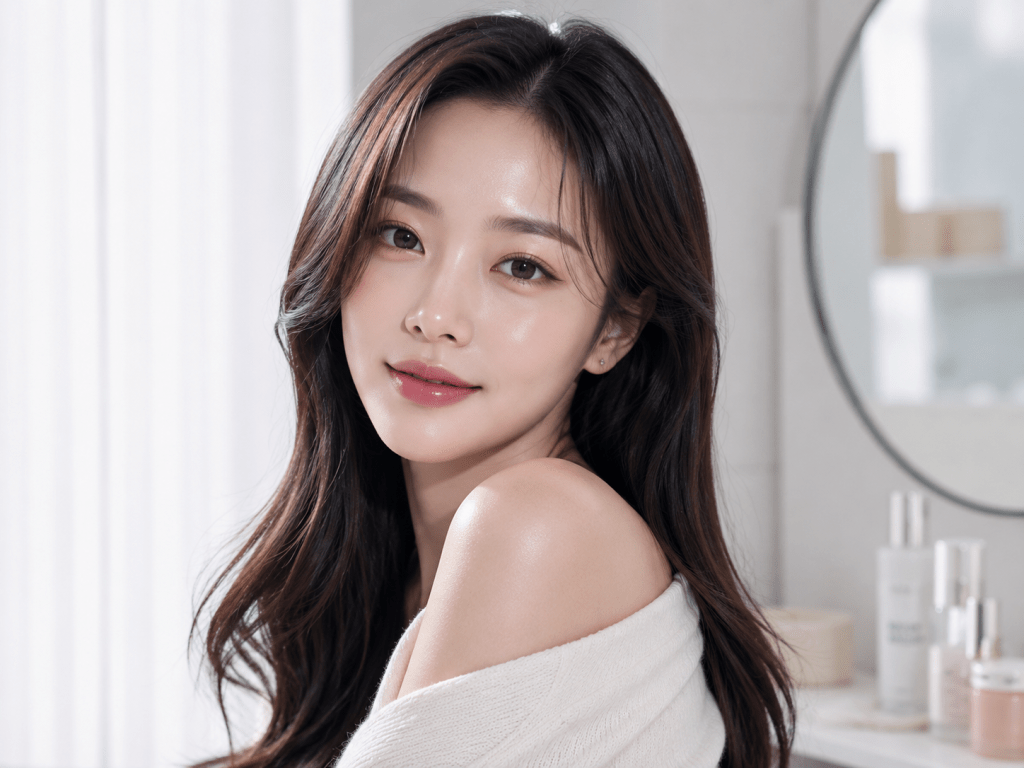
Last Updated: August 2026
For years, the world has been fascinated by Korean skincare.
Now, attention is shifting to something just as interesting:
How Koreans actually do their makeup.
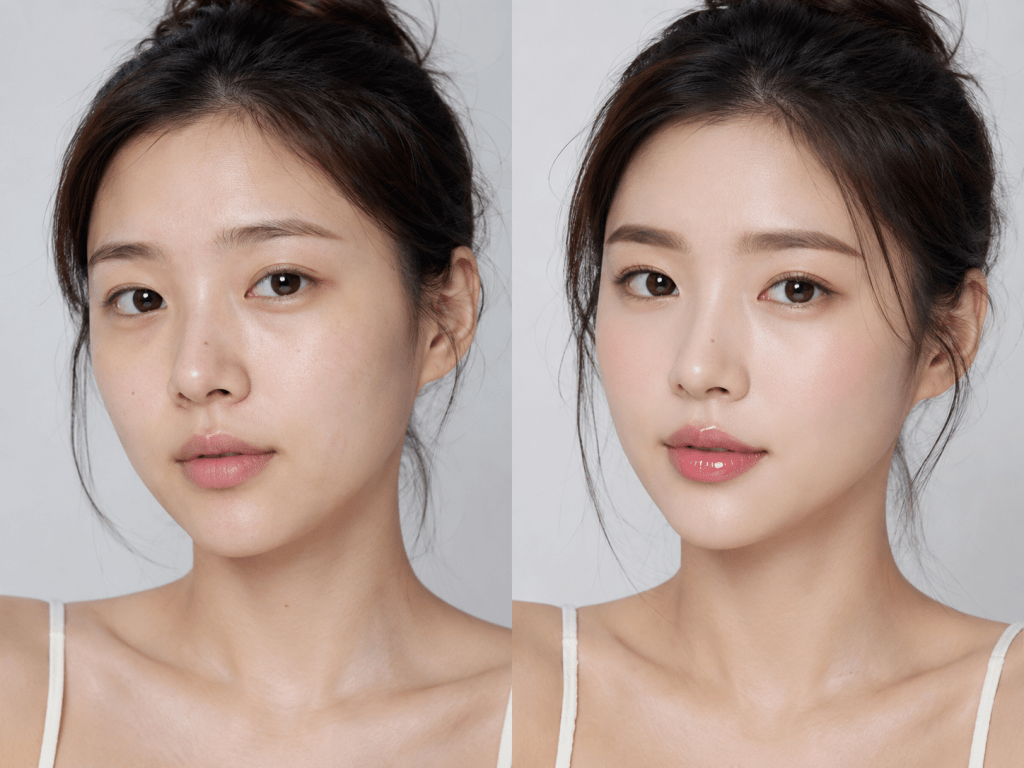
Instead of covering the skin with a heavy base, K-Makeup often focuses on thin, fresh-looking layers.
Instead of strong contouring, it creates soft dimension.
Instead of using bold colors everywhere, it emphasizes harmony between the skin, eyes, cheeks, and lips.
The result is not a completely different face.
It is simply a more polished, brighter, and more balanced version of your own face.
Enhance, Don’t Hide.
That may be the best way to describe the philosophy behind K-Makeup.
Is K-Makeup Really Becoming Popular Worldwide?
Yes.
It would be an exaggeration to say that everyone now prefers K-Makeup, but global interest in Korean makeup styles has clearly grown.
Trends such as:
- Blurred lips
- Aegyo sal
- Under-eye blush
- Soft straight brows
- Glassy skin
- Natural contouring
- Glossy lips
are now widely discussed outside Korea as well.
What was once considered a distinctly Korean beauty style is becoming part of the global beauty vocabulary.
💡 What Is the Core Idea of K-Makeup?
K-Makeup is not mainly about changing your face.
It is about making your own features look a little better.
Your skin.
Your eyes.
Your lips.
Your natural proportions.
Instead of hiding them, K-Makeup tries to make them look:
fresher
softer
brighter
more balanced
That is why K-Makeup can work on many different faces and skin tones.
You do not need to look Korean to enjoy Korean makeup techniques.
The key is adaptation.
7 Key Features of K-Makeup
| Area | Typical K-Makeup Style | Visual Effect |
|---|---|---|
| Skin | Thin, natural-looking base | Fresh and healthy appearance |
| Brows | Soft, natural shape | Gentle and youthful expression |
| Eyes | Subtle shading and eyeliner | Naturally defined eyes |
| Aegyo Sal | Soft highlight and shadow | Brighter, livelier eyes |
| Blush | Softly diffused color | Healthy and fresh complexion |
| Lips | Blurred or glossy finish | Soft and lively lips |
| Contour | Light and subtle shading | Natural facial dimension |
1. Skin — Look Like You Have Good Skin, Not Heavy Makeup
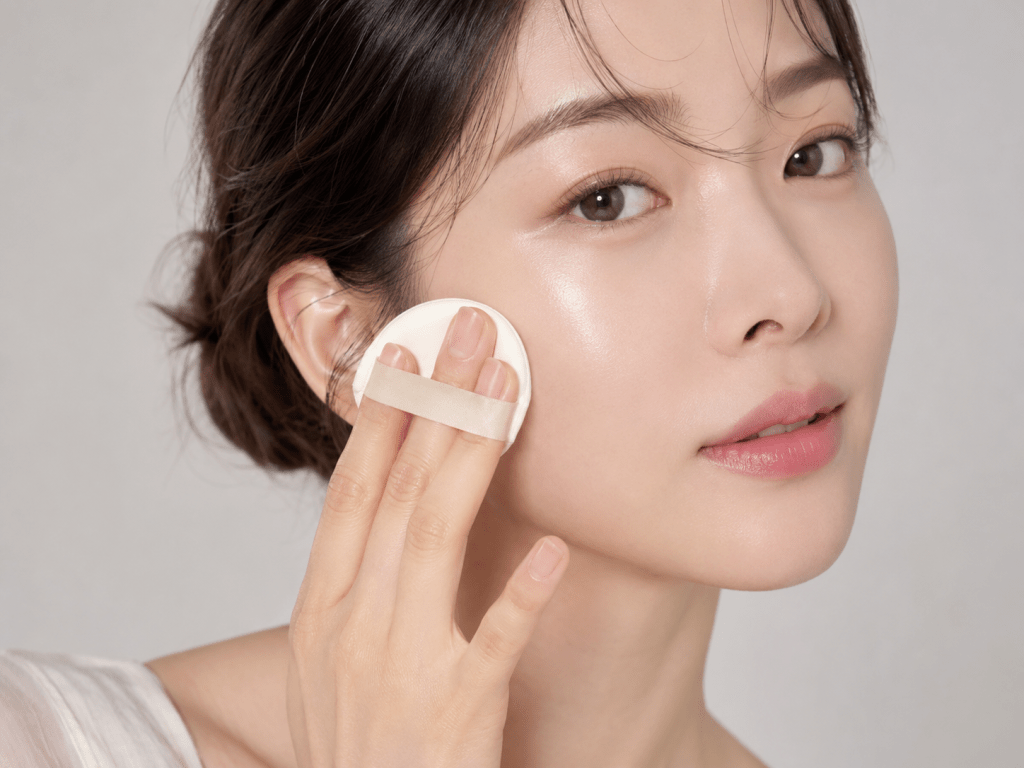
The base is one of the most important parts of K-Makeup.
But that does not mean applying a thick layer of foundation.
In fact, the opposite is often true.
Apply less.
Keep it light.
Cover only where necessary.
The goal is not:
❌ “My makeup looks flawless.”
The better goal is:
⭕ “My skin looks really good today.”
This is one reason cushion foundations became such an important part of Korean beauty culture.
They allow people to build light coverage without completely hiding the natural texture of the skin.
2. Brows — Softer Brows, Softer Expression
Korean-style brows are generally less harsh than heavily sculpted brows.
They often use a soft straight line or a gentle arch.
The basic rules are simple:
- Do not make the brows too dark
- Match the color to your hair
- Keep the inner brow soft
- Fill only the empty areas
- Avoid overly sharp edges
The result can make the overall face appear softer and more approachable.
3. Eyes — Bigger Is Not Always Better
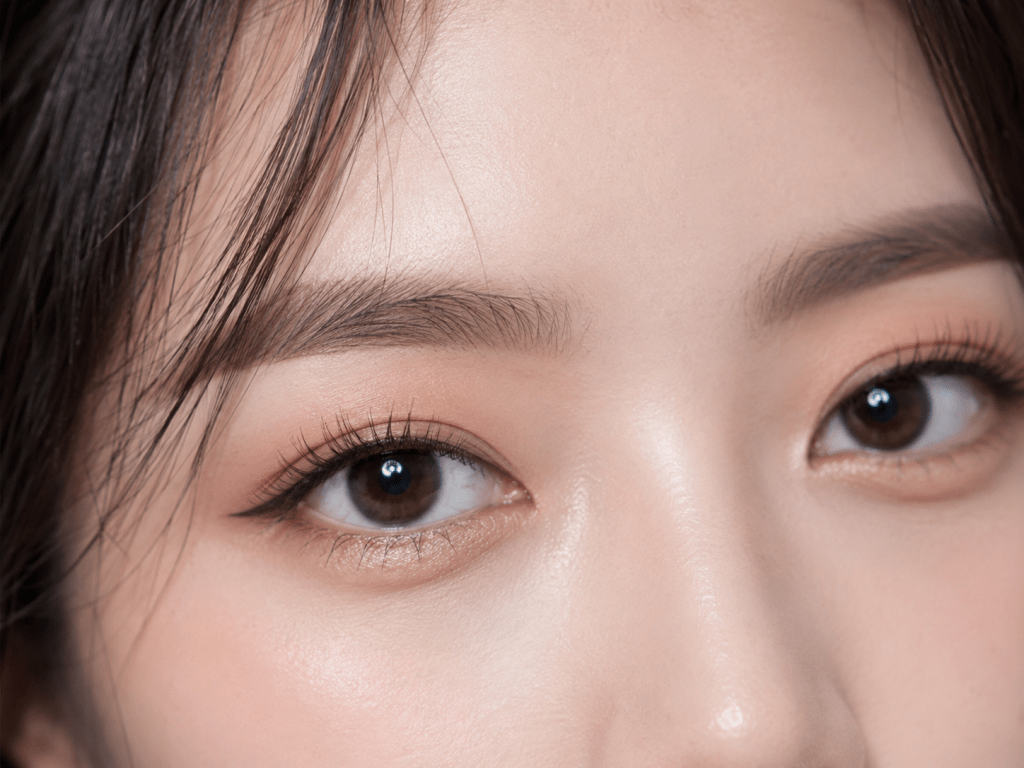
Korean eye makeup is often about control rather than intensity.
Instead of using multiple dark eyeshadow layers, the eyes are softly defined with colors close to the natural skin tone.
Popular shades include:
🤎 Soft Brown
🍑 Peach
🌸 Pink
🌹 Rose
🧊 Mauve
🥛 Beige
Eyeliner is often used to gently extend the natural eye shape rather than creating a very dramatic line.
The objective is not to create completely different eyes.
It is to make your own eyes look more defined.
4. Aegyo Sal — Highlighting What Others Used to Hide
One of the most distinctive K-Makeup techniques is aegyo sal.
Aegyo sal refers to the small natural fullness directly beneath the lower eyelid.
In some beauty traditions, people try to hide everything under the eyes.
K-Makeup sometimes does the opposite.
A subtle highlight and tiny shadow can make this area look more visible.
When done naturally, aegyo sal can make the eyes appear:
- Brighter
- More expressive
- More youthful
- Slightly larger
- More cheerful when smiling
The key word is subtle.
Too much shadow can look unnatural.
5. Blush — A Healthy Flush, Not a Painted Stripe
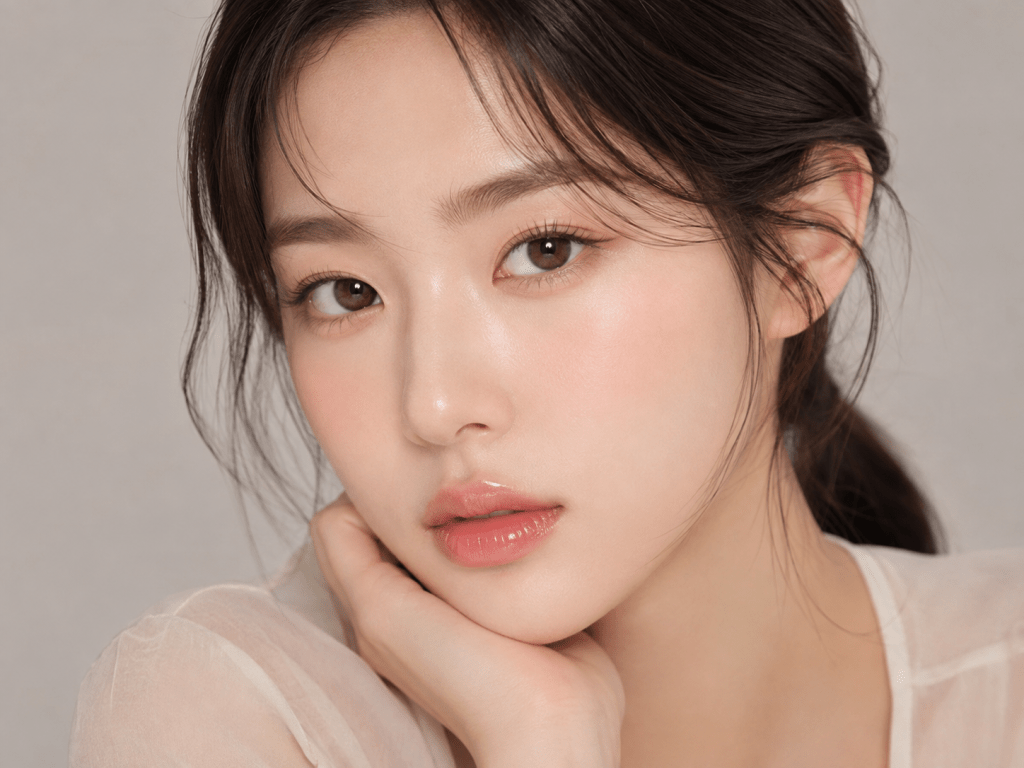
Blush plays a major role in modern K-Makeup.
Rather than using blush only to sculpt the face, color is often placed softly around the cheeks or under the eyes.
The effect can look as if the skin naturally has a little warmth and color.
Color Guide
| Skin Mood / Undertone | Suggested Blush Colors |
|---|---|
| Warm & bright | Peach, Coral |
| Cool & bright | Baby Pink |
| Soft & muted | Mauve, Rose |
| Natural & healthy | Soft Apricot |
| Deeper skin tone | Deep Rose, Berry, Warm Coral |
The most important rule is simple:
Do not choose a color only because it is popular in Korea.
Choose a color that looks natural on your skin tone.
6. Lips — The Easiest Way to Try K-Makeup
If you are new to Korean makeup, lip products may be the easiest place to start.
Korea is especially famous for lip tints.
Older K-Makeup often used a very obvious gradient lip with darker color in the center.
Today, the style is often softer.
Two especially popular looks are:
Blurred Lips
Soft edges with no sharp lip line.
Glossy Lips
Shiny, juicy-looking lips with a fresh finish.
Both styles help the lips look lively without making them appear too heavy.
7. Contouring — Refine, Don’t Redesign
Korean contouring is often softer than dramatic Western-style contouring.
The objective is not to completely change the shape of the face.
Instead, light shading is used around areas such as:
- The nose
- Jawline
- Hairline
- Cheek area
- Chin
Think of it as:
refining your natural structure, not replacing it.
K-Makeup vs. Bold Glam Makeup
Neither style is better.
They simply have different goals.
| Feature | K-Makeup | Bold Glam Style |
|---|---|---|
| Skin | Light and natural | High coverage |
| Contour | Soft and subtle | Strong and defined |
| Brows | Gentle and natural | Sharply shaped |
| Eyeshadow | Soft shading | Strong contrast |
| Blush | Diffused and fresh | More sculpted placement |
| Lips | Blurred or glossy | Strong lip definition |
| Overall Mood | Fresh & Soft | Bold & Defined |
| Main Goal | Enhance natural features | Create a dramatic image |
You can also mix elements from both styles.
Beauty does not need strict rules.
🌟 Why Can K-Makeup Make the Face Look More Attractive?
One reason is visual balance.
If every part of the face is heavily emphasized at the same time, the eye does not know where to focus.
K-Makeup often chooses only a few points to emphasize.
For example:
- Beautiful skin
- Soft eyes
- Fresh cheeks
- Glossy lips
Everything does not compete.
Instead, each feature supports the others.
That creates harmony.
K-Makeup Tips by Facial Feature
K-Makeup works best when it is adapted to your own face.
| Your Feature | Try Emphasizing | Be Careful With |
|---|---|---|
| Round face | Vertical shading, natural brows | Too much wide blush |
| Long face | More horizontal blush placement | Strong vertical contouring |
| Small eyes | Aegyo sal, lashes, thin eyeliner | Very thick eyeliner |
| Large eyes | Soft shading | Over-emphasizing every feature |
| Thin lips | Gloss, soft overlining | Harsh lip borders |
| Full lips | Blurred lip style | Over-darkening the center |
| High cheekbones | Balanced cheek placement | Very dark blush on the highest point |
Can K-Makeup Work on Different Skin Tones?
Absolutely.
This is one of the most important points.
K-Makeup does not mean trying to copy a Korean skin tone.
The method is about:
- Light base makeup
- Natural dimension
- Harmonious colors
- Soft textures
- Enhancing your own features
That approach can work on very fair, medium, olive, tan, or deep skin.
The colors simply need to be adjusted.
🎨 Find Your Best K-Makeup Colors
| Undertone | Colors to Try |
|---|---|
| Warm | Peach, Coral, Warm Beige, Brown |
| Cool | Pink, Rose, Mauve, Berry |
| Neutral | Beige Pink, Soft Rose, Peach Pink |
| Deep Warm | Terracotta, Deep Coral, Warm Brown |
| Deep Cool | Berry, Plum, Deep Rose |
The point is not to copy someone else’s makeup exactly.
The best K-Makeup is the version that suits your face.
💗 The Real Secret of K-Makeup: Harmony
One of the strongest ideas in Korean makeup is:
Harmony
Even beautiful eyeshadow can look strange if it does not match the lip color.
A trendy blush can look wrong if it clashes with your skin tone.
A perfect lip tint can still look out of place if the rest of the makeup is too heavy.
So the real question is not:
“Is this product beautiful?”
It is:
“Does this look beautiful on me?”
That difference is very important.
⏱️ 10-Minute K-Makeup for Beginners
You do not need complicated skills.
STEP 1 — Skin
Apply a thin layer of cushion or foundation.
Use concealer only where needed.
STEP 2 — Brows
Fill the empty areas softly with a shade close to your hair color.
STEP 3 — Eyes
Add a light beige or brown shadow.
Extend the eyeliner slightly at the outer corner.
STEP 4 — Aegyo Sal
Add only a very light highlight and soft shadow.
STEP 5 — Blush
Apply a color that suits your skin tone and blend it carefully.
STEP 6 — Lips
Apply tint or gloss and soften the edges.
Done.
💡 5 Rules of K-Makeup
1. Skin First
Healthy-looking skin is the foundation of the look.
2. Less Is More
You do not need to apply more product to look better.
3. Enhance Your Features
Do not erase your natural face.
4. Find Your Color
Your best color matters more than the most viral color.
5. Create Harmony
Skin, eyes, cheeks, and lips should work together.
🇰🇷 Why Koreans Can Be Proud of K-Makeup
K-Beauty is no longer only about skincare.
Korean beauty culture has introduced or popularized many ideas and product styles around the world, including:
- Cushion foundation
- Lip tints
- Aegyo sal makeup
- Soft contouring
- Glassy skin
- Blurred lips
- Glossy lip textures
- Skin-first makeup
What makes this especially interesting is that Korea is not simply exporting cosmetic products.
It is also exporting a beauty philosophy.
A way of thinking about beauty.
A way of balancing color.
A way of making the face look polished without completely changing it.
In that sense, K-Makeup is becoming more than a trend.
It is becoming a new global beauty language.
The Most Beautiful Idea Behind K-Makeup
The best K-Makeup does not make you look like someone else.
Your skin is still your skin.
Your eyes are still your eyes.
Your face shape is still your face shape.
But everything looks:
a little fresher,
a little brighter,
a little more refined,
and a little more harmonious.
That may be why so many people find K-Makeup appealing.
Don’t Hide Your Face. Highlight It.
Your face does not need to disappear under makeup.
It only needs the right details to shine.
K-Makeup at a Glance
| K-Makeup Value | What It Means |
|---|---|
| ✨ Enhancement | Emphasize your best natural features |
| 💗 Harmony | Make skin, eyes, cheeks, and lips work together |
| 🌿 Naturalness | Avoid covering everything |
| 🎨 Adaptability | Adjust colors to your own skin tone |
| 💡 Practicality | Simple techniques can create a big difference |
| 🇰🇷 K-Beauty | A Korean beauty approach with growing global influence |
Final Thought
K-Makeup is not about looking Korean.
It is about using a Korean beauty philosophy to make your own face look its best.
That may be the true reason K-Makeup continues to attract fans around the world.
#KBeauty #KMakeup #KoreanMakeup #KoreanBeauty #KBeautyTips #KoreanMakeupTutorial #GlassSkin #AegyoSal #BlurredLips #GlossyLips #KBeautyTrend #Korea101Guide


Leave a Reply