
World-Class Medical Technology, Competitive Costs, and Outstanding Patient Satisfaction Are Powering the Rise of K-Medical
Korea 101 Guide — K-Beauty & K-Medical Series ③

Feature Image: Image 1 — K-Beauty and K-Medical in Seoul
The reasons people travel to South Korea are changing.
International visitors still come for K-pop, Korean food, historic palaces, and shopping. But a rapidly growing number are now adding health screenings, dermatology consultations, dental care, cosmetic procedures, and even complex medical treatments to their itineraries.
In 2025, Korea welcomed approximately 2.01 million international patients from 201 countries—a 71.9% increase from 1.17 million in 2024 and the highest annual figure recorded since official data collection began in 2009.
Why are so many patients choosing Korea?
The answer goes far beyond affordable medical care. Korea offers a powerful combination of advanced technology, experienced specialists, sophisticated infrastructure, efficient service, high patient satisfaction, and a unique ecosystem connecting healthcare with K-Beauty, wellness, shopping, and tourism.
K-Medical at a Glance
| Competitive advantage | What Korea offers | Value for international patients |
|---|---|---|
| World-class medical expertise | Advanced cancer care, robotic surgery, endoscopic procedures, organ transplantation, and precision treatment | Access to experienced specialists and complex medical care |
| Advanced infrastructure | High availability of CT, MRI, acute-care beds, and modern hospital facilities | Faster access to testing, diagnosis, and treatment |
| Competitive costs | Many treatments cost less than comparable care in countries such as the United States | Strong value without compromising medical standards |
| Efficient care | Consultation, testing, diagnosis, and treatment can often be coordinated in one system | Shorter waiting periods and easier travel planning |
| High patient satisfaction | International patient satisfaction reached 90.2 out of 100 | Confidence in medical staff, service, and facilities |
| K-Beauty integration | Skincare, dermatology, cosmetic medicine, wellness, and tourism are closely connected | A uniquely Korean health-and-beauty experience |
1. World-Class Medical Technology
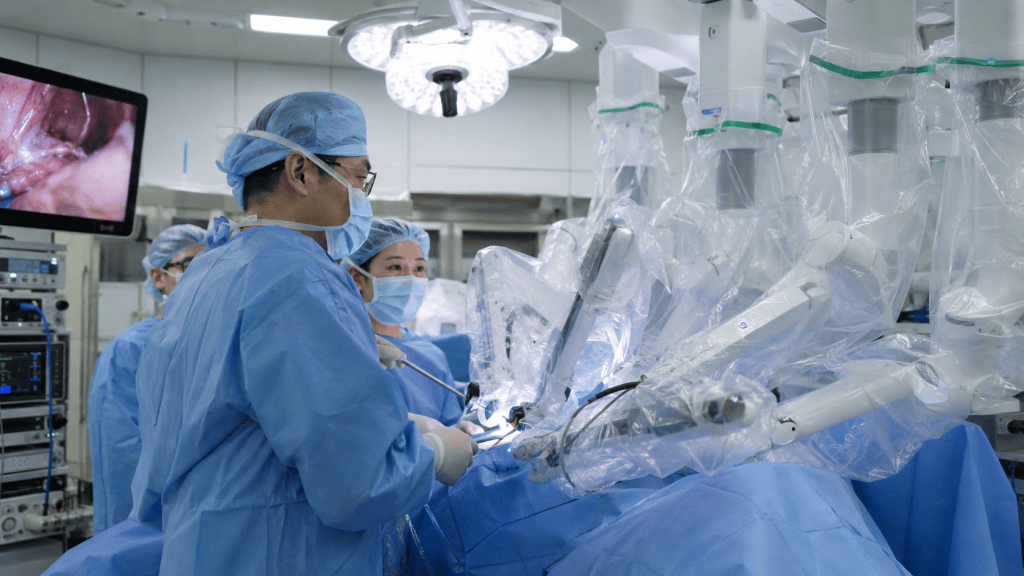
Insert Image 2 — Robot-Assisted Surgery in a Korean Hospital
The foundation of K-Medical is clinical expertise.
Korea has accumulated extensive experience in robotic surgery, laparoscopic and endoscopic procedures, cancer diagnosis and treatment, organ transplantation, spinal and joint care, dental implants, and comprehensive health screening.
In gastric cancer care, advanced techniques such as endoscopic submucosal dissection have gained international recognition. Korean medical institutions also train visiting physicians from around the world in complex surgical and endoscopic procedures.
Five-Year Cancer Survival Rates
| Cancer type | South Korea | United States | United Kingdom |
|---|---|---|---|
| Stomach cancer | 77.9% | 36.4% | 23.9% |
| Colorectal cancer | 74.3% | 65.0% | 57.6% |
| Liver cancer | 39.3% | 21.7% | 13.5% |
| Lung cancer | 38.5% | 36.7% | 21.0% |
| Breast cancer | 93.8% | 91.2% | 85.9% |
| Thyroid cancer | 100.1%* | 98.4% | 87.8% |
*A relative survival rate can exceed 100% because it compares observed survival among patients with expected survival in the general population. Reporting periods and methodologies differ by country, so these figures should be interpreted as broad indicators rather than direct hospital rankings.
These outcomes are not produced by individual physicians alone. They reflect an integrated system combining experienced specialists, advanced equipment, multidisciplinary care, rapid diagnosis, and structured follow-up.
2. Advanced Medical Infrastructure
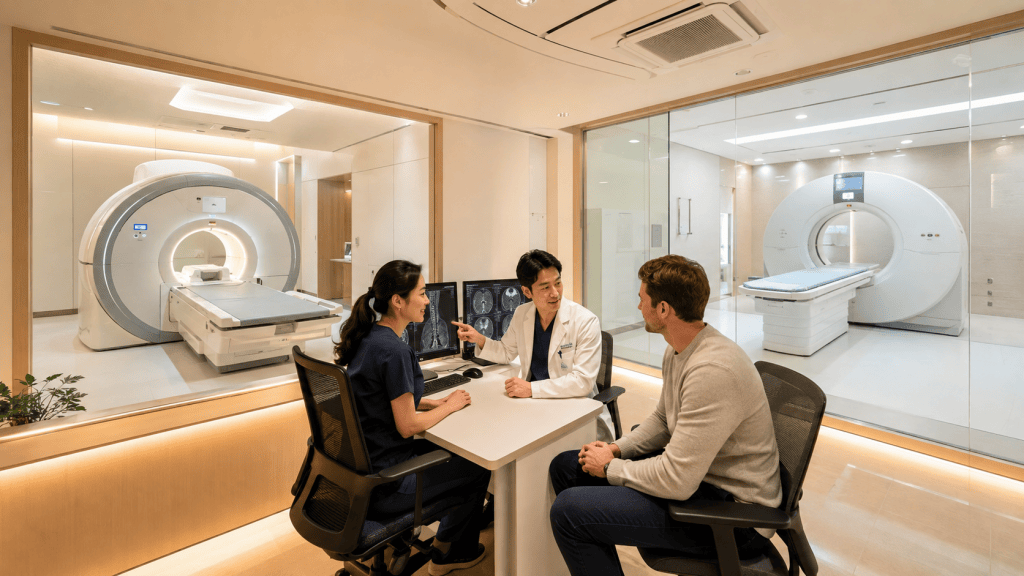
Insert Image 3 — A Modern Korean CT and MRI Center
Medical expertise requires the right infrastructure.
Korea has one of the strongest concentrations of diagnostic equipment and hospital beds among OECD countries. This makes it easier for many patients to access examinations and treatment without the long waiting periods common in some healthcare systems.
Korea Compared with the OECD Average
| Medical infrastructure | Korea | OECD average | Korea’s relative level |
|---|---|---|---|
| CT scanners | 45.3 | 31.1 | Approximately 1.5 times higher |
| MRI units | 38.7 | 21.2 | Approximately 1.8 times higher |
| Total hospital beds | 12.6 | 4.2 | Three times higher |
| Acute-care beds | 7.4 | 3.4 | Approximately 2.2 times higher |
CT and MRI figures are measured per one million people; hospital-bed figures are measured per 1,000 people. The comparison is based on OECD Health Statistics 2025 as presented by the Korea Tourism Organization.
Major hospitals and health-screening centers can coordinate blood tests, endoscopy, ultrasound, CT, MRI, specialist consultations, and follow-up recommendations within a highly organized system.
For international visitors with limited time in Korea, this efficiency can be a major advantage.
3. High-Quality Care at Competitive Prices
Korea’s medical services are widely known for offering competitive value relative to their technological and clinical standards.
A historical OECD-country comparison presented by the Korea Tourism Organization illustrates the size of the potential cost difference.
Comparative Medical Costs
| Country | Cesarean section | Cataract surgery | Appendectomy |
|---|---|---|---|
| South Korea | $1,769 | $1,323 | $2,047 |
| Germany | $3,843 | $3,123 | $3,351 |
| Canada — Nova Scotia | $6,577 | $3,046 | $6,007 |
| Australia | $11,425 | $4,743 | $5,622 |
| United States | $18,460 | $4,694 | $14,010 |
These figures come from a 2013 comparative study and should be treated as historical benchmarks, not current quotations. Actual costs vary according to the hospital, procedure, patient condition, length of stay, exchange rate, medication, anesthesia, and follow-up requirements.
The cost advantage remains visible in today’s aesthetic medical market. International visitors interviewed in 2026 reported that some Korean skincare procedures were up to approximately 20% less expensive than comparable treatments in their home countries.
Korea’s appeal, however, should not be reduced to low prices.
Its real advantage is value: advanced technology, experienced professionals, convenient access, efficient service, and competitive costs combined in one healthcare environment.
4. International Patient Satisfaction Reaches 90.2
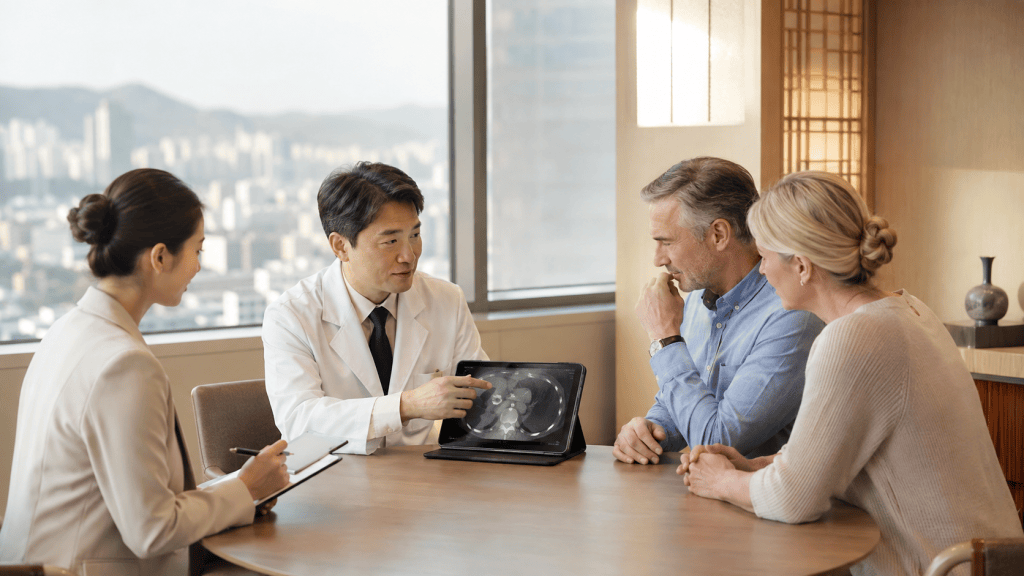
Insert Image 4 — International Patients Consulting a Korean Specialist
According to the Korea Health Industry Development Institute’s survey of international patients, overall satisfaction with Korean medical services reached 90.2 out of 100 in 2023, one point higher than the previous year.
Patients gave particularly favorable evaluations to Korean physicians and hospital personnel. Clinical expertise, medical equipment, and the quality of care were more influential than Korea’s general national image when patients selected a medical destination.
International patients frequently value:
- Experienced and highly specialized medical professionals
- Professional and responsive patient service
- Advanced equipment and clean facilities
- Fast coordination from examination to diagnosis and treatment
- Multilingual coordinators and interpretation support
- The ability to combine healthcare with tourism and recovery
A satisfaction score above 90 indicates that the positive reputation of K-Medical is supported by actual patient experience—not simply promotional messaging.

5. From K-Beauty to K-Medical
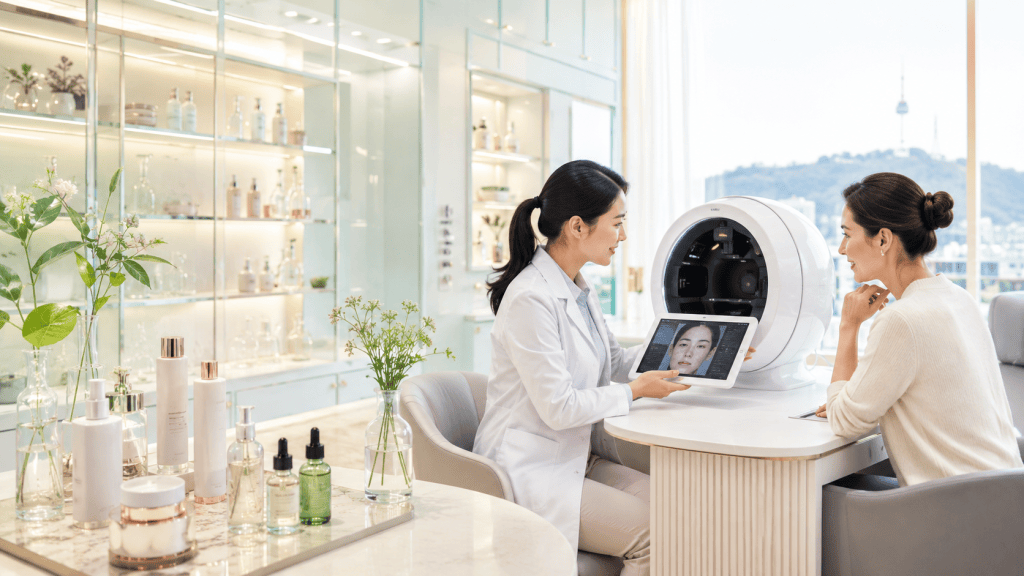
Insert Image 6 — K-Beauty Meets Professional Dermatology
K-Beauty has become a gateway to K-Medical.
As Korean skincare products gained global popularity, international consumers became increasingly interested in the routines, dermatology services, and medical technologies behind Korea’s beauty culture.
In a 2024 international awareness survey, Korea ranked first among 19 competing countries as a leading cosmetics nation. The positive perception of Korean cosmetics is believed to have contributed to growing international demand for Korean dermatology and plastic-surgery services.
In 2024, dermatology accounted for approximately 705,000 international patients, or 56.6% of the total. Plastic surgery represented another 11.4%.
The customer journey often develops like this:
Korean content → Interest in K-Beauty → Korean skincare purchases → Skin analysis and professional care → Interest in dermatology or aesthetic medicine → A visit to Korea
For many international visitors, a Korean beauty store is no longer just a shopping destination. It is the starting point for discovering Korea’s broader approach to skin health, beauty, and wellness.
6. A Fast and Convenient One-Stop System
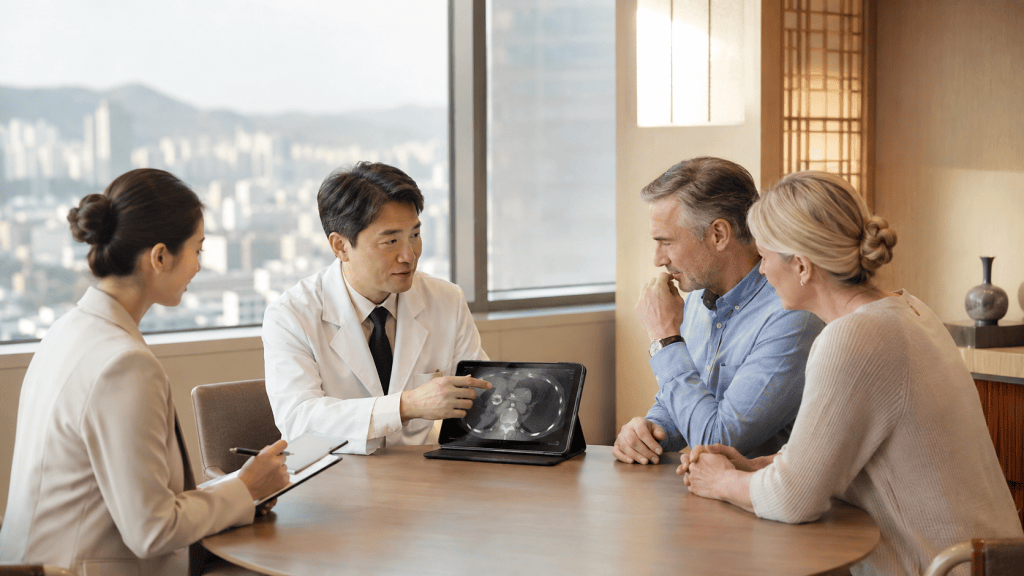
Insert Image 5 — Transparent Treatment Planning and International Patient Support
Another major advantage of Korean healthcare is speed.
Consultations, examinations, diagnosis, treatment, and follow-up can often be coordinated within the same hospital or medical network. Many institutions also operate international healthcare centers staffed by multilingual coordinators.
Seoul is expanding its pool of medical interpretation coordinators from 108 to 1,000 while developing an integrated platform connecting hospital, visa, accommodation, tourism, and transportation information.
A typical international patient journey may include:
- Online consultation before departure
- Appointment coordination and preliminary cost information
- Airport or hotel transportation support
- Assistance from a medical interpreter
- Examination and specialist consultation
- Treatment or procedure
- Recovery and wellness activities
- Online follow-up after returning home
This integrated approach can reduce uncertainty and make the experience considerably easier for first-time patients.
7. Major K-Medical Specialties
| Specialty | Key strengths in Korea | Common reasons for visiting |
|---|---|---|
| Comprehensive health screening | Multiple examinations coordinated through efficient screening systems | Early detection of cancer, cardiovascular disease, and chronic conditions |
| Cancer care | Robotic, laparoscopic, and endoscopic procedures with multidisciplinary treatment | Diagnosis, surgery, radiation therapy, and chemotherapy |
| Dermatology | Skin analysis, laser procedures, and accessible anti-aging care | Pigmentation, scars, skin texture, and firmness |
| Plastic and reconstructive surgery | Aesthetic expertise combined with reconstructive capabilities | Facial, body, trauma, and reconstructive procedures |
| Dentistry | Digital diagnosis and advanced implant and orthodontic systems | Implants, prosthetics, orthodontics, and whitening |
| Ophthalmology | Precision diagnostics and advanced vision-correction techniques | LASIK, LASEK, lens implantation, and cataract surgery |
| Spine and joint care | Endoscopic, robotic, surgical, and nonsurgical treatment options | Back, neck, knee, and joint conditions |
| Korean medicine and wellness | Acupuncture, herbal medicine, Chuna therapy, and traditional healing | Pain management, recovery, relaxation, and wellness |
8. How to Choose a Medical Provider Safely
Korea offers outstanding medical services, but quality and specialization can differ between institutions.
A low price or a popular social-media post should never be the only reason to choose a clinic.
Before making a decision:
- Confirm that the provider is a registered medical institution authorized to treat international patients.
- Check the physician’s qualifications and area of specialization.
- Make sure medical information is communicated accurately through a qualified interpreter.
- Ask about risks, side effects, recovery time, and alternatives—not only expected benefits.
- Confirm whether the quotation includes examinations, medication, anesthesia, and follow-up care.
- Be cautious of heavily edited before-and-after photographs or guaranteed results.
- Ask what support is available after returning to your home country.
- Take time to consider recommendations for multiple procedures.
Cost matters, but safety, medical necessity, and professional expertise must always come first.
K-Medical Is Becoming a New Global Brand for Korea
Insert Image 7 — Recovery, Wellness, and Seoul Tourism
More than two million international patients visiting Korea in a single year demonstrates the extraordinary potential of K-Medical.
If K-Beauty introduced the world to Korea’s philosophy of beauty, K-Medical is revealing the technology, expertise, and healthcare systems behind it.
Advanced clinical skills, extensive experience, modern medical infrastructure, competitive costs, efficient service, and high patient satisfaction have created a distinctive healthcare ecosystem. When combined with Korean culture, shopping, wellness, and tourism, that ecosystem becomes something few other destinations can offer in quite the same way.
Korea is no longer simply a place to receive treatment.
It is becoming a destination where people can examine their health, care for their appearance, experience a new culture, recover comfortably, and return home with greater confidence.
K-Beauty brought the world’s attention to Korea. K-Medical is turning that attention into lasting trust.
SEO Title
Why International Patients Choose Korea: The Global Rise of K-Medical
Meta Description
Discover why millions of international patients choose South Korea for world-class medical technology, competitive costs, efficient care, outstanding satisfaction, dermatology, health screening, and medical tourism.
Suggested URL Slug
why-international-patients-choose-korea-k-medical
SEO Keywords
K-Medical, K-Beauty, medical tourism in Korea, Korean medical technology, international patients in Korea, health screening in Korea, Korean dermatology, Seoul medical tourism, Korean hospitals, healthcare costs in Korea, Medical Tourism Korea
Suggested Hashtags
#KMedical #KBeauty #MedicalTourismKorea #KoreanHealthcare #SeoulMedicalTourism #InternationalPatients #KoreanDermatology #HealthScreeningKorea #WellnessTravel #Korea101Guide


Leave a Reply