

Beyond K-Beauty trends, international patients are looking for personalized design, medical expertise, privacy, and a carefully managed recovery experience.
For young women around the world, Korea is no longer known only for K-pop, Korean dramas, skincare, and cosmetics.
It has also become an important destination where beauty, medicine, technology, and personalized services come together.
The international appeal of Korean cosmetic surgery is not based solely on dramatic before-and-after images. A growing number of patients are looking for refined, balanced, and natural-looking results that preserve their individuality.
Many young women do not want to become completely different people. They want to look fresher, feel more confident, and improve a feature that has concerned them—without losing the characteristics that make them recognizable.
This reflects a meaningful change in how cosmetic surgery is perceived.
The goal is not to become someone else. It is to become a more confident version of yourself.
Why Does Korea Attract Young International Patients?
Young international patients may consider Korea for several interconnected reasons.
| Why Patients Consider Korea | What They May Value |
|---|---|
| Specialized medical experience | Surgeons who focus on specific facial or body procedures |
| Personalized facial analysis | Planning based on overall proportions rather than one isolated feature |
| Natural-looking outcomes | Subtle improvements that preserve individual identity |
| Diverse treatment options | Surgical and nonsurgical options within the same medical market |
| Online pre-consultation | Preliminary communication before traveling to Korea |
| Multilingual support | Assistance during consultation, treatment, and recovery |
| Greater privacy | The opportunity to recover away from one’s usual social environment |
| Wider K-Beauty ecosystem | Access to skincare, personal color analysis, styling, and beauty services |
| Coordinated medical journey | Consultation, examination, treatment, and follow-up arranged within a limited stay |
Korea’s appeal therefore extends beyond any single procedure. Its broader value lies in the possibility of experiencing a coordinated journey that combines medical care, personal beauty, and recovery support.
1. From Changing a Feature to Creating Facial Harmony
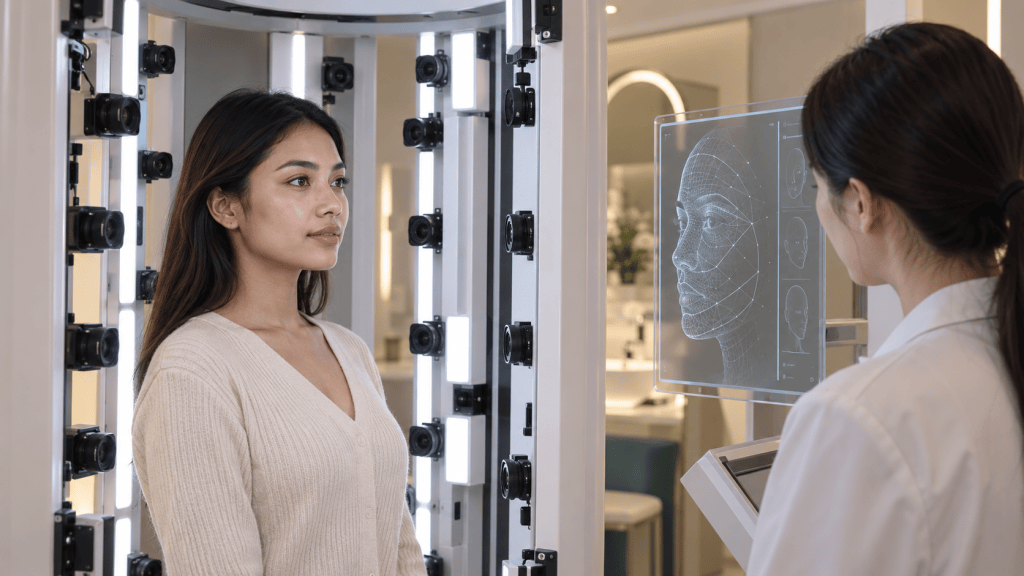
One of the most distinctive ideas in contemporary Korean cosmetic surgery is facial harmony.
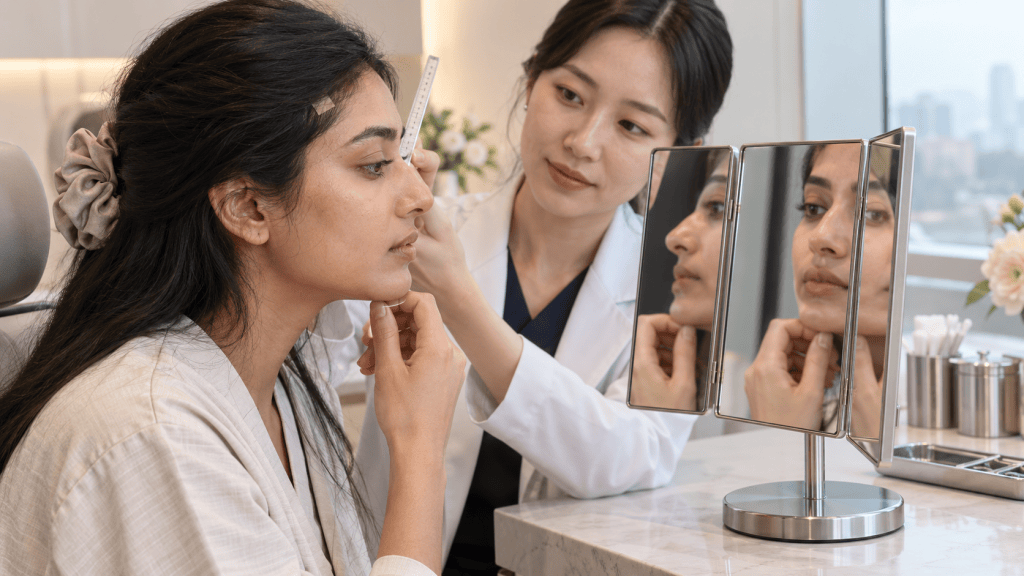
Rather than evaluating the eyes, nose, lips, cheekbones, and jawline separately, a consultation may consider how all these features relate to one another.
A surgeon may examine questions such as:
- Does the nose suit the overall length and width of the face?
- How do the eyes, eyebrows, and forehead work together?
- Is the jawline balanced with the cheekbones and chin?
- Does the side profile appear harmonious?
- Will the proposed change still look natural when the patient smiles?
- Will the outcome respect the patient’s ethnicity and individual identity?
This proportional approach is particularly important for international patients.
Beauty standards differ across countries, cultures, and ethnic backgrounds. A result that suits one person may not suit another, even when the same procedure is used.
Responsible cosmetic surgery should never impose one standardized Korean appearance on every face.
The objective should not be to erase ethnic characteristics. It should be to understand the patient’s anatomy and create a result that feels balanced, natural, and personally meaningful.
2. What Are Young International Women Looking For?
Not every patient travels to Korea seeking a dramatic transformation.
Some want a subtle refinement. Others hope to improve a feature that has affected their confidence for many years. Some may explore nonsurgical options before considering an operation.
| Area of Interest | Possible Patient Goals |
|---|---|
| Eyes | Creating a more balanced or defined eye area |
| Nose | Improving proportion from the front or side profile |
| Facial contour | Balancing the cheekbones, jawline, and chin |
| Skin and facial volume | Improving texture, tone, or facial balance |
| Body contouring | Addressing specific areas that have not responded as expected to lifestyle changes |
| Breast surgery | Changing volume, shape, or symmetry |
| Hairline | Adjusting facial proportions or addressing hair-loss concerns |
| Revision surgery | Correcting functional or aesthetic concerns from a previous procedure |
The name of a procedure should not be the starting point.
A more useful starting point is the patient’s actual concern:
“What bothers me, and what kind of change would feel right for me?”
A thorough consultation may reveal that a procedure discovered on social media is not the most appropriate choice. In some cases, surgery may not be necessary at all.

3. Inspiration Is Different from Imitation
Social media has a strong influence on cosmetic-surgery decisions.
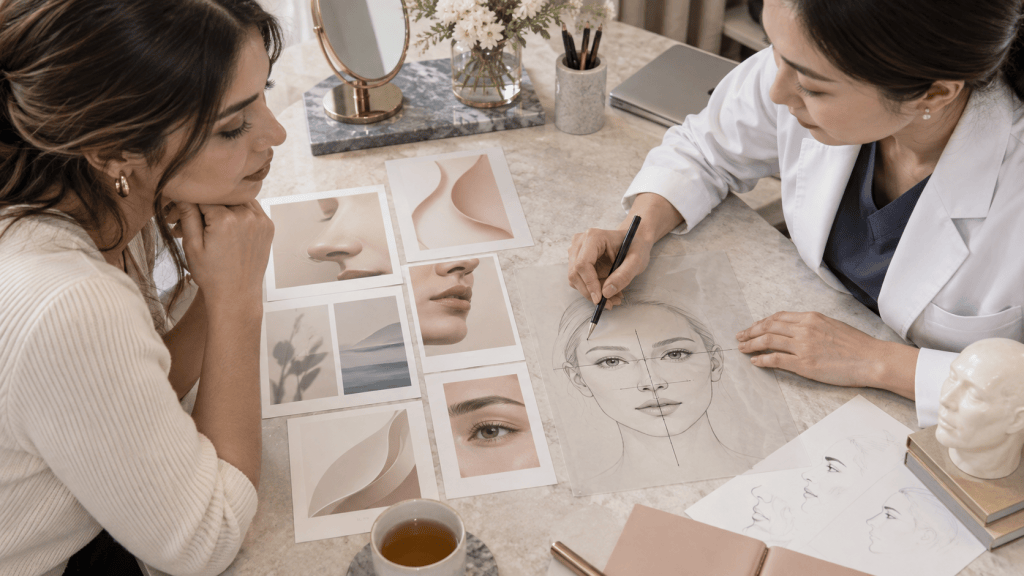
Patients may arrive with saved photographs of celebrities, influencers, or other patients. These images can help communicate aesthetic preferences, but they cannot guarantee an identical outcome.
Every patient has a different:
- Bone structure
- Skin thickness
- Soft-tissue volume
- Degree of facial asymmetry
- Facial movement
- Medical history
- Healing response
- History of previous treatments or surgery
Asking for another person’s exact eyes, nose, or jawline may therefore create unrealistic expectations.
A better way to use reference photographs is to explain the qualities the patient prefers:
- Soft rather than dramatic
- Defined but not artificial
- A natural side profile
- A less tired-looking eye area
- A smoother facial line
- A subtle rather than obvious change
The surgeon’s role is to translate aesthetic preferences into a medically realistic plan based on the patient’s anatomy.
Reference images can guide the conversation. They should never replace individualized medical judgment.
4. Why Privacy Matters
Cosmetic surgery is a deeply personal decision.
Some patients are comfortable sharing their experience online. Others prefer to keep it private from colleagues, friends, or extended family.
Receiving treatment abroad may provide a degree of social and emotional distance. Patients can focus on consultation and recovery without immediately returning to their normal environment.
However, privacy involves much more than recovering in another country.
Patients should ask:
- How does the clinic store photographs?
- Could before-and-after images be used for marketing?
- Who can access the patient’s medical records?
- Is consent for image use explained separately?
- How are online consultations protected?
- Does the clinic communicate through secure channels?
- Can the patient refuse promotional photography?
Consent to receive treatment and consent to use a patient’s images for marketing are separate matters.
Patients should understand both clearly before signing any document.
5. The Consultation Matters More Than the Advertisement
Beautiful social media content may introduce a clinic, but it cannot determine whether that clinic is appropriate for a particular patient.
Before making a decision, an international patient should receive clear answers to several essential questions.
Questions About the Surgeon
- Who will actually perform the procedure?
- Is the doctor appropriately qualified for the planned surgery?
- How frequently does the surgeon perform this procedure?
- Will the doctor providing the consultation also perform the surgery?
- Who will care for the patient if the primary surgeon is unavailable?
Questions About the Procedure
- What exactly will be changed?
- What alternatives are available?
- What are the limitations of the procedure?
- Where may scars be located?
- What type of anesthesia will be used?
- What complications are possible?
- Could the procedure affect breathing, vision, sensation, movement, or another function?
Questions About Recovery
- How much swelling and bruising can normally be expected?
- When will stitches or dressings be removed?
- How long should the patient remain in Korea?
- When may the patient safely travel by air?
- Which symptoms require urgent medical attention?
- Who should the patient contact after returning home?
A trustworthy consultation should make the patient more informed—not more pressured.

6. Five Stages of a Safer Cosmetic-Surgery Journey
| Stage | Important Actions |
|---|---|
| Before choosing a clinic | Verify the medical institution, surgeon, and international-patient support system |
| Before traveling | Share medical history, medications, allergies, and previous operations |
| During consultation | Discuss goals, alternatives, risks, scars, and realistic outcomes |
| During recovery in Korea | Follow instructions regarding medication, wounds, activity, and appointments |
| After returning home | Continue monitoring and maintain access to follow-up support |
Patients should disclose all relevant health information, including:
- Prescription medications
- Over-the-counter drugs
- Supplements and herbal products
- Allergies
- Smoking and nicotine use
- Alcohol consumption
- Previous reactions to anesthesia
- Bleeding disorders
- Chronic medical conditions
- Mental-health treatment
- Previous cosmetic procedures
Hiding medical information because of concern that surgery may be postponed can increase risk.
Safety must take priority over airline tickets, hotel reservations, travel schedules, and promotional discounts.
7. Recovery Is Part of the Result

Before-and-after photographs rarely show the entire recovery process.
Depending on the procedure and the individual patient, recovery may involve:
- Swelling
- Bruising
- Discomfort
- Temporary asymmetry
- Changes in sensation
- Uncertainty about the early appearance
- Emotional ups and downs
Final results may take considerably longer to appear than social media suggests.
Young medical travelers should prepare for:
- Sufficient recovery time before flying
- Follow-up appointments
- Assistance with transportation and daily activities
- Suitable accommodation
- Medication management
- Temporary restrictions on exercise, alcohol, smoking, makeup, and skincare
- Possible changes to travel plans if recovery is delayed
Emotional preparation is also important.
A patient may feel excited before surgery but uncertain during early recovery, when swelling temporarily makes the face or body look unfamiliar.
Clinics should therefore communicate honestly about the recovery timeline rather than presenting cosmetic surgery as an instant beauty experience.
8. Cosmetic Medicine and the Wider K-Beauty Experience
For many young visitors, cosmetic surgery may form part of a broader interest in Korean beauty and personal care.
Their journey may also include:
- Professional skincare consultation
- Personal color analysis
- Hair and makeup styling
- Scalp and hair care
- Wellness and nutrition services
- Fashion and beauty shopping
- Professional photography after recovery
This wider beauty ecosystem can become a distinctive Korean advantage.
However, medical treatment and lifestyle services should remain clearly separated.
Hair, makeup, and personal color analysis can be enjoyable forms of self-expression. Cosmetic surgery, by contrast, is a medical intervention that may involve anesthesia, physical limitations, recovery, and possible complications.
A responsible K-Beauty medical journey should always maintain a clear boundary between entertainment and healthcare.
9. How Korean Cosmetic Medicine Can Differentiate Itself Responsibly
Korea should not compete only through lower prices or more dramatic transformations.
A stronger and more sustainable position can be built around the following principles:
| Responsible Point of Difference | What It Means |
|---|---|
| Identity-preserving design | Improving balance without erasing individuality |
| Specialized expertise | Matching the patient with an appropriate medical professional |
| Honest consultation | Explaining limitations and risks as clearly as possible benefits |
| Cultural understanding | Respecting different beauty ideals and ethnic features |
| Patient privacy | Protecting photographs, records, and personal decisions |
| Recovery planning | Preparing the patient for healing, not only surgery |
| Multilingual continuity | Supporting communication before and after travel |
| Safety verification | Helping patients identify appropriately registered institutions |
| Long-term follow-up | Remaining available after the patient returns home |
Trends change. Trust lasts longer.

10. Checklist for Young Women Considering Cosmetic Surgery in Korea
Personal Readiness
- Am I making this decision for myself?
- Have I wanted this change consistently rather than temporarily?
- Do I understand that improvement does not mean perfection?
- Am I emotionally prepared for swelling and gradual recovery?
- Can I accept that my result may differ from a reference photograph?
Medical Readiness
- Have I disclosed my complete medical history?
- Do I understand the proposed procedure?
- Have the risks and alternatives been explained?
- Do I know who will perform the operation?
- Have I received medical advice about flying after surgery?
Practical Readiness
- Do I have enough time to recover in Korea?
- Is someone available to assist me if necessary?
- Do I understand the expected total cost and possible additional expenses?
- Do I know whom to contact during an emergency?
- Do I have a follow-up plan after returning home?
If important questions remain unanswered, the patient should take more time before proceeding.
Cosmetic surgery should never be rushed because of a limited-time promotion, an influencer campaign, or a short travel schedule.
Beauty Without Losing Identity
The global attraction of Korean cosmetic surgery should not be reduced to achieving a fashionable Korean appearance.
Its greater potential lies in combining medical expertise, aesthetic sensitivity, personalized planning, and international-patient support.
Young women traveling to Korea are increasingly informed consumers. They compare clinics, research procedures, examine recovery timelines, and expect clear communication in their own language.
Most importantly, many are looking for results that feel authentic.
The future of Korean cosmetic medicine should therefore move away from standardized beauty and toward individualized confidence.

The best transformation does not make a patient look like someone else. It helps her feel more comfortable, confident, and recognizable as herself.
That is one of the most meaningful values K-Medical can offer to young women around the world.
Medical note: Cosmetic procedures and surgery involve individual risks and limitations. Patients should consult an appropriately qualified medical professional and verify the medical institution before making treatment or travel decisions.


Leave a Reply