
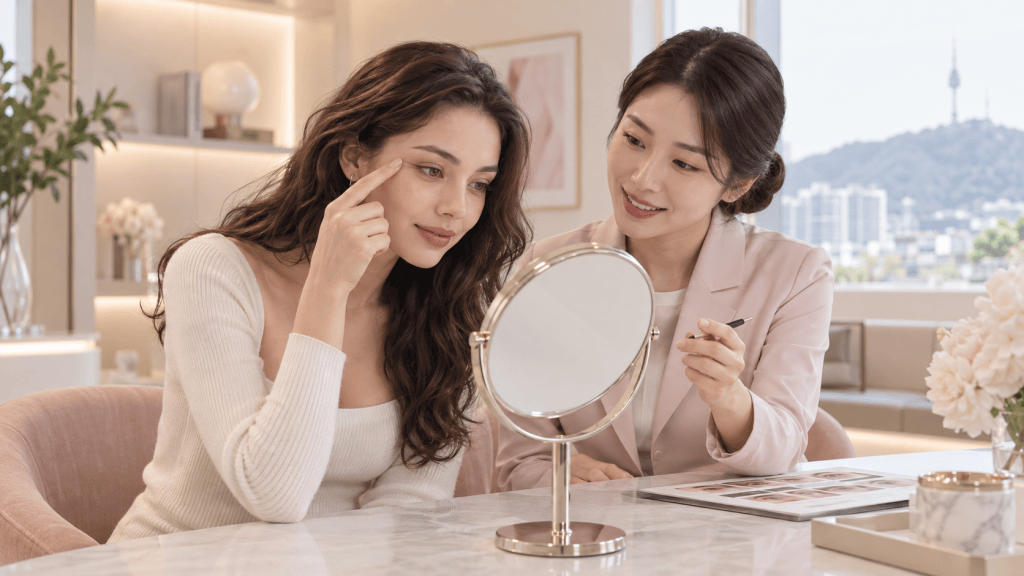
Young international women visiting Korea often bring photos of K-pop idols or Korean actresses to their consultations.
But most of them do not actually want to copy a celebrity’s face. What they really want is a more refined version of themselves:
- Naturally defined eyes without heavy makeup
- A brighter appearance in photos and videos
- Subtle changes that do not look obviously surgical
- An eye shape that complements their everyday makeup
- Results that preserve their ethnic identity and unique features
Modern Korean eye surgery is moving beyond simply creating a double-eyelid crease. The new focus is personalized eye design based on facial harmony, eyelid anatomy, natural expression and individual identity.
What Determines Your Ideal Eye Design?
| Design factor | Why it matters |
|---|---|
| Eyelid thickness | Influences the appropriate crease height and surgical method |
| Eye-opening strength | May reveal ptosis or differences in muscle strength |
| Horizontal eye length | Helps determine whether corner procedures should be considered |
| Epicanthal fold | Influences the inner corner and eyelid-crease design |
| Outer-corner direction | Affects whether the eyes look sharp, soft or elegant |
| Brow-to-eye distance | Helps determine a natural-looking crease height |
| Facial asymmetry | Requires balance rather than perfect duplication |
| Overall facial proportions | Prevents the eyes from looking disproportionate to the face |
The same eyelid crease can look completely different on two people because their eyelid anatomy and facial proportions are different.
Five K-Eye Styles to Know
| K-Eye style | Overall impression | Main design focus |
|---|---|---|
| Natural Clean Eyes | Soft, fresh and natural | A low, subtle eyelid crease |
| Soft In-Out Eyes | Natural but clearly defined | A crease that gradually becomes visible |
| Long and Lifted Eyes | Sleek and sophisticated | Horizontal length and outer-corner direction |
| Bright Open Eyes | Energetic and refreshed | Eye-opening strength and visible iris exposure |
| Smiling Aegyo-Sal Eyes | Youthful and friendly | Gentle fullness beneath the lower lashes |
1. Natural Clean Eyes
This style focuses on a low and subtle crease that does not appear excessively deep when the eyes are closed.
It may appeal to people who want to look more refreshed without dramatically changing their appearance. Depending on the eyelid anatomy, possible options may include non-incisional, natural adhesion or low-incision techniques.
However, a non-incisional method may not be suitable for every patient, especially when the eyelids are thick or there is significant excess skin.
2. Soft In-Out Eyes
An in-out crease begins close to the inner corner and gradually becomes more visible toward the outer eye.
This design creates a balance between softness and clear definition. The position of the crease should be adjusted according to the eyelid thickness, epicanthal fold and distance between the eyes and eyebrows.
3. Long and Lifted Eyes
This style emphasizes horizontal length and the direction of the outer corner rather than simply making the eyes larger or rounder.
The desired effect is sleek and elegant. Depending on the individual anatomy, a consultation may include eyelid design, lateral canthoplasty or lower canthoplasty.
The goal should be facial balance—not extending the eyes as far as technically possible. Excessive corner surgery may result in scarring, redness, reattachment or an unnatural appearance.
4. Bright Open Eyes
This design is often requested by people who feel that their eyes look tired, sleepy or less expressive.
The surgeon should examine eye-opening strength, forehead use and differences between the two eyes. A higher double-eyelid crease alone may not correct a sleepy appearance if the underlying issue involves eyelid function.
5. Smiling Aegyo-Sal Eyes
Aegyo-sal refers to the small area of fullness immediately beneath the lower eyelashes. It usually becomes more visible when a person smiles, creating a youthful and friendly expression.
Aegyo-sal has become internationally recognizable through K-pop and K-beauty. However, it does not necessarily require a medical procedure. Makeup is a simple way to try the look before considering other options.
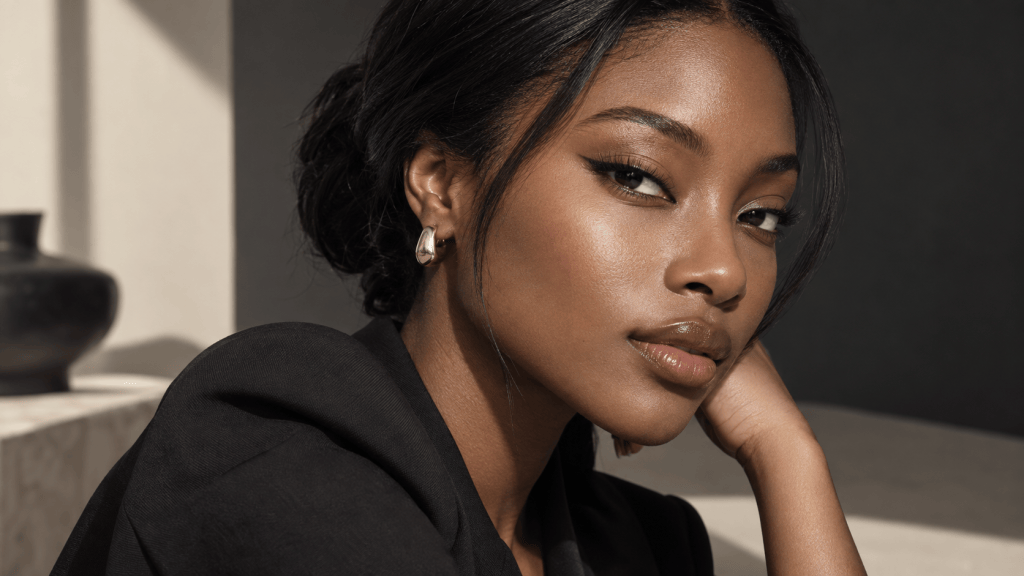
Aegyo-Sal and Under-Eye Bags Are Different
| Category | Aegyo-sal | Under-eye bags |
|---|---|---|
| Location | Immediately beneath the lower lashes | Lower than the aegyo-sal area |
| Expression | Usually becomes clearer when smiling | May remain visible without expression |
| Visual effect | Youthful, lively and friendly | Tired or older appearance |
| Possible approach | Makeup or professional consultation | Evaluation based on fat, skin and facial structure |
| Important point | More volume is not always better | It is not the same structure as aegyo-sal |
Dark circles are different as well. They may be related to pigmentation, visible blood vessels, thin skin, hollowness or shadows created by facial structure.
This is why one treatment cannot address every type of under-eye concern.
Try the Look with Makeup First
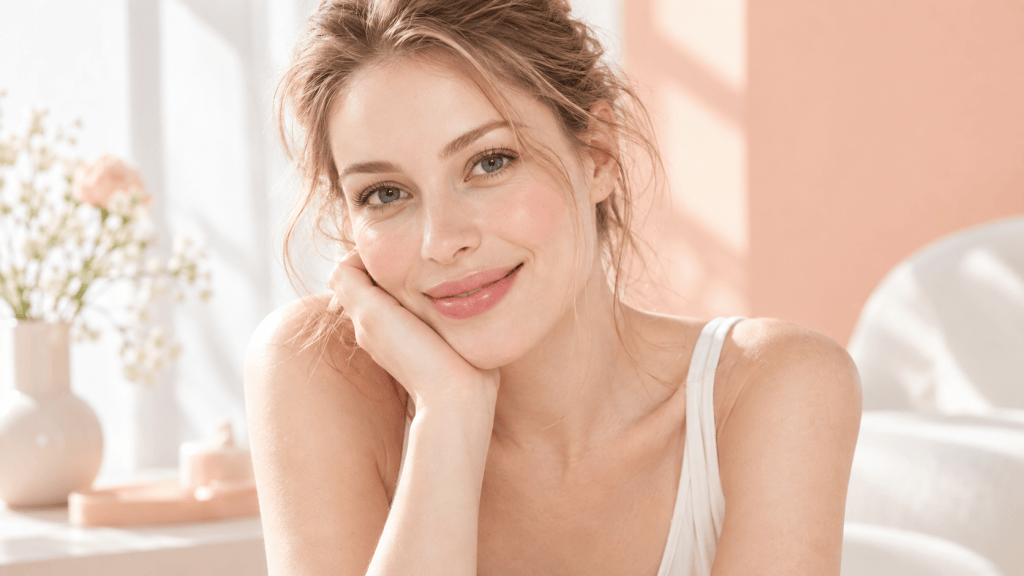
Before considering a procedure, try creating your preferred appearance with makeup.
- Smile and locate the natural fullness beneath the lower lashes.
- Apply a small amount of beige, peach or light pink color.
- Add a very soft taupe or brown shadow immediately below it.
- Blend carefully so that it resembles a natural shadow rather than a drawn line.
- Check the result from the front, side and while smiling.
Under-eye blush, placed close to the lower-eye area and high on the cheeks, can also create a fresh and youthful K-beauty look.
How to Use a K-Pop Idol’s Photo During a Consultation
Celebrity photographs can be useful, but they should communicate your preferred mood—not an expectation of an identical result.
| Avoid saying | Try saying instead |
|---|---|
| “Give me exactly the same eyes.” | “I like the soft, elongated feeling of these eyes.” |
| “Make my eyes as large as possible.” | “I want more definition while maintaining facial balance.” |
| “I want every type of corner surgery.” | “What makes my eyes appear short, and what are my options?” |
| “Add a lot of aegyo-sal.” | “I want subtle fullness that looks natural when I smile.” |
| “Make both eyes perfectly identical.” | “How much can my asymmetry realistically improve?” |
Prepare two or three examples of eyes you like and one or two examples you do not want. Unedited photos of your face without makeup can also help the surgeon understand your natural features.

The Best K-Eye Design Still Looks Like You
A successful result is not measured only by how large the eyes become.
The final result should:
- Look natural without makeup
- Remain balanced with the nose, eyebrows and cheekbones
- Allow the eyes to open and close comfortably
- Preserve natural facial expressions
- Respect ethnic and individual characteristics
- Remain attractive even after beauty trends change
Do not ask only, “Which eyes are popular in Korea?” Ask, “Which eye design best suits my face, expression and identity?”
The true appeal of K-beauty is not making everyone look the same. It is discovering and refining the unique beauty that already exists in each person.
This article provides general information only and does not constitute medical advice. Individual suitability must be determined through an examination and consultation with a qualified medical professional.


Leave a Reply