

The Most Beautiful Eyes Are Not Just Photogenic—They Come Alive in Motion
When people think about Korean eye surgery, they often focus on one question:
“How much bigger will my eyes look?”
But bigger does not always mean more beautiful—and a good result should not be judged by a single, perfectly posed photograph.
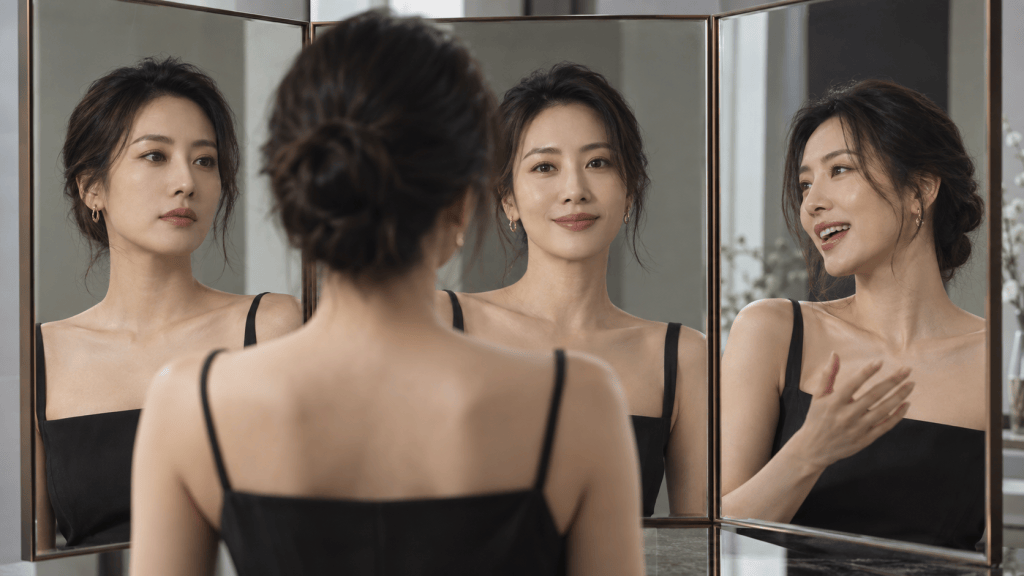
Your eyes are constantly moving. They blink, smile, narrow, widen, and respond to emotion. They communicate warmth, confidence, curiosity, and joy—often before you say a word.
That is why a more sophisticated approach to K-beauty eye surgery is moving beyond static beauty. The real goal is not simply to create larger eyes, but to preserve a natural and attractive expression in everyday life.
It is the difference between eyes that look beautiful in one photograph and eyes that feel naturally expressive in person, on video, and in conversation.
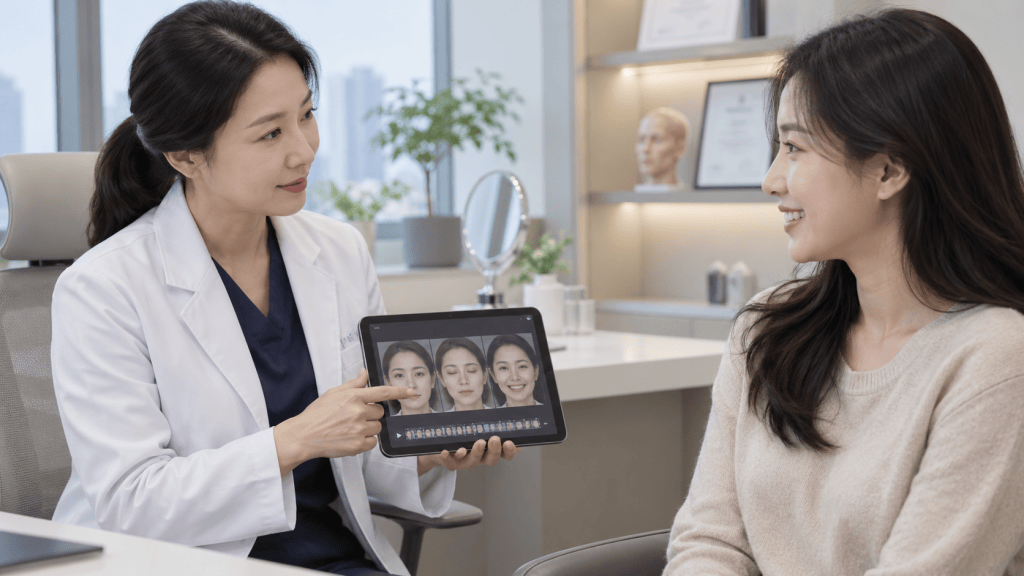
Why Can Eyes Look Different in Photos, Videos, and Real Life?
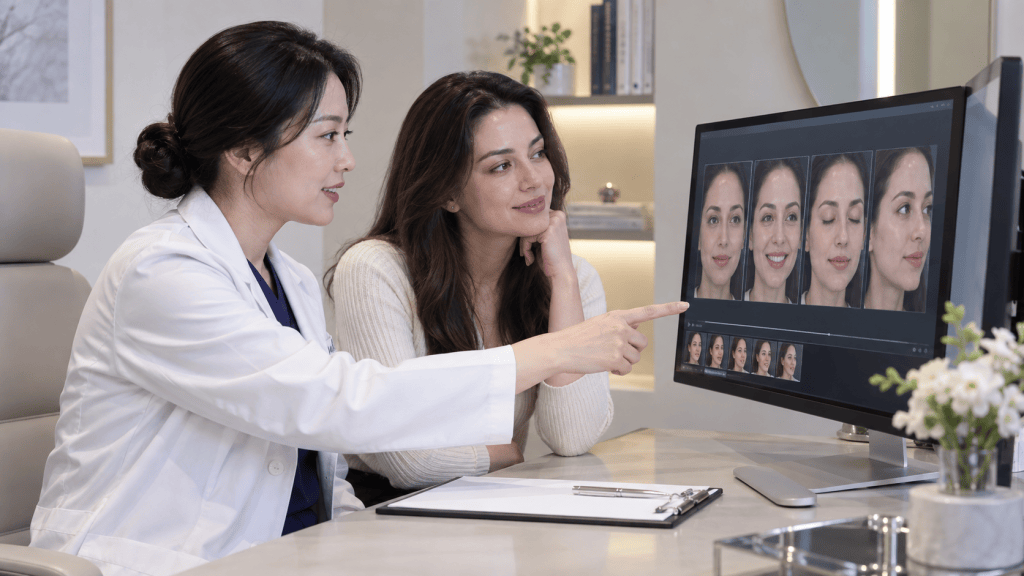
A photograph captures only one fraction of a second. It does not show how the eyelids move while blinking, how the eye shape changes during a smile, or whether the eyelid crease looks natural from different angles.
Video and real-life interaction reveal much more.
They show:
- How smoothly the eyelids open and close
- Whether the crease remains balanced during facial expressions
- How the eyes change when smiling
- Whether both eyes move harmoniously
- Whether the result matches the eyebrows and overall facial proportions
- Whether the expression feels natural rather than surgically created
This is why an attractive result should be evaluated not only through a front-facing image, but also through movement, expression, and multiple viewing angles.
Static Beauty vs. Dynamic Beauty
| Evaluation Area | Static Beauty | Dynamic Beauty |
|---|---|---|
| Main reference | A still photograph | Facial movement and expression |
| Typical focus | Eye size and crease shape | Balance, movement and emotional expression |
| Common poses | Neutral front-facing view | Smiling, talking, blinking and looking sideways |
| What it reveals | Shape at one particular moment | How the eyes behave in everyday life |
| Possible limitation | Lighting and posing can affect the result | Requires a more comprehensive evaluation |
| Desired outcome | Attractive-looking eyes | Eyes that look and feel naturally expressive |
The New K-Beauty Standard: Designing Harmony, Not Just Size
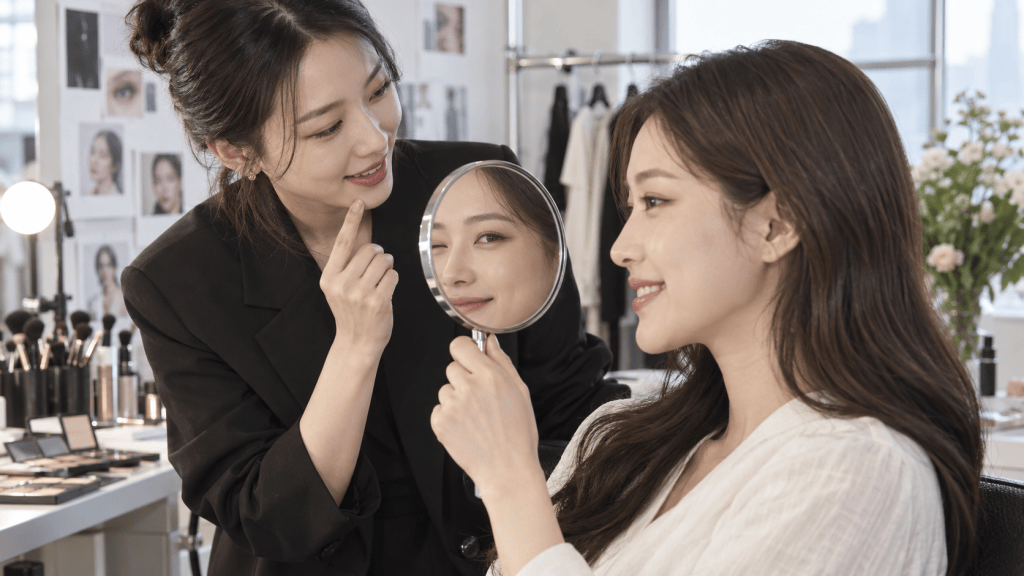
Natural-looking eye surgery is not simply about making a crease or widening the eyes.
The surgeon must consider the relationship among several features:
- Eyelid skin thickness
- Existing crease shape
- Eyelid-opening strength
- Amount and position of eyelid fat
- Distance between the eyes and eyebrows
- Natural eye angle
- Facial width and overall proportions
- Differences between the left and right eyes
- The patient’s usual expressions and desired image
The same eyelid design will not suit every face. A crease that looks elegant on one person may appear too high, deep, or artificial on another.
For this reason, the most refined result is often not the most dramatic one. It is the result that appears to belong naturally to the individual.
What Makes Eyes Look Natural in Motion?
1. A Crease That Does Not Dominate the Face
A very high or deep crease can attract attention when the face is still. During blinking or smiling, however, it may appear stronger than expected.
A natural crease should complement the eye—not become the first and only feature people notice.
2. Balance Between Eye Size and Eyelid Function
The eyes should not only appear open; the eyelids should also move comfortably. Excessive correction may create an unnatural or surprised expression and can affect eyelid closure or eye comfort.
The American Society of Plastic Surgeons lists possible risks of eyelid surgery such as dry eyes, difficulty closing the eyes, swelling, infection, asymmetry, and the possible need for revision surgery.

3. Harmony When Smiling
Smiling changes the entire area around the eyes. The cheeks rise, the lower eyelids become fuller, and the outer corners may narrow slightly.
These changes are not flaws. They are part of a genuine human expression.
The goal should not be to keep the eyes maximally open during every expression. It should be to preserve warmth, softness, and personality.
4. Natural Asymmetry
Nearly every face has some degree of asymmetry. One eyebrow may sit higher, one eye may open more widely, or the eyelid creases may differ slightly.
Surgery may improve noticeable imbalance, but absolute symmetry is rarely realistic. A responsible consultation should distinguish between correctable asymmetry and the natural differences that make a face unique.
5. Compatibility with the Whole Face
Beautiful eyes cannot be designed in isolation.
The nose, eyebrows, cheekbones, forehead, and facial width all influence how the eyes are perceived. A successful design should enhance the entire face rather than reproduce another person’s eyes.
“K-Pop Idol Eyes” Are Not One Specific Shape
Many international patients arrive in Korea carrying photographs of K-pop idols or actors. These references can be helpful because they communicate a preferred mood—soft, elegant, youthful, sophisticated, or expressive.
However, copying a celebrity’s exact eye shape may not produce the same impression.
The celebrity’s result is influenced by:
- Natural bone structure
- Eyebrow position
- Facial proportions
- Makeup and eyelashes
- Lighting and camera lenses
- Facial expressions
- Professional photo and video editing
A better consultation question is not:
“Can you give me these exact eyes?”
Instead, ask:
“Which characteristics of this look can be adapted naturally to my face?”
That small change leads to a more personal and realistic design.
What to Bring to an Eye-Surgery Consultation
Do not rely on one filtered selfie. Prepare visual references that show how your eyes actually look and move.
| What to Prepare | Why It Helps |
|---|---|
| Front-facing photo with a neutral expression | Shows basic eye shape and facial balance |
| Natural smiling photo | Shows how the cheeks and eyelids interact |
| Short video while talking | Reveals natural movement and expressions |
| Video of normal blinking | Helps assess eyelid movement |
| Left and right three-quarter views | Shows depth and asymmetry |
| Photos without makeup or filters | Provides a more accurate reference |
| Two or three preferred examples | Communicates the style or mood you like |
| Examples you do not like | Clarifies what you want to avoid |
| Medical and eye-health history | Supports an appropriate safety assessment |
Questions to Ask Your Surgeon
Before choosing a procedure, consider asking:
- What aspects of my natural eyes should be preserved?
- How will the proposed design look when I smile or blink?
- Is my concern related to the crease, excess skin, eyelid-opening function, eyebrow position, or another factor?
- How might my natural asymmetry affect the outcome?
- Is the proposed crease height suitable for my eyelid structure?
- Could this procedure affect eye closure or dryness?
- Can I see results from patients with facial features similar to mine?
- What qualifications and specific eyelid-surgery experience do you have?
- Where will the procedure be performed, and is the facility appropriately accredited?
- What aftercare is available after I return to my home country?
Professional organizations also recommend asking about the surgeon’s training, certification, experience, facility accreditation, candidacy criteria, risks, and management of complications.
Four Warning Signs of an Overly Photo-Centered Consultation
Be cautious if a consultation:
- Promises that one standardized eye shape will suit everyone
- Focuses only on making the eyes as large as possible
- Uses heavily edited before-and-after photographs
- Does not discuss medical history, eye comfort, risks, recovery, or aftercare
Cosmetic surgery outcomes cannot be guaranteed. Patients should carefully consider their reasons, expectations, costs, recovery, and potential risks before proceeding.
What Should International Patients Consider?
For overseas patients, the operation itself is only one part of the journey. Communication and follow-up care are equally important.
Before booking, confirm:
- Whether consultation and consent documents are available in your language
- Who will explain the procedure—the surgeon or a coordinator
- Whether you will meet the operating surgeon before making your final decision
- How long you should remain in Korea
- When stitches, if used, will be removed
- What symptoms require urgent medical attention
- How follow-up care will be provided after you leave Korea
- Who will assist you if a complication occurs
Swelling and bruising are common after eyelid surgery, and final healing may take considerably longer than the first visible recovery stage. The American Society of Plastic Surgeons notes that many patients are socially presentable after approximately 10–14 days, while final healing can take several months. Individual recovery varies.
The Best Result Is Still You

The future of K-beauty eye surgery is not about creating the same eyes for everyone.
It is about understanding how beauty changes with movement—how the eyes blink, smile, communicate, and connect with others.
A refined result should not erase your identity. It should preserve the expressions that already belong to you while creating greater balance and confidence.
Because truly beautiful eyes are not frozen in a photograph.
They come alive when you do.
Medical Disclaimer
This article is intended for general educational information only and does not constitute medical advice, diagnosis, or a recommendation for any specific procedure or provider. Surgical suitability, expected outcomes, risks, and recovery vary by individual. Consult an appropriately qualified medical professional for a personalized assessment.
Suggested SEO Description
Discover why modern Korean eye surgery is moving beyond bigger eyes and static before-and-after photos. Learn how blinking, smiling, facial balance, and natural expression can shape a more personalized K-beauty result.
Suggested Keywords
Korean eye surgery, K-beauty eyes, natural double eyelid surgery, expressive eye design, Korean blepharoplasty, Seoul plastic surgery, eye surgery consultation, K-medical tourism, natural-looking eyelid surgery, dynamic facial beauty
Suggested Hashtags
#KBeauty #KMedical #KoreanEyeSurgery #DoubleEyelidSurgery #Blepharoplasty #NaturalBeauty #KoreanPlasticSurgery #MedicalTourismKorea #BeautyInMotion #SeoulBeauty


Leave a Reply