

A K-Beauty Medical Journey Designed for International Women
What if your visit to Seoul could be more than a beauty trip?
For many international women, Korean eyelid surgery is not simply about creating bigger eyes. It is about achieving a clearer, fresher, and more harmonious expression—while preserving the features that make each face unique.
Korea is known for highly personalized eye design, refined surgical techniques, and extensive experience with different eyelid structures. But successful surgery depends on much more than choosing a popular clinic or an attractive social-media photo.
It requires:
- A qualified and experienced surgeon
- A design suited to your facial anatomy
- Clear communication before surgery
- Sufficient recovery time
- Reliable postoperative care
- A realistic understanding of risks and results
Here is a detailed seven-day guide to planning a safer and more informed K-beauty medical journey in Seoul.
Important: Seven days may be enough for an initial consultation, surgery, and early follow-up, but it is not full recovery. Many patients still have visible swelling or bruising when they leave Korea. Your surgeon must determine whether the schedule is medically appropriate for you.
Why Do International Women Choose Korea for Eyelid Surgery?

Korean eye surgery is often associated with double-eyelid surgery, but modern K-beauty medical care can involve a much more detailed analysis.
A surgeon may assess:
- Eyelid skin thickness
- Existing eyelid crease
- Amount and position of eyelid fat
- Strength of the eyelid-opening muscles
- Eyebrow-to-eye distance
- Eye length and angle
- Degree of asymmetry
- Presence of ptosis
- Previous surgery or scarring
- Dry-eye symptoms
- Overall facial proportions
- The patient’s ethnic and individual characteristics
The objective should not be to give every patient the same “Korean-style eyes.” A good result should complement the patient’s own face, identity, and natural expression.
The Essential Principle
Do not ask: “Which eyes are the most beautiful?”
Ask: “Which design is most harmonious with my face?”
Your 7-Day Seoul Eyelid Surgery Plan
At a Glance
| Day | Main Plan | Medical Priority | Recommended Activity Level |
|---|---|---|---|
| Day 1 | Arrival and rest | Recover from the flight | Very light |
| Day 2 | In-person consultation and examinations | Confirm surgeon, procedure, risks, and aftercare | Light |
| Day 3 | Surgery day | Procedure and immediate recovery | Rest only |
| Day 4 | First recovery day | Swelling, wound care, medication | Minimal |
| Day 5 | Early follow-up | Check healing and possible complications | Light walking only if approved |
| Day 6 | Recovery-focused Seoul experience | Protect the surgical area | Calm indoor activities |
| Day 7 | Final check and departure decision | Confirm fitness to travel and follow-up plan | Surgeon-approved only |
Day 1: Arrive in Seoul and Let Your Body Recover
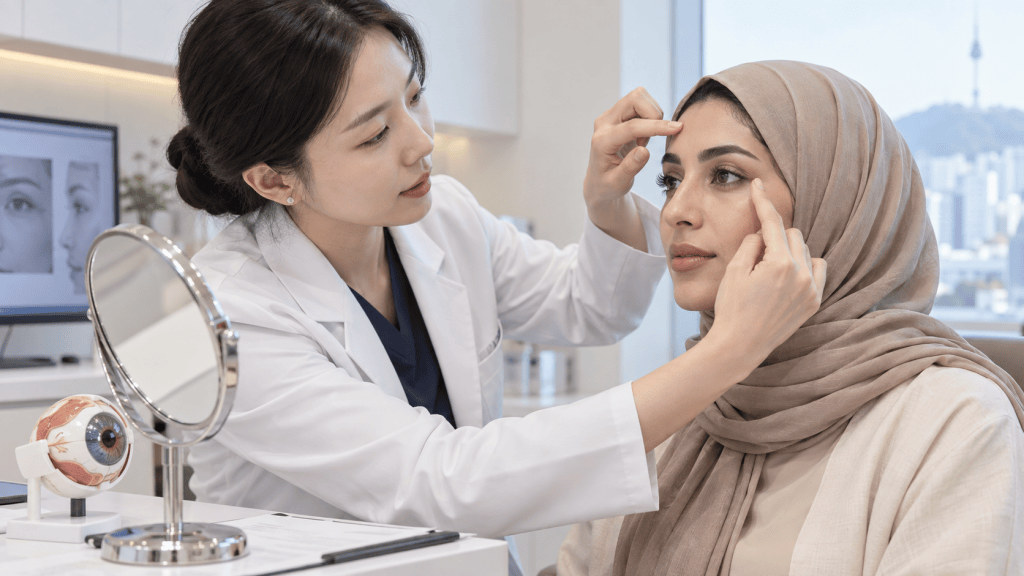
Do not schedule surgery immediately after a long international flight.
Jet lag, dehydration, poor sleep, stress, and changes in your eating schedule can affect how you feel during the consultation and surgery. Your surgeon may also need time to review your medical history and determine whether you are a suitable candidate.
Recommended Plan
- Check into accommodation close to the clinic.
- Drink water regularly unless a doctor advises otherwise.
- Eat a balanced, low-sodium meal.
- Avoid alcohol.
- Avoid intense exercise.
- Sleep early.
- Prepare your passport, medical records, and medication list.
- Confirm the clinic appointment and interpreter arrangements.
Choose Your Accommodation Carefully
Your hotel or serviced residence should ideally have:
- Short travel time to the clinic
- Elevator access
- A refrigerator for approved cold packs or food
- A pharmacy or convenience store nearby
- Easy access to taxis
- A quiet and clean sleeping environment
- Space for a companion, if someone is traveling with you
- Flexible booking in case your stay must be extended
A glamorous hotel across the city may be less practical than a comfortable room within 10–20 minutes of the clinic.
Day 2: Consultation, Medical Assessment, and Eye Design
This is the most important day before surgery.
Your consultation should be more than choosing a crease height from a collection of photographs. The surgeon should evaluate your anatomy, listen to your preferences, explain realistic outcomes, and discuss potential complications.
Information You Should Give the Surgeon
Tell the medical team about:
- Current prescription and nonprescription medicines
- Vitamins, supplements, and herbal products
- Medication allergies
- Previous allergic reactions
- Eye diseases or previous eye procedures
- Dry eyes or frequent eye irritation
- Difficulty fully closing your eyes
- Vision problems
- Thyroid disease
- Diabetes
- High blood pressure
- Bleeding or clotting disorders
- Previous cosmetic procedures
- Previous eyelid surgery
- Smoking or nicotine use
- Pregnancy or possible pregnancy
- Previous problems with anesthesia
- Tendency to develop thick or raised scars
Never hide medical information because you are afraid the clinic may postpone the procedure. A postponed operation is far safer than an avoidable complication.

The Surgeon Should Examine
| Assessment Area | Why It Matters |
|---|---|
| Eyelid skin | Helps determine whether incision or skin removal may be considered |
| Eyelid fat | Affects fullness, heaviness, and contour |
| Muscle function | May identify possible eyelid-opening weakness or ptosis |
| Eye symmetry | Perfect natural symmetry is uncommon; pre-existing differences should be documented |
| Brow position | Low or uneven brows can change the appearance of the upper eyelids |
| Tear function | Dry-eye symptoms may influence surgical planning and recovery |
| Previous scars | Important for revision surgery and healing expectations |
| Facial proportions | Helps create a result that fits the entire face |
| Personal preference | “Natural,” “defined,” and “dramatic” can mean different things to different patients |
Bring Reference Photographs—but Use Them Correctly
Bring three types of images:
- Results you like
- Results you do not like
- Photographs of your own eyes before swelling, makeup, filters, or cosmetic procedures
Reference images should communicate preferences, not guarantee an identical result. Your anatomy may not safely support the same design.
Eyelid Procedures You May Hear About
| Procedure | General Purpose | Important Question to Ask |
|---|---|---|
| Non-incisional double-eyelid procedure | Creates a crease using small openings or sutures | Is my eyelid anatomy suitable, and how stable may the crease be? |
| Incisional double-eyelid surgery | Creates a crease through an incision and may address tissue or skin | Where will the scar be, and how long may it remain visible? |
| Ptosis correction | Addresses weakness or imbalance in eyelid elevation | Do I have clinically significant ptosis, and how was it diagnosed? |
| Epicanthoplasty | Alters the inner eye-corner fold | Could it increase visible scarring, redness, or an unnatural appearance? |
| Lateral canthoplasty | Modifies the outer corner of the eye | How much meaningful change is anatomically possible? |
| Lower-eyelid surgery | Addresses lower-eyelid fat, skin, or contour | What is the risk of lower-lid pulling, dryness, or asymmetry? |
| Under-eye fat repositioning | Repositions selected fat to improve under-eye contour | Will this address the cause of my under-eye shadow or only part of it? |
| Revision eyelid surgery | Corrects or improves a previous surgical result | How does scar tissue change the risks, technique, and recovery period? |
More procedures do not automatically create a better result. If several procedures are recommended, ask why each one is necessary and what your result may look like without it.

15 Questions Every International Patient Should Ask
- Are you the surgeon who will personally perform my operation?
- What is your medical specialty and professional qualification?
- How often do you perform this specific procedure?
- Why is this technique suitable for my eyelid anatomy?
- What result is realistically achievable for me?
- What asymmetries do I already have?
- Where will the procedure take place?
- What type of anesthesia or sedation will be used?
- Who will administer and monitor the anesthesia?
- What are the main risks in my individual case?
- How does the clinic respond to an emergency?
- Who can I contact after business hours?
- How many follow-up appointments are included?
- What happens if I develop a complication after returning home?
- What expenses are excluded from the quoted price?
Professional guidance recommends asking specifically about the proposed technique, recovery period, risks, management of complications, and options if the cosmetic outcome is unsatisfactory.
Day 3: Surgery Day
Follow the clinic’s instructions exactly. Do not assume that instructions from a friend, influencer, or previous procedure apply to you.
Before Leaving Your Accommodation
- Follow the clinic’s fasting instructions.
- Do not wear eye makeup, false eyelashes, or contact lenses.
- Remove jewelry around the face and ears if instructed.
- Wear loose, comfortable clothing.
- Choose a top that opens at the front.
- Bring identification and required medical documents.
- Bring glasses if you usually wear contact lenses.
- Arrange for a responsible adult to accompany you if sedation or anesthesia is used.
- Confirm transportation back to your accommodation.
- Do not drive after sedation or anesthesia.
Before Signing the Consent Form
Confirm in writing:
- The exact procedure
- The surgical areas
- The surgeon’s name
- The anesthesia plan
- The total price
- Included follow-up visits
- Medication and dressing costs
- Revision and complication policies
- Emergency contact details
- Whether clinical photographs may be used publicly
Do not sign a consent form you cannot understand. Request a qualified interpreter or a translated explanation.
Day 4: The First Full Recovery Day
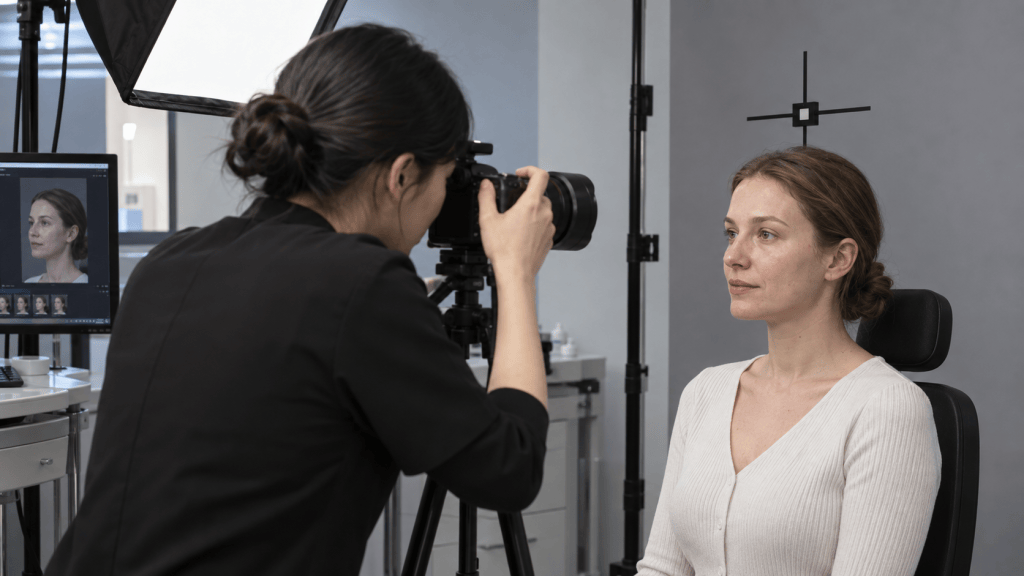
Swelling, bruising, temporary irritation, dry eyes, and discomfort may occur during initial healing. Your medical team may recommend medication, approved cold compresses, ointment, or other individualized care.
Recovery Priorities
- Take only medications approved by your surgeon.
- Use cold compresses only as directed.
- Keep your head elevated while resting.
- Do not rub or press your eyes.
- Do not remove dressings or clean the incision unless instructed.
- Avoid alcohol and smoking.
- Avoid strenuous activity.
- Limit activities that strain or irritate your eyes if advised.
- Protect the area from direct sunlight.
- Contact the clinic if symptoms seem unusual or rapidly worsen.
What to Avoid
| Avoid | Why |
|---|---|
| Alcohol | May interfere with recovery and prescribed medication |
| Smoking and nicotine | Can impair wound healing |
| Intense exercise | May increase swelling or bleeding risk |
| Sauna and steam room | Heat may worsen swelling |
| Swimming | May expose the healing area to contamination |
| Eye makeup | May irritate or contaminate the incision |
| Contact lenses | May be uncomfortable or inappropriate during early healing |
| Rubbing the eyes | Can disturb healing tissues |
| Very salty meals | May contribute to fluid retention |
| Unapproved medicine or supplements | Some may affect bleeding or interact with medication |
Always follow your own surgeon’s instructions when they differ from general guidance.
Day 5: Follow-Up Examination
The clinic may evaluate:
- Swelling and bruising
- Incision condition
- Bleeding or fluid collection
- Signs of infection
- Ability to open and close the eyes
- Eye comfort and dryness
- Early asymmetry
- Whether wound care should change
- Timing of suture removal, if applicable
- Whether travel remains appropriate
Do not panic about early asymmetry. Swelling can differ between the two eyes. However, the medical team—not social media—should determine whether a change is part of ordinary healing.
Ask for a Written Aftercare Record
Before leaving the clinic, obtain:
- Procedure name
- Date of surgery
- Surgeon’s name
- Type of anesthesia
- Medication list
- Wound-care instructions
- Follow-up schedule
- Emergency contact information
- Warning signs requiring immediate care
- Instructions for your doctor at home
- Relevant operative or medical records, if available
Keep digital copies on your phone and email.

Day 6: A Recovery-Focused Seoul Experience
This is not the day for an ambitious sightseeing schedule.
If your surgeon approves light activity, choose short, calm, low-exertion experiences. Your priority is healing—not completing a travel checklist.
More Recovery-Friendly Options
- A quiet café near your accommodation
- A short, gentle walk
- A calm museum visit
- Light shopping with frequent breaks
- Room-service dining or a nearby restaurant
- A scenic taxi ride instead of extended walking
Activities to Postpone
- Hiking
- Running
- Fitness classes
- Sauna or jjimjilbang
- Swimming
- Amusement parks
- Crowded nightlife
- Heavy shopping bags
- Long outdoor exposure
- Alcohol-centered activities
- Facials or beauty treatments around the eyes
Wear sunglasses only if your surgeon approves them and they do not press against the surgical area.
Day 7: Final Check and Preparing to Leave Korea
Do not decide independently that you are fit to fly. Ask your surgeon whether your recovery is stable enough for travel.
Before Departure, Confirm:
- Is flying medically acceptable?
- Are the sutures ready for removal?
- If not, who will remove them at home?
- What level of swelling is expected?
- Which symptoms require urgent treatment?
- When can I wash my face normally?
- When can I wear eye makeup?
- When can I use contact lenses?
- When can I exercise?
- When can I resume alcohol?
- When should I send follow-up photographs?
- When will an online follow-up take place?
- Who pays if additional treatment is required?
- How can a doctor in my country contact the Korean clinic?
Your Travel Recovery Kit

| Item | Purpose |
|---|---|
| Prescription medication | Continue the surgeon’s approved regimen |
| Written medical instructions | Useful during travel or local medical treatment |
| Clinic contact information | Enables quick communication |
| Glasses | Alternative to contact lenses |
| Clean gauze or approved supplies | Use only as instructed |
| Sunglasses | Light protection if medically approved |
| Neck pillow | May help keep the head supported |
| Water | Helps avoid dehydration, subject to medical guidance |
| Travel insurance documents | Useful if covered care is required |
| Before-and-after records | Helps another doctor understand recent changes |
Understanding the Real Recovery Timeline
A seven-day visit covers only the beginning of recovery.
| Period | What You May Experience |
|---|---|
| First 24–72 hours | Swelling, bruising, tightness, irritation, or discomfort may be prominent |
| Days 4–7 | Early healing continues; some patients may have sutures removed depending on the procedure |
| Days 7–14 | Swelling and bruising may gradually become less noticeable |
| Several weeks | The eyelid contour may continue changing |
| Several months | Scars and final definition may continue to mature |
According to the American Society of Plastic Surgeons, many eyelid-surgery patients may feel socially presentable after approximately 10–14 days, while final healing can take several months. Individual recovery varies substantially.
Plan important photography, weddings, professional appearances, and long-distance business events with a generous recovery margin.
Budget Planning: Look Beyond the Advertised Surgery Price
The lowest advertised price may not represent the final medical cost.
Ask for an Itemized Written Quotation
| Budget Category | What to Confirm |
|---|---|
| Consultation | Is the initial consultation included? |
| Medical tests | Are blood tests or eye examinations charged separately? |
| Surgeon’s fee | Is the quoted surgeon personally performing the procedure? |
| Facility fee | Is the operating-room cost included? |
| Anesthesia | What type is planned, and is monitoring included? |
| Medication | Are prescriptions and ointments included? |
| Follow-up care | How many postoperative visits are included? |
| Suture removal | Is it included, and when will it occur? |
| Interpretation | Is a professional interpreter provided? |
| Accommodation | How many nights should be reserved? |
| Transportation | Are airport and clinic transfers included? |
| Extended stay | What happens if you cannot fly as planned? |
| Complication care | Which additional treatments are covered? |
| Revision policy | What is included, excluded, and time-limited? |
| Home-country care | Will the clinic coordinate with your local doctor? |
A Smart Budget Formula
Total Medical Journey Budget = Procedure + Tests + Anesthesia + Medication + Accommodation + Flights + Local Transportation + Meals + Interpretation + Follow-Up + Emergency Reserve
Keep an emergency reserve and choose flexible airfare and accommodation where possible.
How to Choose a Clinic Safely
Positive Signs

- The medical institution can be verified through an official system.
- The surgeon’s identity and qualifications are clearly disclosed.
- You meet the operating surgeon before payment and surgery.
- The consultation includes medical history and anatomical assessment.
- Risks and limitations are explained without pressure.
- You receive written prices and aftercare information.
- The clinic provides reliable postoperative contact.
- Interpretation is accurate and professional.
- The clinic explains how emergencies are handled.
- The clinic is willing to say that a procedure is unnecessary or unsuitable.
Korea’s Medical Korea platform provides information on registered medical institutions serving international patients and describes a registration and accreditation framework for foreign-patient care. Use official registration as a basic screening tool, not as a guarantee of a perfect cosmetic result.
Warning Signs
- “Guaranteed perfect symmetry”
- “Zero risk”
- “No swelling”
- Pressure to pay immediately
- Sudden procedure upgrades on surgery day
- A different surgeon appears after payment
- Refusal to discuss complications
- No after-hours emergency contact
- Heavy dependence on filtered photographs
- Influencer popularity presented as medical qualification
- Large discounts in exchange for unrestricted use of your images
- Promises that every patient can safely combine surgery with an intensive tour
- No clear follow-up plan after you return home
Know the Possible Risks
Eyelid surgery may involve risks including:
- Bleeding
- Infection
- Swelling and bruising
- Dryness or irritation
- Difficulty closing the eyes
- Changes in sensation
- Persistent pain
- Visible or unfavorable scarring
- Asymmetry
- Lower-eyelid position changes
- Sensitivity to bright light
- Need for revision surgery
- Temporary or permanent vision changes in rare cases
- Anesthesia-related complications
Professional plastic-surgery guidance specifically lists risks such as bleeding, infection, dry eyes, difficulty closing the eyes, lid-position problems, persistent pain, and possible revision surgery. Rare but serious vision complications are also recognized.
A responsible clinic will explain risks clearly. Honest risk communication is a sign of professionalism—not a reason to distrust the surgeon.
When to Seek Urgent Medical Attention
Contact your clinic immediately or seek emergency care if you experience symptoms such as:
- Sudden or worsening vision changes
- Severe or rapidly increasing pain
- Rapidly expanding swelling
- Significant or uncontrolled bleeding
- Difficulty breathing
- Loss of consciousness
- Severe allergic symptoms
- High fever or signs of serious infection
- Any symptom your surgeon identifies as an emergency
For a serious emergency in Korea, call 119 for an ambulance or emergency medical assistance. The official Korea travel-safety information also advises international visitors to request English interpretation by saying “English please” or “Interpreter please.” The 1330 Korea Travel Hotline offers travel assistance in multiple languages.
Save these numbers before surgery:
| Service | Number |
|---|---|
| Ambulance and medical emergency | 119 |
| Police | 112 |
| Korea Travel Hotline | 1330 |
| Your clinic’s emergency contact | Save before surgery |
| Your hotel reception | Save at check-in |
| Your embassy or consulate | Save before departure |
The International Patient’s Final Checklist
Before Booking
- Verify the clinic through official sources.
- Verify the surgeon’s identity and qualifications.
- Request a video consultation.
- Explain your desired result in clear language.
- Disclose your complete medical history.
- Request a detailed quotation.
- Ask about revision and complication policies.
- Confirm interpreter availability.
- Review visa and entry requirements.
- Review travel-insurance exclusions for elective treatment.
Before Flying to Korea
- Receive preoperative instructions in writing.
- Confirm which medications or supplements require medical review.
- Prepare medical records and allergy information.
- Book flexible flights.
- Reserve accommodation near the clinic.
- Arrange a companion if possible.
- Save emergency and clinic contacts.
- Leave extra days in case recovery is slower than expected.
Before Surgery
- Meet the surgeon who will operate.
- Confirm the exact procedure.
- Confirm anesthesia arrangements.
- Discuss risks and realistic outcomes.
- Review the consent form in a language you understand.
- Confirm after-hours medical support.
- Confirm postoperative appointments.
- Confirm how your photographs may be used.
Before Returning Home
- Receive the surgeon’s permission to travel.
- Complete the recommended follow-up examination.
- Obtain your medical and procedure records.
- Receive written wound-care instructions.
- Confirm medication timing across time zones.
- Schedule an online follow-up.
- Identify a qualified doctor near your home.
- Know which symptoms require emergency care.
Your Beauty Should Still Look Like You
The best Korean eyelid surgery should not erase your identity.
It should not force every woman into the same crease, the same eye shape, or the same beauty standard. The goal should be a thoughtful refinement that respects your anatomy, ethnicity, expression, and personal preferences.
Come to Seoul with inspiration—but also with questions.
Choose medical judgment over trends.
Choose facial harmony over imitation.
Choose safe recovery over a rushed itinerary.
Choose a surgeon who listens before designing.
Seoul may be the destination—but an informed decision is where your transformation truly begins.
Medical disclaimer: This article provides general educational and travel-planning information and is not a diagnosis, individualized medical recommendation, or substitute for consultation with a qualified medical professional. Procedure suitability, medication management, postoperative care, and fitness to fly must be determined by your treating surgeon.


Leave a Reply