
Why the Best Korean Eye Surgery Should Make You Look More Like Yourself—not Like Someone Else
By Korea 101 Guide
When you think about Korean eye surgery, what comes to mind?
Perhaps it is the sparkling eyes of a K-pop idol, the delicate gaze of a Korean actress, or the flawless before-and-after images appearing across social media.
It is natural to save those photos for inspiration. But there is one important truth that every young woman considering eye surgery in Korea should know:
Your favorite celebrity’s eyes may be beautiful—but they were designed by her face, not yours.
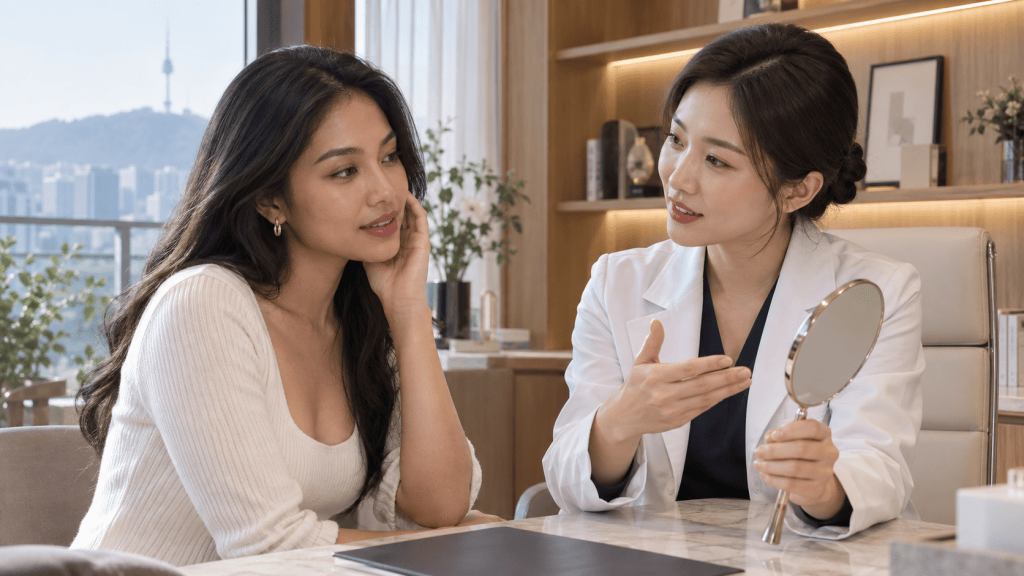
The best Korean eye surgery is not about copying another person’s eyelids. It is about understanding your own facial structure, preserving your identity, and finding an eye shape that brings out the most attractive version of you.
Today’s global aesthetic trend is increasingly moving toward subtle and natural-looking results rather than dramatic, easily recognizable changes.
That is why the real question is no longer:
“How can I get K-pop eyes?”
The better question is:
“What kind of eyes belong naturally on my face?”
The K-Beauty Secret Is Not Bigger Eyes
Korean eye surgery is often described internationally as a way to make the eyes “bigger.” But bigger is not always more beautiful—and it is certainly not the only goal.
A sophisticated eye design considers the relationship between many facial elements:
- The natural height and width of your eyes
- The amount of eyelid skin and fat
- The distance between your eyes
- The position and shape of your eyebrows
- The height and width of your nose
- The strength of the muscles that open your eyes
- The direction of the outer corners
- The balance between your forehead, cheeks, and jawline
- The overall impression you want to create
Two people can request the same eyelid crease and receive completely different results because their facial structures are different.
A wider or higher crease may look elegant on one face but unnatural on another. A very subtle crease may create beautiful definition for one person but may not produce the desired effect for someone with thicker eyelid tissue.
This is why eye surgery should never be treated as choosing a design from a beauty menu.
Your face is not a template.
Which Eyelid Style Matches Your Image?
Terms such as in-fold, in-out fold, and out-fold are commonly used in Korean cosmetic consultations. These descriptions can help you communicate your preferences, but they should not be treated as guaranteed surgical outcomes.
The final design must account for your anatomy, existing crease, skin condition, facial proportions, and the surgeon’s professional assessment.
| Eyelid style | Visual characteristics | General impression | May appeal to someone who wants | Important consideration |
|---|---|---|---|---|
| In-fold | The crease begins very close to the inner corner and gradually becomes visible | Soft, subtle and natural | A discreet change that does not look obviously surgical | The crease may appear less visible in photographs or under heavy makeup |
| In-out fold | The crease begins near the inner corner but remains more consistently visible | Balanced, refined and versatile | Natural definition with a slightly clearer eyelid line | The ideal height depends heavily on eyelid thickness and eye shape |
| Out-fold | The crease remains visibly separated from the inner corner | Open, defined and glamorous | A stronger makeup-friendly or editorial appearance | A crease that is too high or deep may look less natural on some faces |
| Tapered crease | The crease narrows toward the inner corner and widens toward the outer eye | Delicate and harmonious | A graceful transition rather than a sharply defined line | Symmetry and long-term crease stability require careful evaluation |
| Parallel crease | The crease follows a more even line above the eyelashes | Bold, modern and expressive | A clearly visible eyelid crease | It may not suit every eyelid structure or facial proportion |
Remember
These categories are visual references—not a diagnosis and not a promise. Your anatomy may not fit neatly into one style, and a skilled consultation may recommend a customized combination.
“I Want Her Eyes”—Why Celebrity Photos Can Be Misleading
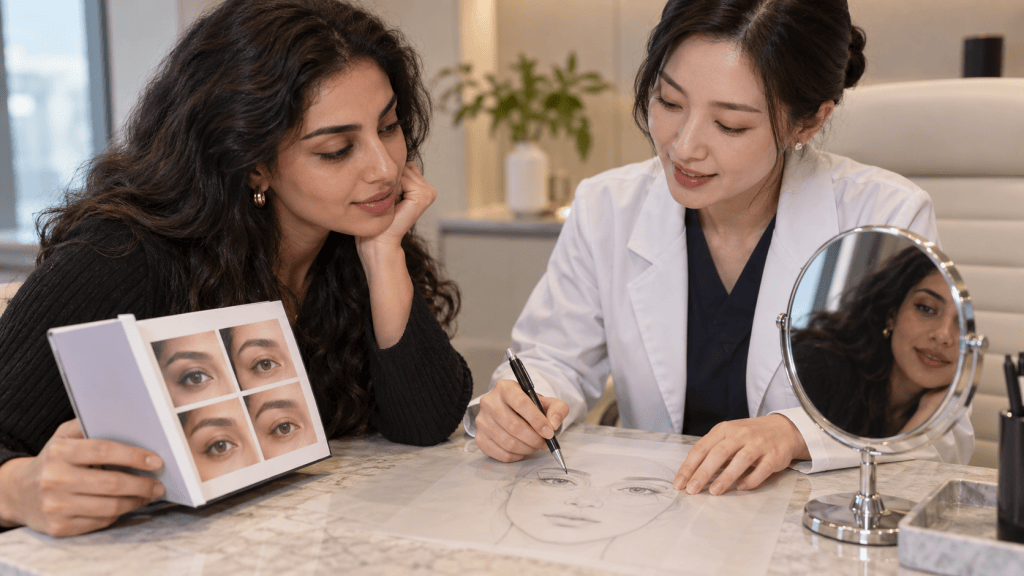
Bringing celebrity photos to a consultation is not necessarily a bad idea. Images can help the medical team understand the mood you prefer.
However, a reference photo should communicate an aesthetic direction, not demand an exact copy.
A celebrity photo may be influenced by:
- Professional makeup and false eyelashes
- Colored contact lenses
- Studio lighting
- Camera angle and lens distortion
- Photo retouching and beauty filters
- Facial expressions
- Previous nonsurgical or surgical procedures
- Naturally different bone and soft-tissue structures
Instead of saying, “I want exactly these eyes,” try saying:
- “I like how natural and soft her eyelid crease looks.”
- “I prefer a crease that remains visible without heavy makeup.”
- “I want my eyes to appear more awake, but not dramatically different.”
- “I like this overall mood, but I want to preserve my own ethnic and facial identity.”
- “I do not want people to immediately notice that I had surgery.”
That change in language can lead to a much more meaningful consultation.
Your Ethnicity Is Not a Problem to Be Corrected
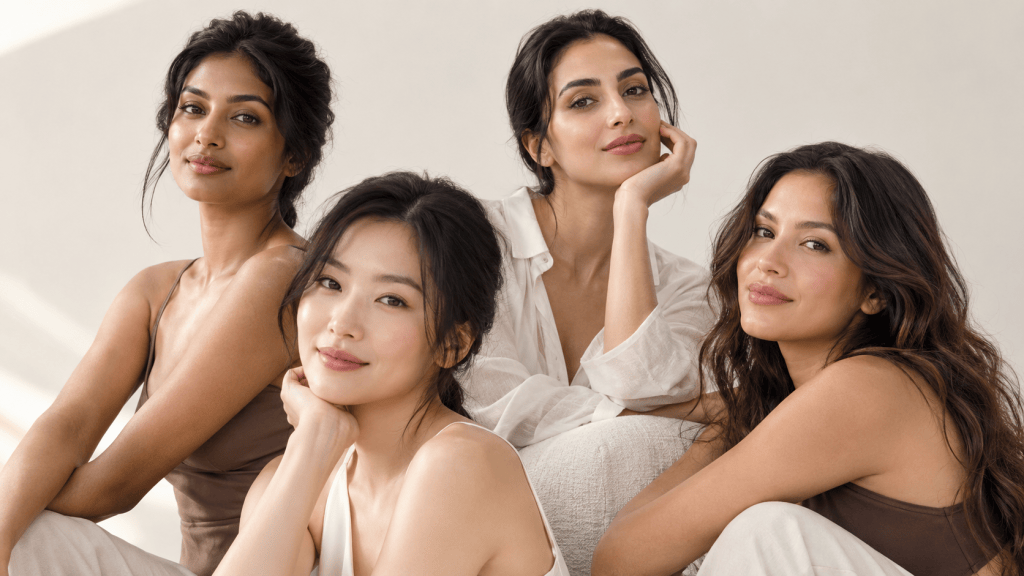
Women travel to Korea from many parts of the world, including Southeast Asia, Europe, North America, the Middle East, Japan, China, Central Asia, and Latin America.
Their facial structures are wonderfully diverse.
A responsible approach to Korean eye surgery should never assume that one eye shape represents the universal standard of beauty. It should not erase the features that reflect your family, ethnicity, or personal identity.
The goal is not to make every patient look Korean.
The goal is to understand:
- Which features you want to preserve
- Which concerns genuinely bother you
- What level of change feels authentic
- How the result will harmonize with the rest of your face
- Whether your expectations are medically realistic
The most beautiful result is often the one that makes friends say:
“You look amazing.”
Not:
“You look like a completely different person.”
What Do You Really Want to Change?
Before choosing a procedure, identify the actual concern.
“I want bigger eyes” is often too broad. You may instead be concerned about one of the following:

| Your concern | What you may actually be noticing | What to discuss during consultation |
|---|---|---|
| “My eyes look tired.” | Heavy upper lids, under-eye shadows, brow position or weak eye-opening function | Whether the tired appearance comes from the eyelid, eyebrow, under-eye area or another factor |
| “My eyes look too small.” | Limited vertical opening, short horizontal width, eyelid coverage or makeup habits | Which dimension is creating the impression and whether surgery is appropriate |
| “My eyes look uneven.” | Natural skeletal asymmetry, different eyelid folds, eyebrow height or muscle strength | How much asymmetry can realistically be improved |
| “My crease disappears.” | Variable folds, swelling, thicker tissue or unstable crease formation | Whether an incision or non-incision approach may be considered |
| “I always look angry.” | Outer-corner direction, eyebrow shape, muscle tension or facial expression | Whether the issue is truly related to the eyelids |
| “Makeup is difficult.” | Hidden crease, eyelid overlap or transfer of eyeliner and eyeshadow | The crease height that would remain functional and natural without becoming excessive |
| “I want the K-pop look.” | A desire for clarity, symmetry, brightness or a specific emotional image | Which exact qualities you admire beyond the celebrity’s identity |
A consultation should begin with the problem you want to solve—not with the name of a procedure you discovered on social media.
Seven Questions to Ask During Your Consultation in Korea
A beautiful clinic interior or a large social media following does not replace a detailed medical consultation.
Ask these questions before making your decision:
1. Who will perform my surgery?
Confirm that the doctor conducting the consultation is the doctor expected to perform the procedure.
2. Why is this design suitable for my face?
The explanation should be based on your anatomy and facial proportions—not simply on what is currently popular.
3. Which of my original features will be preserved?
Tell the doctor what you like about your eyes, not only what you dislike.
4. What degree of asymmetry may remain?
Almost every face has some natural asymmetry. Perfect symmetry should not be promised.
5. What scars, swelling and recovery stages should I realistically expect?
Ask to see results at several stages, not only fully healed photographs.
6. What happens if I experience a problem after returning home?
Clarify postoperative communication, follow-up arrangements and the clinic’s policy for complications or revisions.
7. Can I receive the explanation and consent information in a language I fully understand?
Do not sign a document you cannot confidently understand. Interpretation should help you communicate directly and accurately with the medical team.
Your Personal Eye-Design Brief
Before your consultation, complete this short exercise.
I want my eyes to feel:
- Natural and almost unchanged
- Brighter and more awake
- Soft and feminine
- Defined and sophisticated
- Bold and glamorous
- Youthful but not artificial
I want to preserve:
- My ethnic identity
- My natural eye shape
- My current inner corners
- My unique asymmetry
- My family resemblance
- My ability to wear minimal makeup
I do not want:
- An excessively high crease
- A deep or artificial-looking fold
- An overly round-eyed appearance
- A dramatic change in my identity
- A result designed only for photographs
- Additional procedures that I did not originally request
Take this list to your consultation. It can communicate your values more clearly than a folder filled with celebrity photographs.

Beautiful in Photographs—or Beautiful in Real Life?
Social media has changed the way people evaluate beauty.
A dramatic crease may appear impressive in a carefully selected close-up photograph. But you will live with your eyes in many different situations:
- Without makeup
- Under daylight
- While smiling or laughing
- When you are tired
- During video calls
- In profile and three-quarter views
- Years after the original procedure
A good result should not be designed for only one photograph. It should work with your expressions, daily routine, personality, and long-term appearance.
Ask yourself:
Would I still want this design if no one ever saw my before-and-after photos?
If the answer is yes, your motivation may be coming from a healthy and personal place.
If the answer is uncertain, give yourself more time.
Korea Can Offer Expertise—but You Still Need to Choose Carefully
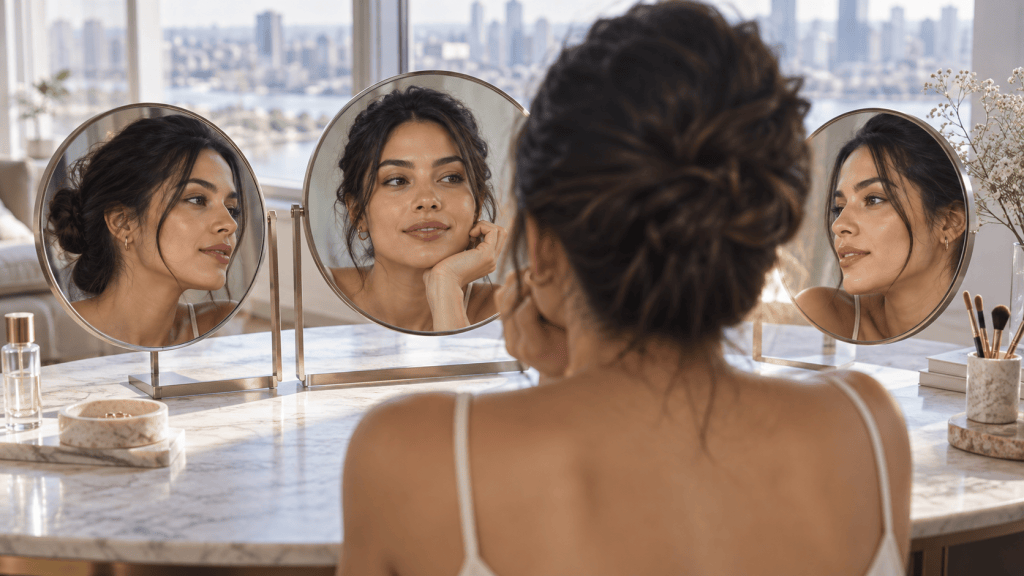
Korea has become one of the world’s most visible destinations for beauty and medical tourism. Seoul received approximately 999,642 international medical tourists in 2024, accounting for about 85% of Korea’s international medical patients that year. The number of Seoul medical institutions registered to treat international patients reached 1,994.
But a popular destination does not make every clinic, recommendation, or package equally suitable.
Before proceeding, check:
- The doctor’s medical credentials and specialty
- Whether the medical institution is properly registered
- Who provides translation and patient coordination
- What is included in the quoted price
- Whether you are being pressured to decide immediately
- Whether risks and limitations are explained clearly
- Whether postoperative care continues after you leave Korea
- Whether the treatment plan respects your original request
Do not select a clinic only because it offers the lowest price, the most dramatic advertisement, or the largest influencer discount.
Your eyes deserve a decision based on trust and understanding.
The Real Meaning of Korean Beauty
K-beauty is often admired for precision, refinement, innovation, and attention to detail.
But its best principle may be something simpler:
Small changes can create meaningful harmony.
You do not need to become someone else to become more confident. You do not need the highest crease, the widest eyes, or the most dramatic transformation.
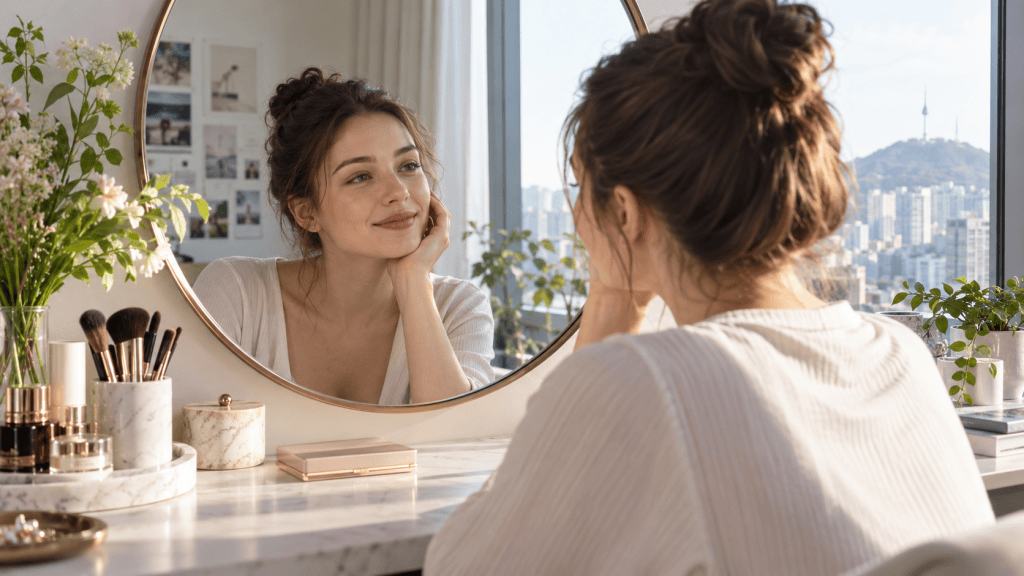
You need a result that feels comfortable when you look in the mirror—a result that respects the face you already have.
So bring your inspiration photos. Explore Seoul. Enjoy K-beauty. Ask every question you need to ask.
But remember:
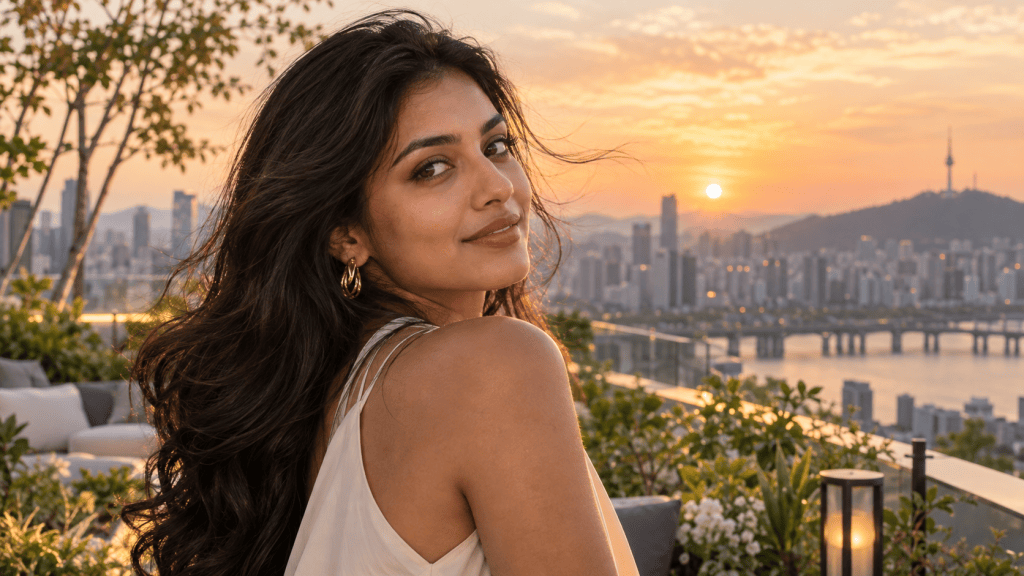
Don’t get K-pop eyes. Get your eyes—refined, balanced and unmistakably yours.
Medical notice: This article provides general educational information and does not replace an in-person consultation, diagnosis, or individualized medical advice. Every surgical procedure involves potential risks, and suitability, technique, recovery and results vary by patient. Consult an appropriately qualified medical professional and make sure you fully understand the procedure, alternatives, costs, aftercare and possible complications before deciding.
Suggested hashtags:
#KBeauty #KoreanEyeSurgery #MedicalKorea #BeautyInSeoul #NaturalBeauty #DoubleEyelidSurgery #KoreanPlasticSurgery #MedicalTourism #SeoulBeauty #BeYourself


Leave a Reply