

What does “comeback” really mean in K-Pop? From concept photos and music shows to photocards, fanchants, fan signs, and pop-up stores, here is everything international fans need to know.
Updated: September 2026
If you are new to K-Pop, one word may confuse you more than almost any other:
Comeback.
In English, a “comeback” usually means returning after being away for a long time.
But in K-Pop?
An artist can release a song in April and make another “comeback” only a few months later.
Nobody disappeared.
Nobody retired.
So what exactly are they coming back from?
The answer reveals something fascinating about K-Pop.
A K-Pop comeback is not simply the release of a new song.
It is a carefully designed cultural event involving music, fashion, storytelling, visual concepts, performances, merchandise, television appearances, social media, and—most importantly—fans.
For international visitors and new K-Pop fans, understanding the comeback system is one of the fastest ways to understand why K-Pop feels different from almost any other music industry in the world.
Welcome to the world of the K-Pop comeback.
What Does “Comeback” Mean in K-Pop?
In K-Pop, a comeback usually means that an artist is beginning a new promotional cycle with new music.
It might involve:
- A full album
- A mini album or EP
- A single
- A new title track
- A completely new visual concept
- New choreography
- Television performances
- Fan events
- Merchandise
- Pop-up stores
- Promotional content
So when fans say:
“My favorite group is having a comeback next month!”
they usually mean:
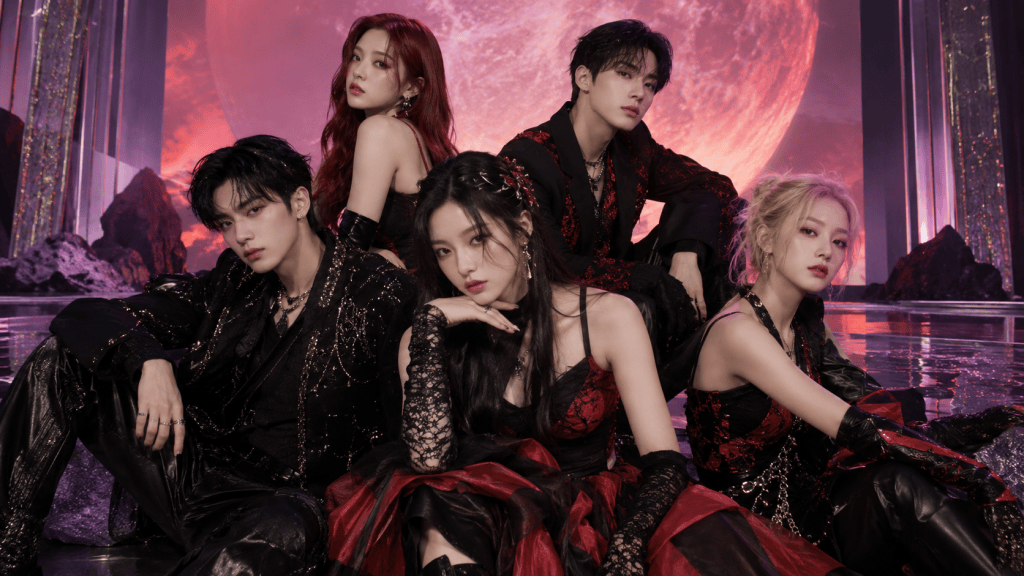
“My favorite group is releasing new music and starting a new promotional era.”
That word—era—is important.
In K-Pop, each comeback can feel like entering an entirely new world.
The hairstyles may change.
The fashion changes.
The album design changes.
The stage design changes.
The choreography changes.
Even the group’s logo may change.
That is why fans often remember K-Pop history by eras rather than simply by songs.
A K-Pop Comeback at a Glance
| Stage | What Happens | Why Fans Care |
|---|---|---|
| Comeback Announcement | New release is officially revealed | The countdown begins |
| Logo / Mood Teaser | First hint of the new concept | Fans start making theories |
| Concept Photos | New fashion and visual identity revealed | Introduces the new “era” |
| Track List | Song titles and credits are announced | Fans discover the album structure |
| Highlight Medley | Short previews of songs are released | Fans hear the album for the first time |
| MV Teaser | Short preview of the music video | Excitement reaches another level |
| Album & MV Release | The title track officially drops | The comeback begins |
| Showcase | New songs and choreography are introduced | First full performance |
| Music Shows | Artists perform on Korean TV programs | Competition, stages, and fan participation |
| Fan Events | Fan signs, video calls, pop-ups, cafés | Fans interact with the comeback |
| Concert / Tour | Songs become part of the live experience | The era reaches global audiences |
1. The Countdown Begins Before the Music
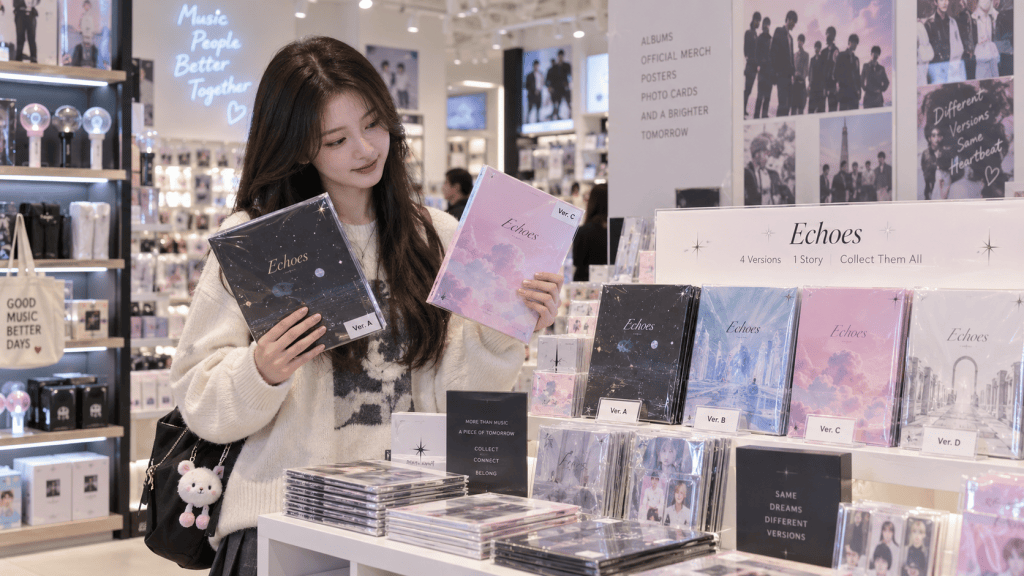
One of the biggest differences between K-Pop and many other music industries is that the experience often begins long before you hear the complete song.
A comeback may start with a mysterious image.
A new logo appears.
The group’s profile pictures suddenly change.
A strange symbol appears on social media.
Maybe there is no explanation.
And then fans begin analyzing everything.
What does the symbol mean?
Is that a clue to the album?
Why is the moon in the background?
Does the number on the poster mean something?
Welcome to K-Pop comeback season.
For dedicated fans, the mystery is part of the entertainment.
2. Concept Photos: When Music Meets Fashion
Before a K-Pop album is released, agencies often publish several sets of concept photos.
These images establish the visual identity of the comeback.
One version might be futuristic.
Another could be romantic.
Another could feel dark and cinematic.
Another may look colorful and playful.
The same artist can transform completely between comebacks.
That ability to reinvent an artist visually is one of K-Pop’s greatest strengths.
A K-Pop comeback is therefore not just:
“What does the song sound like?”
It is also:
“What world are we entering this time?”
This is why fashion, hairstyles, makeup, photography, graphic design, and set design are so important to the K-Pop experience.
3. Why Are There So Many Versions of the Same Album?

This is one of the first things international fans notice.
You walk into a K-Pop store in Seoul.
You find your favorite group’s new album.
Then you realize there are:
Version A
Version B
Version C
and sometimes even more.
But isn’t the music the same?
Often, yes.
The songs may be identical or largely identical.
The physical experience is not.
Different album versions may include different:
- Cover designs
- Photobooks
- Concept photography
- Posters
- Stickers
- Postcards
- Photo cards
- Packaging
- Special collectibles
For many fans, buying a K-Pop album is therefore closer to purchasing a collectible cultural product than simply buying a CD.
4. The Photocard Phenomenon
Then we arrive at one of the most fascinating parts of modern K-Pop fandom:
Photocards.
A photocard is usually a small collectible card featuring an artist or group member.
It may look simple.
But in K-Pop fandom, photocards can become highly desirable collectibles.
Fans may:
- Collect their favorite member
- Trade duplicate cards
- Buy special card sleeves
- Display cards in decorated holders
- Carry them while traveling
- Photograph them at cafés and landmarks
- Search for rare cards
- Trade with other fans around the world
And there is one important element:
Randomness.
If an album contains a random member photocard, you may not know which member you will receive until you open it.
That creates one of the classic K-Pop fan experiences:
You buy an album.
You open it carefully.
You search through the photobook.
Then you find the photocard.
And for one second, everything stops.
“Did I pull my bias?”
This small moment has become a major part of modern K-Pop collecting culture.
5. What Is a “Bias”?
If you spend even one day around K-Pop fans, you will probably hear this word.
A bias is your favorite member of a group.
For example:
“I love the whole group, but she is my bias.”
Simple.
Until another member suddenly becomes extremely charming.
Then you may discover another K-Pop term:
Bias Wrecker.
A bias wrecker is the member who constantly threatens your loyalty to your original favorite.
It sounds dramatic.
That is the point.
K-Pop fandom has developed its own playful international language, and learning that vocabulary is part of the fun.
Essential K-Pop Vocabulary
| K-Pop Term | Meaning | Simple Explanation |
|---|---|---|
| Comeback | New promotional cycle | An artist releases new music and begins promotions |
| Bias | Favorite member | The member you like most |
| Bias Wrecker | Member challenging your bias | The one who makes you question your favorite |
| Maknae | Youngest member | The youngest person in the group |
| Leader | Group leader | Member who often represents and guides the group |
| Fandom | Official fan community | The collective fanbase of an artist |
| Light Stick | Official concert light | A unique fan light associated with an artist |
| Photocard | Collectible artist card | Often included randomly in albums |
| Fanchant | Organized fan chant | Words fans shout during specific parts of a song |
| Title Track | Main promoted song | Usually the song performed most during promotions |
| B-Side | Other album track | A song on the album that is not the main title track |
| Teaser | Preview content | A short preview before the official release |
| Concept Photo | Promotional image | Photos revealing the visual theme of the comeback |
| Showcase | New-release performance event | First major introduction of new songs and choreography |
| Fan Sign | Artist-fan meeting | Selected fans briefly interact with the artist |
| Streaming | Playing music digitally | Fans often stream songs during comeback periods |
| MV | Music Video | One of the centerpiece pieces of comeback content |
| Era | Comeback period or concept | The visual and musical identity surrounding a release |
6. Release Day: When Everything Changes at Once
After days—or sometimes weeks—of teasers, the countdown finally reaches zero.
The music video appears.
The album becomes available.
Social media explodes.
Fans begin streaming.
Reaction videos appear.
Dance challenges begin.
Lyrics are translated.
Fashion is analyzed.
Choreography details are discussed.
Screenshots spread around the internet.
For fans in different time zones, this can mean staying awake at strange hours just to experience the release together.
That shared countdown is important.
K-Pop is not only about consuming content.
It is about experiencing it collectively.
7. Music Shows: The Stage After th

e Music Video
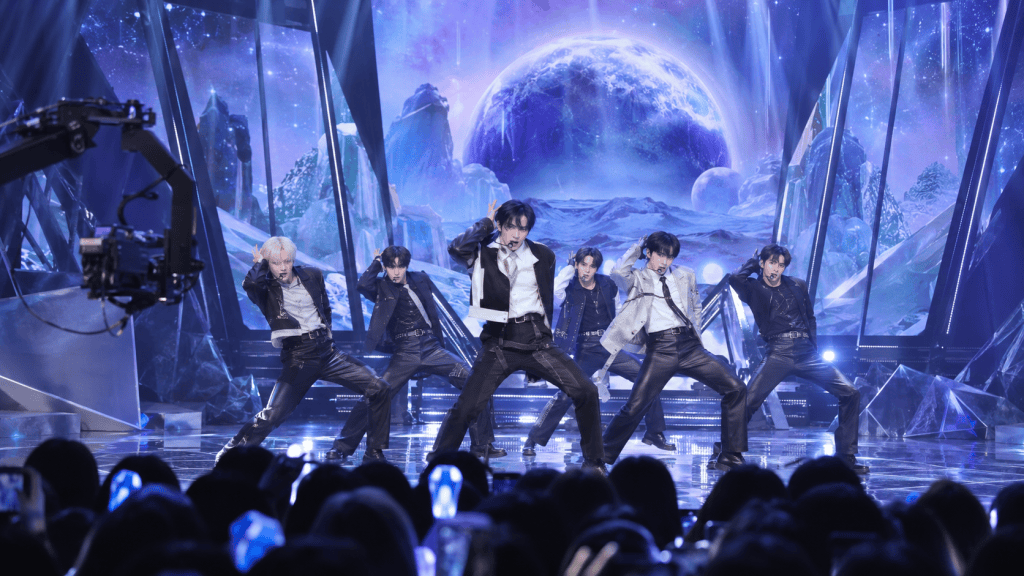
After a comeback begins, many K-Pop artists perform their new songs on Korean television music programs.
Well-known examples include programs such as:
- Music Bank
- M Countdown
- Inkigayo
These shows are much more than ordinary television appearances.
For fans, they provide something new every time.
An artist may wear different outfits.
The camera work changes.
The stage design changes.
The facial expressions change.
Sometimes choreography is slightly modified.
Fans can compare performances from week to week.
And many shows also have ranking systems that can result in a song receiving a weekly win.
Winning can be an emotional moment.
Artists may thank their fans.
Members may cry.
Fans celebrate online.
For new groups especially, a first music-show win can become one of the most memorable moments of their career.
8. Why Do K-Pop Fans Shout During Songs?
Imagine attending a concert.
The artist begins singing.
Suddenly thousands of people shout exactly the same words at exactly the same time.
Welcome to the fanchant.
A fanchant is an organized audience response designed for a particular song.
Fans may shout:
- Group names
- Members’ names
- Key words
- Repeated lyrics
- Special phrases
And they do it at specific moments.
To someone experiencing it for the first time, the precision can be surprising.
But that is exactly what makes it powerful.
The audience does not simply watch the performance.
The audience becomes part of the performance.
9. Light Sticks: More Than a Flashlight
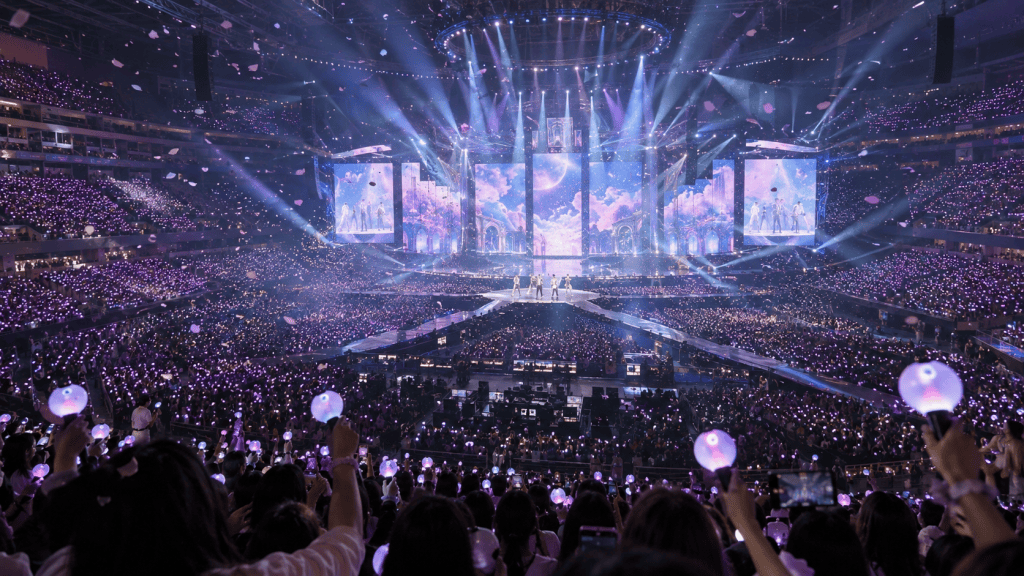
Another instantly recognizable feature of K-Pop fandom is the official light stick.
Different artists often have their own unique light-stick designs.
They may feature:
- Fandom colors
- Group symbols
- Artist logos
- Unique shapes
- Bluetooth connectivity
Inside a large Korean concert venue, thousands of connected light sticks may change color together.
The result?
An entire arena can become part of the stage production.
One moment, thousands of lights are white.
Then blue.
Then pink.
Then the entire stadium moves in waves of color.
It is difficult to fully understand this experience through a video.
You have to stand inside the crowd and see it around you.
That is when you realize:
A K-Pop audience is not simply watching the show.
The audience is helping create the show.
10. Fan Signs: Meeting Your Favorite Artist
Another distinctive part of the K-Pop promotional system is the fan sign.
At an offline fan sign, selected fans receive a brief opportunity to meet artists face-to-face.
Traditionally, fans may bring an album for the artist to sign and have a short conversation.
Online video-call fan events have also made this type of experience accessible to more international fans.
But how do you get selected?
This is important.
Many events use a purchase-based lottery system.
For example, albums purchased through a participating retailer during a designated period may count as entries.
The exact rules vary greatly by event.
So international fans should always check:
- Official announcement
- Eligible retailer
- Application dates
- Identification requirements
- Whether international participation is allowed
- Online or offline format
- Event rules
Korea101 Tip: Never rely only on social-media screenshots. Always verify fan-event rules through the official organizer or retailer.
11. Why Do Fans Buy Multiple Albums?
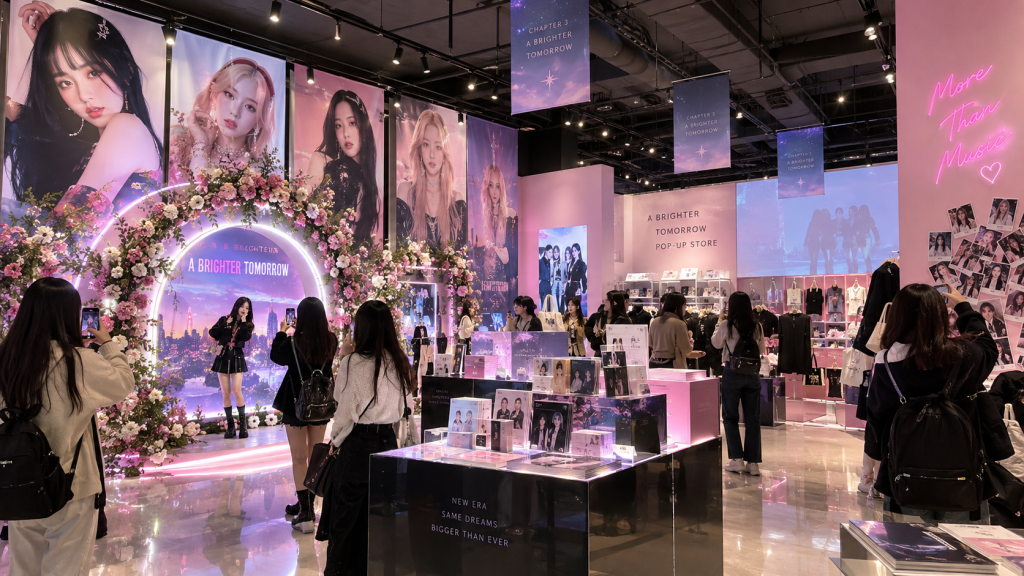
This question can confuse people outside K-Pop.
If the songs are the same, why buy five albums?
There are several reasons.
| Reason | Explanation |
|---|---|
| Different Versions | Albums may have different photography and packaging |
| Random Photocards | Fans may collect specific members |
| Fan Sign Entries | Some events use album purchases as lottery entries |
| Collecting | Physical K-Pop albums are designed as collectibles |
| Gifts | Fans sometimes buy albums for friends |
| Support | Some fans want to support an artist’s release |
However, K-Pop can be enjoyed perfectly well without buying multiple albums.
There is no requirement to spend large amounts of money to be a “real fan.”
Enjoying the music is enough.
12. Comeback Season Can Transform Seoul
This is where K-Pop becomes especially interesting for travelers.
During a major comeback, the experience can move beyond your smartphone and into the city itself.
Depending on the artist and campaign, visitors to Seoul may encounter:
- Pop-up stores
- Giant digital billboards
- Album advertisements
- Subway ads
- Photo zones
- Department-store collaborations
- Character merchandise
- Special cafés
- Limited-edition goods
- Brand collaborations
- Interactive exhibitions
Areas such as Hongdae, Myeongdong, Seongsu, Gangnam, and COEX frequently connect with Korea’s broader pop-culture, fashion, retail, and entertainment scene.
This means a fan visiting Seoul during the right week might unexpectedly discover a comeback experience simply by walking through the city.
13. Pop-Up Stores: The Comeback You Can Walk Into
One of the best developments for international K-Pop travelers is the rise of the pop-up store.
A pop-up is a temporary retail or experience space connected to an artist, album, character, tour, or special project.
Instead of simply buying an album online, fans may enter a space designed around the concept itself.
You might find:
- Large artist photographs
- Recreated MV sets
- Photo booths
- Exclusive merchandise
- Character goods
- Album displays
- Interactive installations
- Handwritten messages
- Limited products
A good pop-up store turns a comeback into a place.
You do not simply see the concept.
You physically enter it.
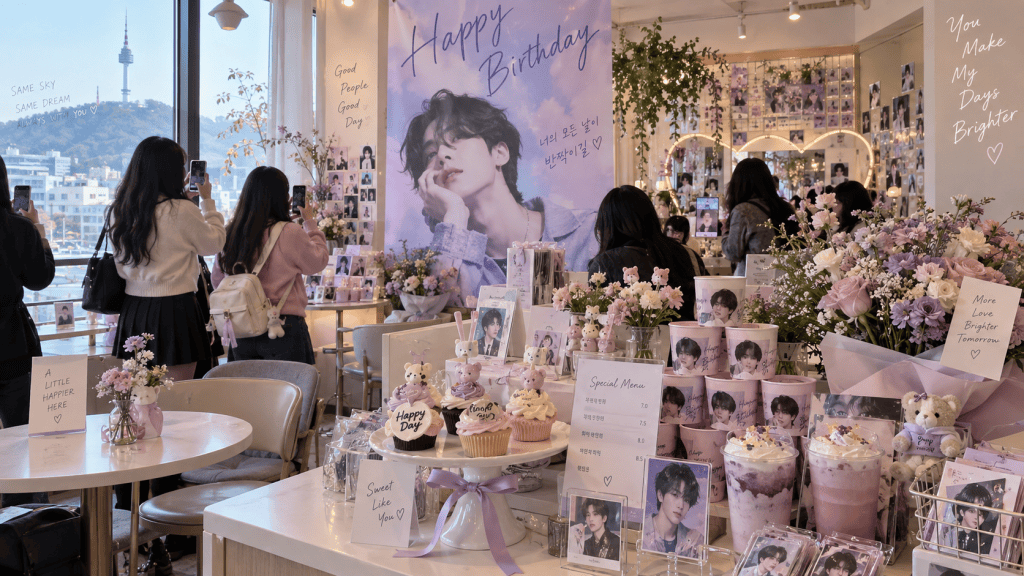
14. Birthday Cafés: When Fans Create the Event
Not every K-Pop event is organized by an entertainment company.
Fans themselves create an enormous amount of K-Pop culture.
One of the best examples is the birthday café.
Around an idol’s birthday, fans may collaborate with a café to decorate the space with:
- Photos
- Banners
- Cup sleeves
- Posters
- Special drinks
- Fan-made gifts
- Photo zones
Visitors buy a drink and may receive special fan-created items.
Some birthday events are small.
Others become highly elaborate.
And several events for the same artist may happen across Seoul at the same time.
For international visitors, this can be a fascinating glimpse into the creativity and organization of Korean fandom culture.
15. From Balloons to Bluetooth: How Korean Fan Culture Changed
Today’s sophisticated K-Pop fandom did not appear overnight.
In earlier generations of Korean pop music, fans often used colored balloons associated with particular artists.
As the industry grew, fandom identities became more sophisticated.
Balloons evolved into customized light sticks.
Printed photos evolved into elaborate photocard collections.
Small fan gatherings became global online communities.
Local fan projects became international birthday campaigns.
Today, K-Pop fandom connects:
Music + Technology + Design + Community + Commerce + Travel
That combination helps explain why K-Pop feels larger than a traditional music genre.
16. The Real Secret of a K-Pop Comeback: Participation
This may be the most important thing to understand.
K-Pop does not ask fans only to listen.
It constantly gives them opportunities to participate.
Fans can:
- Watch teasers
- Discuss theories
- Learn choreography
- Join dance challenges
- Learn fanchants
- Collect albums
- Trade photocards
- Attend pop-ups
- Visit birthday cafés
- Watch music shows
- Attend concerts
- Join fan communities
- Create artwork
- Translate content
- Share reactions
The result is a relationship that feels highly active.
The artist produces the music.
But the community helps turn that music into a cultural event.
Traditional Music Release vs. K-Pop Comeback
| Traditional Release | K-Pop Comeback |
|---|---|
| Song announced | Comeback schedule announced |
| Single released | Concept introduced through multiple teasers |
| Album cover | Multiple concept-photo sets |
| One album version | Often multiple physical versions |
| Music video | MV + teasers + performance videos + challenges |
| Interviews | Music shows + variety + digital content |
| Concert promotion | Showcases + fan signs + pop-ups + concerts |
| Fans listen | Fans stream, collect, chant, trade, create, and participate |
| Release day is the peak | The entire promotional period becomes an experience |
This difference explains something fundamental about K-Pop.
The product is not simply the song.
The experience surrounding the song matters almost as much as the song itself.
If You Are in Seoul During a Comeback
If your favorite artist announces a comeback while you are visiting Korea, do not panic.
You do not need to completely change your itinerary.
Instead, check a few things.
1. Official Artist Accounts
Start with the artist or agency’s official channels.
2. Pop-Up Announcements
Look for temporary events in Seoul.
3. Major K-Pop Shopping Areas
Hongdae, Myeongdong, Gangnam, and COEX are good areas to explore.
4. Department Stores and Shopping Complexes
Major collaborations and pop-ups sometimes appear here.
5. Concert and Showcase Information
Tickets may require advance reservation, so check early.
6. Fan Events
Always verify whether an event is official, fan-organized, free, reservation-only, or lottery-based.
Korea101Guide: The Beginner’s K-Pop Comeback Checklist
If this is your first K-Pop comeback, try this:
| What to Do | Beginner Level |
|---|---|
| Watch the first teaser | ✓ |
| Choose your favorite concept photo | ✓ |
| Listen to the full album | ✓ |
| Watch the title-track MV | ✓ |
| Watch one live music-show performance | ✓ |
| Learn one part of the fanchant | ✓ |
| Find your bias | ✓ |
| Open your first physical album | Optional |
| Trade a photocard | Optional |
| Visit a Seoul pop-up | Highly recommended if traveling |
| Attend a Korean concert | Ultimate experience |
Do You Need to Know Everything to Enjoy K-Pop?
Absolutely not.
You do not need to memorize every member.
You do not need to buy every album.
You do not need to collect photocards.
You do not need to learn every fanchant.
And you definitely do not have to understand every fandom joke on your first day.
Start with the music.
Then follow whatever interests you.
Maybe you love choreography.
Maybe you love fashion.
Maybe you become interested in Korean language.
Maybe you collect albums.
Maybe you simply enjoy watching performances.
There is no single correct way to enjoy K-Pop.
Why K-Pop Comebacks Feel So Exciting
A great comeback creates anticipation.
First comes the mystery.
Then the images.
Then the music teaser.
Then the music video.
Then the performance.
Then the fan reaction.
Then the concerts.
Each step gives fans something new to experience.
That is why a comeback can feel less like the release of a product and more like the premiere of a new season of a favorite series.
There is a beginning.
There is a visual world.
There is a soundtrack.
There are characters.
There are surprises.
And millions of fans around the world experience it together.
Final Korea101Guide Tip
If you visit Korea during a major comeback, leave some free space in your schedule.
K-Pop moves fast.
A new pop-up may appear.
A special merchandise event may open.
A fan café may be announced.
A giant screen in Seoul may suddenly feature your favorite artist.
You cannot plan every K-Pop moment in advance.
And that is part of the excitement.
Sometimes the best experience is the one you discover accidentally while walking through Seoul.
K-Pop Is More Than a Song Release
To understand K-Pop, do not look only at the charts.
Look at the countdown.
The photography.
The fashion.
The choreography.
The television stages.
The light sticks.
The photocards.
The cafés.
The pop-ups.
And most importantly, look at the fans.
Because a K-Pop comeback is not simply an artist saying:
“Here is our new song.”
It is closer to saying:
“Here is our new world. Come experience it with us.”
That may be the real secret behind K-Pop’s global appeal.
K-Pop is not just about releasing music.
A comeback is a story, a countdown, a competition, a celebration—and a shared experience between artists and fans.
Welcome to the comeback.
Welcome to K-Pop.
Welcome to Korea101Guide.
WordPress SEO Settings
SEO Title
K-Pop Comebacks Explained: The Ultimate Guide for International Fans
Alternative SEO Title
What Is a K-Pop Comeback? 18 Things Every International Fan Should Know
URL Slug
kpop-comeback-guide
Meta Description
What does “comeback” mean in K-Pop? Discover how K-Pop releases work, including teasers, concept photos, music shows, photocards, fanchants, fan signs, light sticks, pop-ups, and Korean fandom culture.
Focus Keyphrase
K-Pop Comeback Guide
Secondary Keywords
K-Pop comeback meaning
What is a K-Pop comeback
K-Pop fan culture
K-Pop terms for beginners
K-Pop photocard
K-Pop fanchant
K-Pop music shows
K-Pop light stick
K-Pop fan sign
K-Pop Korea guide
K-Pop fandom culture
K-Pop comeback explained
Recommended Category
K-Pop / K-Culture
Recommended Tags
K-Pop, K-Pop Comeback, K-Pop Guide, Korean Culture, Hallyu, K-Pop Fans, Seoul, Korea Travel, Photocards, Light Sticks, Fanchant


Leave a Reply