

Everything International Students Need to Know Before and After Arriving in Korea

Studying in Korea can be one of the most exciting experiences of your life.
You can earn a degree, learn Korean, experience K-culture firsthand, build an international network, travel across Korea, and potentially begin your career in one of Asia’s most dynamic economies.
But before you arrive, you probably have dozens of questions:
How much will university cost?
How expensive is Seoul?
Should I live in a dormitory or rent a room?
How much is a subway ride?
Can I work part-time?
How do I open a bank account?
How does Korean health insurance work?
And how much money should I prepare every month?
This guide gives you practical answers.
1. First: Understanding Korean Money
Korea uses the Korean Won (KRW / ₩).
For easy comparison, this guide uses the following approximate exchange rates:
| Korean Won | US Dollar | Japanese Yen | Chinese Yuan |
|---|---|---|---|
| ₩10,000 | US$7.32 | ¥1,133 JPY | ¥49.06 CNY |
| ₩50,000 | US$36.59 | ¥5,667 | ¥245 |
| ₩100,000 | US$73.18 | ¥11,333 | ¥491 |
| ₩500,000 | US$365.88 | ¥56,667 | ¥2,453 |
| ₩1,000,000 | US$731.77 | ¥113,334 | ¥4,906 |
Important: USD, JPY and CNY figures throughout this guide are approximate. Exchange rates change every day.
2. Studying in Korea at a Glance
| Topic | What You Need to Know |
|---|---|
| Degree students | Usually D-2 visa |
| Korean-language students | Usually D-4-1 visa |
| Exchange students | Usually D-2-6 |
| Foreigner registration | Generally required for stays over 90 days |
| Health insurance | Generally mandatory depending on visa/status |
| Part-time work | Permission usually required |
| Currency | Korean Won — KRW |
| Seoul subway | Base adult card fare around ₩1,550 |
| Seoul regular bus | Around ₩1,500 |
| Police | 112 |
| Fire/Ambulance | 119 |
| Immigration Help | 1345 |
| Travel/interpretation help | 1330 |
3. Which Student Visa Do You Need?
Your visa depends on what you will study.
| Study Type | Typical Visa |
|---|---|
| Associate degree | D-2-1 |
| Bachelor’s degree | D-2-2 |
| Master’s degree | D-2-3 |
| Doctoral degree | D-2-4 |
| Research | D-2-5 |
| Exchange student | D-2-6 |
| Work-learning program | D-2-7 |
| Korean language program | D-4-1 |
Your university’s international office should tell you which visa category applies to your specific program.
Do not assume that your friend’s visa will also be correct for you.
4. Before You Fly: Essential Checklist
Keep important documents in your carry-on luggage.
| Item | Priority |
|---|---|
| Passport | Essential |
| Student visa | Essential |
| Admission letter | Essential |
| University contact | Essential |
| Dormitory/rental address | Essential |
| Financial documents | Important |
| Previous academic records | Important |
| Passport photos | Recommended |
| Insurance information | Important |
| Prescription information | If applicable |
| International debit/credit card | Strongly recommended |
| Korean won cash | Recommended |
| Power adapter | Recommended |
Save digital copies of your passport, visa, admission letter, insurance policy and important university documents.
5. How Much Korean Cash Should You Bring?
Korea is highly cashless, so you usually do not need to carry a large amount of cash.
A reasonable initial cash reserve might be:
| Cash | USD | JPY | CNY |
|---|---|---|---|
| ₩50,000 | $36.59 | ¥5,667 | ¥245 |
| ₩100,000 | $73.18 | ¥11,333 | ¥491 |
| ₩200,000 | $146.35 | ¥22,667 | ¥981 |
| ₩300,000 | $219.53 | ¥34,000 | ¥1,472 |
International cards are widely accepted, but having some Korean won is useful during your first few days.
6. Your First Week in Korea

| When | What to Do |
|---|---|
| Day 1 | Arrive and check into accommodation |
| Day 2 | University orientation |
| Day 2–3 | SIM/eSIM and transportation card |
| Day 3–5 | Explore campus and neighborhood |
| Week 1 | Begin foreigner registration procedures |
| Week 1 | Check health insurance |
| Week 1–2 | Open Korean bank account |
| Week 1–2 | Install university and essential apps |
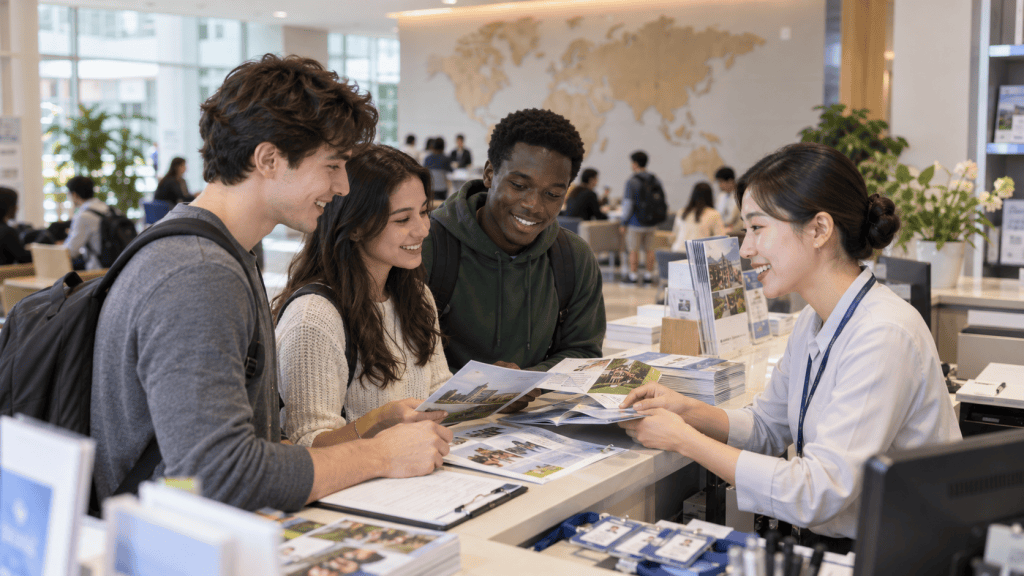
Your university’s International Office should become one of your most important resources.
7. Foreigner Registration / Residence Card
Students staying in Korea for more than 90 days generally need to complete foreigner registration.
You may hear students call the identification card:
ARC — Alien Registration Card
or simply:
Residence Card
You may need it for:
- bank accounts,
- mobile-phone contracts,
- insurance,
- online identification,
- part-time employment,
- visa extensions,
- housing,
- university administration.
Apply as early as possible.
Many universities arrange group applications for international students.
8. Where Should You Live?
Accommodation will probably be your largest monthly expense after tuition.
| Housing | Cost Level | Convenience | Privacy | Good For |
|---|---|---|---|---|
| University dormitory | $ | ★★★★★ | ★★★ | New students |
| Goshiwon | $–$$ | ★★★★ | ★★ | Budget students |
| Share house | $$ | ★★★★ | ★★★ | Social students |
| One-room apartment | $$$ | ★★★ | ★★★★★ | Long-term students |
9. Typical Monthly Housing Budget
Actual costs vary significantly by university, city, room size and deposit.
A useful planning range is:
| Monthly Housing | KRW | USD | JPY | CNY |
|---|---|---|---|---|
| Lower planning level | ₩500,000 | $365.88 | ¥56,667 | ¥2,453 |
| Higher planning level | ₩700,000 | $512.24 | ¥79,334 | ¥3,434 |
Central Seoul and newer private apartments can be considerably more expensive.
Dormitories may be cheaper when calculated on a monthly basis.
10. Korean Rental Terms You Should Know

월세 — Wolse
Deposit + monthly rent
This is the most familiar rental structure for most foreign students.
전세 — Jeonse
A very large refundable deposit is paid, typically with little or no monthly rent.
For most short-term international students, wolse or a dormitory is easier to manage.
Before transferring any housing deposit, check:
- the actual owner,
- the written contract,
- deposit amount,
- monthly rent,
- maintenance fee,
- utilities,
- contract period,
- refund terms,
- moving-out notice.
Never send a large deposit simply because someone contacted you on social media.
11. How Much Does Student Life Cost Per Month?
A reasonable baseline planning range for total living expenses can be around:
₩750,000–₩1,000,000+ per month
In four currencies:
| Monthly Living Cost | KRW | USD | JPY | CNY |
|---|---|---|---|---|
| Lower baseline | ₩750,000 | $548.82 | ¥85,000 | ¥3,679 |
| Upper baseline | ₩1,000,000 | $731.77 | ¥113,334 | ¥4,906 |
However, a student living alone in central Seoul, eating out frequently and going out regularly can spend considerably more.

12. Monthly Student Budget Example

| Expense | KRW | USD | JPY | CNY |
|---|---|---|---|---|
| Housing — lower example | ₩500,000 | $365.88 | ¥56,667 | ¥2,453 |
| Housing — higher example | ₩700,000 | $512.24 | ¥79,334 | ¥3,434 |
| Food — lower example | ₩200,000 | $146.35 | ¥22,667 | ¥981 |
| Food — higher example | ₩300,000 | $219.53 | ¥34,000 | ¥1,472 |
| Transportation | ₩60,000–₩120,000 | $43.91–$87.81 | ¥6,800–¥13,600 | ¥294–¥589 |
| Mobile phone | ₩30,000–₩70,000 | $21.95–$51.22 | ¥3,400–¥7,933 | ¥147–¥343 |
| Social/coffee | ₩100,000–₩300,000+ | $73.18–$219.53+ | ¥11,333–¥34,000+ | ¥491–¥1,472+ |
The Biggest Variables
Your budget is usually affected most by:
Housing + Food + Social Life

13. How Much Is Korean University Tuition?
Average annual tuition differs by university and major.
| University Type | KRW / Year | USD | JPY | CNY |
|---|---|---|---|---|
| National/Public average | ₩4.27M | $3,125 | ¥483,936 | ¥20,948 |
| Non-metropolitan average | ₩6.32M | $4,625 | ¥716,271 | ¥31,004 |
| Overall 4-year average | ₩6.82M | $4,991 | ¥772,938 | ¥33,457 |
| Private university average | ₩7.63M | $5,583 | ¥864,738 | ¥37,431 |
| Metropolitan-area average | ₩7.65M | $5,598 | ¥867,005 | ¥37,529 |
These are averages rather than guaranteed tuition prices.
Medicine, engineering, arts and specialized programs may cost more.
14. What Does That Mean Per Semester?
If annual tuition were around ₩6.82 million, a simple half-year estimate would be roughly:
| Semester Estimate | Amount |
|---|---|
| KRW | ₩3,410,000 |
| USD | ≈ $2,495 |
| JPY | ≈ ¥386,469 |
| CNY | ≈ ¥16,729 |
Actual university billing may not be exactly half of the annual average.
Always check your university’s tuition table.
15. Scholarships Can Change Everything
Do not assume you must pay 100% of tuition.
International students can look for:
GKS
Global Korea Scholarship
and university-specific scholarships.
University scholarships may be based on:
- GPA,
- admission performance,
- TOPIK score,
- English proficiency,
- research performance,
- financial need,
- nationality or partnership programs.
Some universities offer partial or even full tuition support to qualified international students.
16. Student Cafeteria: One of the Best Ways to Save Money

Campus meals can be substantially cheaper than eating in restaurants every day.
A rough planning range:
| Meal | KRW | USD | JPY | CNY |
|---|---|---|---|---|
| Low-cost campus meal | ₩5,000 | $3.66 | ¥567 | ¥24.53 |
| Higher-priced campus meal | ₩15,000 | $10.98 | ¥1,700 | ¥73.59 |
If you eat one ₩5,000 campus meal instead of a ₩15,000 restaurant meal, you save:
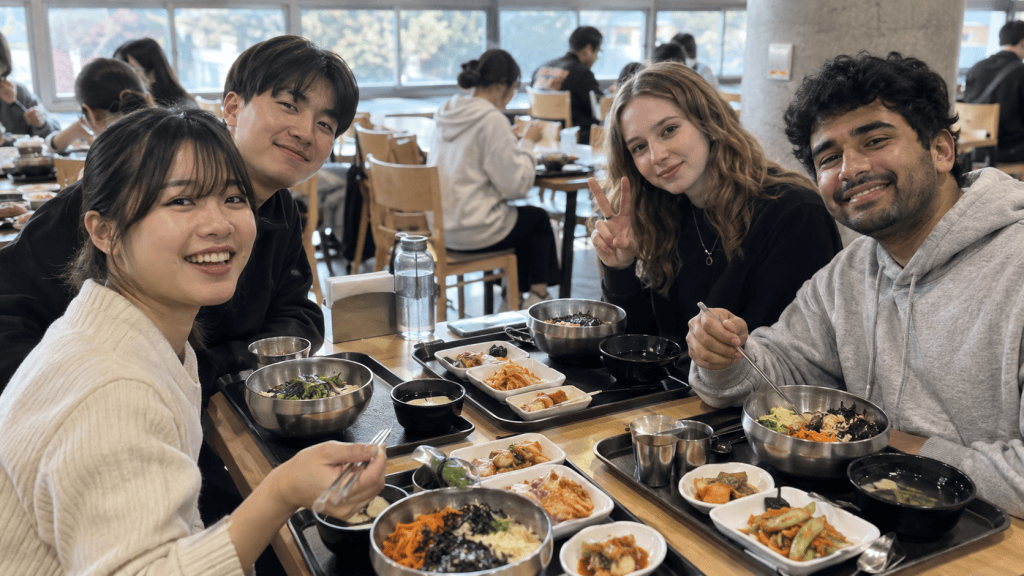
₩10,000 each time
Approximately:
$7.32 / ¥1,133 / ¥49
Small savings add up quickly.
17. Transportation Costs in Seoul
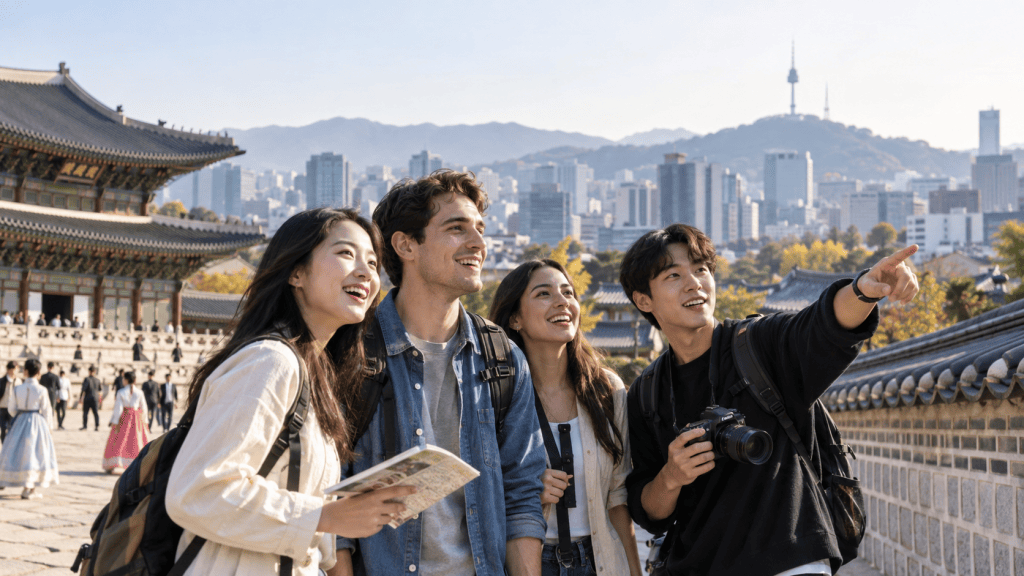
Public transportation is one of Korea’s greatest advantages for students.
| Transportation | KRW | USD | JPY | CNY |
|---|---|---|---|---|
| Local/town bus | ₩1,200 | $0.88 | ¥136 | ¥5.89 |
| Regular Seoul bus | ₩1,500 | $1.10 | ¥170 | ¥7.36 |
| Seoul subway base fare | ₩1,550 | $1.13 | ¥176 | ¥7.60 |
| Late-night bus | ₩2,500 | $1.83 | ¥283 | ¥12.26 |
| Metropolitan/red bus | ₩3,000 | $2.20 | ¥340 | ¥14.72 |
Additional distance fares can apply.
18. Monthly Transportation Example
Suppose you spend around:
₩60,000 per month
That equals approximately:
US$43.91
¥6,800 JPY
¥294 CNY
At:
₩120,000 per month
approximately:
US$87.81
¥13,600 JPY
¥589 CNY
Students living on campus can often spend much less on transportation than students commuting long distances.
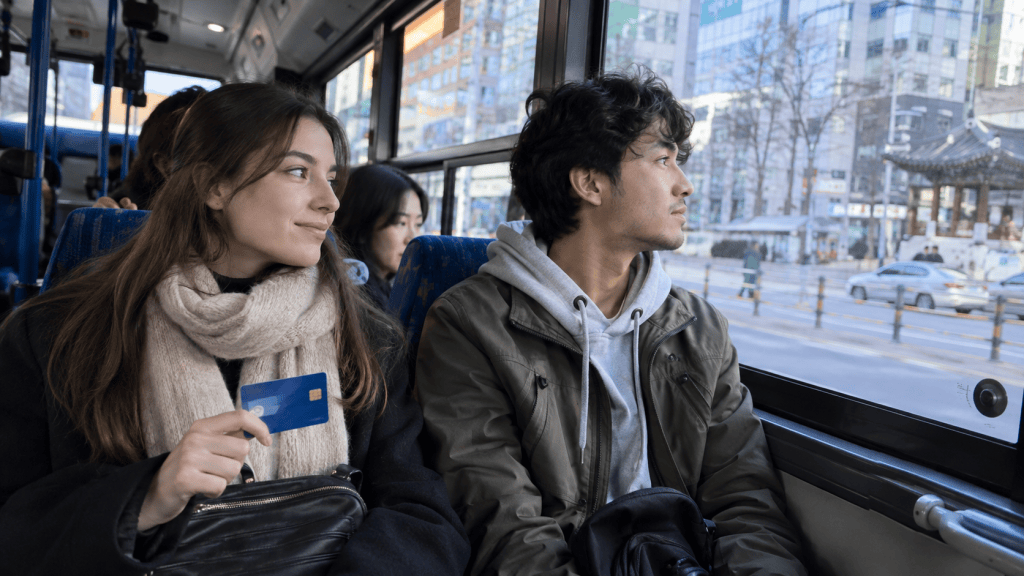
19. Get a Transportation Card
A transportation card such as Tmoney makes everyday travel much easier.
You can use it for subway and bus trips.
Remember:
TAP IN → TRAVEL → TAP OUT
Tapping out is important because Korea has an integrated transfer-fare system.
20. Mobile Phone Cost
A rough student planning range is:
| Monthly Phone Plan | KRW | USD | JPY | CNY |
|---|---|---|---|---|
| Budget level | ₩30,000 | $21.95 | ¥3,400 | ¥147 |
| Mid level | ₩50,000 | $36.59 | ¥5,667 | ¥245 |
| Higher level | ₩70,000 | $51.22 | ¥7,933 | ¥343 |
Prepaid SIM and eSIM plans can differ substantially.
21. Essential Apps
Your smartphone will become one of your most important tools.
| App | Main Use |
|---|---|
| NAVER Map | Navigation |
| KakaoMap | Navigation |
| KakaoTalk | Communication |
| Papago | Translation |
| Kakao T | Taxi |
| University app | Classes/notices |
| Banking app | Payments/transfers |
| Korail | Intercity trains |
Especially Important: KakaoTalk
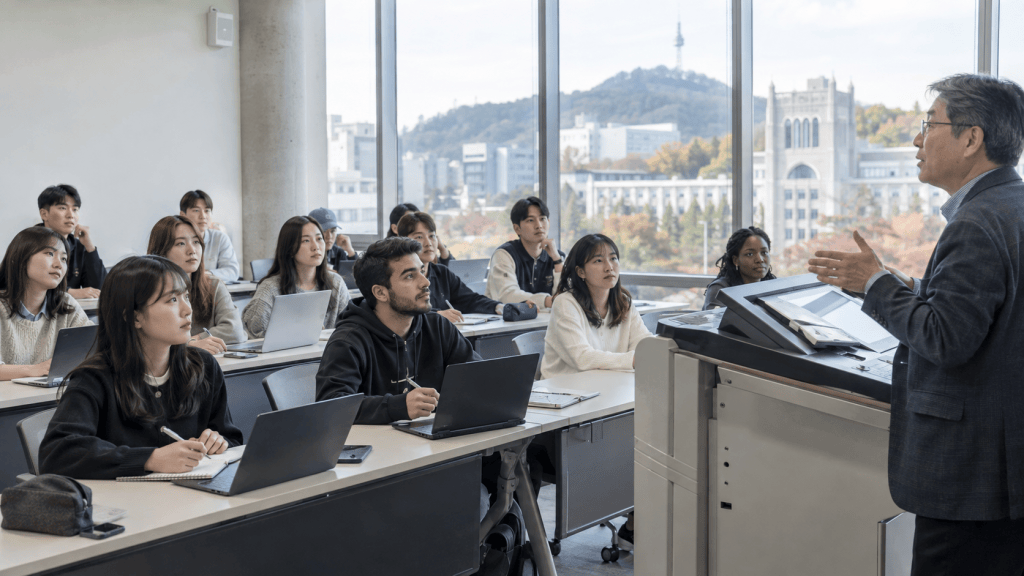
Class chats, club communications and friendships in Korea often use KakaoTalk.
22. Opening a Korean Bank Account
A local account makes life much easier.
You may need it for:
- rent,
- scholarships,
- wages,
- online payments,
- mobile bills,
- transfers.
Bring as many of these as possible:
| Document | Bring It |
|---|---|
| Passport | ✓ |
| Residence Card | ✓ |
| Student ID | ✓ |
| Certificate of enrollment | ✓ |
| Korean phone number | Helpful |
| Korean address | Helpful |
Campus-area branches are often more familiar with international students.
23. Health Insurance
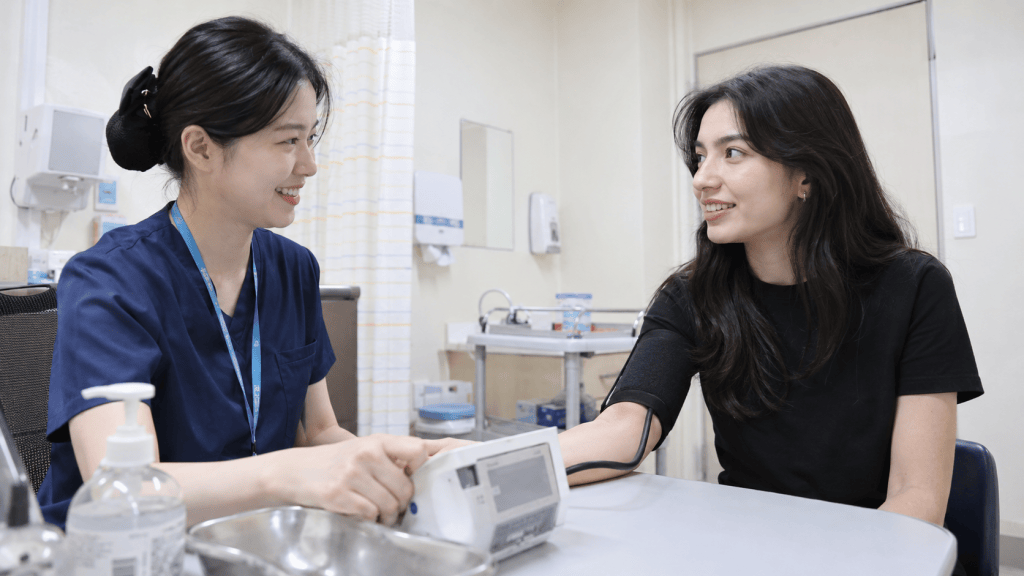
International students are generally required to participate in Korea’s health-insurance system according to their visa and residence status.
D-2 students generally enter the system earlier than many D-4 language students.
Ask your university:
When does my National Health Insurance begin?
Do I need private insurance before then?
How much will my monthly premium be?
Insurance premiums can change, so use the university and National Health Insurance Service for your exact current amount.
24. Going to the Doctor
Useful vocabulary:
| Korean | English |
|---|---|
| 병원 | Hospital / clinic |
| 약국 | Pharmacy |
| 내과 | Internal medicine |
| 치과 | Dentist |
| 피부과 | Dermatology |
| 안과 | Ophthalmology |
| 응급실 | Emergency room |
| 처방전 | Prescription |
Emergency:
119
25. Can You Work Part-Time?
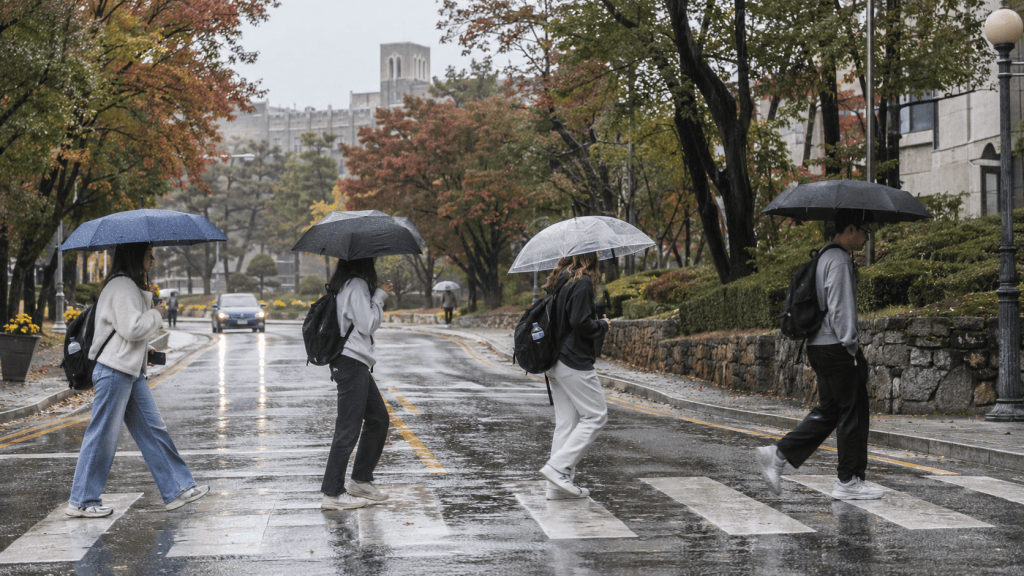
Many international students can work part-time—but permission is normally required first.
Do not:
Start working → then ask immigration.
Instead:
Check eligibility → get university approval → apply for permission → begin work.
Rules vary depending on:
- visa,
- study level,
- Korean proficiency,
- academic performance,
- university status,
- job type.
26. Typical Student Part-Time Jobs
Subject to legal permission:
| Job | Korean |
|---|---|
| Café | 카페 |
| Restaurant | 식당 |
| University assistant | 행정 보조 |
| Translation | 번역 |
| Event assistant | 행사 보조 |
| Tourism assistance | 관광 안내 |
| Retail | 판매 |
Never assume that an online job advertisement is automatically legal under your visa.
27. Korean Language: 15 Survival Expressions
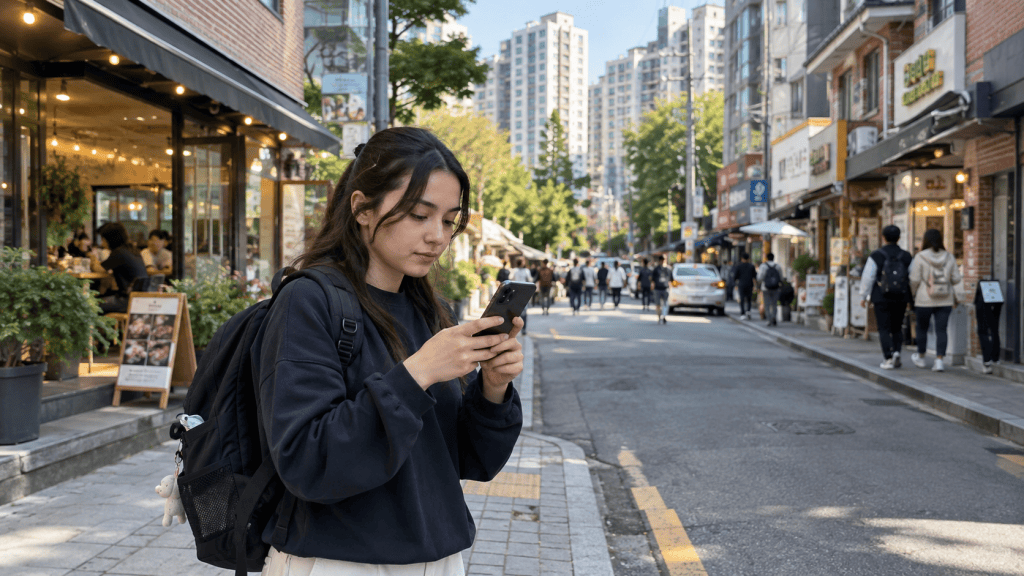
| Korean | Pronunciation | Meaning |
|---|---|---|
| 안녕하세요 | Annyeonghaseyo | Hello |
| 감사합니다 | Gamsahamnida | Thank you |
| 죄송합니다 | Joesonghamnida | I’m sorry |
| 괜찮아요 | Gwaenchanayo | It’s okay |
| 네 | Ne | Yes |
| 아니요 | Aniyo | No |
| 주세요 | Juseyo | Please give me… |
| 얼마예요? | Eolmayeyo? | How much? |
| 어디예요? | Eodiyeyo? | Where is it? |
| 도와주세요 | Dowajuseyo | Please help me |
| 영어 하세요? | Yeongeo haseyo? | Do you speak English? |
| 잘 모르겠어요 | Jal moreugesseoyo | I don’t understand |
| 다시 말해주세요 | Dasi malhaejuseyo | Please say it again |
| 맛있어요 | Masisseoyo | It’s delicious |
| 잘 부탁드립니다 | Jal butakdeurimnida | I look forward to working/studying together |
28. Korean University Classroom Culture
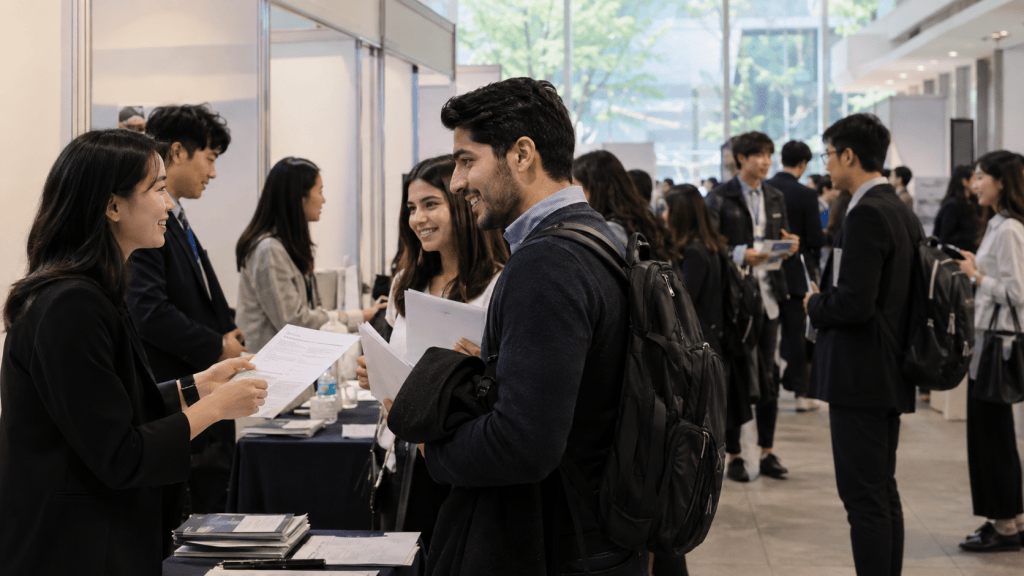
Attendance Matters
Attendance can contribute directly to your grade.
For international students, consistently poor attendance may also create administrative problems.
Be On Time
Try to arrive several minutes early.
Check the University Portal
Professors may post:
- assignments,
- lecture slides,
- examinations,
- schedules,
- announcements
online.
29. Talking to Professors

Start formally.
For example:
“Professor Kim, I have a question about today’s assignment.”
The Korean term:
교수님 — Gyosunim
means Professor.
Do not immediately use a professor’s first name unless they explicitly invite you to.
30. Making Korean Friends

Do not spend your entire semester only with other foreign students.
Try:
| Activity | Benefit |
|---|---|
| University club | Natural friendships |
| Language exchange | Korean practice |
| Buddy program | Meet local students |
| Sports | Less language pressure |
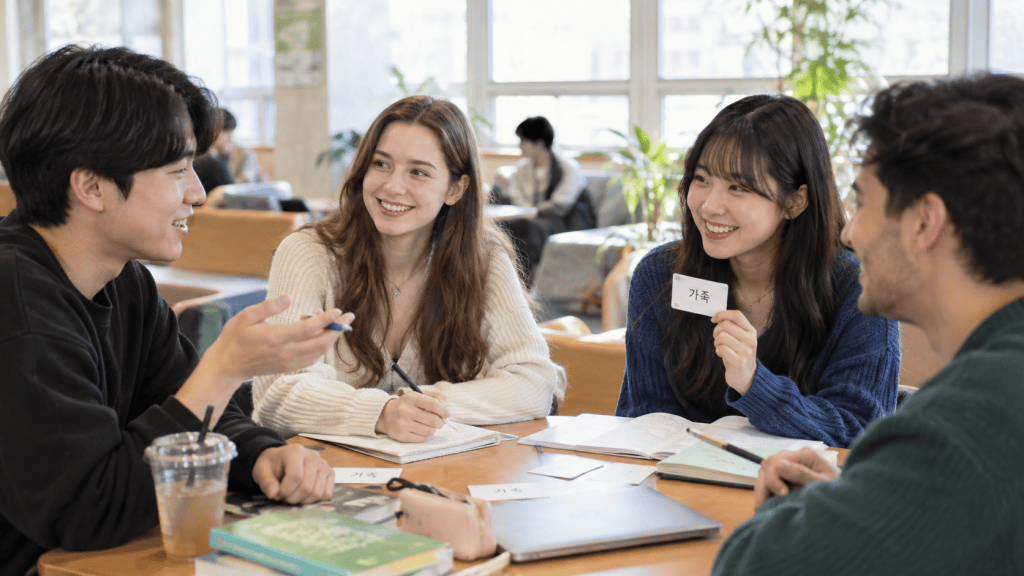
| Study group | Regular contact |
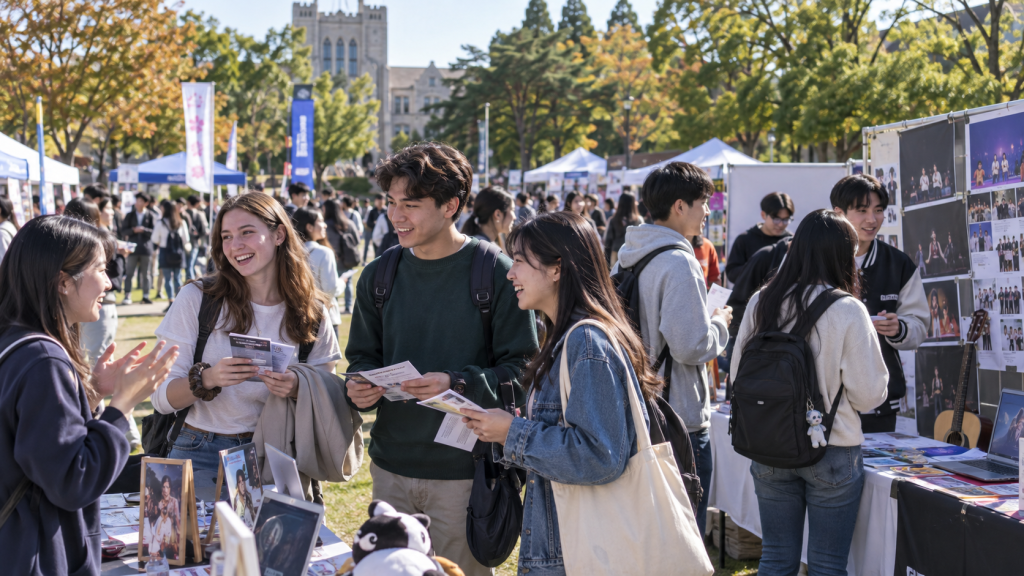
| Festivals | Easy social environment |
| Volunteering | Meet people outside campus |
| Department events | Academic networking |
Some Korean students may be shy about speaking English.
That does not necessarily mean they are not interested in becoming friends.
31. Korean Food on a Student Budget
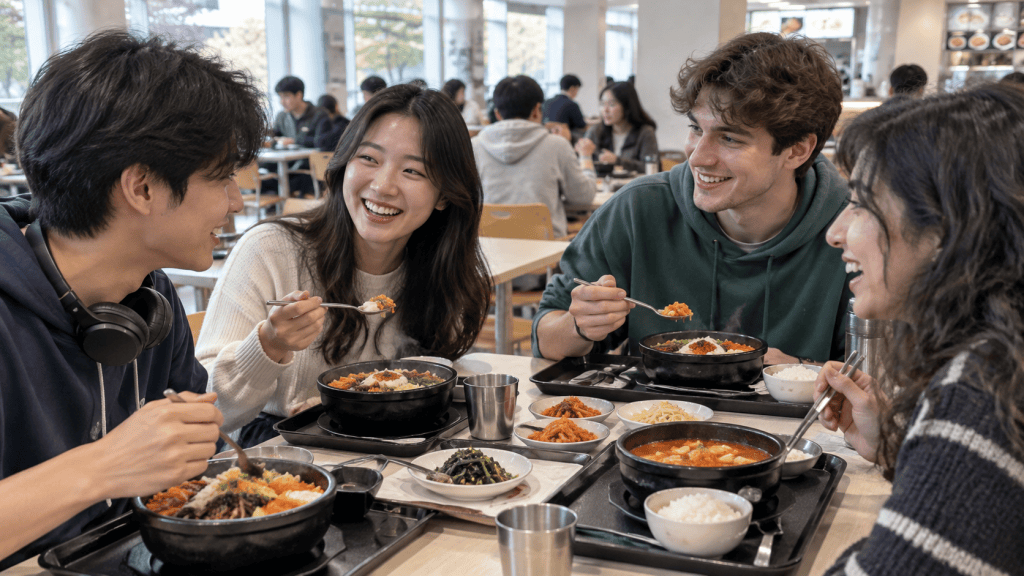
Useful choices include:
- 김밥 — Gimbap
- 비빔밥 — Bibimbap
- 라면 — Ramyeon
- 김치찌개 — Kimchi stew
- 된장찌개 — Soybean paste stew
- 불고기 — Bulgogi
- 치킨 — Korean fried chicken
One of the best ways to save money is simple:
Eat on campus regularly and eat out selectively.
32. Convenience Stores

Korean convenience stores can become part of everyday student life.
You can find:
- simple meals,
- snacks,
- drinks,
- toiletries,
- chargers,
- stationery,
- household basics.
Many stores also have microwaves and small eating areas.
33. Korean Social Culture
| Situation | Useful Approach |
|---|---|
| Older people | Begin politely |
| Someone’s home | Usually remove shoes |
| Giving something formally | Two hands can be polite |
| Group meal | Follow the group’s lead |
| Senior students | Start slightly more formally |
| Alcohol | Drinking is optional |
| KakaoTalk | Responses can be quick |
| Appointments | Punctuality is valued |
You do not need to “act Korean.”
Simply show respect and curiosity.
34. Alcohol: You Can Say No
You can say:
“I don’t drink, but I’d love to join.”
You can still attend dinners and social activities.
Friendship does not require drinking alcohol.
35. Korea Has Four Real Seasons
Spring
Mild but variable.
Summer
Hot, humid and rainy.
Autumn
Often mild and pleasant.
Winter
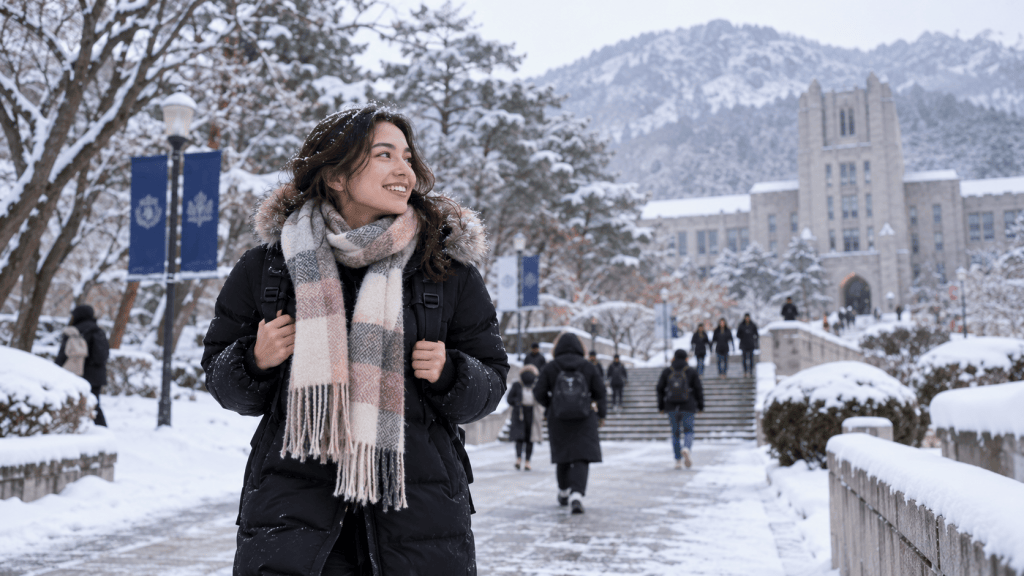
Cold—sometimes very cold.
Students arriving from tropical countries should budget for winter clothing.
36. Emergency Numbers
| Situation | Number |
|---|---|
| Police | 112 |
| Fire / Ambulance | 119 |
| Immigration | 1345 |
| Travel / Interpretation | 1330 |
| Seoul information | 120 |
Save them now.
37. Don’t Use Social Media as Your Immigration Lawyer
TikTok, Reddit, Facebook and YouTube can provide useful student experiences.
But immigration rules are different.
For visa matters, prioritize:
University International Office
→ Immigration Contact Center 1345
→ Hi Korea
38. Common Mistakes

| Mistake | Better Choice |
|---|---|
| Waiting to register as a foreigner | Start early |
| Working without permission | Get permission first |
| Only making foreign friends | Join Korean groups |
| Ignoring Korean study | Learn survival Korean |
| Renting without reviewing contract | Ask for help |
| Never budgeting | Review money weekly |
| Missing classes | Take attendance seriously |
| Ignoring university email | Check every day |
| Using only familiar foreign navigation apps | Install Korean apps |
| Losing important documents | Keep cloud copies |
39. How Much Money Should You Prepare for One Year?
This example excludes scholarships and varies greatly by lifestyle.
Suppose:
Annual tuition
₩6,820,000
and monthly living expenses:
₩1,000,000 × 12 months
₩12,000,000
Approximate annual total:
₩18,820,000
Equivalent to approximately:
| Currency | Approximate Total |
|---|---|
| Korean Won | ₩18,820,000 |
| US Dollar | $13,772 |
| Japanese Yen | ¥2,133,000 |
| Chinese Yuan | ¥92,329 |
This is only a planning example.
A scholarship, dormitory, cheaper city or lower-cost lifestyle could reduce the amount substantially.
Private housing and a high-spending Seoul lifestyle could increase it.
40. Lower-Cost Example
Suppose you spend:
₩750,000 per month × 12 = ₩9,000,000
plus average tuition:
₩6,820,000
Total:
₩15,820,000 per year
Approximately:
US$11,576
¥1,793,000 JPY
¥77,610 CNY
Again, this is a budgeting example rather than a guaranteed cost.
41. First-Month Emergency Fund
It is wise to have money available beyond your normal monthly budget.
For example:
₩500,000–₩1,000,000
Emergency reserve:
| KRW | USD | JPY | CNY |
|---|---|---|---|
| ₩500,000 | $365.88 | ¥56,667 | ¥2,453 |
| ₩1,000,000 | $731.77 | ¥113,334 | ¥4,906 |
This can help with:
- unexpected housing charges,
- phone setup,
- bedding,
- clothing,
- medical expenses,
- school supplies,
- transportation,
- emergencies.
42. Your First-Month Action Plan
| Week | Main Task |
|---|---|
| Before arrival | Visa + housing + documents |
| Week 1 | Orientation + SIM + transport card |
| Week 1–2 | Foreigner registration |
| Week 2 | Bank account |
| Week 2 | KakaoTalk class groups |
| Week 2–3 | Join one club |
| Week 3 | Review spending |
| Week 3–4 | Establish Korean-study routine |
| Week 4 | Set monthly budget |
| Later | Check legal part-time options |
43. Your Monthly Money Routine
Every week, check four things:
1. Housing
Fixed expense.
2. Food
Easy to overspend.
3. Transportation
Usually manageable.
4. Social life
The hidden budget killer.
A simple student budget can be:
Essential → Save → Experience Korea
rather than:
Spend → Spend → Spend → Panic at the end of the month.
44. International Student Cost Cheat Sheet
| Item | KRW | USD | JPY | CNY |
|---|---|---|---|---|
| Subway | ₩1,550 | $1.13 | ¥176 | ¥7.60 |
| City bus | ₩1,500 | $1.10 | ¥170 | ¥7.36 |
| Cheap campus meal | ₩5,000 | $3.66 | ¥567 | ¥24.53 |
| Higher campus meal | ₩15,000 | $10.98 | ¥1,700 | ¥73.59 |
| Phone example | ₩50,000 | $36.59 | ¥5,667 | ¥245 |
| Transport/month example | ₩60,000 | $43.91 | ¥6,800 | ¥294 |
| Social budget example | ₩100,000 | $73.18 | ¥11,333 | ¥491 |
| Food/month example | ₩300,000 | $219.53 | ¥34,000 | ¥1,472 |
| Housing/month example | ₩500,000 | $365.88 | ¥56,667 | ¥2,453 |
| Living/month baseline | ₩750,000 | $548.82 | ¥85,000 | ¥3,679 |
| Living/month higher baseline | ₩1,000,000 | $731.77 | ¥113,334 | ¥4,906 |
45. Final Advice: Don’t Just Study in Korea — Live in Korea
Your education in Korea will not happen only inside a classroom.
It may happen:
on the subway,
in a Korean-language class,
at a university festival,
over a ₩5,000 campus lunch,
during a conversation with a Korean friend,
while traveling to Busan,
or when you solve your first problem completely in Korean.
At first, everything can feel unfamiliar.
Then something changes.
The subway becomes normal.
Your favorite café knows your order.
Your Korean improves.
You make friends.
You stop feeling like a visitor.
And Korea gradually becomes another place you can call home.
Welcome to Korea.
Study hard.
Manage your money wisely.
Learn Korean.
Meet people.
Travel.
And create your own Korean story.


Leave a Reply