
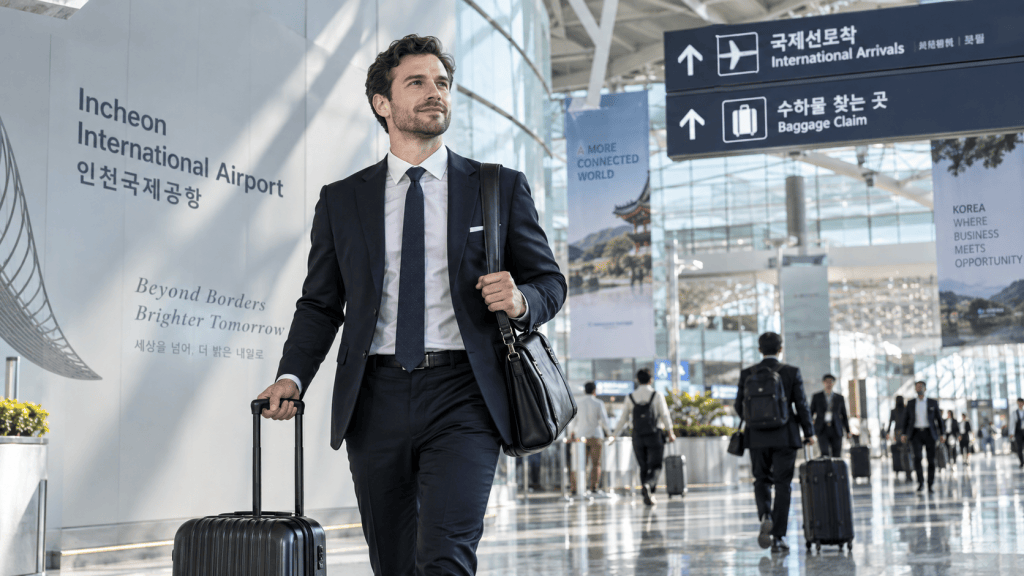
What Every Business Visitor Should Know Before Coming to Korea
Korea is one of Asia’s most dynamic and convenient destinations for business travel.
Seoul offers world-class infrastructure, fast internet, an extensive public transportation network, international hotels, and easy access to major business districts.
But if this is your first trip to Korea, you will probably have some very practical questions:
How much is a taxi from Incheon Airport?
How much does the subway cost?
Should I take a train, airport bus, or taxi?
Can I use an international credit card?
Where should I stay for meetings in Gangnam or Yeouido?
This guide gives you the answers.
1. First, Understand Korean Prices
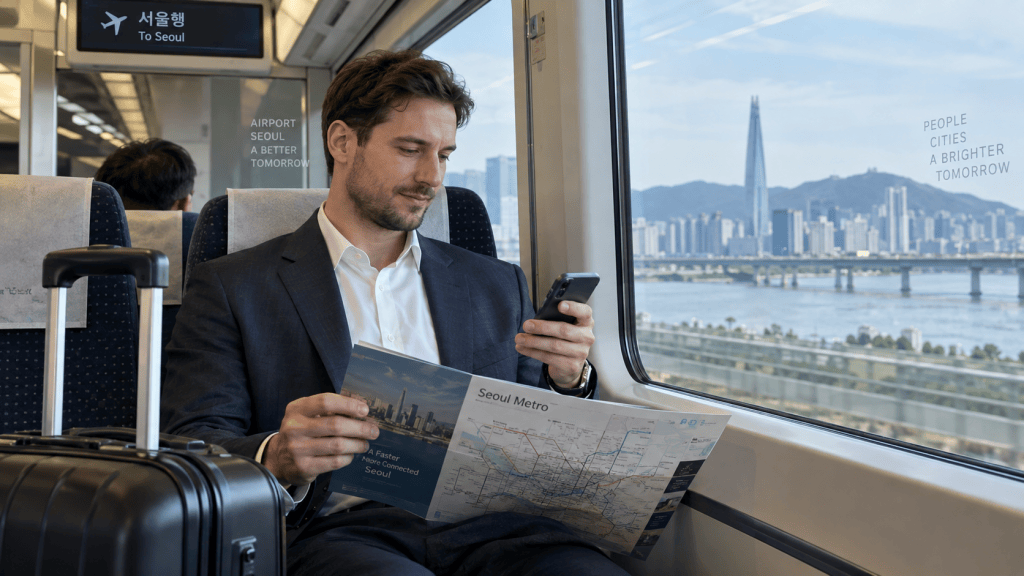
Korea uses the Korean won (KRW / ₩).
For easy reference, this guide uses the following approximate exchange rates as of September 16, 2026:
| Korean Won | US Dollar | Japanese Yen | Chinese Yuan |
|---|---|---|---|
| ₩10,000 | US$7.32 | ¥1,133 JPY | ¥49.06 CNY |
| ₩50,000 | US$36.59 | ¥5,667 JPY | ¥245.29 CNY |
| ₩100,000 | US$73.18 | ¥11,333 JPY | ¥490.57 CNY |
Important: Currency exchange rates change daily. USD, JPY and CNY prices throughout this guide are approximate and are provided only to help international visitors understand the general cost.
2. Getting from Incheon Airport to Seoul
For most international business travelers, this will be the first major decision after arriving in Korea.
You have four practical options.
| Transportation | Approx. Cost | Travel Time | Best For |
|---|---|---|---|
| AREX All-Stop Train | ₩4,150–₩4,750 | About 60 min. | Budget travelers |
| AREX Express Train | ₩13,000 | 43–51 min. | Fast, predictable travel |
| Airport Limousine Bus | Around ₩17,000 | Usually 60–90+ min. | Travelers with luggage |
| Taxi | Depends on destination | Usually 60–90+ min. | Executives, groups, heavy luggage |
Seoul’s official transportation information currently lists the AREX Express fare at ₩13,000 one way and approximately 43 minutes from Terminal 1 to Seoul Station. The All-Stop Train costs approximately ₩4,150–₩4,750 depending on the airport terminal.
3. Incheon Airport → Seoul: Price Comparison
Here is the same information in four major currencies.
| Transportation | KRW | USD approx. | JPY approx. | CNY approx. |
|---|---|---|---|---|
| AREX All-Stop — from T1 | ₩4,150 | $3.04 | ¥470 | ¥20.36 |
| AREX All-Stop — from T2 | ₩4,750 | $3.48 | ¥538 | ¥23.30 |
| AREX Express | ₩13,000 | $9.51 | ¥1,473 | ¥63.77 |
| Airport Limousine Bus | ₩17,000 | $12.44 | ¥1,927 | ¥83.40 |
Airport Limousine routes 6001 and 6015 currently charge ₩17,000 for an adult ticket.
Which One Should a Business Traveler Choose?
AREX Express is excellent when your destination is around Seoul Station or when predictable journey time matters.
Airport Limousine Bus is excellent when the bus stops close to your hotel. You do not need to carry large luggage through subway stations.
Taxi is usually the easiest option if you are traveling with colleagues, carrying multiple bags, arriving late, or going directly to a meeting or hotel.
4. How Much Is a Taxi from Incheon Airport?
This is one of the most useful things to know before arriving.
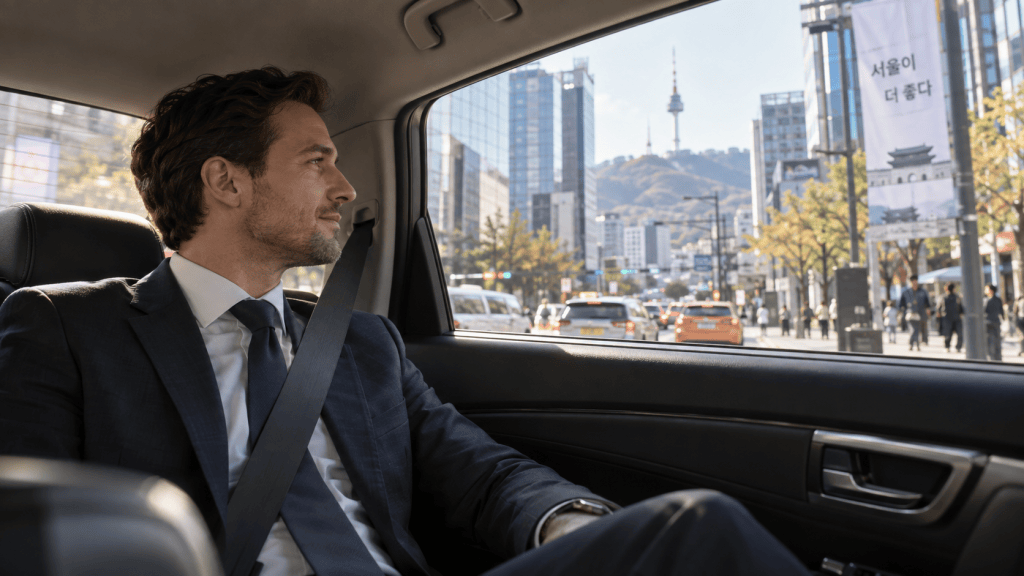
Seoul’s official International Taxi system offers zone-based fares between Incheon Airport and Seoul.
| Destination Area | Taxi Fare | USD | JPY | CNY |
|---|---|---|---|---|
| Mapo / Yeouido area | ₩75,000 | $54.88 | ¥8,500 | ¥367.93 |
| Yongsan / Jongno / Central Seoul | ₩85,000 | $62.20 | ¥9,633 | ¥416.99 |
| Gangnam / Seocho | ₩90,000 | $65.86 | ¥10,200 | ¥441.52 |
| Songpa / Eastern Seoul | ₩95,000 | $69.52 | ¥10,767 | ¥466.05 |
Seoul’s official International Taxi zone fares currently range from ₩70,000 to ₩95,000 for sedan taxis, depending on the Seoul district. For example, Yeongdeungpo, which includes Yeouido, falls in the ₩75,000 zone; Jongno and central Seoul in the ₩85,000 zone; and Gangnam in the ₩90,000 zone.
Expressway tolls or other charges may apply depending on the service and route.
Business Traveler Tip
If three colleagues are traveling together, a taxi can suddenly become quite reasonable.
For example:
Gangnam International Taxi: ₩90,000
For three travelers:
₩30,000 per person ≈ US$21.95 per person
That can be attractive compared with taking a bus or train, transferring to another subway or taxi, and carrying luggage.
5. Taxi Fares Inside Seoul
Seoul taxis are relatively affordable compared with taxis in many other major international cities.
The standard Seoul sedan taxi daytime base fare is currently:
| Taxi Fare | KRW | USD | JPY | CNY |
|---|---|---|---|---|
| Base fare — first 1.6 km | ₩4,800 | $3.51 | ¥544 | ¥23.55 |
The official fare is ₩4,800 for the first 1.6 km, followed by distance- and time-based metered charges.
Late-night surcharges apply between 10 PM and 4 AM, with the highest surcharge period generally between 11 PM and 2 AM.
For business visitors, taxis are particularly convenient when traveling:
hotel → client office → restaurant → hotel
during a busy meeting day.
6. Seoul Subway: One of the Best Ways to Travel
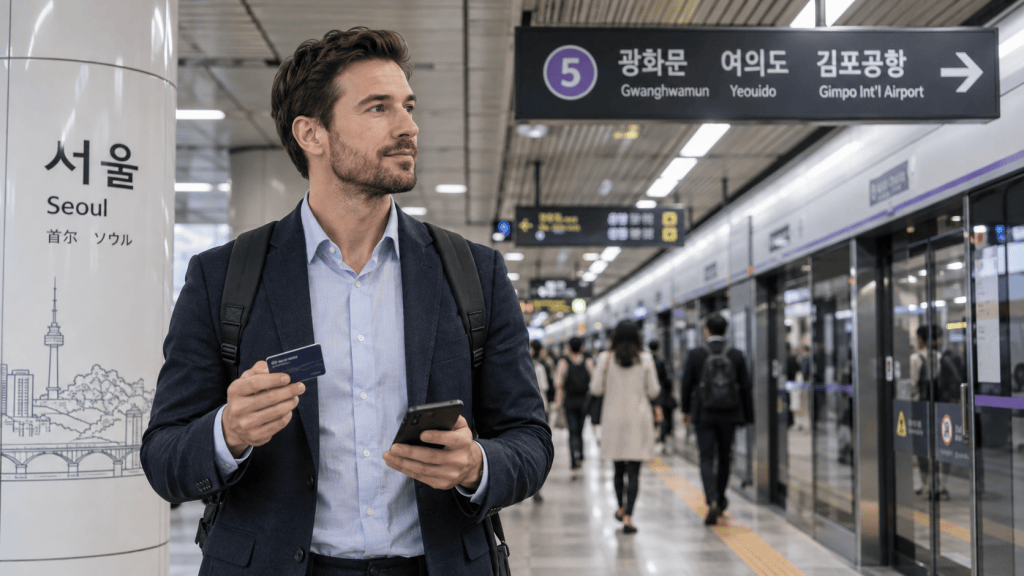
The Seoul subway is fast, clean, extensive, and particularly useful during rush hour.
The standard adult base fare using a transportation card is currently:
| Subway Ticket | KRW | USD | JPY | CNY |
|---|---|---|---|---|
| Transportation card | ₩1,550 | $1.13 | ¥176 | ¥7.60 |
| Single-ride ticket | ₩1,650 | $1.21 | ¥187 | ¥8.09 |
The adult subway base fare increased to ₩1,550 with a transportation card from June 28, 2025, while a single-ride ticket costs ₩1,650.
Additional distance charges may apply for longer journeys.
Example
Suppose you have meetings in:
Gangnam → City Hall → Yeouido
Using the subway can cost only a few thousand won for the entire day.
That is roughly just a few U.S. dollars.
For travelers from New York, London, Tokyo, Singapore, Hong Kong, or Paris, Korean public transportation can feel surprisingly affordable.
7. Seoul City Bus Fares
Seoul buses are color-coded according to their function.
| Bus Type | Adult Fare | USD | JPY | CNY |
|---|---|---|---|---|
| Blue / Green Bus | ₩1,500 | $1.10 | ¥170 | ¥7.36 |
| Yellow / Circulation Bus | ₩1,400 | $1.02 | ¥159 | ¥6.87 |
| Red / Metropolitan Bus | ₩3,000 | $2.20 | ¥340 | ¥14.72 |
| Late-Night Bus | ₩2,500 | $1.83 | ¥283 | ¥12.26 |
| Local / Town Bus | ₩1,200 | $0.88 | ¥136 | ¥5.89 |
Seoul’s official fare information lists regular trunk and branch buses at ₩1,500 for adults, metropolitan buses at ₩3,000, late-night buses at ₩2,500, and local buses at ₩1,200.
Very Important: Tap When You Get Off
When using a transportation card, remember to tap the card:
when you board AND when you get off.
This is important because Seoul operates an integrated transfer fare system.
Eligible transfers between buses and subways can receive discounted transfer treatment when the transportation card is correctly tapped.
8. The Transportation Card You Should Get

For most business travelers, a Tmoney transportation card is extremely useful.
It can be used for public transportation including subway and bus services.
Instead of buying a ticket every time, simply:
Tap → Travel → Tap out
This makes travel much faster.
If you expect to make many trips during your stay, Seoul also offers visitor-oriented transportation passes and other transportation card options.
9. Quick Transportation Cost Guide
Here is perhaps the most useful table to save on your phone.
Korea Transportation Price Cheat Sheet
| Transportation | KRW | USD | JPY | CNY |
|---|---|---|---|---|
| Local bus | ₩1,200 | $0.88 | ¥136 | ¥5.89 |
| Downtown circulation bus | ₩1,400 | $1.02 | ¥159 | ¥6.87 |
| Seoul city bus | ₩1,500 | $1.10 | ¥170 | ¥7.36 |
| Seoul subway | ₩1,550 | $1.13 | ¥176 | ¥7.60 |
| Late-night bus | ₩2,500 | $1.83 | ¥283 | ¥12.26 |
| Metropolitan / Red bus | ₩3,000 | $2.20 | ¥340 | ¥14.72 |
| AREX All-Stop | ₩4,150–4,750 | $3.04–3.48 | ¥470–538 | ¥20.36–23.30 |
| Seoul taxi starting fare | ₩4,800 | $3.51 | ¥544 | ¥23.55 |
| AREX Express | ₩13,000 | $9.51 | ¥1,473 | ¥63.77 |
| Airport Limousine Bus | ₩17,000 | $12.44 | ¥1,927 | ¥83.40 |
| Airport taxi → Yeouido area | ₩75,000 | $54.88 | ¥8,500 | ¥367.93 |
| Airport taxi → Central Seoul | ₩85,000 | $62.20 | ¥9,633 | ¥416.99 |
| Airport taxi → Gangnam | ₩90,000 | $65.86 | ¥10,200 | ¥441.52 |
Exchange-rate conversions are approximate. Transportation fares should also be reconfirmed before travel because fares can change.
10. Which Transportation Should You Use?
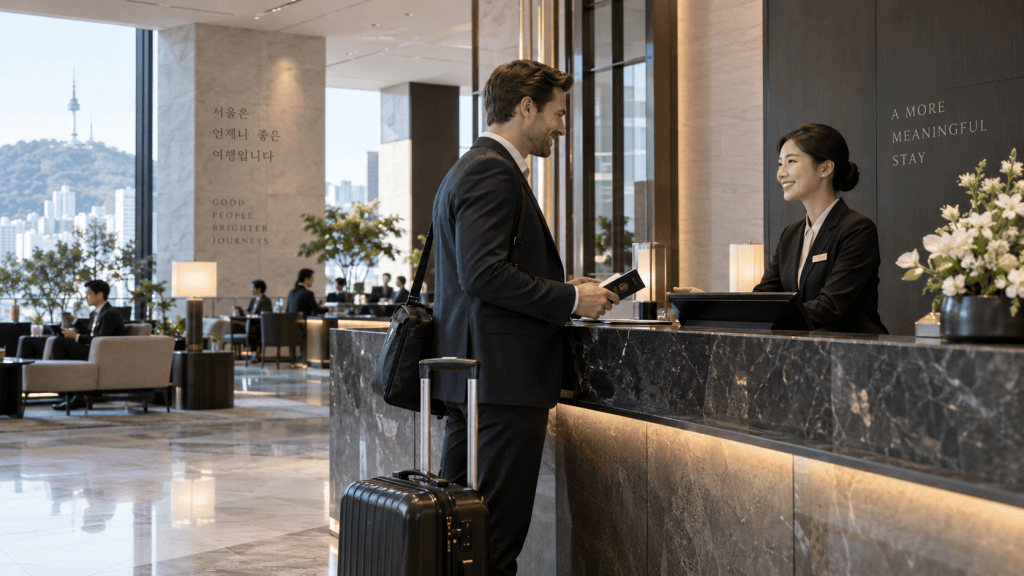
For business travelers, the cheapest option is not always the best option.
| Situation | Best Choice |
|---|---|
| Traveling alone with light luggage | AREX |
| Going to Seoul Station | AREX Express |
| Hotel is directly on an airport bus route | Airport Limousine |
| Two or three executives traveling together | Taxi |
| Several large suitcases | Taxi / Airport Limousine |
| Traveling during Seoul rush hour | Subway |
| Short trip between meetings | Taxi |
| Late-night travel | Taxi |
| Need predictable travel time | Subway / AREX |
| Want door-to-door convenience | Taxi |
The Key Principle
Your time may be worth more than the fare difference.
A business traveler should consider not only transportation cost, but also:
time + luggage + transfers + traffic + meeting schedule.
11. Essential Apps for Business Visitors
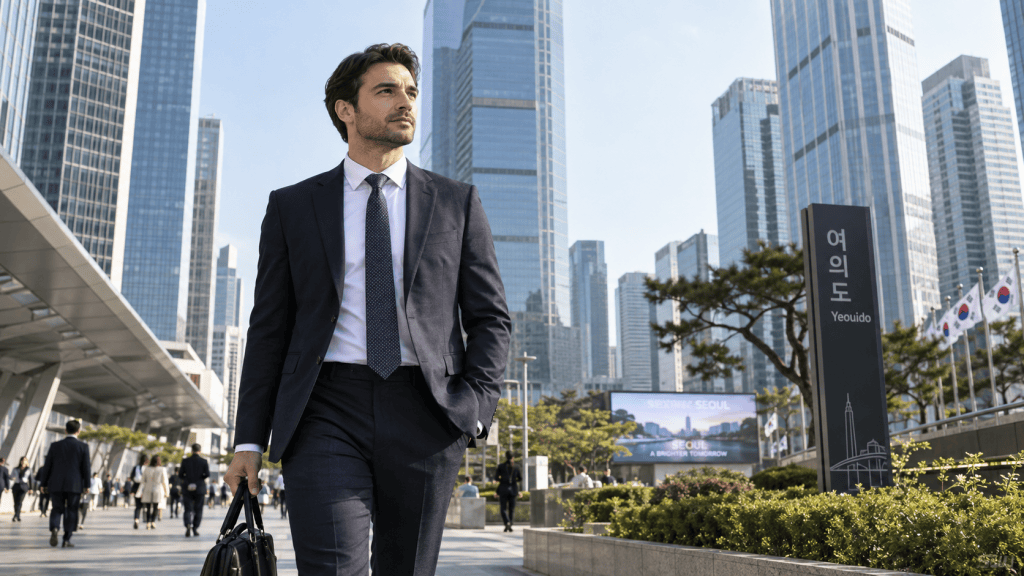
Your smartphone becomes your most important travel tool in Korea.
| App | Main Use | Why It Helps |
|---|---|---|
| NAVER Map | Navigation | Excellent Korean address and transportation information |
| Papago | Translation | Korean-English/other language translation |
| Kakao T / visitor-friendly taxi service | Taxi | Easier destination communication |
| Catchtable | Restaurants | Reservations at popular restaurants |
| KakaoTalk | Communication | Widely used in Korea |
Before leaving your hotel for a meeting, check your route again.
A destination that appears close on a map may take significantly longer because of traffic.
12. Where Should a Business Traveler Stay?
Choosing the right location can save far more money and time than choosing the cheapest hotel.
| Area | Best For | Main Characteristics |
|---|---|---|
| Gangnam | Major companies, tech, professional services | Modern business district |
| Samseong / COEX | Conventions, exhibitions, corporate meetings | Excellent business infrastructure |
| Yeouido | Finance, banking, investment | Korea’s financial center |
| Gwanghwamun / Jongno | Government, public sector, corporations | Central Seoul |
| Seoul Station | Airport and intercity connections | Excellent transportation |
| Myeongdong | First-time international visitors | Central and convenient |
| Jamsil | Eastern Seoul business | Hotels, conventions and entertainment |
A Very Simple Rule
If most of your meetings are in Gangnam, stay in Gangnam.
If most meetings are with financial institutions, consider Yeouido.
If you are meeting government organizations, associations, or companies in central Seoul, consider Gwanghwamun or Jongno.
A cheaper hotel on the other side of Seoul can easily cost you one or two hours of additional travel every day.
13. Paying in Korea

Korea is a highly cashless society.
International credit cards are commonly accepted at:
hotels, major restaurants, department stores, cafés, convenience stores, and many taxis.
For a short business trip, a practical approach is:
| Payment Method | Recommendation |
|---|---|
| International credit card | Excellent |
| Transportation card | Essential |
| Korean cash | Keep some as backup |
| Mobile wallet | Acceptance varies |
| Prepaid travel card | Useful but optional |
Keeping around ₩50,000–₩100,000 in cash as a backup is usually sufficient for many short business trips.
That is approximately:
| KRW | USD | JPY | CNY |
|---|---|---|---|
| ₩50,000 | $36.59 | ¥5,667 | ¥245 |
| ₩100,000 | $73.18 | ¥11,333 | ¥491 |
14. Business Meeting Basics
Korean companies are increasingly global, but understanding a few local practices can make your visit smoother.
| Situation | Recommended Approach |
|---|---|
| Meeting arrival | Arrive 5–10 minutes early |
| Greeting | Handshake and polite greeting |
| Business cards | Bring enough cards |
| Senior executives | Acknowledge senior members appropriately |
| Dress | Professional business attire |
| Meeting | Avoid unnecessary interruption |
| Follow-up | Send a short follow-up email |
| Business dinner | Often valuable for relationship-building |
Business cards remain useful, especially during first meetings.
If Korea is an important market for your company, consider:
English on one side / Korean on the other.

15. How Much Money Might You Spend in One Business Day?
Consider a simple example:
| Expense | Example Cost |
|---|---|
| Subway to first meeting | ₩1,550+ |
| Taxi to second meeting | Metered |
| Coffee | Varies |
| Business lunch | Varies significantly |
| Subway / taxi to next meeting | Varies |
| Dinner | Varies |
| Taxi to hotel | Metered |
Transportation itself can be remarkably inexpensive if you mainly use the subway.
A full day involving several subway and bus journeys may still cost only a small fraction of what similar transportation could cost in some other global business cities.
However, using taxis throughout the day provides greater convenience and can still be practical for executives with tight schedules.
16. Emergency Information
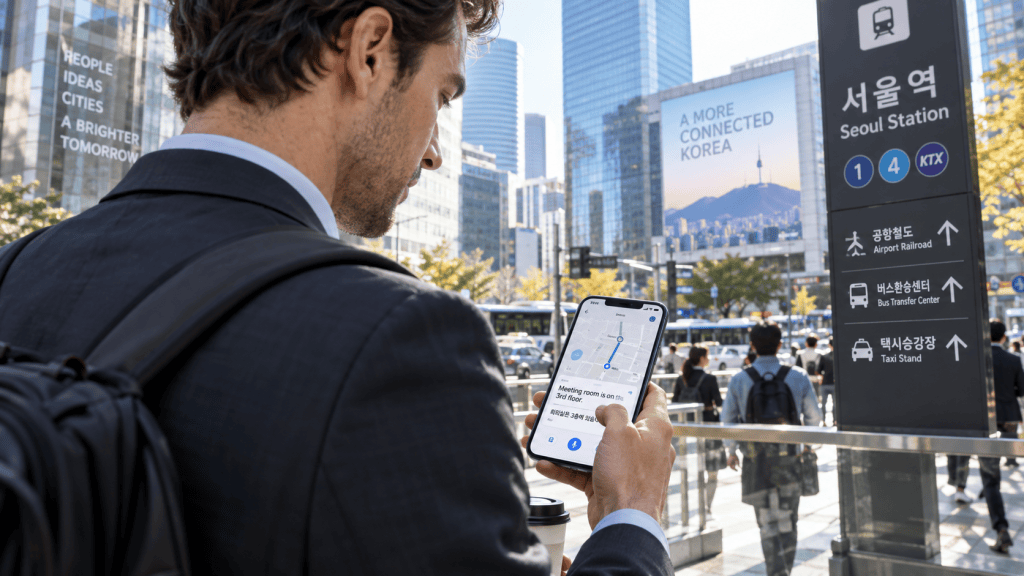
Save these numbers before arriving in Korea.
| Service | Number |
|---|---|
| Police | 112 |
| Fire / Ambulance | 119 |
| Korea Travel Helpline | 1330 |
| Korea Country Code | +82 |
Also save your:
hotel address in Korean, Korean business partner’s mobile number, embassy or consulate information, travel insurance contact, and meeting addresses.
17. The Smart Business Traveler’s Rule
Travel in Korea becomes much easier if you remember one simple strategy:
Use the subway when time matters.
Use a taxi when convenience matters.
Use AREX when airport predictability matters.
Use an airport limousine when luggage matters.
Korea’s transportation system is relatively inexpensive, sophisticated, and highly connected.
That means you can focus less on getting around—
and more on the reason you came to Korea in the first place:
Business.
Welcome to Korea.
Have a productive meeting, a comfortable stay, and a successful business trip.


Leave a Reply