
First Time in Korea? Everything You Need to Know Before Your Trip
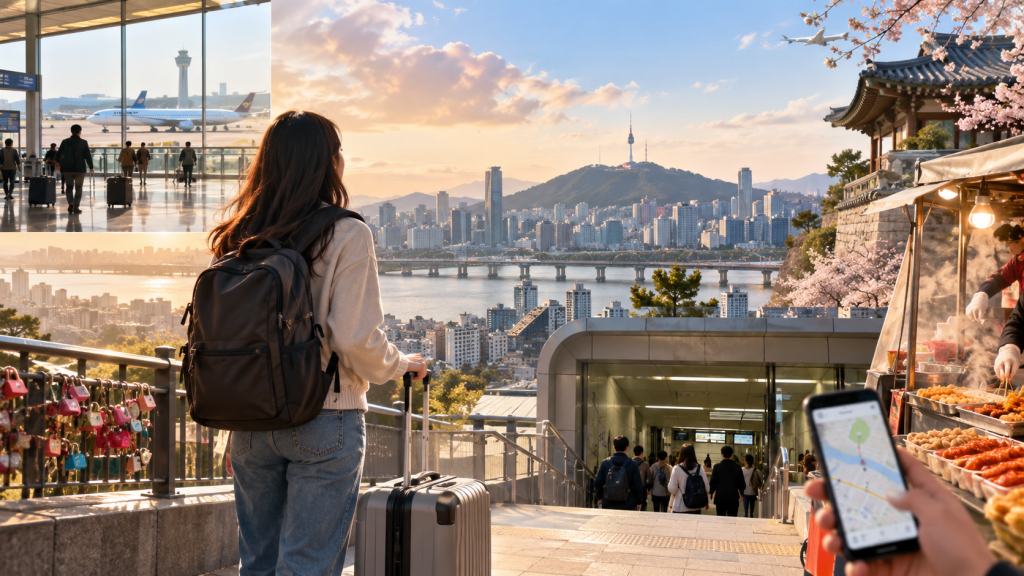
A Practical 2026 Guide to Entry, Airport Transfers, Transportation, Internet, Money, Food, and Daily Travel Costs
Updated: September 2026
South Korea is one of Asia’s easiest countries to travel around once you understand a few basics. The subway system is extensive, public transportation is affordable, mobile internet is fast, credit cards are widely accepted, and major tourist areas are generally easy to navigate.
For first-time visitors, however, a few questions come up again and again: Do I need K-ETA? How do I get from Incheon Airport to Seoul? Should I buy a Tmoney card? How much does food cost? How much cash should I carry? Which apps should I install?
This guide answers those questions in one place.


1. Before You Fly to Korea
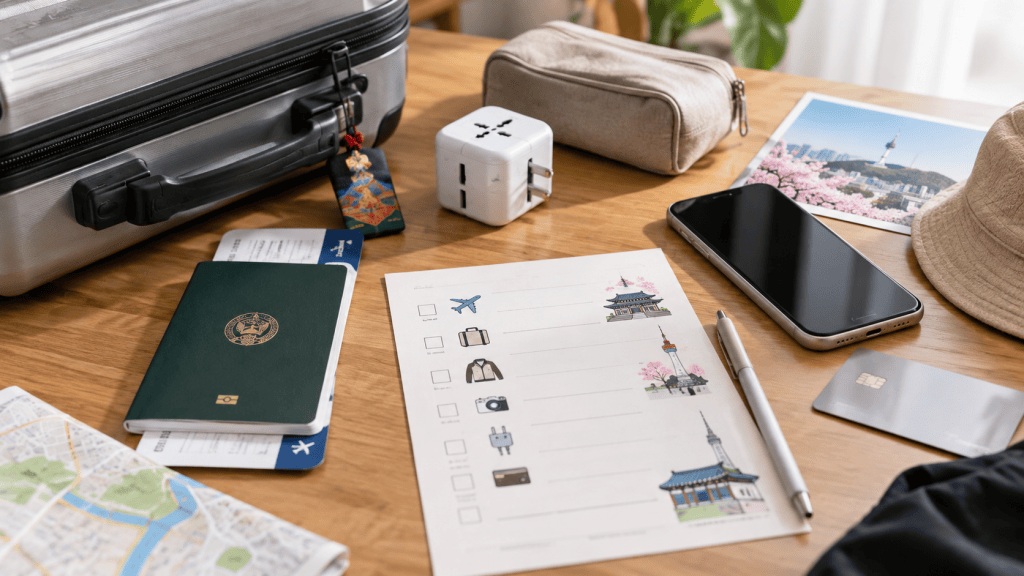
Before departure, check your passport, visa or visa-free entry eligibility, K-ETA status, and arrival-card requirements.
As of 2026, Korea has extended its temporary K-ETA exemption for eligible countries and regions through December 31, 2026. Eligibility depends on nationality, so travelers should always check the official K-ETA website before departure. Travelers who hold a valid K-ETA generally do not need to submit a separate arrival card. (K-ETA)
Korea’s official e-Arrival Card is completely free and can be submitted online starting three days before arrival. The Korean government also warns travelers about unofficial websites that request payment. (E-Arrival Card)
| Before Departure | What You Should Know |
|---|---|
| Passport | Check validity before booking your trip |
| Visa | Requirements depend on nationality and length of stay |
| K-ETA | Some nationalities are temporarily exempt through Dec. 31, 2026 |
| e-Arrival Card | Free; can be submitted within 3 days before arrival if required |
| Accommodation address | Keep your hotel name and address available for immigration |
| Travel insurance | Strongly recommended |
| Phone | Make sure it is unlocked if you plan to use a Korean SIM/eSIM |
| Payment | Bring an international credit/debit card plus a small amount of KRW cash |
2. Korean Money: A Quick Currency Guide
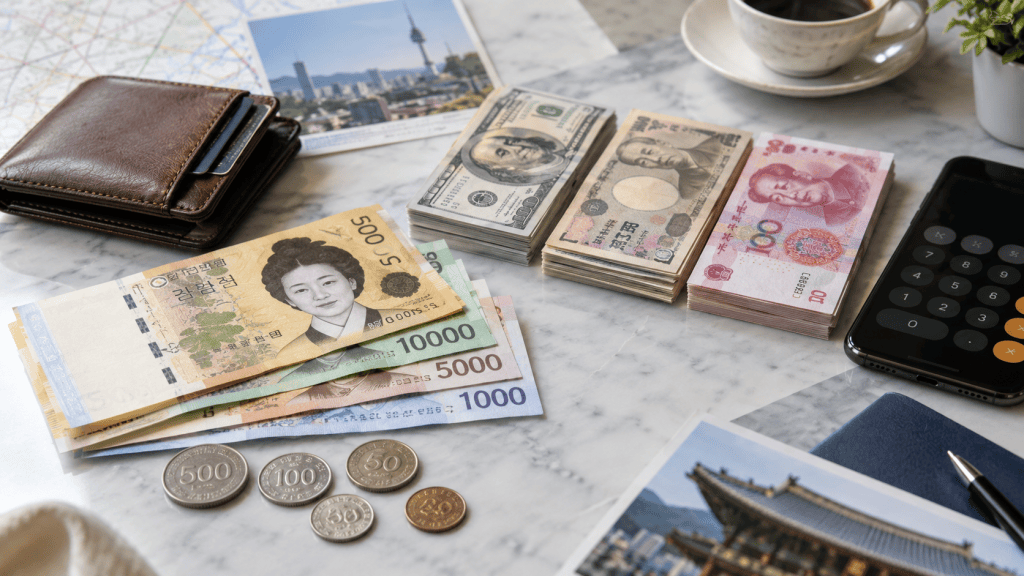
Korea uses the South Korean won (KRW / ₩).
For easy comparison in this article, the following approximate exchange rates are used:
| Korean Won | US Dollar | Japanese Yen | Chinese Yuan |
|---|---|---|---|
| ₩10,000 | about US$7.2 | about ¥1,130 | about CN¥48.5 |
| ₩50,000 | about US$36 | about ¥5,650 | about CN¥243 |
| ₩100,000 | about US$72 | about ¥11,300 | about CN¥485 |
These are rounded reference rates for travelers. Exchange rates, card-company rates, and cash-exchange rates change constantly. Recent mid-market rates put KRW at roughly these levels. (Xe)
3. Arriving at Incheon International Airport
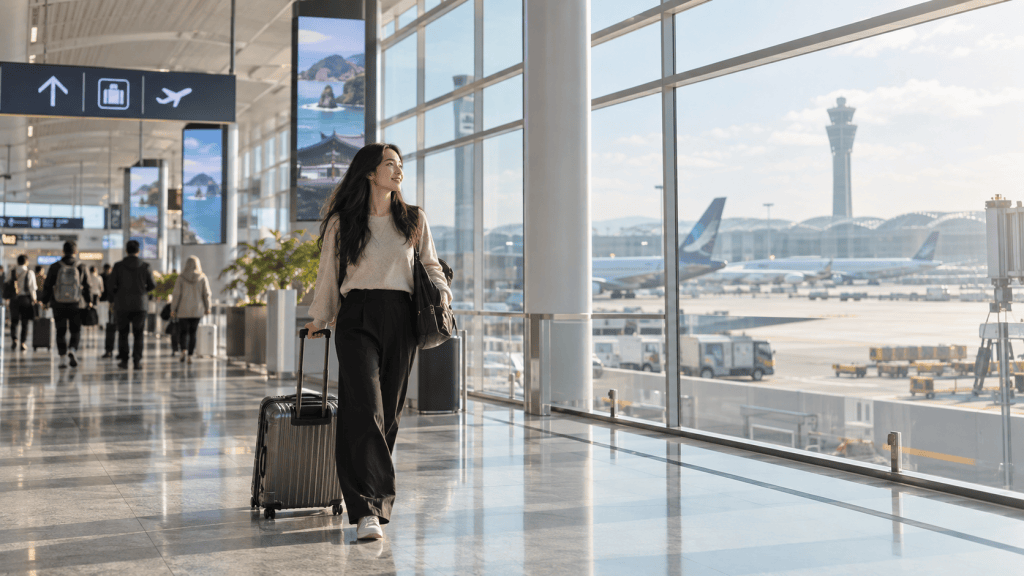
For most international visitors, the first big question is:
“What is the best way to get from Incheon Airport to Seoul?”
There are four practical choices: the AREX All-Stop Train, AREX Express Train, Airport Limousine Bus, and taxi.
Incheon Airport → Central Seoul
| Transportation | Approx. Cost | USD | JPY | CNY | Approx. Time | Best For |
|---|---|---|---|---|---|---|
| AREX All-Stop Train | ₩4,150–₩4,750+ | $3.0–$3.4 | ¥470–¥540 | ¥20–23 CNY | 59–66 min | Budget travelers |
| AREX Express Train | ₩13,000 | $9.4 | ¥1,470 | ¥63 CNY | 43–51 min | Seoul Station |
| Airport Limousine Bus | around ₩17,000 on many routes | $12.3 | ¥1,920 | ¥82 CNY | 60–100+ min | Large luggage |
| Standard Taxi | often around ₩60,000–₩100,000 to central Seoul | $43–$72 | ¥6,780–¥11,300 | ¥291–¥485 CNY | 60–90+ min | Families/groups |
The AREX Express travels nonstop between Incheon Airport and Seoul Station, taking about 43 minutes from Terminal 1 and about 51 minutes from Terminal 2. The All-Stop Train takes roughly an hour but connects directly with stations such as Hongik University, Digital Media City, and Gongdeok. (VISITKOREA – Imagine Your Korea)
Many Airport Limousine routes currently charge ₩17,000 for adults, including routes serving Myeongdong, Seoul Station, Hongdae, and other major districts. (공항리무진)
Taxi fares depend on distance, traffic, destination, tolls, and time of day. Official airport guidance also notes that Seoul taxis may charge nighttime surcharges of roughly 20%–40% between 10 p.m. and 4 a.m. Travelers should use official taxi stands rather than accepting unsolicited rides inside the airport. (인천국제공항)
Which one should you choose?
For most solo travelers, the AREX All-Stop Train offers the best value.
If your hotel is near Seoul Station, the AREX Express is comfortable and simple.
If you have two large suitcases and your hotel is near an airport-bus stop, the Airport Limousine Bus may be easier than transferring through subway stations.
For three or four people traveling together, a taxi can become more attractive because the fare is shared.
4. Getting Around Seoul: Subway and Bus
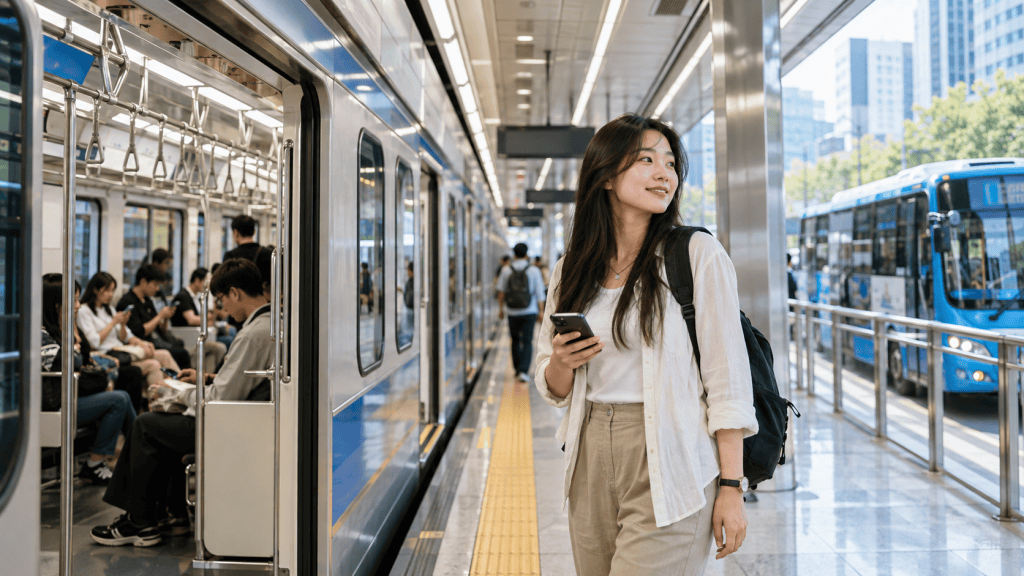
Seoul has one of the most extensive public transportation systems in the world.
The subway is usually the easiest option for international visitors because stations have numbered lines, English signage, and clear transfer information.
The current adult base subway fare using a transportation card is ₩1,550. A single-use ticket costs slightly more. (Seoul English)
| Transportation | KRW | USD | JPY | CNY |
|---|---|---|---|---|
| Seoul subway base fare | ₩1,550 | $1.12 | ¥175 | CN¥7.5 |
| Approx. 4 subway rides | ₩6,200 | $4.47 | ¥701 | CN¥30 |
| Approx. 8 subway rides | ₩12,400 | $8.94 | ¥1,401 | CN¥60 |
One of Korea’s biggest advantages is the integrated transfer system. When properly using a transportation card and tapping in and out, passengers can transfer between buses and subways while paying according to the integrated fare rules. (Seoul English)
5. Should You Buy a Tmoney Card?
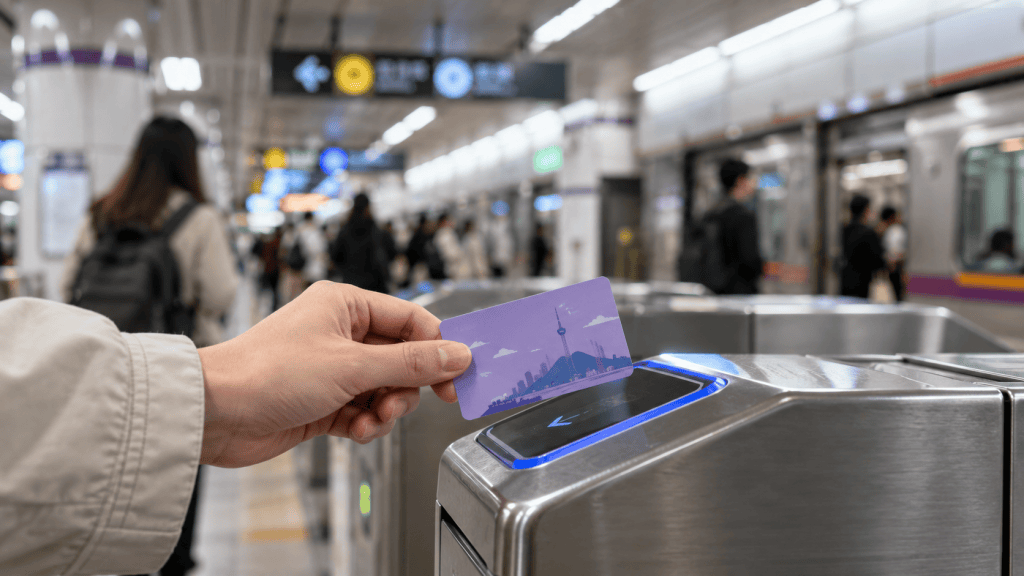
For most travelers, yes.
A Tmoney card can be used on subways and buses and at many affiliated locations. Transportation cards can be purchased and reloaded at convenience stores and other designated locations. (VISITKOREA – Imagine Your Korea)
Instead of buying individual tickets every time, you simply tap your card when entering and leaving the subway or when boarding and exiting buses.
Keep a small amount of Korean cash available because payment and recharge options can vary depending on the machine, card type, or location.
6. Staying in Seoul for Several Days? Consider the Climate Card
Foreign tourists who plan to take public transportation frequently should also compare the Climate Card short-term passes.
| Pass | KRW | USD | JPY | CNY |
|---|---|---|---|---|
| 1 Day | ₩5,000 | $3.61 | ¥565 | CN¥24 |
| 2 Days | ₩8,000 | $5.77 | ¥904 | CN¥39 |
| 3 Days | ₩10,000 | $7.21 | ¥1,130 | CN¥49 |
| 5 Days | ₩15,000 | $10.82 | ¥1,695 | CN¥73 |
| 7 Days | ₩20,000 | $14.42 | ¥2,260 | CN¥97 |
Short-term passes currently cover 1, 2, 3, 5, or 7 days. A physical card costs an additional ₩3,000, and international credit/debit cards can be used for short-term pass purchases at supported machines. Service coverage is not identical to every train or bus in the wider Seoul metropolitan region, so travelers should check whether their routes are included. (Seoul English)
For someone taking the subway six or seven times in one day, the pass can become particularly convenient.
7. Mobile Internet: SIM or eSIM?
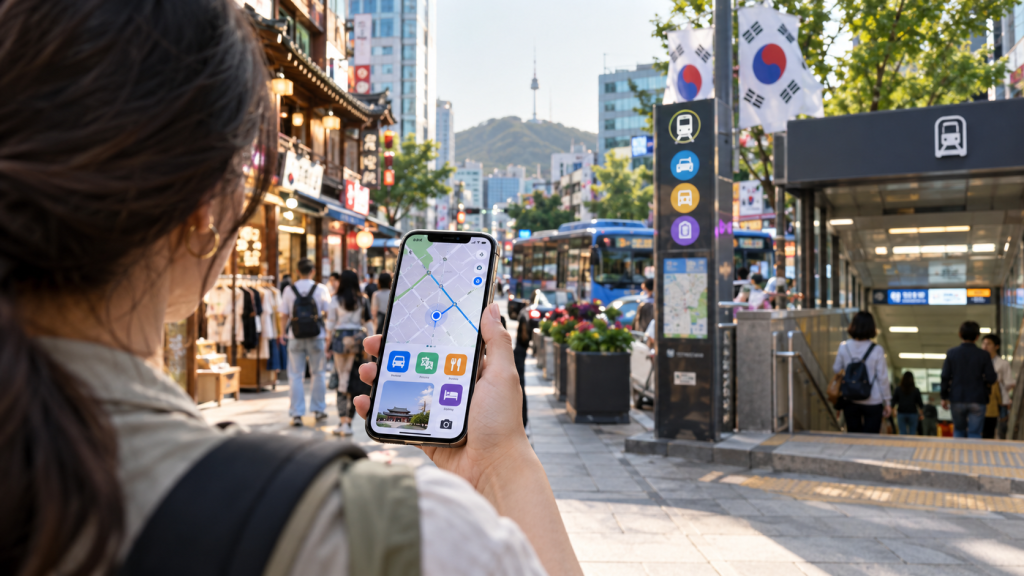
Do not underestimate how important mobile data is in Korea.
You will probably use your phone constantly for navigation, translation, taxi booking, restaurant searches, subway directions, reservations, and messaging.
Korean mobile carriers offer prepaid SIM and eSIM products at airports and online. VISITKOREA notes that prepaid SIM cards are widely available and often include unlimited data for stays ranging from one day to several weeks. (VISITKOREA – Imagine Your Korea)
As one current example, LG U+ offers the following unlimited-data traveler plans:
| Period | KRW | USD | JPY | CNY |
|---|---|---|---|---|
| 1 Day | ₩6,500 | $4.69 | ¥735 | CN¥32 |
| 2 Days | ₩12,000 | $8.65 | ¥1,356 | CN¥58 |
| 3 Days | ₩18,000 | $12.98 | ¥2,034 | CN¥87 |
| 4 Days | ₩23,000 | $16.58 | ¥2,599 | CN¥112 |
| 5 Days | ₩27,500 | $19.83 | ¥3,108 | CN¥133 |
Current LG U+ tourist SIM/eSIM products offer unlimited 5G/LTE data, with pricing varying by duration and product type. (LG U+)
An eSIM is particularly convenient because there is no physical card to replace, but you should check that your phone supports eSIM and is carrier-unlocked before purchasing.
8. The Apps That Make Korea Much Easier
International visitors will have a much smoother trip if they prepare their phones before arriving.
| Purpose | Recommended App/Service | Why It Helps |
|---|---|---|
| Navigation | Naver Map | Excellent public-transport and walking directions |
| Navigation | Kakao Map | Useful alternative for local navigation |
| Translation | Papago | Particularly useful for Korean-English translation |
| Taxi | Kakao T / tourist-friendly taxi services | Easier than hailing taxis manually |
| Trains | KorailTalk / Korail | KTX and intercity train information |
| Tourism | VISITKOREA | Official tourism information |
| Emergency travel help | 1330 Korea Travel Helpline | Tourism information and assistance |
A practical tip is to save your hotel name in both English and Korean. Showing the Korean name or address to a taxi driver can save time.
9. What Does Food Cost in Korea?
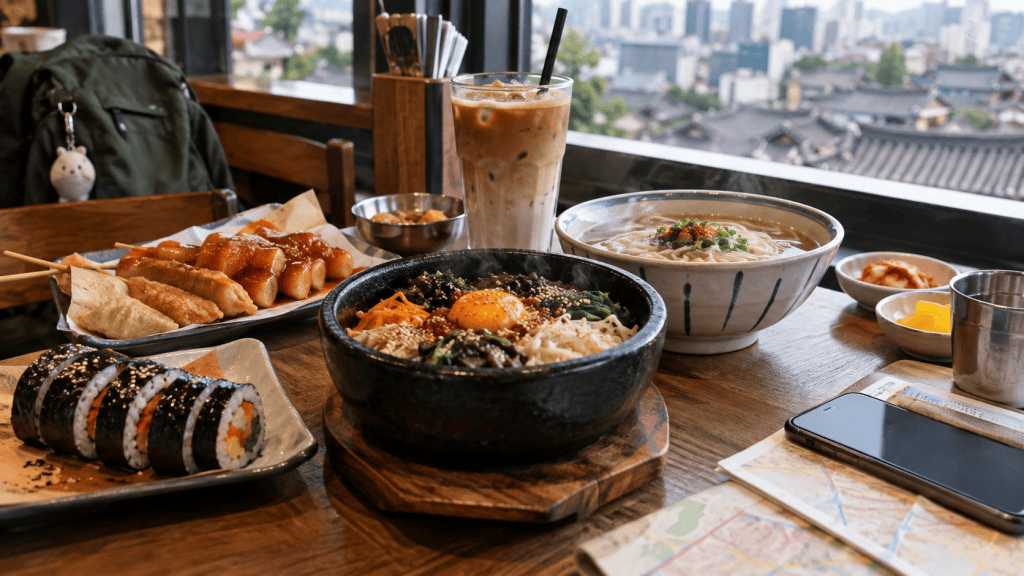
Korea can be surprisingly affordable if you eat the way locals do, but costs rise quickly with premium restaurants, cafés, nightlife, and hotel dining.
The following are practical traveler-oriented estimates rather than fixed prices.
| Food / Drink | Typical KRW | USD | JPY | CNY |
|---|---|---|---|---|
| Convenience-store breakfast | ₩4,500–₩7,000 | $3.2–$5.0 | ¥510–¥790 | CN¥22–34 |
| Simple Korean lunch | ₩8,000–₩12,000 | $5.8–$8.7 | ¥900–¥1,360 | CN¥39–58 |
| Bibimbap / soup / noodles | ₩9,000–₩15,000 | $6.5–$10.8 | ¥1,020–¥1,700 | CN¥44–73 |
| Korean BBQ dinner | ₩20,000–₩40,000+ per person | $14–$29+ | ¥2,260–¥4,520+ | CN¥97–194+ |
| Coffee | ₩4,000–₩7,000 | $2.9–$5.0 | ¥450–¥790 | CN¥19–34 |
| Café dessert | ₩6,000–₩12,000 | $4.3–$8.7 | ¥680–¥1,360 | CN¥29–58 |
| Street food | ₩3,000–₩8,000 | $2.2–$5.8 | ¥340–¥900 | CN¥15–39 |
One useful cultural difference: tipping is generally not expected in ordinary Korean restaurants, cafés, and taxis.
10. How Much Does Accommodation Cost?
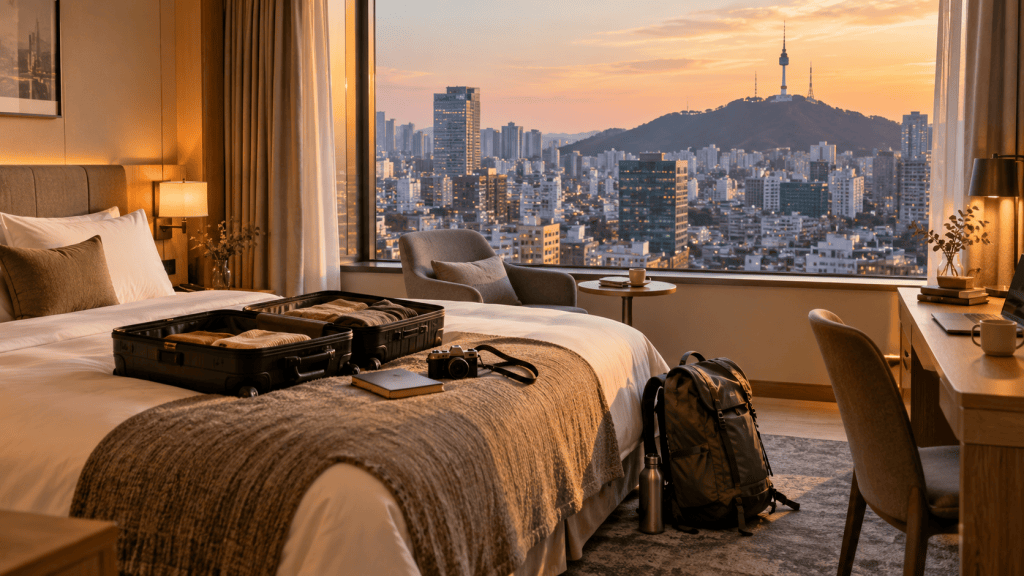
Hotel prices vary enormously by season, weekend demand, neighborhood, events, and room size.
For planning purposes, visitors can use these rough ranges for Seoul:
| Accommodation | Typical Nightly Price | USD | JPY | CNY |
|---|---|---|---|---|
| Hostel / Guesthouse | ₩30,000–₩70,000 | $22–$50 | ¥3,390–¥7,910 | CN¥146–340 |
| Budget Hotel | ₩70,000–₩120,000 | $50–$87 | ¥7,910–¥13,560 | CN¥340–582 |
| Comfortable 3–4 Star Hotel | ₩120,000–₩250,000 | $87–$180 | ¥13,560–¥28,250 | CN¥582–1,213 |
| Premium Hotel | ₩250,000–₩500,000+ | $180–$361+ | ¥28,250–¥56,500+ | CN¥1,213–2,426+ |
For first-time tourists, Myeongdong, Hongdae, Jongno, Insadong, Seoul Station, Gangnam, and Dongdaemun are among the most practical areas, depending on your travel style.
11. How Much Money Should You Budget Per Day?
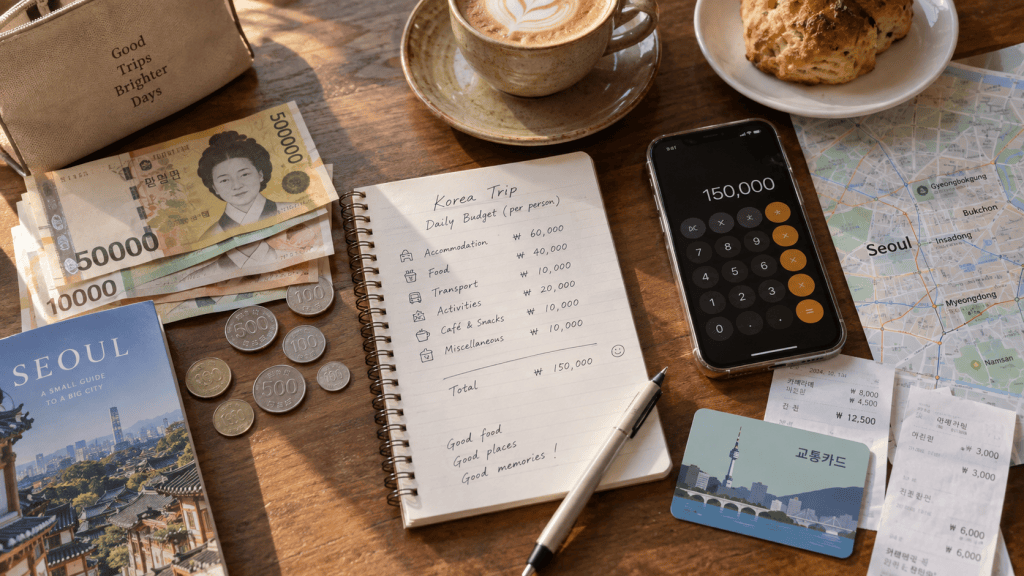
Excluding international airfare, a realistic daily budget can look like this:
| Travel Style | KRW per Day | USD | JPY | CNY | What It Feels Like |
|---|---|---|---|---|---|
| Budget Traveler | ₩70,000–₩120,000 | $50–$87 | ¥7,900–¥13,600 | CN¥340–582 | Hostel, local meals, subway |
| Comfortable Traveler | ₩150,000–₩300,000 | $108–$216 | ¥17,000–¥33,900 | CN¥728–1,456 | Good hotel, cafés, shopping, attractions |
| Premium Traveler | ₩350,000+ | $252+ | ¥39,600+ | CN¥1,698+ | Upscale hotel, taxis, fine dining |
Shopping is not included because that can easily become the largest part of a Korea trip, especially for travelers interested in K-beauty, fashion, K-pop merchandise, and department stores.
12. Cash or Credit Card?
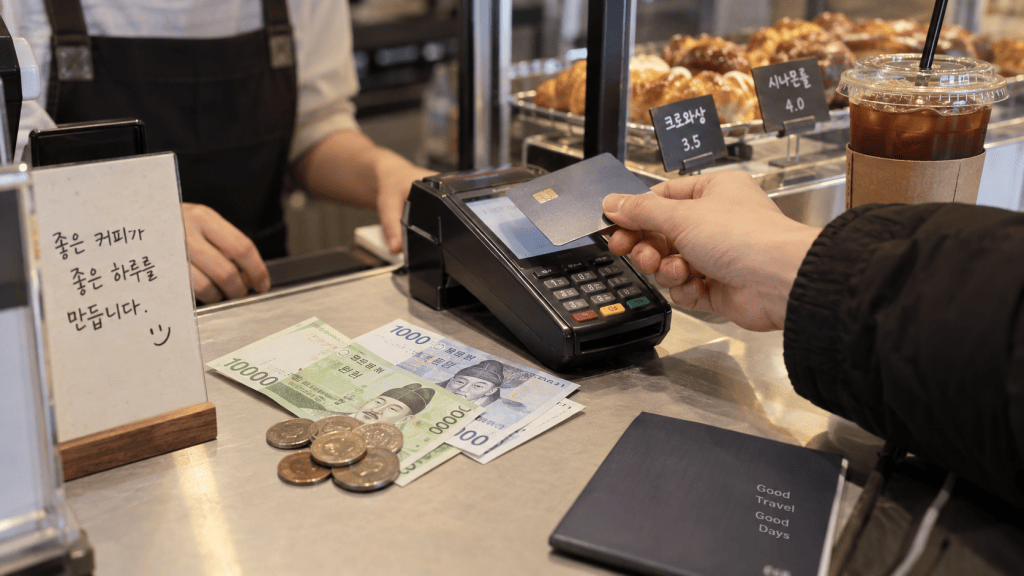
Korea is highly card-friendly.
Hotels, restaurants, cafés, convenience stores, department stores, tourist attractions, and most shops commonly accept cards.
However, carrying ₩30,000–₩50,000 in cash is still a good idea.
That is only about:
| Cash | USD | JPY | CNY |
|---|---|---|---|
| ₩30,000 | $21.6 | ¥3,390 | CN¥146 |
| ₩50,000 | $36.1 | ¥5,650 | CN¥243 |
Cash can be useful for traditional markets, smaller vendors, transit-card recharging, or places where foreign cards occasionally fail.
13. A Few Korean Habits That Surprise First-Time Visitors
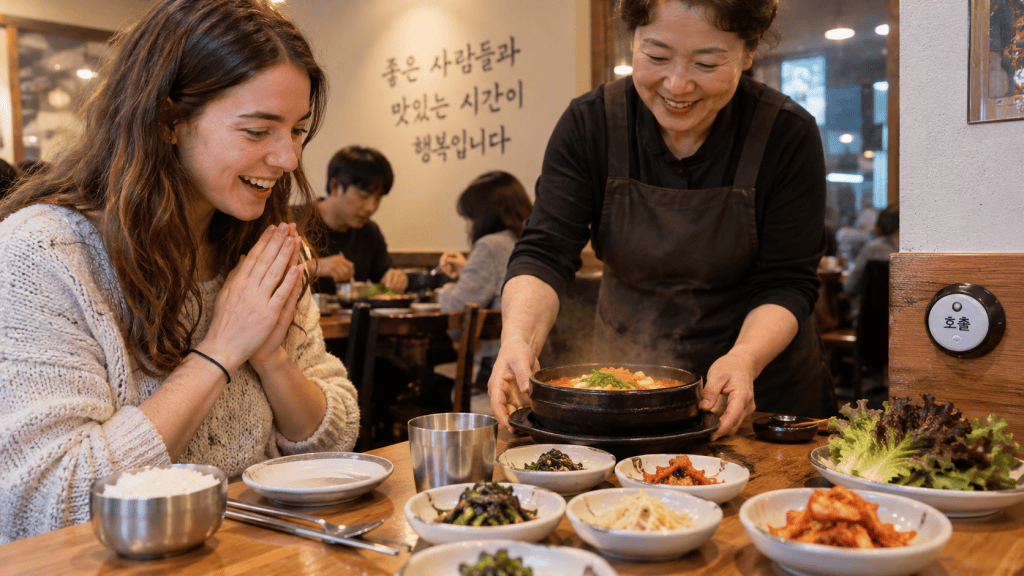
Korea is generally straightforward for visitors, but understanding a few local habits makes travel easier.
| Situation | What to Expect |
|---|---|
| Restaurant tipping | Usually not required |
| Restaurant water | Often self-service or provided free |
| Side dishes | Frequently included with Korean meals |
| Restaurant call button | Common at many tables |
| Shoes | Usually removed when entering a Korean home |
| Escalators | Follow local signage rather than assuming one universal rule |
| Subway | Keep conversations and phone calls relatively quiet |
| Priority seating | Leave designated seats available for those who need them |
| Trash bins | Public bins can be harder to find than visitors expect |
| Drinking water | Tap water is treated, but bottled water is widely available |
14. Emergency Numbers You Should Save
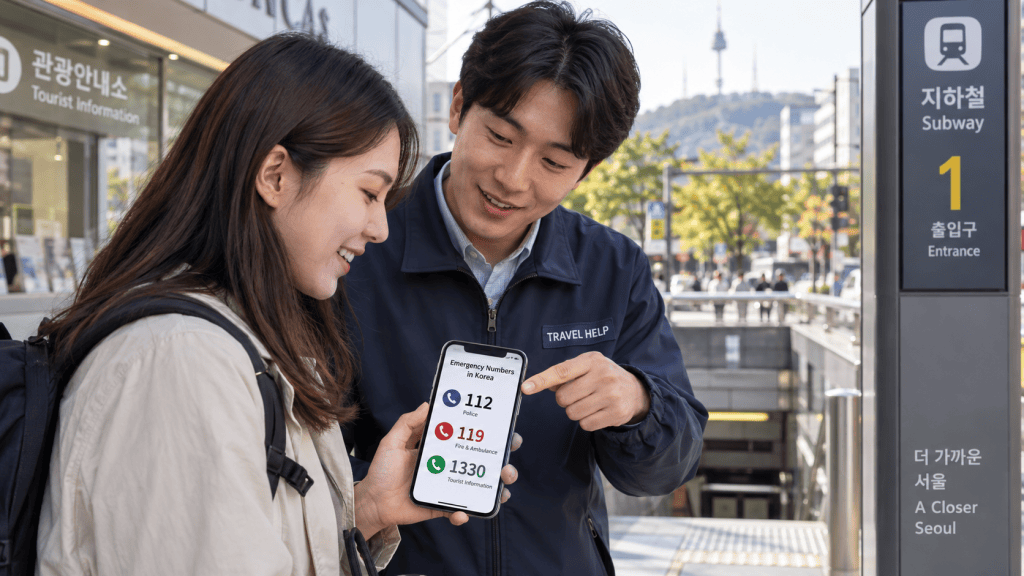
| Situation | Number |
|---|---|
| Police | 112 |
| Fire / Ambulance | 119 |
| Korea Travel Helpline | 1330 |
The 1330 Korea Travel Helpline is especially useful for international tourists who need travel information or assistance.
15. Your First 24 Hours in Korea: The Easiest Plan
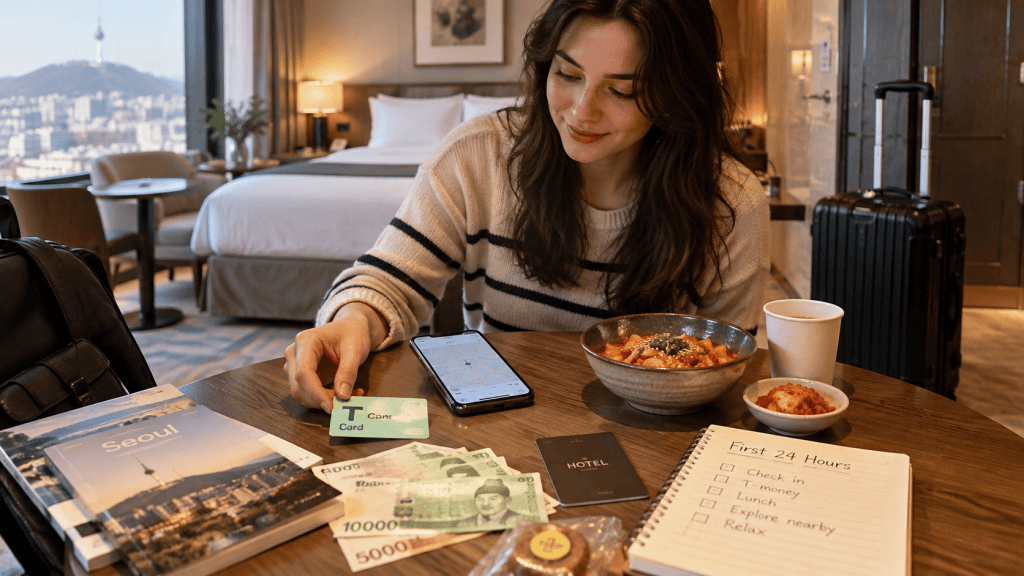
A simple first day can look like this:
Incheon Airport → activate eSIM/SIM → withdraw or exchange a small amount of KRW → buy your transportation card → take AREX or an airport bus → check into your hotel → install or open Naver Map/Papago → eat your first Korean meal → visit a nearby neighborhood rather than scheduling a complicated itinerary.
That sequence avoids the most common problems experienced by first-time visitors.
Final Tip: Korea Is Easier Than It Looks
The biggest mistake first-time visitors make is over-planning.
You do not need to understand every subway line, memorize Korean phrases, or carry large amounts of cash.
If you have mobile data, a transportation card, a working international payment card, Naver Map, a translation app, and your hotel address saved in Korean, you already have most of what you need.
Korea rewards curiosity. Take the subway, walk into a local restaurant, explore a traditional market, try convenience-store food, visit a neighborhood café, and allow yourself time to discover places that were never on your itinerary.


Leave a Reply