
15 Things Every International Business Traveler Should Know
Updated: September 2026
South Korea is fast, highly connected, technologically advanced, and one of Asia’s most dynamic business environments. But doing business in Korea is not simply about arriving with a good product, making an impressive presentation, and negotiating a price.
For first-time business visitors, understanding hierarchy, titles, business cards, decision-making, punctuality, follow-up, business dinners, interpretation, and relationship-building can make a significant difference.
Korean companies vary enormously by industry, size, ownership, and generation. Still, these 15 practical points will help first-time visitors avoid common mistakes and make a stronger first impression.
1. Know the Difference Between a Business Visit and Work

[PHOTO 1 — Business traveler arriving in Korea]
Before booking your flight, be clear about what you will actually be doing in Korea.
Attending meetings, conducting market research, negotiating contracts, visiting suppliers, and performing paid professional services may fall under different immigration categories. Korea distinguishes short-term business visits from employment or profit-making activities, and requirements depend on nationality and the actual purpose of the visit.
| Activity in Korea | What to Check |
|---|---|
| Client meetings | Business-entry requirements |
| Market research | Business-entry requirements |
| Contract negotiations | Business-entry requirements |
| Supplier visits | Business-entry requirements |
| Conference attendance | Entry requirements for your nationality |
| Paid professional services | Work authorization may be required |
| Equipment installation or technical work | Activity-specific visa requirements |
| Receiving compensation in Korea | Check employment/work status carefully |
For eligible nationalities, Korea’s temporary K-ETA exemption has been extended through December 31, 2026, but travelers should always verify their own status before departure.
Key point: The nature of your activity matters more than simply how many days you stay.
2. Know Who You Are Meeting
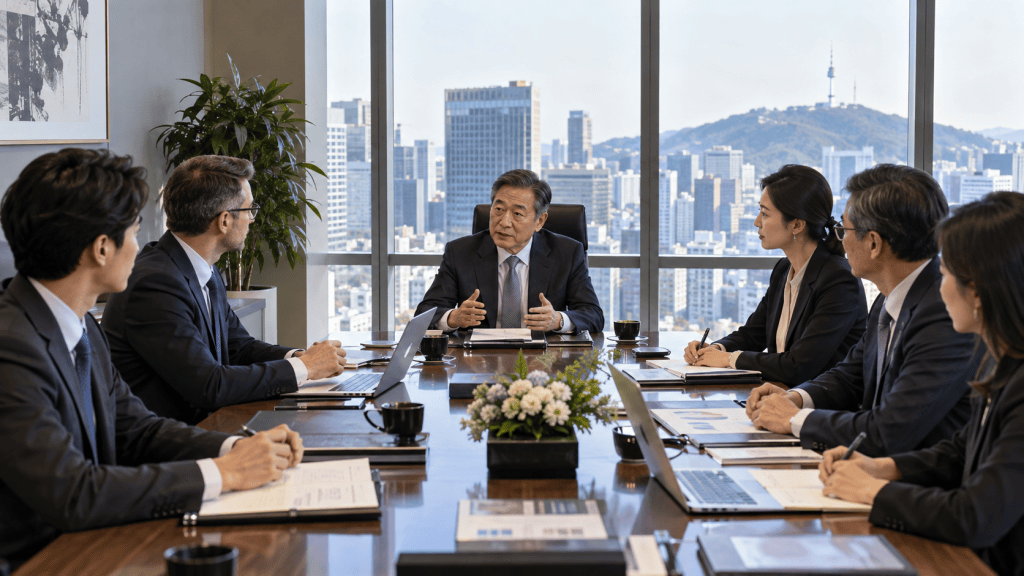
[PHOTO 2 — Korean corporate meeting with a senior decision-maker]
Before an important Korean business meeting, find out who will actually be in the room.
In many organizations, a manager may strongly support your proposal but still need approval from a senior executive, procurement, finance, legal, headquarters, or several of these functions.
| Information to Confirm | Why It Matters |
|---|---|
| Full name | Helps you prepare properly |
| Job title | Indicates seniority |
| Department | Shows business responsibility |
| Meeting role | Buyer, evaluator, user, adviser, decision-maker |
| Number of participants | Helps prepare materials and business cards |
| Senior decision-maker attending? | Changes your presentation strategy |
| English proficiency | Helps determine whether interpretation is useful |
For an important meeting, try to match the seniority of your delegation reasonably well with the Korean side.
If a Korean company sends a senior executive and your company sends only a junior representative, the imbalance can unintentionally signal that the relationship is not a high priority.
3. Do Not Start With First Names Too Quickly
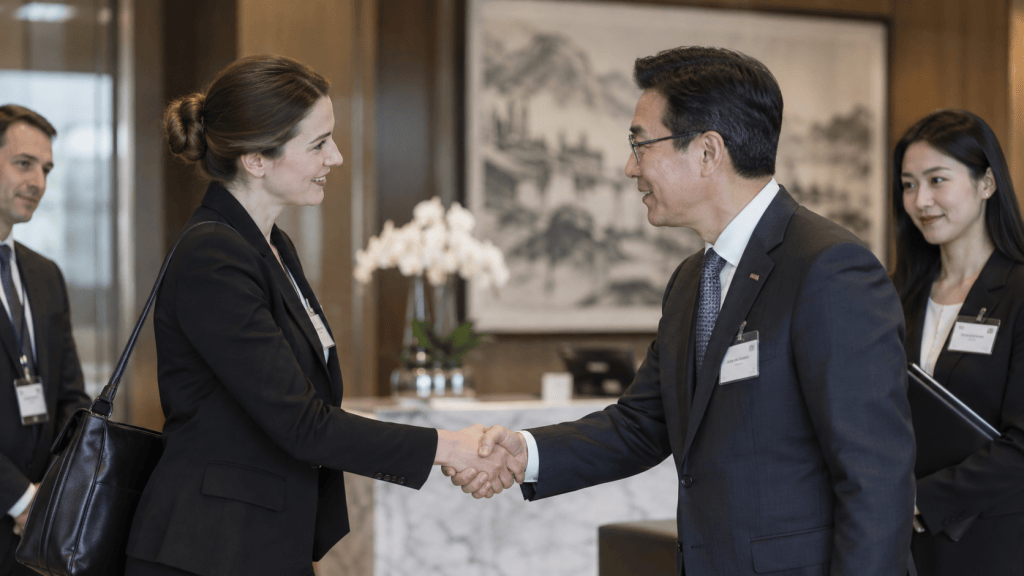
[PHOTO 3 — Formal first business greeting]
Many international executives come from cultures where first names are used immediately. Korea can be different.
During an initial meeting, it is usually safer to use the person’s family name together with an appropriate professional title until they invite you to become more informal.
| Korean Contact | Safe Initial Address |
|---|---|
| CEO Kim Min-su | President Kim / Mr. Kim |
| Director Lee Ji-hoon | Director Lee |
| Professor Park | Professor Park |
| Manager Choi | Manager Choi / Ms. Choi |
| Dr. Han | Dr. Han |
Current U.S. Commercial Service guidance on Korea also recommends initially using last names and titles.
If someone says, “Please call me Minsoo,” then moving to a first-name basis is perfectly natural.
The safest approach: formal first, informal later.
4. Business Cards Still Matter

[PHOTO 4 — Exchanging business cards with both hands]
In an age of LinkedIn, QR codes, and digital profiles, business cards may feel old-fashioned. In Korea, they remain extremely useful.
A card immediately tells your counterpart who you are, which company you represent, what your position is, and how you should be addressed.
Business cards are commonly presented and received respectfully, often with both hands. Take a moment to look at the card you receive rather than immediately putting it away. Bilingual cards can also be useful.
| Better Practice | Avoid |
|---|---|
| Offer the card with both hands | Tossing or sliding it casually |
| Face it toward the receiver | Giving it upside down |
| Look at the card you receive | Immediately stuffing it into a pocket |
| Bring enough cards | Running out during a group meeting |
| Keep your title current | Using an outdated title |
| Consider English/Korean cards | Overcrowded designs |
For a first trip, 30 accurate, professional cards are better than 100 outdated ones.
5. A Positive Response Does Not Automatically Mean Approval

[PHOTO 5 — Korean executives thoughtfully reviewing a proposal]
Your meeting may end with comments such as:
“Very interesting.”
“Sounds good.”
“We will review it internally.”
“Let’s discuss this further.”
These can all be positive signs. But none automatically means that the company has approved your proposal.
Instead of guessing, finish the meeting with one simple question:
“What would be the next step from here?”
Then confirm the following:
| Question | What You Need |
|---|---|
| What happens next? | Next action |
| Who will handle it? | Owner |
| What do you need from us? | Deliverable |
| When should we send it? | Deadline |
| When will you review it? | Timeline |
| Who else needs to approve? | Decision process |
A useful formula is:
WHO → DOES WHAT → BY WHEN
That structure can turn a pleasant meeting into an actionable business process.
6. Korea Is Fast — But Corporate Approval May Still Take Time

[PHOTO 6 — Fast communication and internal approval process]
One of the first things visitors notice about Korea is speed.
Emails can be answered quickly. Meeting schedules can change quickly. Additional information may be requested with very little notice.
But fast communication does not always mean fast final approval.
| What Happens | Possible Meaning |
|---|---|
| Staff respond quickly | Active communication |
| More data requested | Evaluation continues |
| Pricing requested | Commercial review |
| References requested | Due diligence |
| Proposal reported to management | Internal review |
| Executive meeting requested | Relationship is progressing |
| Legal reviews the contract | Advanced stage |
| Purchase order or signed agreement | Formal commitment |
Large organizations may still require approval from several departments.
A useful question is:
“Could you help us understand the internal approval process from this point?”
Remember: “They like our proposal” and “the company has approved our proposal” are not the same thing.
7. A One-Page Executive Summary Can Beat a 50-Slide Deck

[PHOTO 7 — Presenting a concise executive summary]
Many first-time visitors arrive with a long corporate presentation explaining company history, philosophy, products, technology, and global operations.
Senior executives may need something much simpler:
Why does this matter to us?
Prepare a one-page executive summary that can be understood in two or three minutes.
| Section | Include |
|---|---|
| Who We Are | Company in 1–2 sentences |
| What We Offer | Product or service |
| Why Korea | Relevance to the Korean market |
| Business Problem | Problem being solved |
| Proof | Customers, results, certifications |
| Numbers | Savings, performance, growth |
| Proposal | What you want to do together |
| Commercial Model | Basic pricing if appropriate |
| Next Step | What should happen next |
Instead of saying:
“We are a leading global organization delivering innovative solutions.”
say:
“32 countries | 1,800 corporate clients | 84% renewal rate | 15 years of experience.”
Numbers travel through an organization much more easily than adjectives.
8. Plan to Arrive About 20 Minutes Early
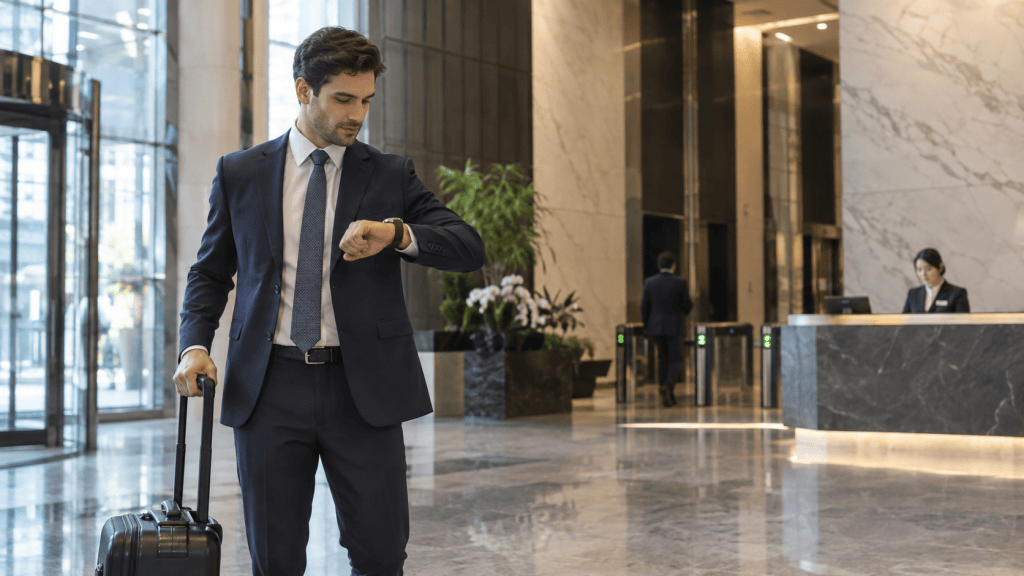
[PHOTO 8 — Business traveler arriving early and checking the time]
Punctuality matters in Korean business.
Seoul traffic can also make a journey that looks short on a map take considerably longer than expected. Current U.S. Commercial Service guidance recommends planning to arrive at least 20 minutes early for business appointments.
| Meeting | Good Target Arrival |
|---|---|
| 9:00 a.m. | Around 8:40 a.m. |
| 10:30 a.m. | Around 10:10 a.m. |
| 2:00 p.m. | Around 1:40 p.m. |
| 4:00 p.m. | Allow extra traffic buffer |
Large office towers may also require:
visitor registration → identification → security gate → elevator → company reception → meeting room.
Arriving at the building does not mean you have arrived at the meeting.
9. Ask How Your Korean Partner Prefers to Communicate
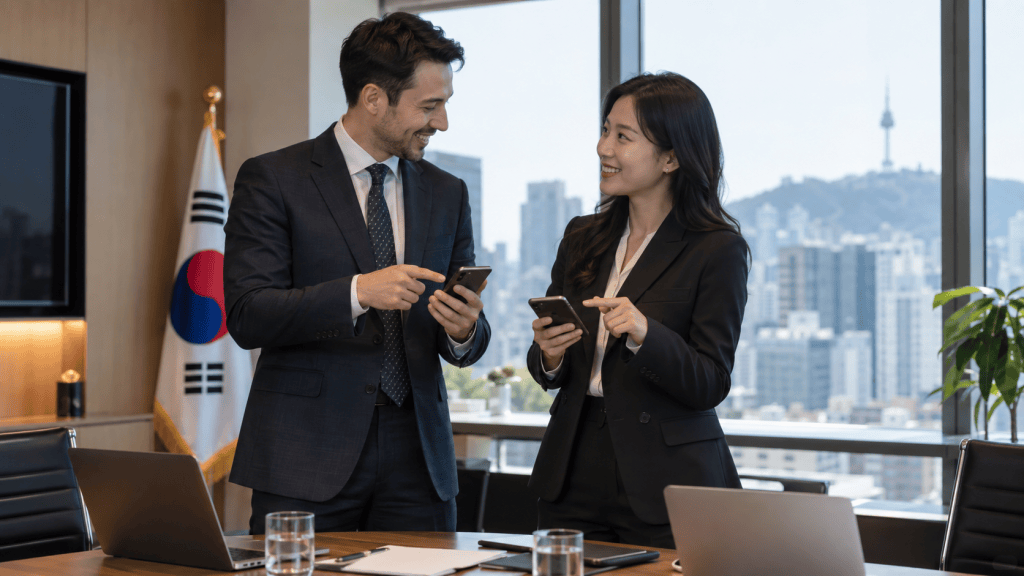
[PHOTO 9 — Business partners confirming how to stay in touch]
Do not assume that every Korean company communicates the same way.
Depending on the company and relationship, your counterpart may prefer email, telephone, KakaoTalk, Teams, Slack, Zoom, or an internal corporate messenger.
Simply ask:
“What is the best way to communicate with you after the meeting?”
| Channel | Good For |
|---|---|
| Proposals, contracts, formal confirmation | |
| Phone | Urgent clarification |
| Messenger | Day-to-day coordination |
| Mobile messaging | Quick updates when mutually agreed |
| Video meeting | Follow-up discussions |
| Shared documents | Collaborative review |
For important commercial matters—price, scope, deadline, deliverables, and responsibilities—confirm the agreement in writing.
Messenger for speed. Email or documents for confirmation.
10. The First 24 Hours After the Meeting Matter

[PHOTO 10 — Sending a professional follow-up after a meeting]
Do not disappear for a week after a good meeting.
A well-structured follow-up sent within roughly 24 hours keeps the discussion fresh and demonstrates reliability.
A useful follow-up message does not need to be long. It should clearly summarize what was discussed and what happens next.
| Follow-Up Element | What to Include |
|---|---|
| Thank You | Brief appreciation for the meeting |
| Key Discussion | 2–4 important points |
| Agreed Items | What both sides agreed |
| Action Items | What must now be done |
| Owner | Who is responsible |
| Deadline | When it should happen |
| Attachments | Proposal, data, brochure, quotation |
| Next Meeting | Suggested date if appropriate |
An effective summary can use four simple headings:
AGREED / ACTION / OWNER / DEADLINE
This is especially valuable when several Korean departments are involved, because your email can be forwarded internally without requiring someone to rewrite the entire discussion.
11. A Business Dinner May Be Part of the Business
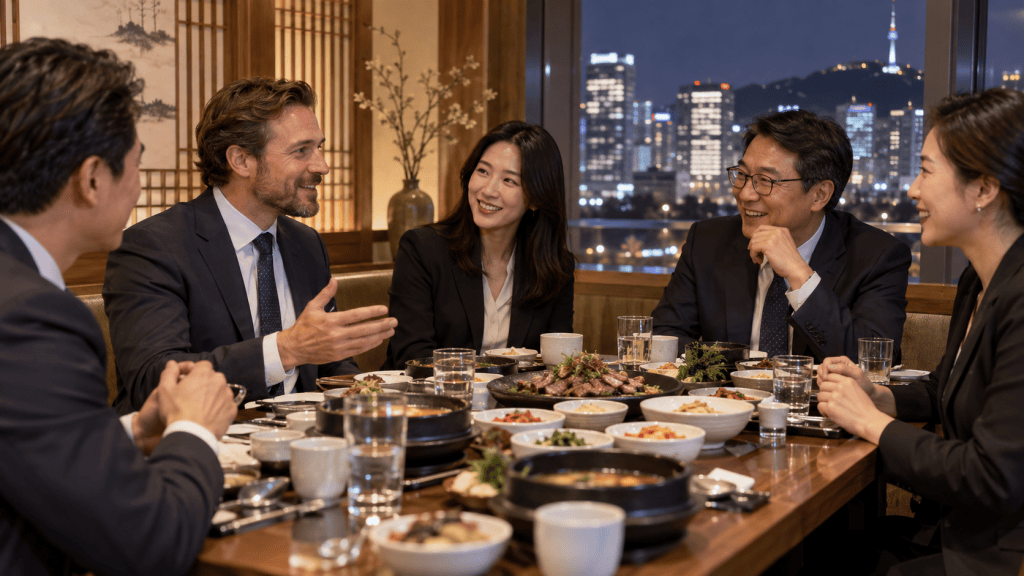
[PHOTO 11 — Korean business dinner with international guests]
Korean corporate culture has changed significantly, and after-work drinking is less compulsory than it once was. Still, an important client dinner can be more than simply a meal.
It can be an opportunity to build trust, understand personalities, and have conversations that may not happen in a formal conference room.
You do not have to drink alcohol.
If you do not drink, a natural response is:
“I don’t drink, but I’d be very happy to join dinner.”
That communicates two things clearly: you are declining alcohol, but not declining the relationship.
A few practical points help:
| Situation | Good Approach |
|---|---|
| Client invites you to dinner | Join if your schedule allows |
| You do not drink | Say so naturally and early |
| Shared dishes are served | Follow the host’s lead |
| Senior executive is present | Maintain professional courtesy |
| Dinner becomes informal | Relax, but remain professional |
| Sensitive negotiation begins | Avoid making rushed commitments |
Business dinners can strengthen relationships, but important commercial commitments should still be confirmed formally afterward.
12. Business Gifts: Small and Thoughtful Is Better Than Expensive
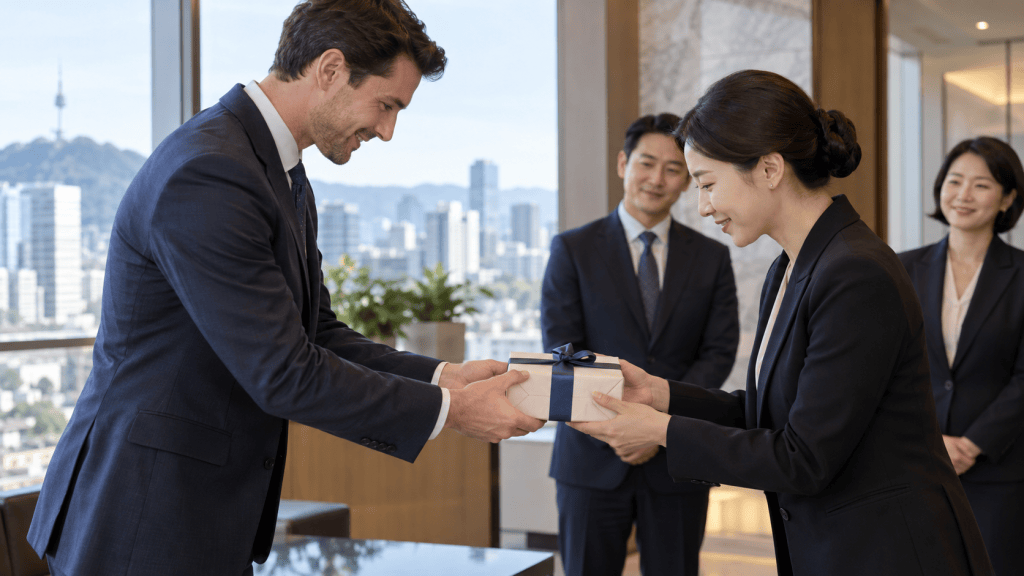
[PHOTO 12 — Modest professional business gift]
A gift is not required for every first meeting in Korea.
If you bring one, something modest that represents your country, city, or company is usually more appropriate than an expensive luxury item.
Extra caution is necessary when dealing with public institutions, public officials, schools, media organizations, or others who may fall under Korea’s Improper Solicitation and Graft Act.
As of 2026, official guidance states that gifts for public officials given for legitimate social or ceremonial purposes are generally limited to KRW 50,000, while qualifying agricultural, livestock, fishery, and processed products may have a KRW 150,000 limit. Special higher limits can apply to those products during designated holiday periods. If you have a direct official-interest relationship—such as participating in a tender—even a gift below the normal threshold may be prohibited.
Approximate currency equivalents:
| Reference Amount | KRW | USD | JPY | CNY |
|---|---|---|---|---|
| General gift threshold | ₩50,000 | ~$36 | ~¥5,650 | ~CN¥243 |
| Certain agricultural/fishery gifts | ₩150,000 | ~$108 | ~¥16,950 | ~CN¥729 |
Currency equivalents are approximate and exchange rates change.
For government or public-sector meetings, the safest question is:
“Does your organization have a gift or compliance policy we should be aware of?”
13. Good English Does Not Always Eliminate the Need for an Interpreter
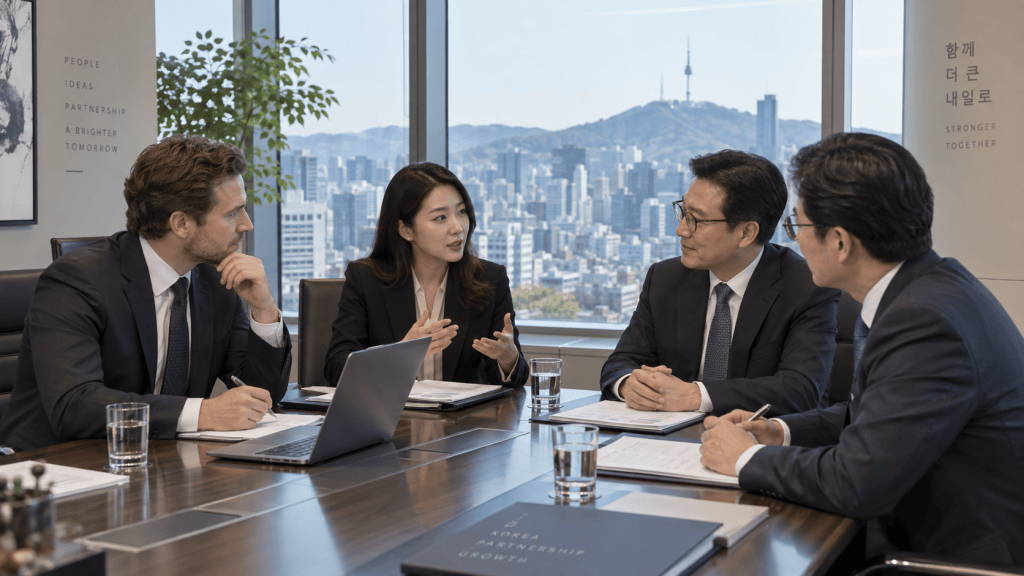
[PHOTO 13 — Professional interpreter assisting a business negotiation]
A Korean executive may speak excellent conversational English and still prefer professional interpretation for a complex negotiation.
Everyday English and contract, legal, financial, medical, technical, or M&A English are very different things.
Consider professional interpretation when the meeting involves:
contracts, legal liability, investment, M&A, technical specifications, manufacturing, medical matters, detailed financial terms, or sensitive negotiations.
A 2026 Seoul-market benchmark compiled by interpretation professionals gives the following broad ranges. These are market estimates, not regulated prices.
| Interpretation Type | KRW / Day | Approx. USD | Approx. JPY | Approx. CNY |
|---|---|---|---|---|
| General business / liaison | ₩400,000–₩700,000 | $289–$505 | ¥45,000–¥79,000 | CN¥1,940–3,400 |
| General consecutive | ₩500,000–₩900,000 | $361–$650 | ¥56,500–¥102,000 | CN¥2,430–4,370 |
| Specialist legal/finance/M&A | ₩900,000–₩1,800,000 | $650–$1,300 | ¥102,000–¥204,000 | CN¥4,370–8,750 |
| Simultaneous team of 2 | ₩2,000,000–₩5,000,000 | $1,440–$3,610 | ¥226,000–¥566,000 | CN¥9,720–24,300 |
Fees vary significantly by language, expertise, duration, schedule, travel requirements, and equipment.
The important question is not simply:
“Can they speak English?”
It is:
“Can both sides discuss this specific issue accurately enough that there will be no expensive misunderstanding later?”
14. Do Not Hold Every Important Meeting in a Hotel Lobby
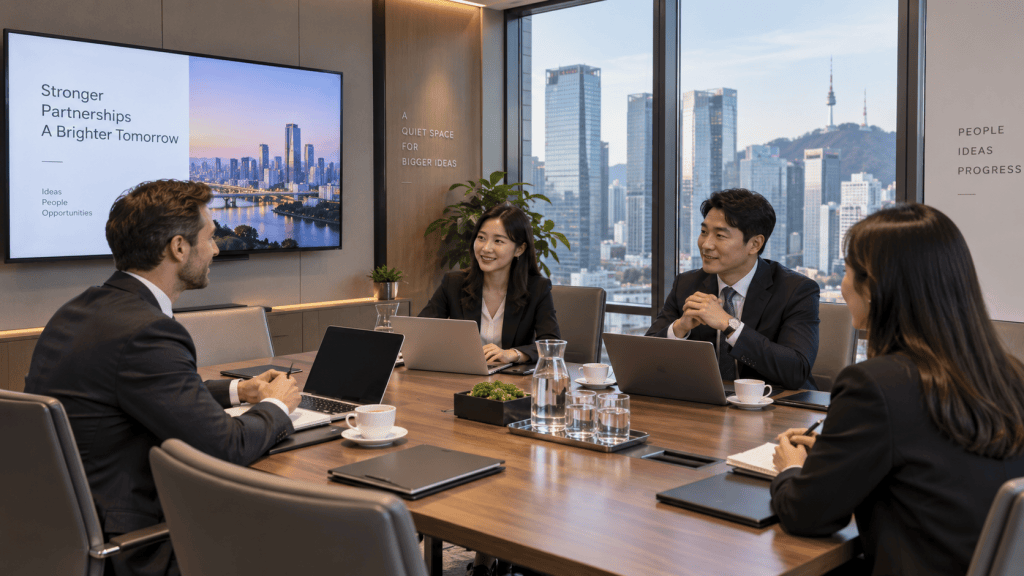
[PHOTO 14 — Professional meeting room in Seoul]
A hotel lobby is fine for an informal coffee.
It may not be the best environment for your first serious negotiation, confidential discussion, product presentation, or contract meeting.
Seoul has a large supply of serviced offices, coworking facilities, hotel meeting rooms, and day offices that can be booked for short periods. International flexible-office providers also offer meeting rooms and day offices by the hour or day.
For an important meeting, look for:
| Requirement | Why It Matters |
|---|---|
| Private room | Confidentiality |
| Large monitor | Presentations |
| HDMI / adapters | Avoid technical delays |
| Reliable Wi-Fi | Video and cloud documents |
| Whiteboard | Workshops |
| Reception support | Professional arrival |
| Easy subway access | Convenience for both sides |
| Coffee / water | Basic hospitality |
| Quiet environment | Better communication |
Before booking, ask whether the quoted price includes tax, equipment, reception service, beverages, and overtime charges.
For your first major Korean client meeting, a simple professional meeting room can create a much stronger impression than negotiating across a crowded hotel café table.
15. Choose Your Hotel Based on Business Location — Not Only Tourist Attractions
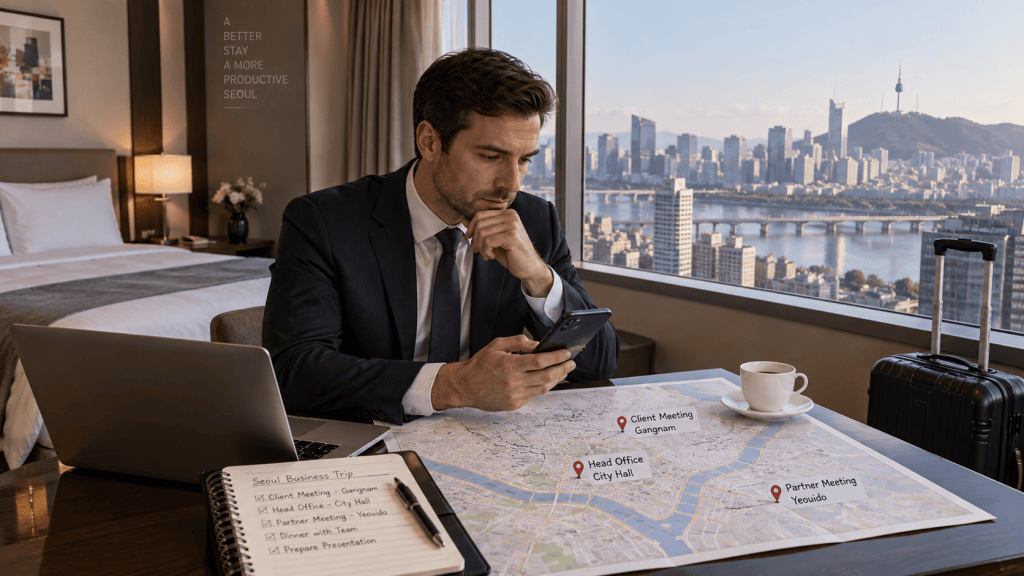
[PHOTO 15 — Seoul business districts and business traveler]
Seoul is enormous.
Two locations may both be “in Seoul” but require a long cross-city journey during rush hour.
For a business trip, your hotel should therefore be selected according to where your clients, conference, or meetings are located, not only according to tourist popularity.
| Area | Business Character |
|---|---|
| Gangnam / Teheran-ro | Technology, professional services, startups, corporate offices |
| Samseong / COEX | Exhibitions, conferences, MICE, corporate meetings |
| Yeouido | Banking, securities, asset management, finance |
| Gwanghwamun / Jongno | Corporate headquarters, professional services, public-sector access |
| Magok | R&D, biotechnology, major corporate research facilities |
| Guro / Gasan | Technology, SMEs, industrial and digital businesses |
| Pangyo | Technology, gaming, platforms, major digital companies |
If all three of your meetings are in Gangnam, staying on the opposite side of Seoul simply because a hotel looked attractive online can waste several hours over a short trip.
Before choosing your hotel, place all of your confirmed meeting locations on a map first.
Then select your accommodation.
For business travel, location is productivity.
Final Checklist Before Your First Korean Business Meeting

| Question | Ready? |
|---|---|
| Is my entry status appropriate for what I will actually do? | □ |
| Do I know the names and titles of the attendees? | □ |
| Do I know who may have decision authority? | □ |
| Do I have enough updated business cards? | □ |
| Do I have a one-page executive summary? | □ |
| Can I explain the proposal in three minutes? | □ |
| Have I allowed enough travel time? | □ |
| Do I know the result I want from the meeting? | □ |
| Will I confirm action, owner, and deadline? | □ |
| Have I prepared my follow-up email? | □ |
| Do I understand the dinner invitation? | □ |
| Have I checked gift/compliance rules? | □ |
| Do I need an interpreter? | □ |
| Is the meeting venue professional enough? | □ |
| Is my hotel close to my main business area? | □ |
The Formula to Remember
Doing business in Korea combines speed, hierarchy, relationships, preparation, and execution.
A successful first trip is not only about making a strong presentation. It is about understanding who you are meeting, respecting the business context, presenting your value clearly, understanding the real decision process, and following through after the meeting.
Remember:
Respect the relationship.
Understand the hierarchy.
Be specific with the numbers.
Confirm the next step.
Follow up quickly.
And before leaving the meeting, ask one final question:
“What is our next step?”
That question can be the difference between having a good meeting in Korea and beginning a real business relationship.
Useful Resource for First-Time Buyers
If your goal is to find Korean suppliers or business partners, KOTRA can be a useful starting point. KOTRA operates BuyKorea, organizes more than 190 one-on-one business meeting events in Korea annually, supports trade fairs, and helps international buyers identify potential Korean suppliers.


Leave a Reply