
From Auditions and Trainee Life to Music Videos and World Tours — Discover What Really Happens Behind Your Favorite K-POP Stars
Behind every dazzling performance lies a world of dreams, dedication, creativity, and countless people working together to make the magic happen.
Prologue: What Really Happens Behind the Glamorous World of K-POP?
Imagine this.
A massive concert arena in Seoul.
Tens of thousands of fans wave colorful lightsticks, creating a breathtaking ocean of light.
Suddenly, the entire venue goes dark.
A single spotlight illuminates the stage.
And there they are — your favorite K-POP idols!
Perfectly synchronized choreography, powerful vocals, stunning outfits, and smiles that make millions of hearts race.
The crowd goes wild.
But have you ever wondered what happens before that magical moment?
How many hours did they spend practicing?
How many times did they record the same song?
Who created their choreography, outfits, makeup, and music videos?
And how did an ordinary teenager become a superstar loved by millions of people worldwide?
Behind every three-minute K-POP performance lies a remarkable story of dreams, hard work, creativity, and teamwork.
K-POP stars are not simply discovered. Their careers develop through a combination of talent, training, personal dedication, music production, and collaboration with countless professionals.
Today, we’re taking you beyond the glamorous stage and into the fascinating world behind K-POP.
Here are 10 amazing secrets every international K-POP fan should know!
1. Where Does the Dream Begin? Inside Korea’s K-POP Audition System
From an Ordinary Teenager to a Future Global Superstar

Every K-POP star has a beginning.
Some start by singing at school festivals.
Others practice dance routines in their bedrooms, upload cover videos to social media, or dream about performing on stage while watching their favorite idols.
For many aspiring artists, the first major step toward becoming a K-POP idol is an audition.
Korean entertainment companies regularly search for talented young people through online auditions, in-person auditions, and international casting programs.
Companies such as HYBE, SM Entertainment, JYP Entertainment, and YG Entertainment have established various systems to discover new talent.
Some auditions are open to applicants from around the world.
That means a teenager in Brazil, Japan, Thailand, the United States, or almost anywhere else may have an opportunity to audition for a Korean entertainment company, depending on the eligibility requirements.
What Do K-POP Auditions Evaluate?
| Category | What Companies May Look For | How to Prepare |
|---|---|---|
| Vocal | Pitch, rhythm, tone, emotional expression | Practice songs that suit your voice |
| Dance | Rhythm, coordination, movement, expression | Learn K-POP choreography and freestyle |
| Rap | Flow, pronunciation, rhythm, delivery | Practice Korean or English rap |
| Visual Presentation | Camera presence and concept suitability | Practice natural introductions |
| Charisma | Individuality, confidence, stage presence | Develop your personal style |
| Growth Potential | Learning ability and adaptability | Explore different musical styles |
Actual audition categories and evaluation methods vary by company and recruitment program.
Can Foreigners Audition for K-POP Companies?
Absolutely!
Some global auditions accept applicants regardless of nationality, although age limits, residence requirements, and other conditions may apply.
International applicants should always check official announcements before applying.
Official Audition Resources
| Company | Official Website |
|---|---|
| HYBE | https://hybecorp.com |
| SM Entertainment | https://www.smentertainment.com |
| JYP Entertainment | https://audition.jype.com |
| YG Entertainment | https://www.yg-audition.com/en |
Important Tip: Never trust unofficial individuals who promise a guaranteed debut in exchange for money. Always verify audition announcements through official company channels.
Your favorite idol may have started with nothing more than a dream, a song, and the courage to audition.
Who knows?
Maybe your own K-POP story could begin the same way.
2. Meet the Entertainment Companies Behind Some of the World’s Biggest K-POP Stars
The Companies That Help Transform Talent into Global Music Careers

To understand K-POP, you first need to understand the role of Korean entertainment companies.
They do much more than manage singers.
Entertainment companies discover talent, develop artists, produce music, organize performances, create visual concepts, and connect musicians with fans worldwide.
Four major companies are frequently discussed when people talk about the global K-POP industry:
HYBE, SM Entertainment, JYP Entertainment, and YG Entertainment.
Four Major K-POP Entertainment Companies
| Company | Well-Known Artists | Business and Creative Features |
|---|---|---|
| HYBE | BTS, SEVENTEEN, TXT, LE SSERAFIM | Multi-label operations, global music business, fan platforms |
| SM Entertainment | EXO, NCT, aespa, RIIZE | Artist development, music production, performance, global entertainment |
| JYP Entertainment | TWICE, Stray Kids, ITZY, NMIXX | Artist development, music production, global music operations |
| YG Entertainment | BLACKPINK, TREASURE, BABYMONSTER | Music production, artist management, performances, global content |
These examples illustrate the companies’ artist portfolios and general business activities.
What Makes the K-POP Business Model Interesting?
Many entertainment companies develop artists and creative projects within an interconnected production system.
For example, a company may bring together:
- Music producers and songwriters
- Vocal and dance trainers
- Choreographers and performance directors
- Fashion and beauty professionals
- Video directors and production teams
- Global marketing specialists
- Concert organizers
- Fan community managers
All these professionals contribute to the artist’s creative and commercial activities.
However, not every successful K-POP artist comes from a large entertainment company.
Korea also has numerous independent labels and smaller agencies developing unique musical styles and talented artists.
One of K-POP’s greatest strengths is the diversity of creative people working together to introduce new music to the world.
3. What Is Life Really Like for a K-POP Trainee?
The Years of Preparation Before the First Performance
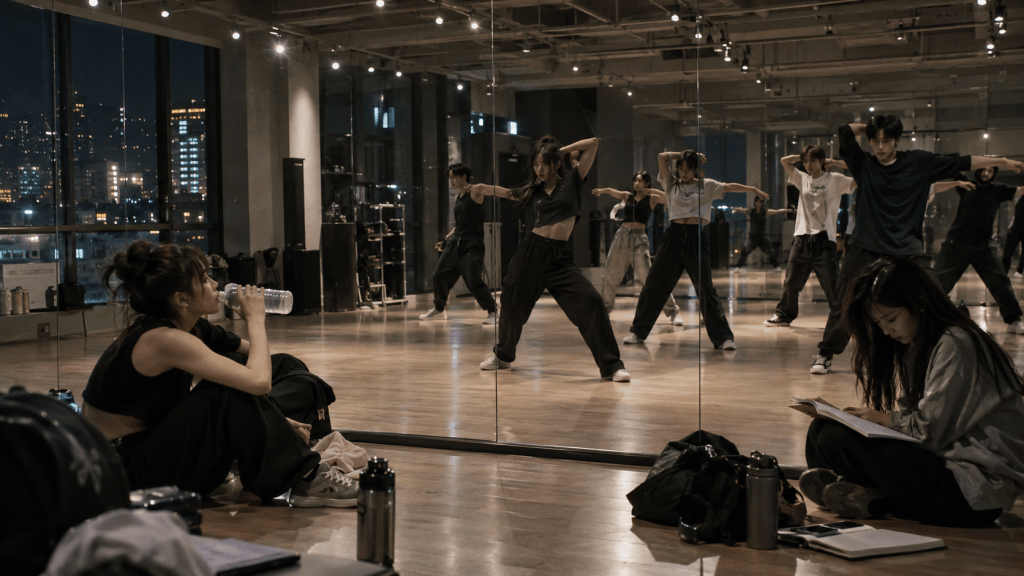
Your favorite idol probably wasn’t born knowing how to perform perfectly on stage.
Many K-POP artists begin their careers as trainees.
A trainee is someone who receives professional training while preparing for a possible debut in the entertainment industry.
Depending on the company and individual, this preparation may include singing, dancing, language lessons, performance training, and other activities.
Some artists train for several years before debuting.
Others follow much shorter paths.
And not every trainee eventually becomes an idol.
A Day in the Life of a K-POP Trainee
The following schedule is an illustrative example designed to help international readers understand the variety of activities involved in trainee life.
| Time | Activity | Main Purpose |
|---|---|---|
| 8:00 AM | Wake up and breakfast | Prepare for the day |
| 9:00 AM | School or personal study | Academic education |
| 1:00 PM | Vocal training | Breathing, pitch, vocal technique |
| 3:00 PM | Dance practice | Choreography, rhythm, coordination |
| 5:00 PM | Language and expression training | Communication skills |
| 6:00 PM | Dinner and rest | Recovery and personal time |
| 7:00 PM | Individual practice | Improve specific skills |
| 9:00 PM | Group practice and feedback | Teamwork and performance preparation |
| 10:00 PM | Return home or to the dormitory | Rest and recovery |
This is not the official schedule of any particular entertainment company. Actual routines differ depending on age, school commitments, training arrangements, company policies, and individual circumstances.
What Is the Hardest Part of Trainee Life?
Most people imagine that the most difficult parts are singing and dancing.
But trainee life can involve much more.
There may be uncertainty about debut opportunities, competition, regular evaluations, and pressure to improve.
For foreign trainees, learning Korean and adapting to a different culture can present additional challenges.
Living away from family and friends may also be difficult.
That is why a safe training environment, sufficient rest, emotional support, and appropriate education are important.
Understanding K-POP means appreciating not only the incredible performances, but also the challenges artists may experience before reaching the stage.
4. Singing, Dancing, Rapping, and Speaking Multiple Languages: The Incredible Training Behind K-POP Idols
Why Are K-POP Idols So Versatile?
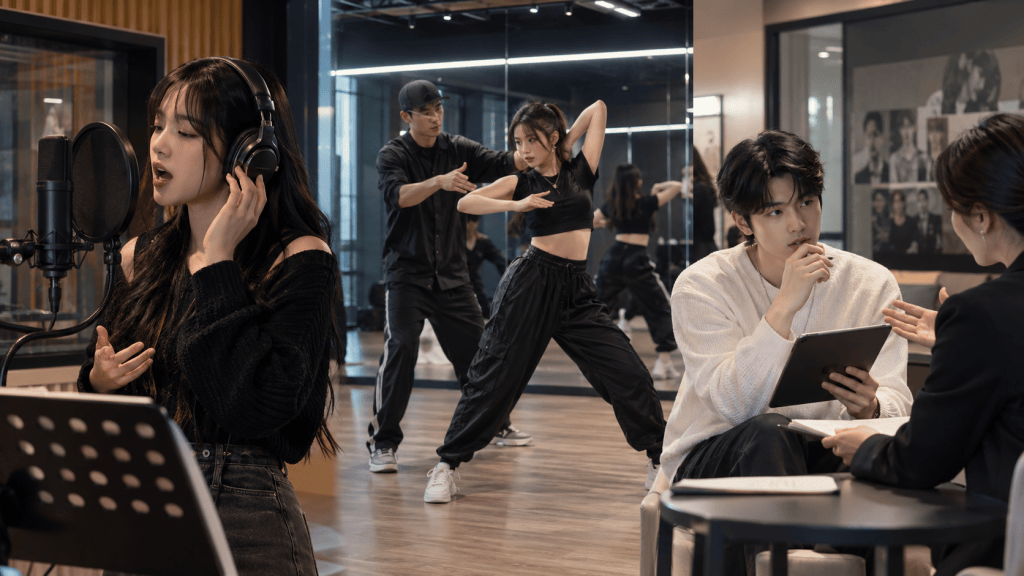
Have you ever watched your favorite K-POP group and wondered:
“How can they dance, sing, smile, and interact with the audience at the same time?”
The answer involves extensive preparation across multiple performance skills.
K-POP performances frequently combine powerful vocals, detailed choreography, visual storytelling, and audience interaction.
Each member may have a different specialty, but successful group performances require close coordination.
Major Areas of K-POP Idol Training
| Training Area | Main Activities | Purpose |
|---|---|---|
| Vocal | Breathing, pitch, tone, technique | Stronger live performances |
| Dance | Choreography, rhythm, precision | Coordinated stage performances |
| Rap | Rhythm, pronunciation, delivery | Musical expression |
| Languages | Korean, English, Japanese, etc. | International communication |
| Stage Expression | Facial expressions, movement, eye contact | Emotional connection |
| Camera Training | Interviews, expressions, media practice | Natural on-camera presence |
| Teamwork | Communication and cooperation | Stronger group performances |
Not every idol receives identical training. The emphasis varies according to their individual strengths, group concept, and professional role.
Why Do So Many K-POP Idols Learn Foreign Languages?
K-POP has grown far beyond Korea.
Artists now perform and communicate with fans in Asia, Europe, North America, South America, and many other regions.
As a result, language skills can help idols connect with international audiences.
| Language | Common Uses |
|---|---|
| Korean | Domestic broadcasts, concerts, music activities |
| English | International interviews and fan communication |
| Japanese | Japanese concerts and media appearances |
| Chinese | Communication with Chinese-speaking audiences |
| Spanish and Other Languages | Local greetings and fan interaction during international tours |
Not every artist needs to speak multiple languages fluently.
Sometimes, even a simple greeting in a fan’s native language creates an unforgettable emotional connection.
Imagine attending a concert thousands of miles from home and hearing your favorite idol say:
“Thank you for coming. I love you!”
In your own language.
For a fan, that small moment can mean everything.
Language is more than a communication tool. It is another way for artists to connect with the hearts of their fans.
5. How Is a K-POP Hit Song Created?
The Incredible Journey Behind a Three-Minute Song
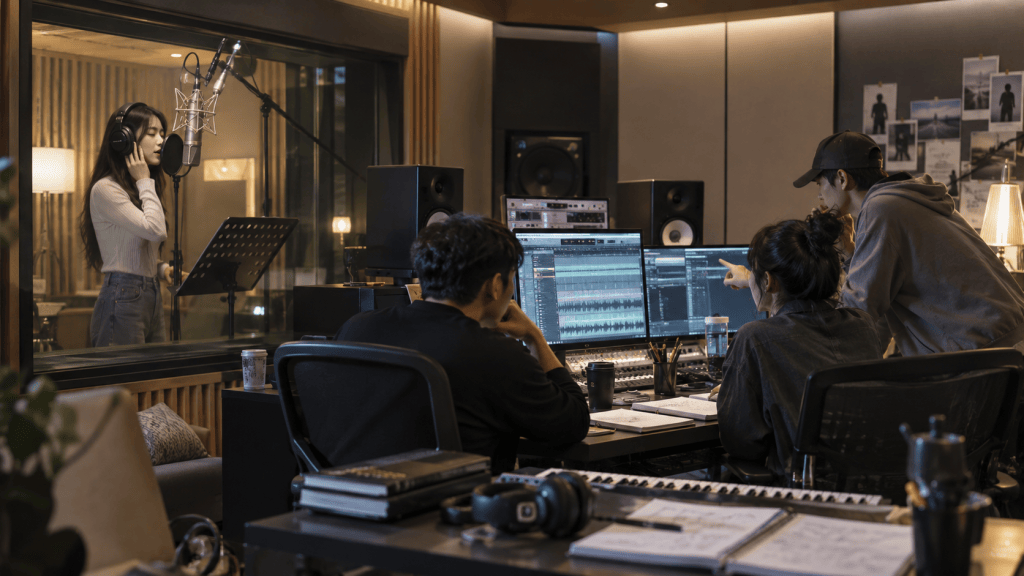
Think about your favorite K-POP song.
Maybe you love the chorus.
Maybe you can’t stop listening to the beat.
Or perhaps the lyrics remind you of an important moment in your life.
But how does that song actually come to life?
K-POP music production often involves songwriters, composers, producers, arrangers, recording engineers, mixing engineers, and artists.
Another important role is A&R, which stands for Artists and Repertoire.
A&R professionals help identify and develop music that fits an artist’s musical direction and creative identity.
How a K-POP Song Is Made
| Stage | Main Activity | Key Professionals |
|---|---|---|
| 1 | Develop musical direction and concept | Producers, A&R |
| 2 | Create melodies and musical ideas | Composers, producers |
| 3 | Write lyrics | Lyricists, artists |
| 4 | Arrange the music | Arrangers, producers |
| 5 | Record vocals and rap | Artists, recording engineers |
| 6 | Mix the recording | Mixing engineers |
| 7 | Master the final track | Mastering engineers |
| 8 | Prepare the release | Entertainment company, distributor |
These stages are simplified for explanation. Real music production is often collaborative and nonlinear, with several activities happening simultaneously.
What Makes K-POP Music So Distinctive?
One fascinating feature of K-POP is its willingness to combine different musical influences.
A single song might contain elements of:
- Pop
- Hip-hop
- R&B
- Rock
- Electronic dance music
- Funk
- Ballads
Many K-POP projects also bring together songwriters and producers from different countries.
A Korean artist might record a song developed through international collaboration, with creative teams working together to shape its sound, lyrics, and concept.
This makes K-POP an interesting example of global musical cooperation.
K-POP may have originated in Korea, but its creative world now connects musical talent from many different cultures.
6. The Secret Behind K-POP Choreography: Why the Whole World Wants to Dance Along
The Art of Perfectly Synchronized Performances
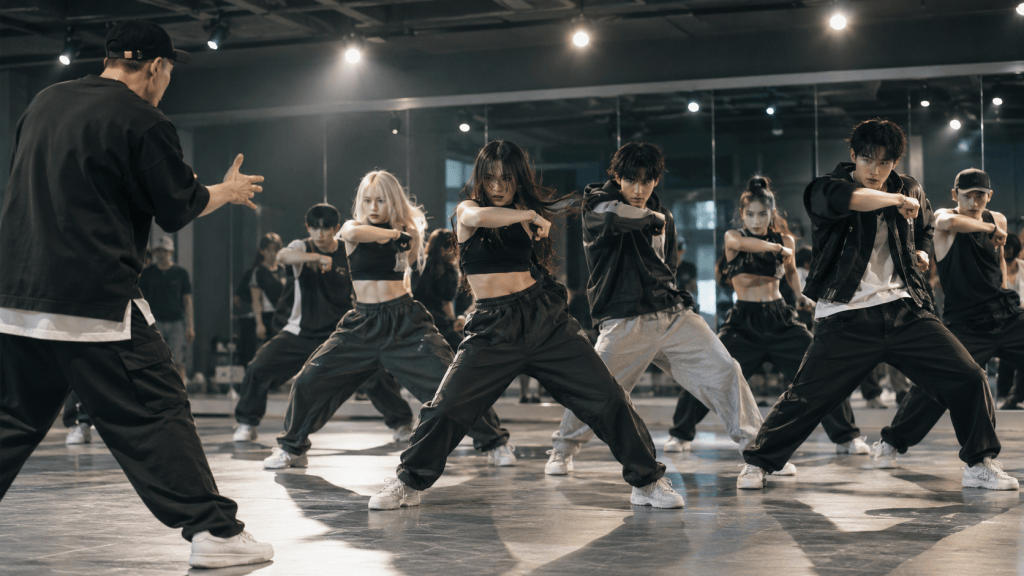
One of K-POP’s most recognizable features is its choreography.
Whether you are watching BTS, BLACKPINK, TWICE, Stray Kids, SEVENTEEN, or another group, dance often plays a major role in the performance.
But have you ever wondered how those complicated routines are created?
A choreographer first studies the music and its emotional direction.
The creative team then develops movement ideas that match the song and artist.
For group performances, every member’s position and movement must be carefully considered.
How K-POP Choreography Comes to Life
| Stage | Activity | Key Objective |
|---|---|---|
| 1 | Analyze the song and concept | Understand the music’s mood |
| 2 | Develop choreography ideas | Explore different movements |
| 3 | Create signature dance moves | Build memorable moments |
| 4 | Design group formations | Coordinate members’ positions |
| 5 | Practice repeatedly | Improve precision and timing |
| 6 | Conduct camera rehearsals | Adapt choreography for video |
| 7 | Finalize the performance | Prepare for the stage |
What Is a Point Dance?
A point dance is a memorable movement that represents a particular song.
It might be a hand gesture, a short sequence of steps, or a distinctive movement during the chorus.
Point dances are especially important because fans can learn and share them.
They often become the inspiration for dance challenges on TikTok, Instagram, and YouTube Shorts.
And this is where K-POP becomes something even more exciting.
Instead of simply listening to the music, fans become participants in the culture.
Want to Experience K-POP Dance in Korea?
Visitors to Korea can explore various dance experiences.
| Experience | What You Can Try |
|---|---|
| K-POP One-Day Class | Learn the main choreography of a song |
| Cover Dance Class | Practice a complete dance section |
| Dance Video Experience | Record yourself performing |
| Group Dance Class | Experience synchronized choreography |
Learning even 30 seconds of your favorite song’s choreography can give you a new appreciation for the effort required to perform on stage.
The next time you watch a perfect K-POP dance performance, remember the countless repetitions behind every movement.
7. Who Creates the Hair, Makeup, and Fashion of K-POP Idols?
K-POP Is Music You Can Hear — and Art You Can See
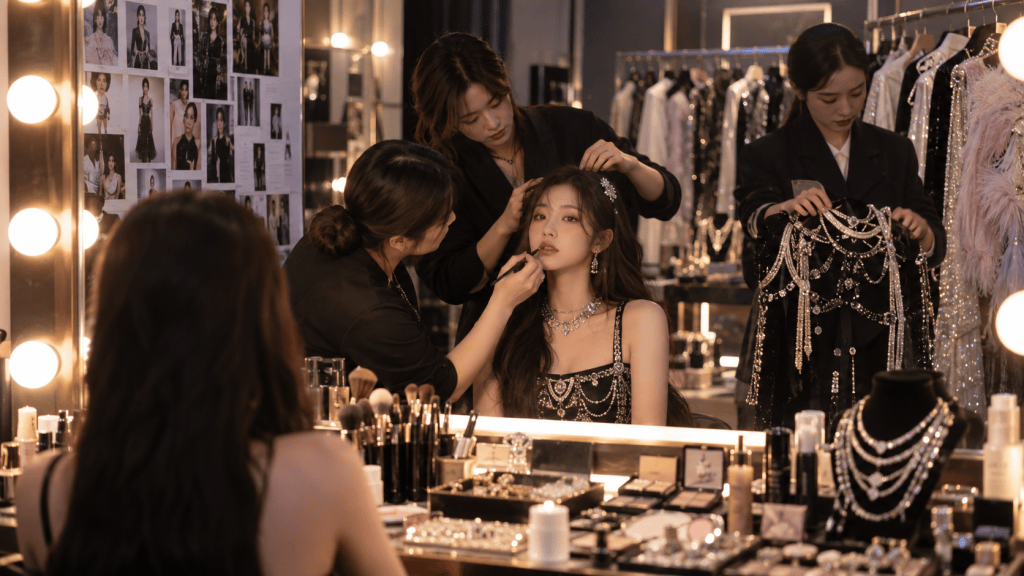
K-POP is not only about sound.
Visual identity is another major part of the experience.
A new album often brings a completely different artistic concept.
An idol might appear with a dramatic hairstyle, a distinctive outfit, or makeup designed to complement the song’s mood.
Sometimes, a single teaser photograph is enough to create excitement among fans.
But who creates these looks?
Behind the scenes, numerous fashion and beauty professionals collaborate to develop the artist’s appearance.
The Professionals Behind K-POP Styling
| Professional | Main Responsibility | Creative Result |
|---|---|---|
| Creative Director | Develops the overall concept | Artistic identity |
| Hair Designer | Haircuts, coloring, styling | Signature hairstyles |
| Makeup Artist | Facial and stage makeup | Distinctive visual appearance |
| Fashion Stylist | Clothing and accessories | Stage and photoshoot outfits |
| Nail Artist | Nail design | Detailed styling |
| Photographer | Concept and promotional photography | Album and promotional images |
When K-POP Meets K-Beauty
One of the most interesting aspects of K-POP’s global popularity is its connection to Korean beauty and fashion.
International fans often become interested in Korean cosmetics, hairstyles, skincare, and makeup after discovering K-POP artists.
Some even visit Korea to experience idol-inspired styling.
K-POP Beauty Experiences You Can Try in Korea
| Experience | What You Can Enjoy |
|---|---|
| Idol-Inspired Makeup | Makeup based on K-POP styling trends |
| K-POP Hairstyling | Waves, volume, and creative styling |
| Concept Profile Photography | Photos inspired by K-POP album concepts |
| K-Beauty Shopping | Discover Korean makeup and skincare products |
K-POP fashion is not simply about looking attractive.
Hair, makeup, and clothing help communicate the concept and emotional identity of a song or album.
The visual world of K-POP is another form of storytelling.
8. How Are K-POP Music Videos Made? The Art of Creating a Miniature Movie
A Few Minutes of Visual Magic, Created by an Entire Production Team

K-POP music videos are often spectacular.
They feature elaborate sets, cinematic lighting, creative costumes, sophisticated choreography, and stunning visual effects.
Some music videos feel like short films.
Others create imaginative worlds that reflect the artist’s identity or album concept.
But producing these videos requires far more than simply placing cameras in front of singers.
The K-POP Music Video Production Process
| Stage | Main Activity | Key Professionals |
|---|---|---|
| 1 | Develop the video concept | Director, creative team |
| 2 | Create a storyboard | Director, visual planners |
| 3 | Prepare locations and sets | Art and location teams |
| 4 | Prepare hair, makeup, and outfits | Beauty and styling teams |
| 5 | Film scenes | Director, cinematographers |
| 6 | Record dance performances | Artists, choreographers |
| 7 | Edit the video | Video editors |
| 8 | Add color grading and visual effects | Post-production specialists |
| 9 | Release the finished video | Entertainment company, marketing team |
How Many People Does It Take to Produce One Music Video?
The number varies depending on the project’s scale.
A major production may involve directors, camera operators, lighting technicians, set designers, dancers, makeup artists, costume specialists, safety personnel, editors, and many others.
Each professional contributes a different skill.
Together, they transform a musical idea into a visual experience.
A Special Travel Experience for International K-POP Fans
Did you know that visiting locations connected to your favorite music videos can be a memorable way to explore Korea?
Some K-POP music videos feature Korean streets, buildings, cafés, landscapes, and other recognizable locations.
Fans can research accessible filming locations and visit public spaces where their favorite artists once performed.
Imagine standing in a location you have watched dozens of times on YouTube.
Suddenly, the music video feels much closer to your own life.
A K-POP music video is where music, fashion, filmmaking, design, and technology come together.
9. Debut Is Only the Beginning: From K-POP Comebacks to World Tours
What Happens After an Idol Becomes a Star?
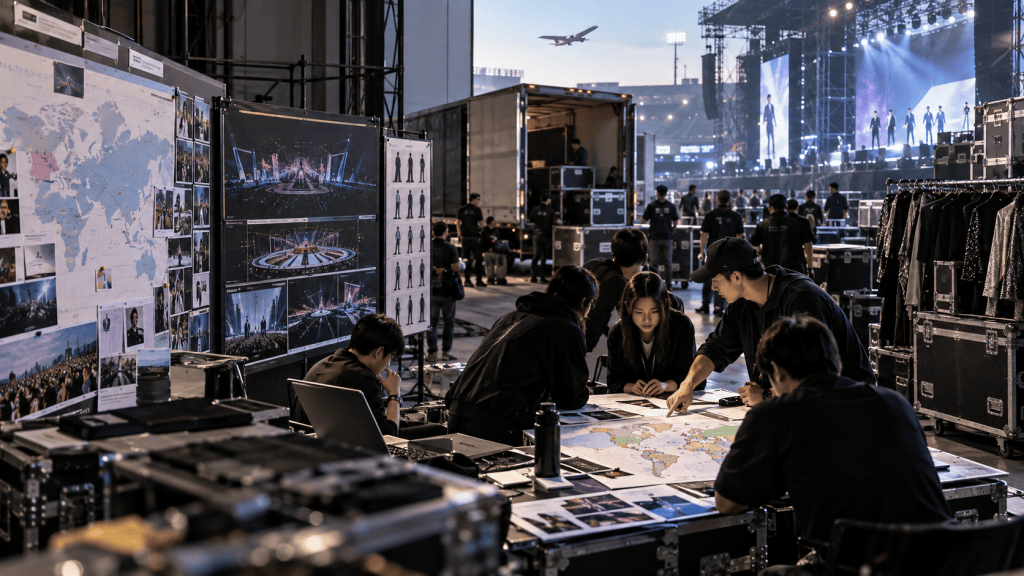
Many people imagine that debuting as a K-POP idol is the final destination.
In reality, it is often just the beginning of a new chapter.
After debuting, artists may release albums, appear on music programs, meet fans, create digital content, and expand their activities internationally.
One particularly interesting part of K-POP culture is the word “comeback.”
In everyday English, a comeback often means returning after a long absence.
In K-POP, however, it commonly refers to an artist releasing new music and beginning another promotional period.
The K-POP Comeback Process
| Stage | Main Activity | What Fans Experience |
|---|---|---|
| 1 | Plan a new album | Comeback announcement |
| 2 | Record and produce music | Album information |
| 3 | Develop the visual concept | Teaser photographs |
| 4 | Film the music video | Video teasers |
| 5 | Release the album | New songs and music videos |
| 6 | Promote on music shows | Live performances |
| 7 | Organize fan events | Fan signings and fan meetings |
| 8 | Expand overseas promotion | International interviews and events |
| 9 | Prepare concerts | Concerts and world tours |
Not every artist follows the same promotional schedule, and not every comeback includes all these activities.
How Is a K-POP World Tour Organized?
A world tour is a massive international project.
It involves far more than booking flights and performing on stage.
Behind the Scenes of a K-POP World Tour
| Area | Main Responsibilities |
|---|---|
| Concert Planning | Selecting cities, dates, and venues |
| Stage Production | Lighting, sound, video, stage design |
| Choreography | Preparing performances and stage movements |
| Music Production | Live arrangements and musical coordination |
| Travel Logistics | Flights, hotels, local transportation |
| Safety | Venue safety and event operations |
| Fan Experience | Merchandise and special events |
| Global Marketing | Local media, social media, ticket promotion |
Many people work behind the scenes to bring a single concert to life.
The artist may be the person you see under the spotlight, but the performance also depends on a coordinated international team.
A K-POP world tour is an extraordinary collaboration between music, technology, logistics, creativity, and global business.
10. Love K-POP? You Could Become Part of the Industry — Even Without Becoming an Idol!
Discover Career Opportunities Behind the Music You Love
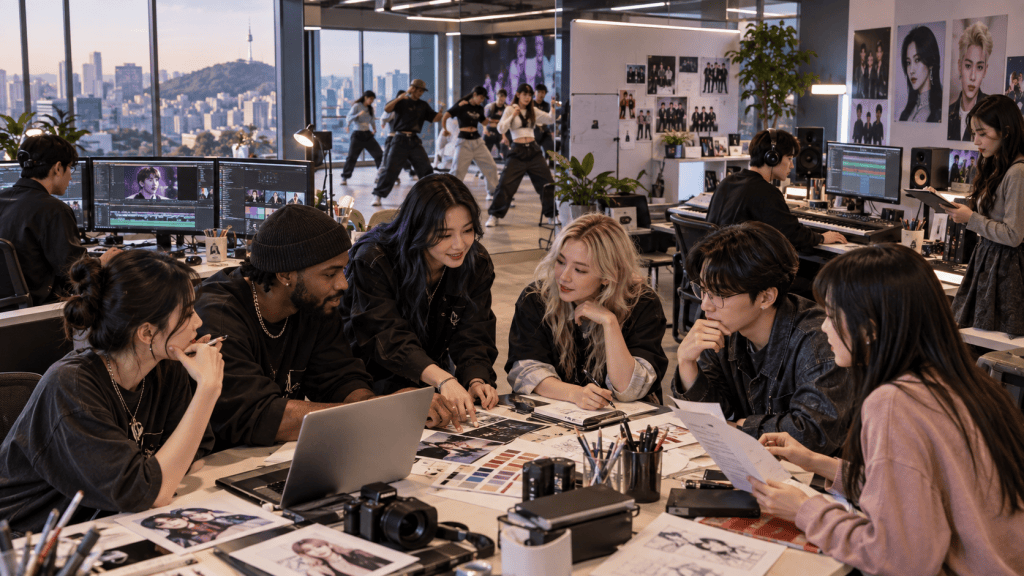
Here is something many international K-POP fans may not realize.
You do not have to become an idol to work in the K-POP industry.
There are countless career paths related to music, entertainment, fashion, technology, marketing, and international business.
As K-POP connects audiences around the world, professionals who understand different cultures and languages can contribute to the industry’s international activities.
Career Opportunities in the K-POP Industry
| Career | Main Responsibilities | Useful Skills |
|---|---|---|
| Global Marketing Specialist | Promote artists internationally | Languages, marketing, social media |
| International Business Specialist | Manage overseas partnerships | Business, communication, languages |
| Translator / Interpreter | Translate interviews and content | Korean and foreign languages |
| Video Editor | Create music videos and social content | Editing, visual design |
| Music Producer | Produce and arrange music | Composition, music technology |
| Choreographer | Create dance performances | Dance and creativity |
| Fashion Stylist | Develop artist styling | Fashion and design |
| Fan Community Manager | Communicate with international fans | Communication and content |
| Concert Planner | Organize concerts and fan events | Event planning, project management |
| Content Designer | Create album and digital designs | Graphic design and creativity |
How Can International Fans Prepare for a Career in K-POP?
| Area | Recommended Preparation |
|---|---|
| Korean Language | Improve communication skills and consider TOPIK |
| English and Native Language | Strengthen multilingual communication |
| K-POP Knowledge | Understand Korean music and fan culture |
| Portfolio | Create music, video, design, or marketing projects |
| Internship Experience | Explore entertainment and content-related companies |
| Networking | Attend music and creative industry events |
| Job Information | Check official entertainment company recruitment pages |
Useful Career Resources
| Organization | Website |
|---|---|
| HYBE | https://careers.hybecorp.com |
| SM Entertainment | https://www.smentertainment.com |
| JYP Entertainment | https://recruit-apply.jype.com |
| YG Entertainment | https://ygfamily.com |
| Korea Creative Content Agency (KOCCA) | https://www.kocca.kr |
Actual employment eligibility depends on the job requirements, qualifications, experience, and applicable visa or work authorization rules.
If you love K-POP, consider developing a professional skill that connects with the industry.
Maybe you are good at writing.
Maybe you love photography.
Perhaps you have a talent for design, music production, editing, or international communication.
Your passion for K-POP could become the starting point for exploring a completely new professional path.
You don’t have to stand on the stage to become part of the world that creates it.
BONUS: How Many Professionals Does It Take to Create a K-POP Star?
When you see a K-POP artist performing on stage, you are witnessing the result of many different professional contributions.
Here is a simplified look at the people who may be involved in supporting an artist’s career.
| Area | Professionals | Their Contribution |
|---|---|---|
| Talent Discovery | Casting specialists | Identify potential artists |
| Artist Development | Vocal and dance trainers | Develop performance skills |
| Music Production | Composers, lyricists, producers | Create original music |
| Choreography | Choreographers, performance directors | Develop stage performances |
| Styling | Hair, makeup, fashion professionals | Create visual identity |
| Content Production | Directors, camera crews, editors | Produce videos and promotional content |
| Global Marketing | Marketing and PR specialists | Connect artists with international audiences |
| Fan Services | Fan community managers | Support artist-fan communication |
| Concert Production | Concert planners and stage crews | Deliver live performances |
| Artist Management | Managers and operations teams | Coordinate activities and schedules |
Every successful performance involves more than what we see on the stage.
Behind the lights, music, and applause are people contributing their own expertise.
The magic of K-POP is created not by one person alone, but by the collaboration of many different talents.
Epilogue: The Most Beautiful Secret Behind Your Favorite K-POP Star
Your favorite K-POP idol smiles brightly on stage.
But have you ever imagined everything that may have happened before that smile?
The nervous excitement of a first audition.
The endless hours spent practicing in a dance studio.
The song recorded again and again until it finally sounded right.
The loneliness of being far away from family.
The unforgettable moment when a debut was confirmed.
And the first time thousands of fans shouted the artist’s name.
All those moments become part of an artist’s journey.
Of course, every K-POP star has a different story.
Some train for years before debuting.
Others receive opportunities much sooner.
And success is never guaranteed by talent or effort alone.
But behind the performances we love are artists, creators, and professionals who have dedicated their time and abilities to bringing music to life.
The next time you watch your favorite K-POP music video, listen to a new album, or attend a concert, think about the world behind the stage.
Every precise dance movement.
Every carefully written lyric.
Every perfectly timed spotlight.
Every beautifully designed outfit.
Every unforgettable musical moment.
Someone helped make it happen.
And once you understand that world, your favorite K-POP song may begin to sound a little different.
A little deeper.
A little more meaningful.
Because K-POP is not simply an industry that creates stars.
It is a world where people with different talents and dreams come together to create something extraordinary.
And perhaps, one day, you could become part of that world too.
As a musician.
A dancer.
A designer.
A producer.
A filmmaker.
A marketer.
Or someone who helps introduce Korean music and culture to the world.
K-POP has already inspired millions of people across the globe.
And behind every performance, there is another remarkable story waiting to be discovered.
Behind Every K-POP Star, There Is a Story of Dreams, Dedication, Creativity, and the People Who Make the Magic Happen.


Leave a Reply