
10 Reasons Why Korean Plastic Surgery Is Attracting Global Attention
Discover the Medical Expertise, Advanced Technology, and Personalized Beauty That Make South Korea a Leading Destination for Aesthetic Medicine
“Beyond Changing Your Appearance: Discover the Beauty That Truly Belongs to You.”
Why are people from around the world traveling to South Korea for plastic surgery?
Is it the influence of K-POP stars and K-drama celebrities?
Is it the popularity of Korean beauty trends?
Or is there something more behind the growing international interest in Korean aesthetic medicine?
The answer goes beyond beauty trends.
South Korea has developed an extensive aesthetic medicine industry offering specialized surgical procedures, advanced medical technologies, personalized consultations, and healthcare services designed for international patients.
According to South Korea’s Ministry of Health and Welfare, 2,011,822 foreign patients visited Korea for medical services in 2025, representing a 71.9% increase from 2024.
Approximately 11.2% of these international patients received plastic surgery services. The figures demonstrate the growing international interest in Korean healthcare and aesthetic medicine. (Korea.net)
But what makes Korean plastic surgery distinctive?
Let’s explore 10 important strengths of K-Plastic Surgery and discover what international visitors should know before choosing a medical procedure in South Korea.
1. Specialized Medical Expertise: Find the Right Surgeon for Your Needs!
“Your Eyes Deserve an Eye Surgery Specialist. Your Nose Deserves a Rhinoplasty Expert.”
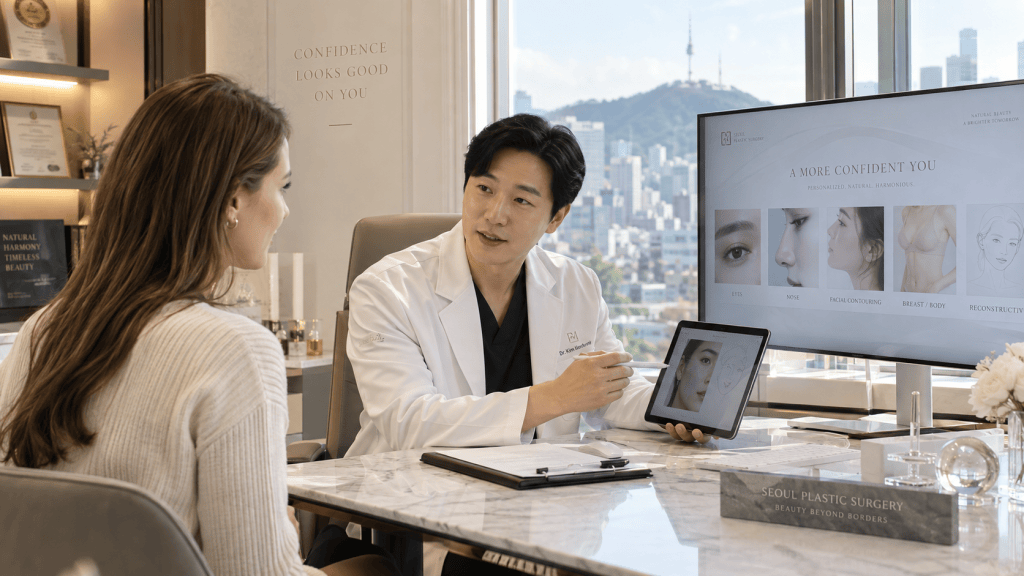
One of the defining characteristics of Korean plastic surgery is the availability of surgeons and medical institutions focusing on particular areas of aesthetic medicine.
Plastic surgery is not a single procedure or medical technique.
Eyelid surgery, rhinoplasty, facial contouring, breast surgery, body contouring, and reconstructive surgery all require different anatomical knowledge, technical skills, and surgical experience.
In Korea, international patients can find medical professionals whose practices focus on particular procedures and anatomical areas.
This allows patients to explore treatment options that address their individual needs.
Major Specialties in Korean Plastic Surgery
| Specialty | Common Procedures | Potential Benefits |
|---|---|---|
| Eyelid Surgery | Double-eyelid surgery, ptosis correction, lower eyelid surgery | Improvement in eyelid appearance and selected functional concerns |
| Rhinoplasty | Nasal bridge and tip surgery | Improvement in nasal shape and facial balance |
| Facial Contouring | Cheekbone, jaw, and chin procedures | Changes in facial bone structure and contours |
| Anti-Aging Surgery | Facelifts, eyelid surgery | Improvement in selected signs of facial aging |
| Breast Surgery | Augmentation, reduction, breast lifts | Changes in breast size and shape |
| Body Contouring | Liposuction, abdominoplasty | Improvement in selected body contours |
| Reconstructive Surgery | Scar, trauma, and tissue reconstruction | Restoration of appearance and function |
What Makes This Valuable for International Patients?
The ability to compare surgeons with experience in specific procedures can help patients make more informed decisions.
However, a clinic’s popularity or advertising claims do not establish a surgeon’s qualifications.
Before choosing a surgeon, verify their medical license, specialist qualifications, relevant surgical experience, and whether they will personally perform your procedure.
The right surgical decision begins with finding the right medical professional—not simply choosing the most famous clinic.
2. Korean Eyelid Surgery: Small Changes That Can Make a Noticeable Difference!
“The Eyes Express Emotion, Personality, and Confidence.”
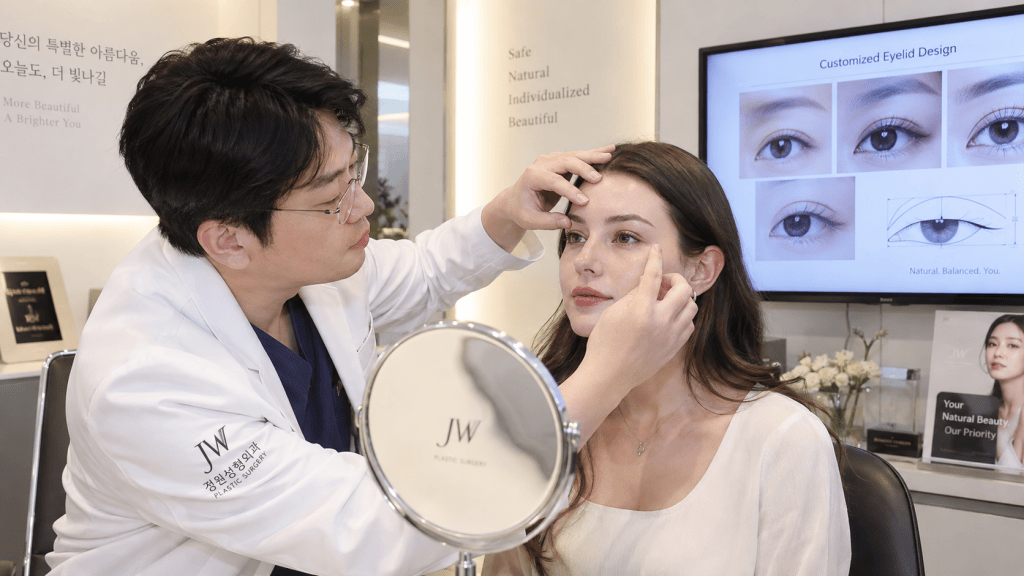
Eyelid surgery is one of the most internationally recognized areas of Korean aesthetic medicine.
However, Korean eyelid surgery involves much more than creating a double-eyelid crease.
A successful treatment plan may require an understanding of eyelid thickness, fat distribution, muscle function, skin elasticity, and the relationship between the eyes and other facial features.
Korean surgeons offer different surgical approaches according to the patient’s anatomy and aesthetic goals.
This is particularly relevant for patients with different eyelid structures and varying degrees of skin laxity or eyelid ptosis.
Popular Eyelid Surgery Procedures in Korea
| Procedure | Description | Potential Candidates |
|---|---|---|
| Non-Incisional Double-Eyelid Surgery | Creates an eyelid crease using sutures with limited incisions | Patients with suitable eyelid anatomy |
| Incisional Double-Eyelid Surgery | Creates an eyelid crease through a surgical incision | Patients requiring more extensive tissue adjustment |
| Ptosis Correction | Addresses problems involving the muscles responsible for lifting the eyelid | Patients diagnosed with eyelid ptosis |
| Epicanthoplasty | Modifies the medial eyelid structure | Selected patients with suitable anatomy |
| Lateral Canthoplasty | Adjusts structures near the outer corner of the eye | Selected patients after careful assessment |
| Lower Eyelid Fat Repositioning | Repositions fat beneath the eyes | Patients with suitable under-eye concerns |
| Upper and Lower Blepharoplasty | Addresses selected age-related eyelid changes | Patients with excess eyelid skin or related concerns |
Three Important Features of Korean Eyelid Surgery
1. Individualized Eyelid Design
The position and shape of an eyelid crease can be planned according to the patient’s anatomy and desired appearance.
2. Consideration of Appearance and Function
When a patient has actual eyelid ptosis, functional evaluation may be necessary before cosmetic surgery.
3. Multiple Surgical Options
Patients can discuss incisional, non-incisional, and other procedures depending on their individual circumstances.
K-BEAUTY INSIGHT
Beautiful eyes do not all need to look the same.
The most meaningful goal is to find an appearance that complements your facial features while respecting the function and health of your eyes.
Remember that eyelid surgery can involve risks such as asymmetry, scarring, dry eyes, and difficulty closing the eyelids.
Your eyes are unique. Your surgical plan should be unique, too.
3. Korean Rhinoplasty: Creating Balance at the Center of Your Face!
“The Nose Can Influence the Entire Impression of a Face.”
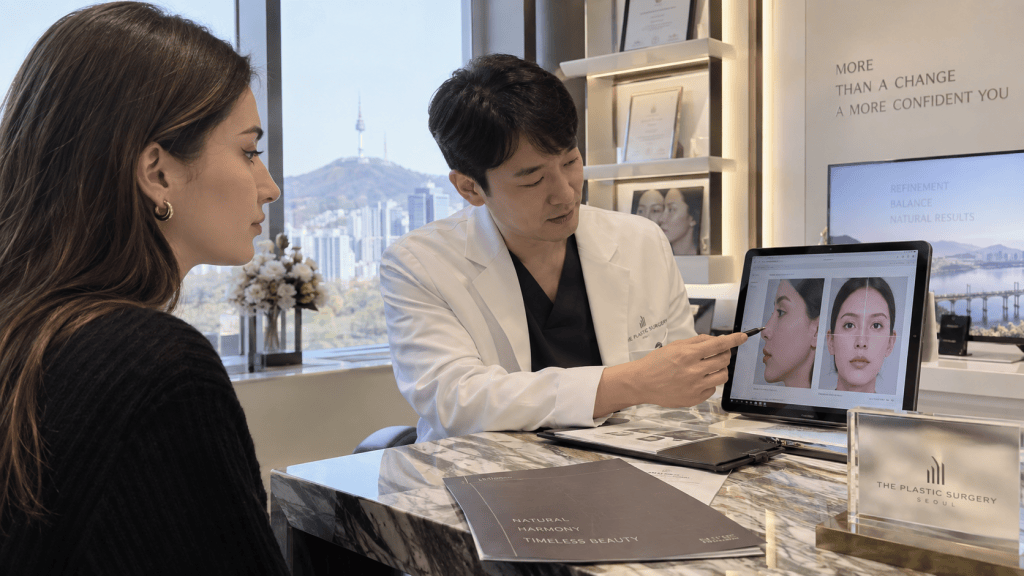
The nose occupies a central position on the face.
Its height, length, shape, and relationship with the forehead, lips, and chin can influence overall facial balance.
Korean rhinoplasty offers a variety of surgical approaches addressing concerns involving the nasal bridge, nasal tip, nostrils, and structural abnormalities.
International patients can explore treatment options that consider both aesthetic goals and, when appropriate, nasal function.
Popular Rhinoplasty Procedures in Korea
| Procedure | Primary Purpose |
|---|---|
| Nasal Bridge Augmentation | Adjusting the height and contour of the nasal bridge |
| Nasal Tip Surgery | Modifying the shape and projection of the nasal tip |
| Dorsal Hump Reduction | Addressing a prominent nasal hump |
| Crooked Nose Correction | Improving selected forms of nasal deviation |
| Short Nose Correction | Adjusting nasal length and tip orientation |
| Bulbous Nose Correction | Improving the appearance of a broad or rounded nasal tip |
| Functional Nasal Surgery | Addressing medically indicated structural breathing problems |
Another Important Feature: Different Graft and Implant Options
Depending on the patient’s anatomy and surgical needs, surgeons may consider materials such as:
- Septal cartilage
- Ear cartilage
- Rib cartilage
- Selected medical implants
Each option has benefits, limitations, and potential complications.
The most appropriate choice depends on factors such as skin thickness, existing nasal anatomy, previous procedures, and the patient’s medical history.
K-MEDICAL TIP
Ask your surgeon to explain the proposed changes from both frontal and profile views.
Also discuss breathing function, possible implant-related complications, scarring, and the possibility of revision surgery.
Rhinoplasty is not simply about making a nose higher or smaller. It is about finding a shape that works with the individual face.
4. Korean Facial Contouring: Understanding Beauty in Three Dimensions!
“Facial Harmony Begins Beneath the Skin.”
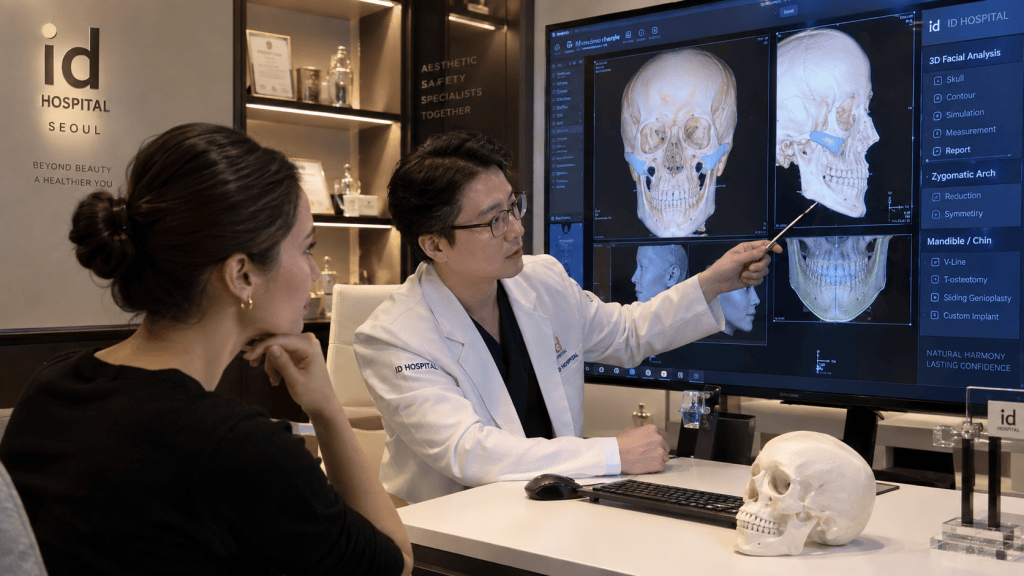
Facial appearance is influenced by much more than skin and soft tissue.
The underlying facial bones play a major role in determining the shape and proportions of the face.
South Korea offers various facial contouring procedures involving the cheekbones, jaw, and chin.
These operations require careful evaluation of facial anatomy because bones, nerves, muscles, blood vessels, and soft tissues are closely connected.
Major Facial Contouring Procedures
| Procedure | Primary Surgical Area | Purpose |
|---|---|---|
| Cheekbone Reduction | Zygomatic bones | Modifying prominent cheekbone contours |
| Jaw Reduction | Mandible | Adjusting selected lower-face contours |
| Chin Surgery | Chin bone | Modifying chin length or projection |
| Orthognathic Surgery | Upper and lower jaws | Correcting selected jaw-position and bite abnormalities |
| Facial Asymmetry Surgery | Relevant facial bones | Improving selected structural asymmetries |
The Role of 3D Medical Imaging
Some Korean medical institutions use three-dimensional CT imaging and other diagnostic technologies when planning facial bone surgery.
These tools can help surgeons evaluate:
- Facial bone structure
- Anatomical asymmetry
- Jaw relationships
- Important nerve pathways
- Relevant surgical landmarks
The information may support the development of a more individualized surgical plan.
Important Safety Considerations
Facial contouring can involve substantial surgical risks, including bleeding, infection, sensory changes, asymmetry, and difficulties related to jaw function.
Orthognathic surgery in particular requires an assessment of dental occlusion and jaw function, often involving relevant dental and maxillofacial specialists.
The value of advanced facial contouring lies not simply in changing facial shape, but in understanding the anatomy behind that change.
5. Korean Anti-Aging Surgery: Discover a Personalized Approach to Facial Aging!
“Aging Is Natural. How You Respond to It Is Personal.”
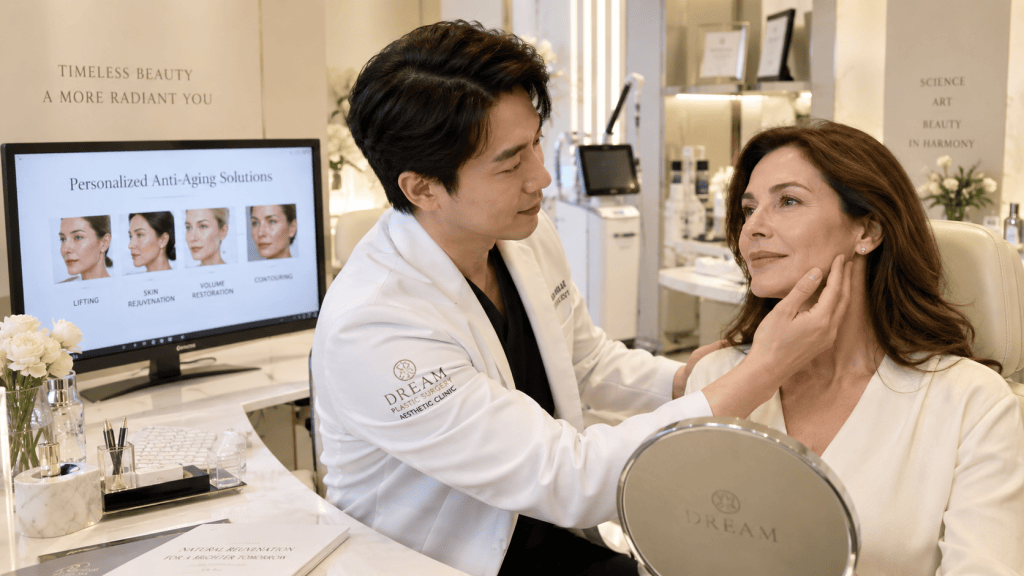
As we age, our faces gradually change.
Skin elasticity decreases.
Facial fat distribution shifts.
The eyelids may become heavier, the jawline may lose definition, and wrinkles may become more visible.
Korean aesthetic medicine offers surgical and non-surgical options addressing different aspects of facial aging.
Rather than relying on a single procedure for everyone, treatment options can be selected according to the patient’s individual concerns and medical suitability.
Popular Anti-Aging Procedures in Korea
| Procedure | Description | Potential Benefits |
|---|---|---|
| Facelift | Surgical adjustment of facial tissues | Improvement in selected facial and jawline sagging |
| Upper and Lower Eyelid Surgery | Adjustment of eyelid skin and tissue | Improvement in age-related eyelid changes |
| Facial Fat Grafting | Transfer of the patient’s own fat | Restoration of selected areas of facial volume |
| Botulinum Toxin | Injection-based muscle relaxation | Reduction of selected expression lines |
| Dermal Fillers | Injectable volume restoration | Improvement in selected volume-related concerns |
| Radiofrequency Treatments | Energy-based skin procedures | Improvement in selected skin-firmness concerns |
| Ultrasound-Based Treatments | Energy-based treatment of selected tissue layers | Improvement in skin firmness for suitable patients |
What Makes Personalized Anti-Aging Important?
Two people of the same age may have very different facial concerns.
One person may be primarily concerned about facial volume loss.
Another may have significant skin laxity.
A third may wish to address wrinkles around the eyes.
These different conditions may require different treatment approaches.
K-BEAUTY INSIGHT
The goal does not have to be looking 20 years younger.
It can simply be finding an appearance that reflects how you want to feel at your current stage of life.
Aging is a journey. Your aesthetic choices should reflect your own priorities and individuality.
6. Korean Body Contouring: Beauty Beyond the Face!
“Personalized Aesthetic Medicine for the Entire Body.”
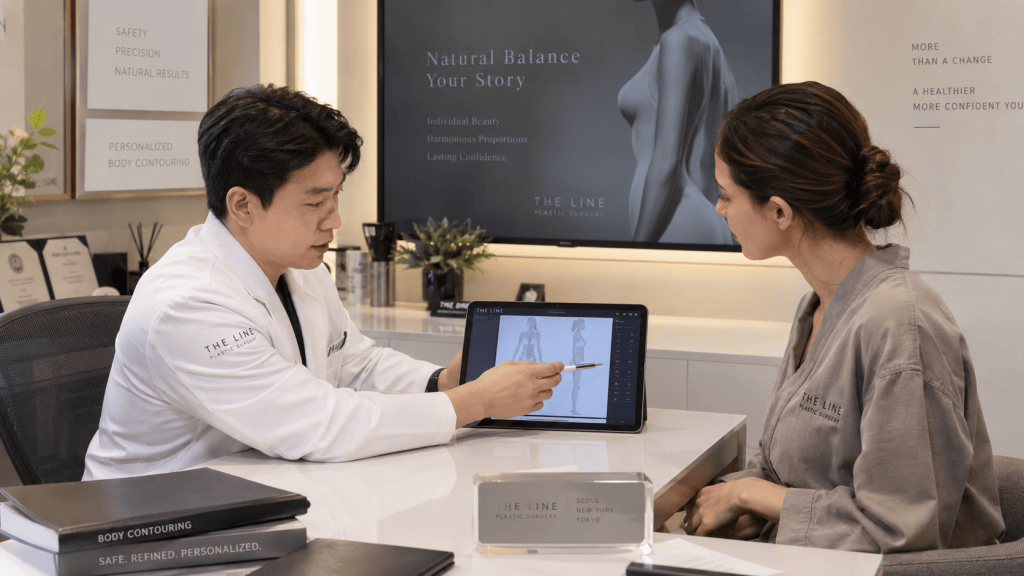
Korean plastic surgery extends beyond facial procedures.
Breast surgery and body contouring provide additional options for patients concerned about changes in their physical appearance.
Pregnancy, weight changes, aging, genetics, and individual anatomical differences can all influence body shape.
Some aesthetic concerns may not respond to exercise or weight management alone.
For suitable patients, surgical consultation may help determine whether a procedure could address those concerns.
Popular Body Contouring Procedures
| Procedure | Primary Purpose |
|---|---|
| Breast Augmentation | Increasing breast size and volume |
| Breast Reduction | Reducing excessive breast tissue |
| Breast Lift | Adjusting the shape and position of the breasts |
| Liposuction | Removing fat from selected areas |
| Abdominoplasty | Adjusting excess abdominal skin and tissue |
| Fat Grafting | Using the patient’s own fat to modify selected contours |
| Gynecomastia Surgery | Addressing excessive male breast tissue |
What Should International Patients Know?
Body contouring procedures require careful consideration of individual anatomy, medical history, and recovery requirements.
For example, breast augmentation may involve decisions about implant type, placement, and long-term monitoring.
Liposuction requires an assessment of fat distribution, skin elasticity, and overall health.
Removing more fat does not automatically produce a better aesthetic result.
K-MEDICAL TIP
Body contouring procedures may require longer recovery periods than relatively minor outpatient aesthetic treatments.
Ask about compression garments, wound care, mobility, flying after surgery, and the risk of blood clots.
The most appropriate body contouring plan is one designed around your health, anatomy, and personal goals.
7. Korean Reconstructive Surgery: Restoring More Than Appearance!
“Plastic Surgery Can Help People Rebuild Their Lives.”
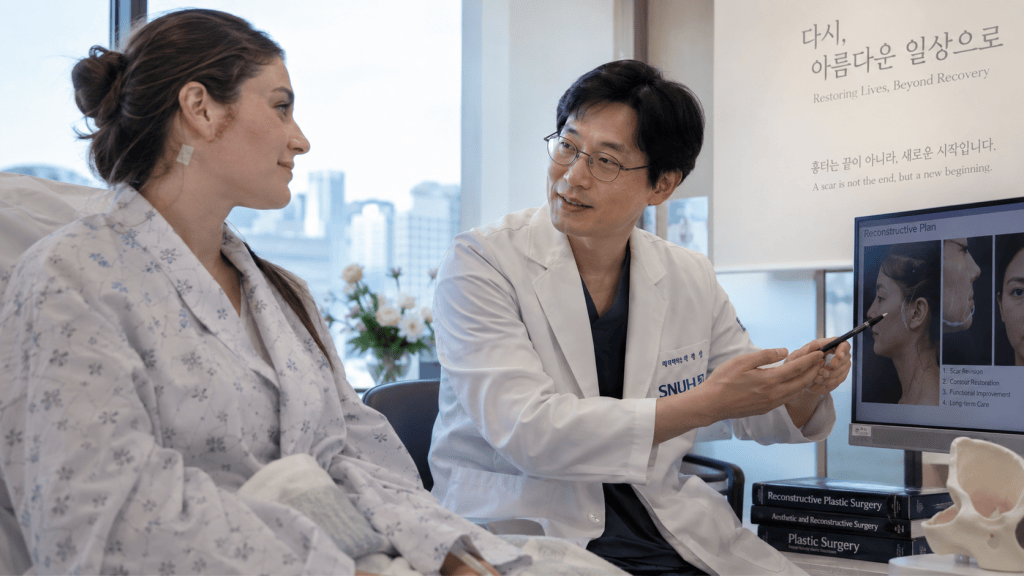
When people hear the term plastic surgery, they often think of cosmetic enhancement.
But reconstructive surgery is another essential part of the specialty.
Plastic surgeons also treat patients affected by accidents, burns, congenital conditions, cancer surgery, and tissue damage.
These procedures may aim to restore appearance, function, or both.
Major Areas of Reconstructive Surgery
| Specialty | Treatment Purpose |
|---|---|
| Burn Reconstruction | Restoring damaged skin and tissue |
| Trauma Reconstruction | Repairing structures damaged by accidents |
| Breast Reconstruction | Restoring breast shape following mastectomy |
| Scar Revision | Improving selected scars and functional limitations |
| Congenital Reconstruction | Addressing congenital structural abnormalities |
| Head and Neck Reconstruction | Reconstructing tissue after selected tumor operations |
| Hand Reconstruction | Restoring hand structure and function |
Why Reconstructive Surgery Matters
Consider a patient recovering from a severe burn.
Successful treatment may involve much more than improving the appearance of a scar.
It may also involve restoring movement and reducing functional limitations caused by scar contracture.
Similarly, breast reconstruction after cancer surgery may help address changes in physical appearance while considering the patient’s overall treatment plan and preferences.
THE HUMAN SIDE OF K-MEDICAL
The significance of plastic surgery is not limited to aesthetic transformation.
For some patients, reconstructive surgery can support the recovery of everyday abilities and help them adjust to major physical changes.
Sometimes, the most meaningful transformation is not becoming someone new. It is regaining an important part of everyday life.
8. Korean Plastic Surgery Meets Advanced Digital Technology!
“Where Medical Experience Meets Modern Imaging and Surgical Planning.”
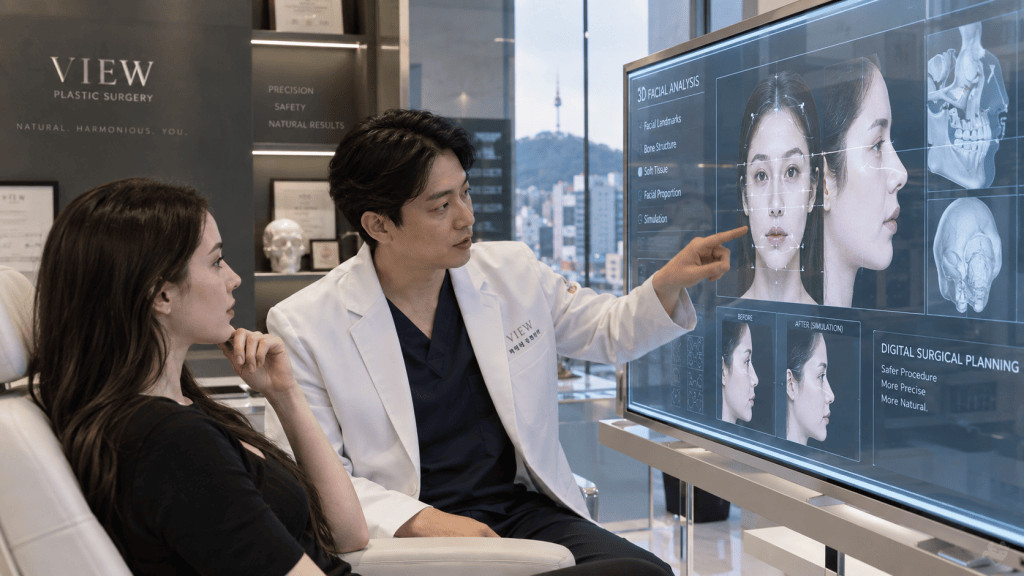
Modern plastic surgery increasingly incorporates medical imaging, digital analysis, and surgical planning technologies.
Some Korean medical institutions use three-dimensional imaging, facial analysis, and other tools to support diagnosis and treatment planning.
These technologies can help patients and surgeons communicate more clearly about anatomical concerns and proposed changes.
However, not every clinic provides the same technologies, and advanced imaging is not necessary for every procedure.
Digital Technologies Used in Aesthetic Medicine
| Technology | Common Applications | Potential Benefits |
|---|---|---|
| 3D CT Imaging | Facial contouring and selected rhinoplasty cases | Assessment of bone and other anatomical structures |
| Digital Facial Analysis | Eyelid, nose, and facial surgery consultations | Evaluation of facial proportions |
| 3D Simulation | Selected aesthetic consultations | Communication about proposed changes |
| Endoscopic Equipment | Certain surgical procedures | Improved visualization of selected surgical areas |
| Ultrasound Imaging | Breast and soft-tissue assessments | Evaluation of relevant tissue structures |
| Preoperative Imaging | Medically indicated surgical assessments | Identification of anatomical or medical concerns |
Why Digital Planning Can Be Helpful
Imagine visiting a Korean plastic surgery clinic to discuss rhinoplasty.
You know you would like to change the shape of your nose, but you find it difficult to explain exactly what you want.
Digital images or simulations may help you communicate your preferences to the surgeon.
The surgeon can then discuss what may be anatomically possible and medically appropriate.
However, a digital simulation is not a guarantee of the final surgical result.
Healing, swelling, scar formation, skin characteristics, and other individual factors can affect the outcome.
K-MEDICAL TIP
Do not choose a clinic solely because it advertises the latest equipment.
Ask how the technology will actually contribute to your diagnosis, surgical planning, or safety.
Technology is most valuable when it supports sound medical judgment and informed patient decisions.
9. International Patient Services: Making Medical Travel to Korea Easier!
“Healthcare Across Borders Requires More Than a Good Surgeon.”
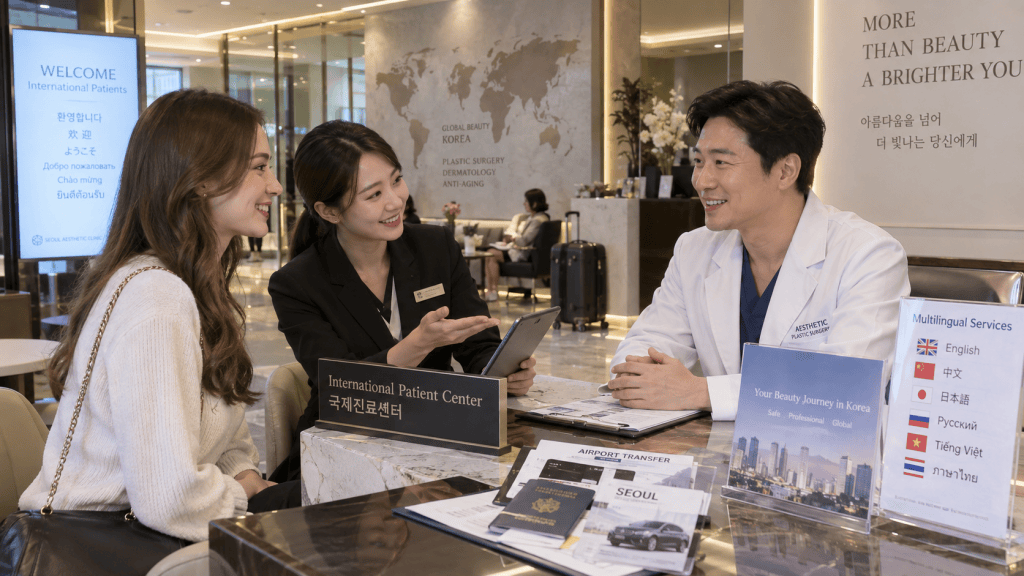
Receiving plastic surgery in another country involves unique challenges.
You may need to communicate in a different language.
You may be unfamiliar with local medical procedures.
You may need help arranging accommodations, transportation, medical records, or follow-up appointments.
To address these needs, some Korean hospitals and clinics provide international patient services.
Depending on the medical institution, these may include multilingual consultations, interpretation, appointment assistance, and guidance on medical tourism arrangements.
South Korea’s Ministry of Health and Welfare also operates a registration framework for medical institutions serving foreign patients. (Medical Korea)
Services Available to International Patients
| Service | Description |
|---|---|
| Online Consultation | Preliminary consultation before traveling |
| Multilingual Support | Assistance in English, Chinese, Japanese, and other languages where available |
| Medical Interpretation | Communication support during medical consultations |
| Surgery Scheduling | Coordination of treatment and travel dates |
| Airport Transportation | Transportation assistance where offered |
| Accommodation Guidance | Information about suitable places to stay during recovery |
| Postoperative Care | Follow-up examinations and wound care |
| After-Departure Support | Follow-up communication where available and appropriate |
How Can You Find a Registered Medical Institution?
Medical Korea provides an official searchable directory of medical institutions registered to serve foreign patients.
Visitors can use the directory to explore hospitals and clinics according to their medical needs and location.
Important Distinction
Registration to serve foreign patients does not guarantee superior surgical outcomes.
International patients should also verify:
- The operating surgeon’s qualifications
- Experience with the intended procedure
- Anesthesia arrangements
- Emergency response capabilities
- Postoperative care
- Medical malpractice insurance coverage
A successful international medical experience depends on the entire patient journey—from the first consultation to the final follow-up.
10. Korean Plastic Surgery: More Choices and Transparent Cost Planning!
“The Right Procedure Is Not Simply the Cheapest One.”
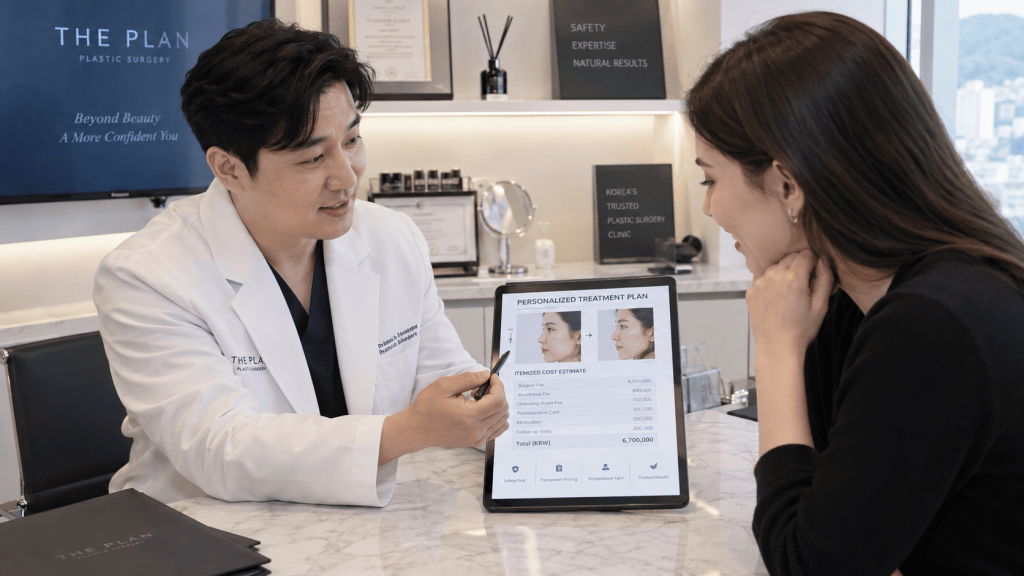
Cost is an important consideration for anyone planning plastic surgery abroad.
South Korea has a range of medical institutions offering different surgical approaches and treatment packages.
International patients can compare medical consultations, proposed procedures, treatment plans, and estimated expenses.
However, Korean plastic surgery is not necessarily cheaper than surgery in every other country.
Actual costs depend on the procedure, surgeon, institution, anesthesia, medical materials, exchange rates, and individual treatment requirements.
What Should You Compare Before Booking Surgery?
| Cost Category | Questions to Ask |
|---|---|
| Surgical Fee | What procedures are included? |
| Anesthesia Fee | Who administers anesthesia, and what is included? |
| Preoperative Tests | Are required medical examinations included? |
| Hospitalization | Will an overnight stay be necessary? |
| Medication | Are postoperative medications included? |
| Interpretation | Is language assistance included in the price? |
| Additional Treatment | What happens if complications require further care? |
| Postoperative Care | Are follow-up examinations included? |
| Revision Surgery | What are the clinic’s revision policies and costs? |
| Total Estimated Cost | What is the full anticipated financial commitment? |
Three Important Factors to Consider Together
1. Medical Expertise
Confirm that the surgeon has appropriate qualifications and relevant experience.
2. Patient Safety
Ask about anesthesia, emergency arrangements, and postoperative monitoring.
3. Total Treatment Cost
Compare complete estimates rather than advertised starting prices.
South Korea’s Medical Tourism Safety Framework
South Korea requires registered medical institutions attracting foreign patients to maintain medical malpractice liability insurance or participate in an approved medical liability scheme.
The country also operates the Korean Accreditation Program for Hospitals Serving Foreign Patients, known as KAHF.
The program evaluates participating institutions against criteria related to international patient services and patient safety. (Medical Korea)
These systems provide useful information for international patients evaluating their healthcare options.
The best financial decision is not automatically the lowest quote. It is an informed decision that considers the complete cost, medical appropriateness, and patient safety.
BONUS 1: The Ultimate Checklist Before Getting Plastic Surgery in Korea
10 Things Every International Patient Should Verify
Before making your final decision, review the following checklist.
| No. | Essential Checkpoint | Why It Matters |
|---|---|---|
| 1 | Verify the surgeon’s qualifications | Confirm appropriate medical expertise |
| 2 | Identify the actual operating surgeon | Ensure you know who will perform your surgery |
| 3 | Compare treatment options | Understand alternatives and avoid unnecessary procedures |
| 4 | Complete recommended medical tests | Identify relevant individual risk factors |
| 5 | Confirm anesthesia arrangements | Understand anesthesia and related safety measures |
| 6 | Review emergency response procedures | Understand how complications will be managed |
| 7 | Request a complete cost estimate | Avoid unexpected financial commitments |
| 8 | Confirm the recommended recovery period | Allow sufficient time for postoperative monitoring |
| 9 | Arrange follow-up care after returning home | Maintain continuity of treatment |
| 10 | Understand limitations and complications | Develop realistic expectations |
A Special Warning About Flying After Surgery
Do not assume that you can undergo surgery and immediately return home.
Recovery requirements vary considerably according to the procedure, anesthesia, and individual medical circumstances.
Long-distance flights may be particularly concerning following certain operations because prolonged immobility can increase the risk of blood clots.
Always discuss your planned departure date with your surgeon.
Your recovery is part of your treatment—not an optional addition to your travel itinerary.
BONUS 2: Where Can International Patients Find Reliable Information About Korean Plastic Surgery?
One of the most important parts of planning medical travel is finding reliable information.
Social media reviews and before-and-after photographs may provide personal perspectives, but they should not replace official information about medical institutions and surgeon qualifications.
Official Resources for Korean Medical Tourism
| Organization | Information Available |
|---|---|
| Medical Korea | Registered medical institutions serving foreign patients |
| Korean Society of Plastic and Reconstructive Surgeons | Professional society and member information |
| Korea Tourism Organization | Medical tourism and travel information |
| Korea Medical Dispute Mediation and Arbitration Agency | Medical dispute consultation and mediation |
Useful Official Websites
1. Medical Korea
Discover information about medical tourism, international patient services, and healthcare institutions in South Korea.
2. Registered Medical Institutions
Find Korean medical institutions registered to serve international patients.
Search Registered Medical Institutions
3. Korean Accreditation Program for Hospitals Serving Foreign Patients
Learn about accreditation criteria related to international patient services and patient safety.
4. Korean Society of Plastic and Reconstructive Surgeons
Explore information from Korea’s professional plastic surgery society.
Visit the Korean Society of Plastic and Reconstructive Surgeons
5. Korea Medical Dispute Mediation and Arbitration Agency
Find information about medical dispute resolution and patient support.
Visit the Korea Medical Dispute Mediation and Arbitration Agency
FINAL THOUGHTS
Why Is the World Paying Attention to Korean Plastic Surgery?
Discover the Intersection of Beauty, Medicine, Technology, and Personal Choice.
Korean plastic surgery is about much more than following the appearance of a famous celebrity.
It represents a broad field of medical services offering specialized surgical procedures, aesthetic consultations, digital planning technologies, and international patient support.
For international visitors, South Korea provides an opportunity to explore different approaches to aesthetic medicine while experiencing Korean culture.
Let’s summarize the 10 important strengths of K-Plastic Surgery.
K-PLASTIC SURGERY AT A GLANCE
| No. | Key Strength | What It Means for International Patients |
|---|---|---|
| 1 | Specialized Medical Expertise | Access to surgeons focusing on different aesthetic procedures |
| 2 | Eyelid Surgery | Individualized approaches to eyelid appearance and selected functional concerns |
| 3 | Rhinoplasty | Surgical options considering nasal shape and facial balance |
| 4 | Facial Contouring | Assessment of three-dimensional facial anatomy |
| 5 | Anti-Aging Medicine | Treatment options tailored to individual aging concerns |
| 6 | Body Contouring | Aesthetic procedures addressing different body areas |
| 7 | Reconstructive Surgery | Treatment aimed at restoring appearance and function |
| 8 | Digital Medical Technology | Imaging and analysis supporting selected surgical plans |
| 9 | International Patient Services | Assistance with medical consultations and travel arrangements |
| 10 | Cost and Treatment Choices | Opportunities to compare medical plans and complete estimated costs |
Your Beauty. Your Identity. Your Decision.
Perhaps you are considering double-eyelid surgery.
Perhaps you are interested in rhinoplasty, facial contouring, or anti-aging treatment.
Or perhaps you simply want to learn more about the possibilities of modern aesthetic medicine.
Whatever your goals may be, the most important starting point is understanding your own needs.
Plastic surgery is a medical decision that deserves careful consideration, realistic expectations, and professional guidance.
Korea offers many opportunities to explore these options.
But no single procedure, surgeon, or beauty standard is right for everyone.
The most meaningful aesthetic transformation is one that respects your health, individuality, and personal choices.
Your journey to Korea might begin with K-POP, K-FOOD, or K-DRAMA.
It could also introduce you to the world of K-MEDICAL.
And along the way, you may discover something even more valuable:
A deeper understanding of what beauty means to you.
K-MEDICAL KOREA
Discover Korean Beauty.
Experience Korean Medical Innovation.
Find the Beauty That Belongs to You.
“Your Journey to Discover Your Own Beauty Begins in Korea.”
#KMedical #KBeauty #KPlasticSurgery #KoreanPlasticSurgery #MedicalKorea #MedicalTourism #KoreanBeauty #KoreanHealthcare #VisitKorea #MedicalTourismKorea #SeoulPlasticSurgery #KBeautyMedical #KoreanAesthetics #PlasticSurgeryKorea #KoreanMedicalTourism #BeautyTourism #KoreanInnovation


Leave a Reply