
If you want to truly experience Korea, food is just as important as sightseeing.
Korean cuisine is known for its unique combination of fermentation, grilled meats, soups, vegetables, rice, and bold flavors. For international visitors, Korean food is more than just something to eat. It is also a way to experience Korean daily life, traditions, social culture, and the way people share meals together.
Below are 10 iconic Korean foods every foreign visitor should try.
Quick Guide: Top 10 Korean Foods
| No. | Food | Main Characteristic | Spiciness | Typical Price | Approx. USD |
|---|---|---|---|---|---|
| 1 | Kimchi | Korea’s signature fermented food | Medium to spicy | ₩3,000–₩10,000* | About $2–$7 |
| 2 | Bulgogi | Sweet and savory marinated beef | Not spicy | ₩15,000–₩30,000 | About $11–$22 |
| 3 | Bibimbap | Rice mixed with vegetables, meat, and sauce | Adjustable | ₩9,000–₩16,000 | About $7–$12 |
| 4 | Samgyeopsal | Korean-style grilled pork belly | Not spicy | ₩15,000–₩22,000 per serving | About $11–$16 |
| 5 | Tteokbokki | Spicy and sweet Korean street food | Spicy | ₩4,000–₩8,000 | About $3–$6 |
| 6 | Japchae | Glass noodles with vegetables and beef | Not spicy | ₩8,000–₩18,000 | About $6–$13 |
| 7 | Gimbap | Convenient Korean rice rolls | Not spicy | ₩3,500–₩7,000 | About $3–$5 |
| 8 | Galbi | Grilled marinated or plain short ribs | Not spicy | ₩25,000–₩50,000+ | About $18–$36+ |
| 9 | Samgyetang | Chicken and ginseng health soup | Not spicy | ₩16,000–₩25,000 | About $12–$18 |
| 10 | Korean Fried Chicken | Crispy fried or sauced chicken | Adjustable | ₩18,000–₩28,000 per whole chicken | About $13–$20 |
*Kimchi is often served free of charge as a side dish in Korean restaurants.
USD figures are approximate and may vary depending on the exchange rate, location, restaurant, and portion size.
1. Kimchi
The Starting Point of Korean Food Culture
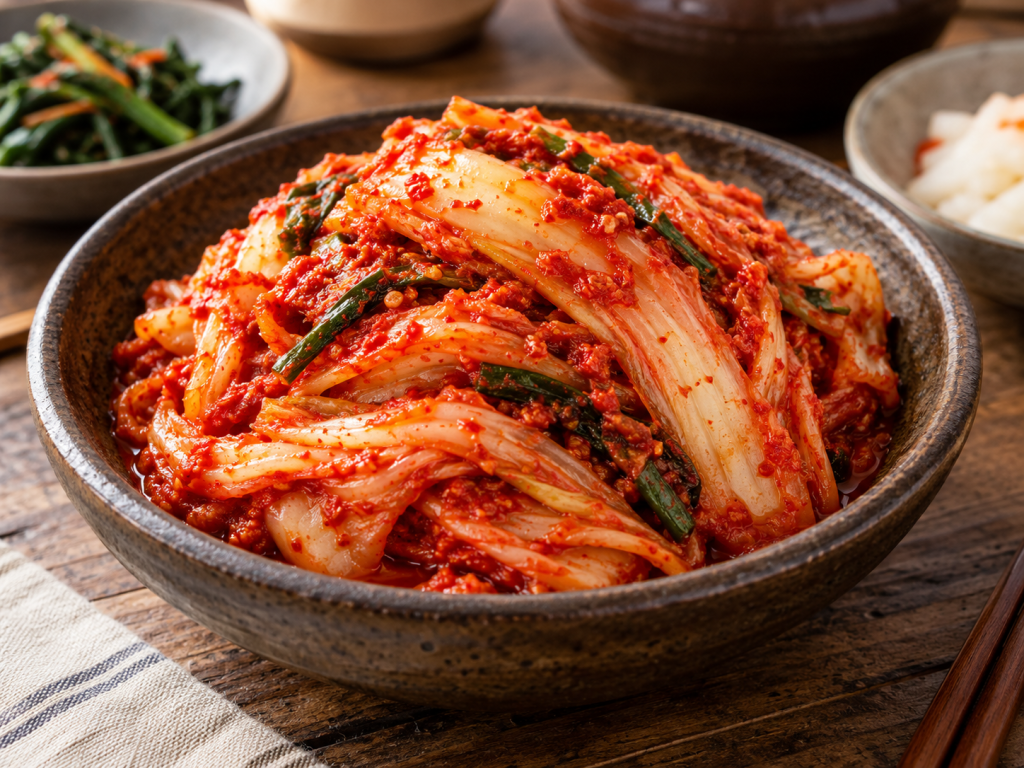
Kimchi is one of the most recognizable symbols of Korean cuisine.
It is usually made by salting vegetables such as napa cabbage or radish and seasoning them with ingredients such as:
- Korean red pepper flakes
- Garlic
- Ginger
- Green onions
- Fermented seafood
- Salt
The vegetables are then fermented, creating a flavor that can be spicy, sour, refreshing, or deeply savory.
Why You Should Try It
Kimchi is much more than spicy cabbage.
Its flavor changes depending on:
- the region,
- the season,
- the ingredients,
- the fermentation period,
- and the recipe used by each household or restaurant.
Popular types include:
- Napa cabbage kimchi
- Kkakdugi, or cubed radish kimchi
- Young radish kimchi
- White kimchi
- Cucumber kimchi
- Mustard leaf kimchi
Best Way to Eat It
If you are trying kimchi for the first time, start with a small portion and eat it with rice or grilled meat.
Kimchi pairs especially well with:
- Samgyeopsal
- Bulgogi
- Korean soups
- Rice dishes
Typical Price
At restaurants, kimchi is often included for free as a side dish.
Packaged or separately ordered kimchi usually costs about:
₩3,000–₩10,000
Approx.:
$2–$7
Recommended For
- People interested in fermented food
- Visitors who enjoy spicy flavors
- Anyone who wants to experience traditional Korean food culture
2. Bulgogi
One of the Easiest Korean Foods for Foreigners to Enjoy
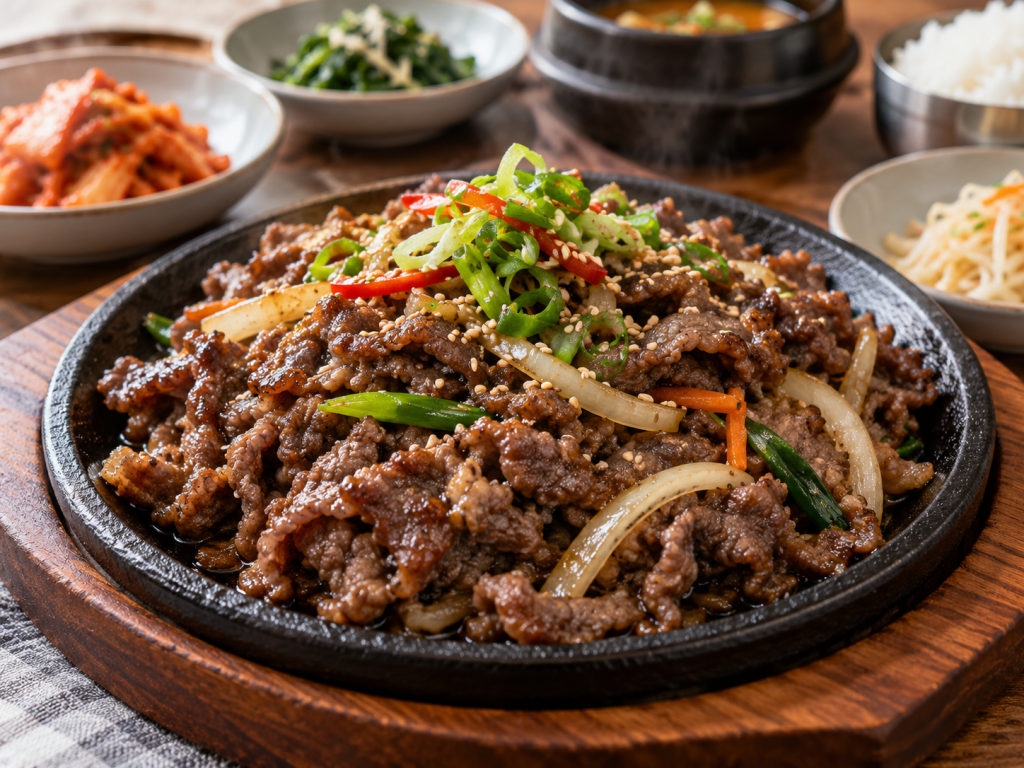
Bulgogi is made from thin slices of beef marinated in a sweet and savory sauce.
Typical marinade ingredients include:
- Soy sauce
- Sugar
- Garlic
- Sesame oil
- Green onion
The meat is then grilled or stir-fried.
Flavor
Bulgogi is usually:
- Sweet
- Savory
- Tender
- Mild
- Slightly nutty from sesame oil
Because it is not spicy, it is one of the safest choices for visitors who are new to Korean food.
How to Eat It
You can enjoy bulgogi with rice or wrap it in lettuce.
It is often cooked together with:
- Mushrooms
- Onions
- Green onions
- Carrots
Typical Price
Per person:
₩15,000–₩30,000
Approx.:
$11–$22
Premium Korean beef bulgogi can cost significantly more.
Ordering Tip
Look for:
- Bulgogi
- Beef bulgogi
- Ttukbaegi bulgogi
Ttukbaegi bulgogi is served in a hot earthenware pot with broth, making it especially easy to enjoy with rice.
3. Bibimbap
Korea’s Famous Mixed Rice Bowl
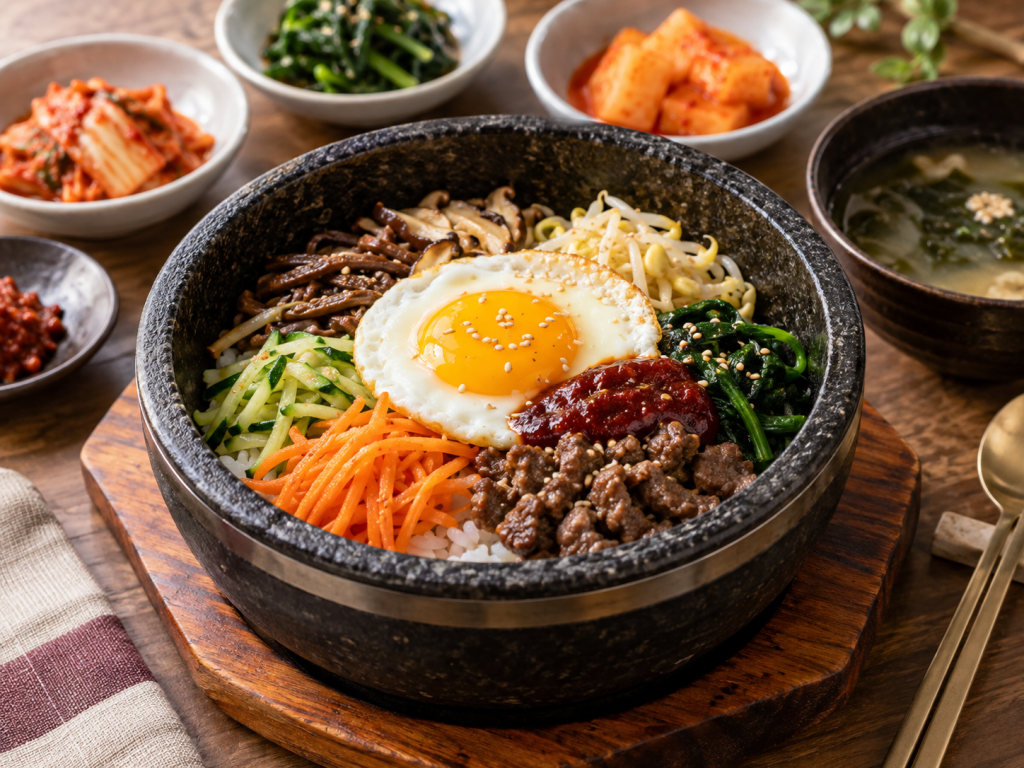
Bibimbap literally means “mixed rice.”
It is one of the best dishes for experiencing the balance and visual beauty of Korean cuisine.
A bowl of rice is topped with colorful vegetables, meat, egg, and gochujang before everything is mixed together.
Common Ingredients
- Rice
- Spinach
- Bean sprouts
- Carrots
- Mushrooms
- Fernbrake
- Beef
- Egg
- Gochujang
Why Foreign Visitors Like It
You can control the level of spiciness yourself.
If you do not like spicy food, simply use less gochujang or ask for it on the side.
Popular Types
- Jeonju bibimbap
- Dolsot bibimbap
- Yukhoe bibimbap
- Mountain vegetable bibimbap
Typical Price
Usually:
₩9,000–₩16,000
Approx.:
$7–$12
Premium versions with raw beef or Korean beef can cost more.
Best Choice for First-Timers
Try dolsot bibimbap.
It is served in a hot stone bowl, which creates a delicious crispy rice layer at the bottom.
4. Samgyeopsal
Korea’s Most Famous Pork Barbecue Experience
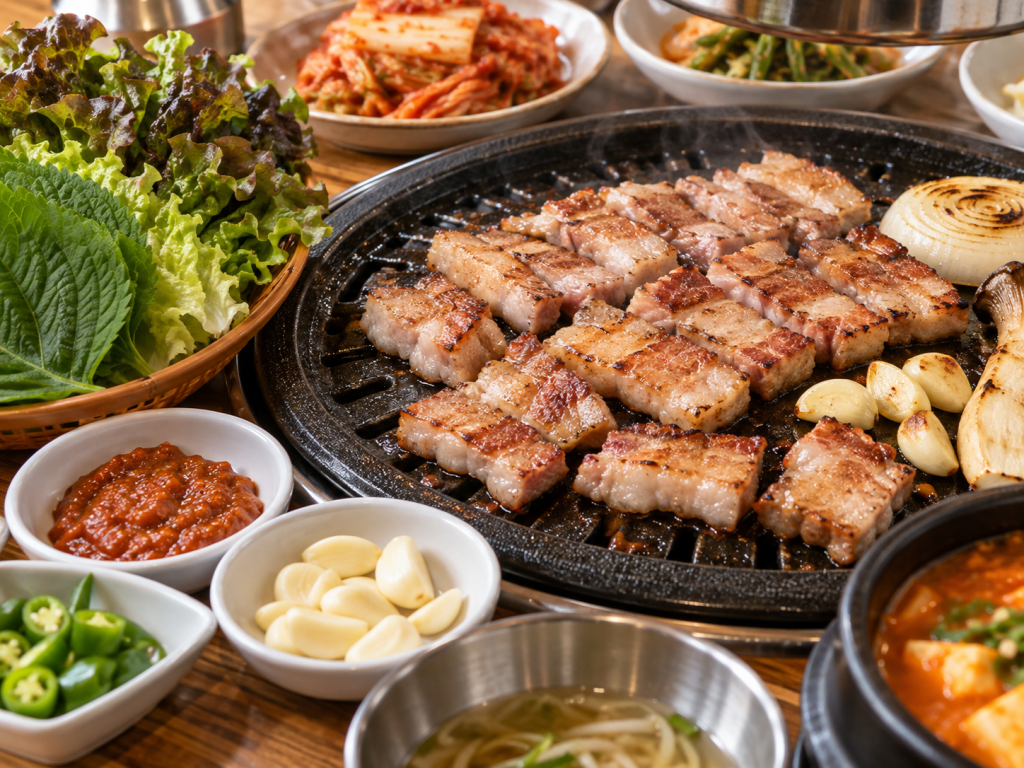
Samgyeopsal is thick-cut pork belly grilled directly at the table.
It is one of Korea’s most popular social foods and is commonly enjoyed with:
- Friends
- Family
- Coworkers
What Makes It Special
Samgyeopsal is not just about grilled meat.
The full experience usually includes:
- Lettuce
- Perilla leaves
- Garlic
- Ssamjang
- Kimchi
- Green onion salad
- Chili peppers
A common way to eat it is to place a piece of grilled pork on lettuce, add garlic, ssamjang, and kimchi, then wrap everything together and eat it in one bite.
Typical Serving Size
Many restaurants sell pork belly in portions of around:
150–200 grams per serving
Some restaurants may require a minimum order of two servings.
Typical Price
Per serving:
₩15,000–₩22,000
Approx.:
$11–$16
Premium aged pork or Jeju black pork may cost more.
Useful Tip
Some restaurants grill the meat for you, while others expect customers to cook it themselves.
If you are unsure, simply ask the staff.
5. Tteokbokki
Korea’s Iconic Street Food
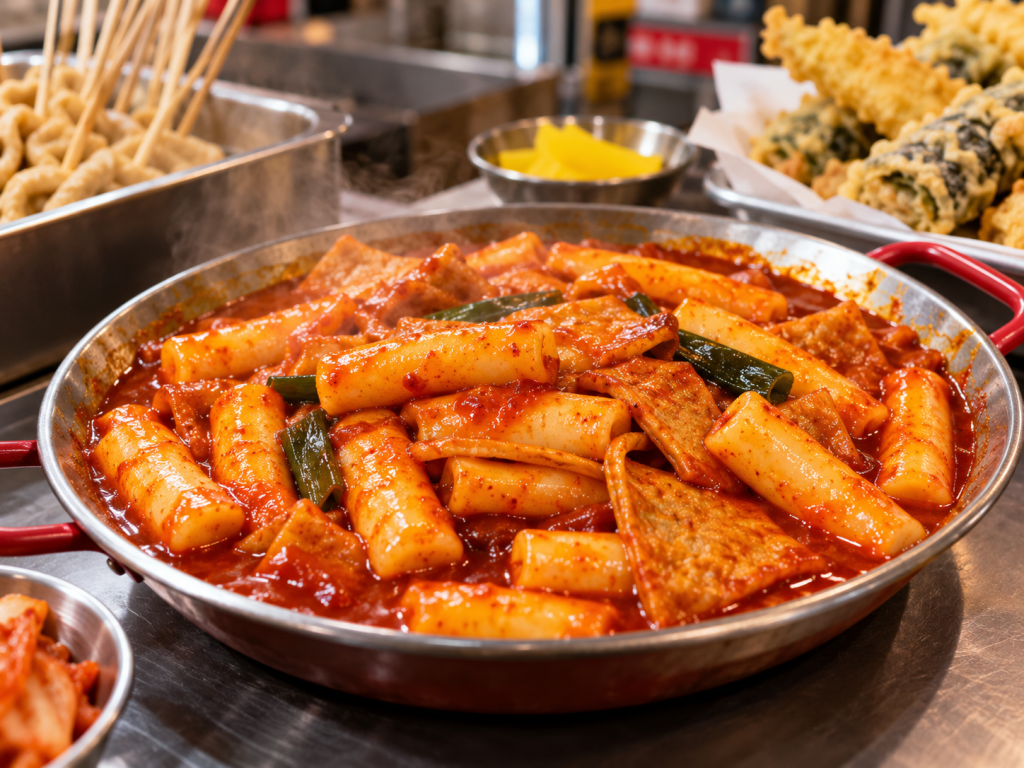
Tteokbokki consists of chewy rice cakes cooked in a spicy and sweet red sauce, usually made with gochujang.
It is commonly found at:
- Traditional markets
- Snack shops
- Street stalls
- Food courts
Main Ingredients
- Rice cakes
- Gochujang
- Fish cakes
- Green onions
- Sugar or syrup
Flavor
Tteokbokki is usually sweet at first, followed by a noticeable spicy kick.
Visitors who are sensitive to spicy food should be careful.
Best Foods to Eat With It
Koreans often enjoy tteokbokki together with:
- Fried snacks
- Sundae
- Fish cake
- Gimbap
A popular way to eat it is to dip fried snacks into the tteokbokki sauce.
Typical Price
Per serving:
₩4,000–₩8,000
Approx.:
$3–$6
Large franchise-style tteokbokki restaurants may cost more.
6. Japchae
Sweet and Savory Korean Glass Noodles
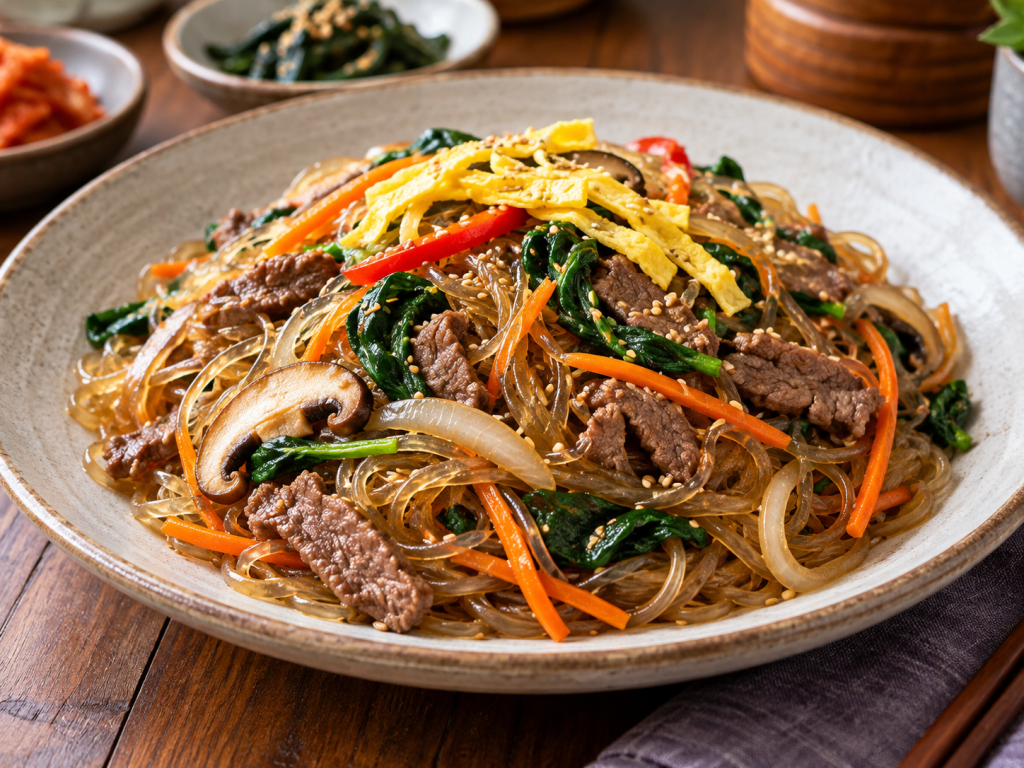
Japchae is made with sweet potato glass noodles stir-fried with vegetables, meat, soy sauce, and sesame oil.
It is mild, slightly sweet, and generally not spicy.
Common Ingredients
- Glass noodles
- Beef
- Carrots
- Onions
- Mushrooms
- Spinach
- Soy sauce
- Sesame oil
Texture
The noodles are smooth, springy, and chewy.
The combination of soy sauce and sesame oil gives the dish a rich but gentle flavor.
Cultural Meaning
Japchae is common at:
- Birthdays
- Holidays
- Family gatherings
- Traditional celebrations
Typical Price
As a meal:
₩8,000–₩18,000
Approx.:
$6–$13
At Korean set-menu restaurants, it may also be served in smaller portions as a side dish.
7. Gimbap
Korea’s Convenient Everyday Meal
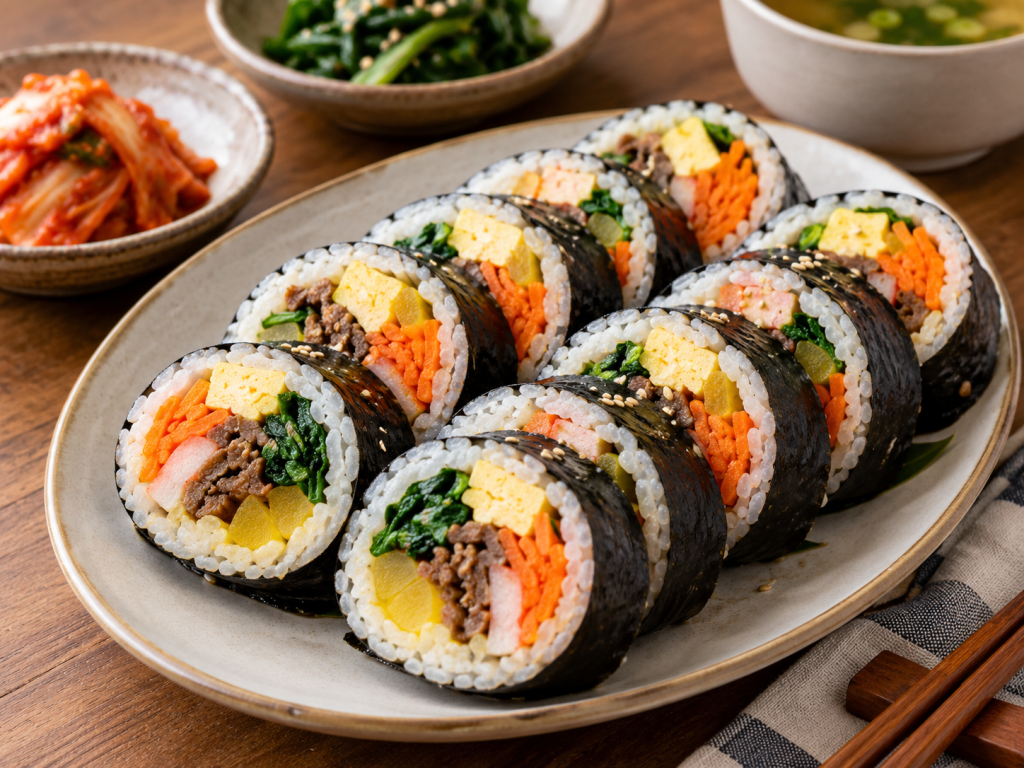
Gimbap is made by rolling rice and various fillings in dried seaweed and slicing the roll into bite-sized pieces.
Foreign visitors sometimes compare it with Japanese sushi, but the taste and preparation are quite different.
Common Fillings
- Rice
- Seaweed
- Pickled radish
- Carrots
- Spinach
- Egg
- Ham
- Burdock root
Popular Types
Today, there are many variations, including:
- Tuna gimbap
- Cheese gimbap
- Bulgogi gimbap
- Pork cutlet gimbap
- Spicy gimbap
- Vegetable gimbap
Why It Is Popular
- Affordable
- Portable
- Quick to eat
- Filling enough for a meal
Typical Price
Per roll:
₩3,500–₩7,000
Approx.:
$3–$5
Premium gimbap can cost ₩8,000 or more.
8. Galbi
One of Korea’s Premium Barbecue Dishes
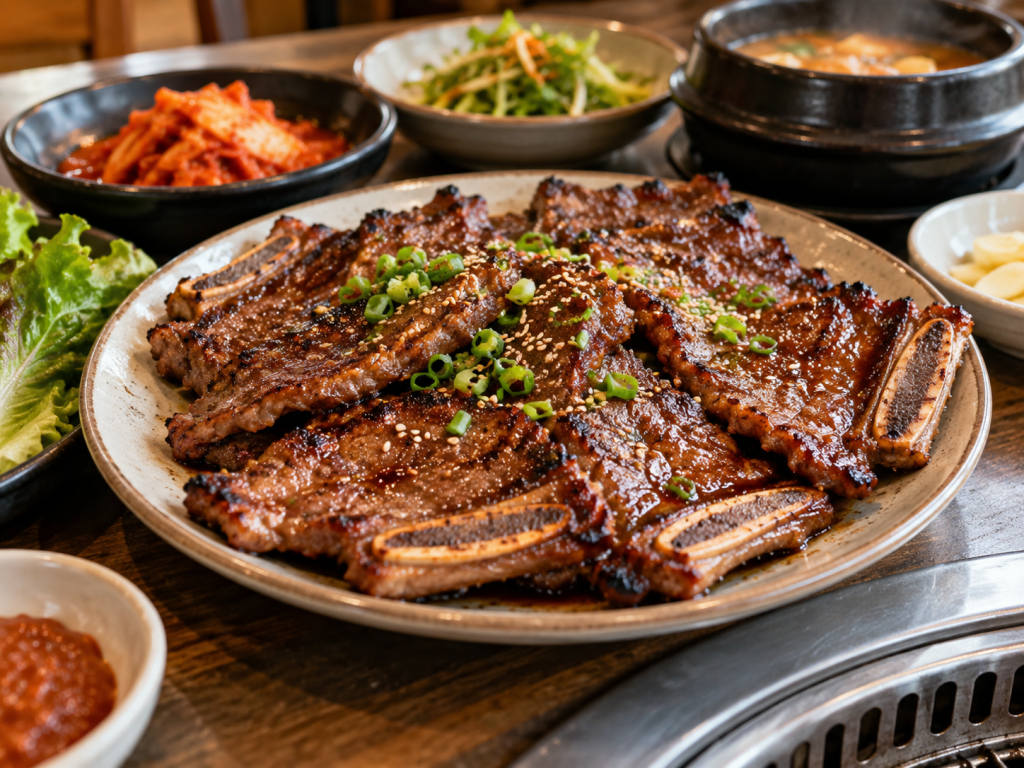
Galbi refers to beef or pork ribs that are grilled either plain or after being marinated.
It is also a popular choice for business dinners and special occasions.
Popular Types
- Beef galbi
- Marinated galbi
- Pork galbi
- LA galbi
- Premium Korean beef galbi
Flavor
Marinated galbi is usually:
- Sweet
- Savory
- Smoky
- Juicy
How to Eat It
Like samgyeopsal, galbi can be wrapped in lettuce or perilla leaves with garlic and sauce.
At more upscale restaurants, staff often grill the meat for you.
Typical Price
Per serving:
₩25,000–₩50,000+
Approx.:
$18–$36+
Premium Korean beef restaurants can charge:
₩60,000–₩100,000+ per serving
Best For
- Special dinners
- Business meals
- Visitors looking for premium Korean barbecue
9. Samgyetang
Korea’s Famous Chicken and Ginseng Health Soup
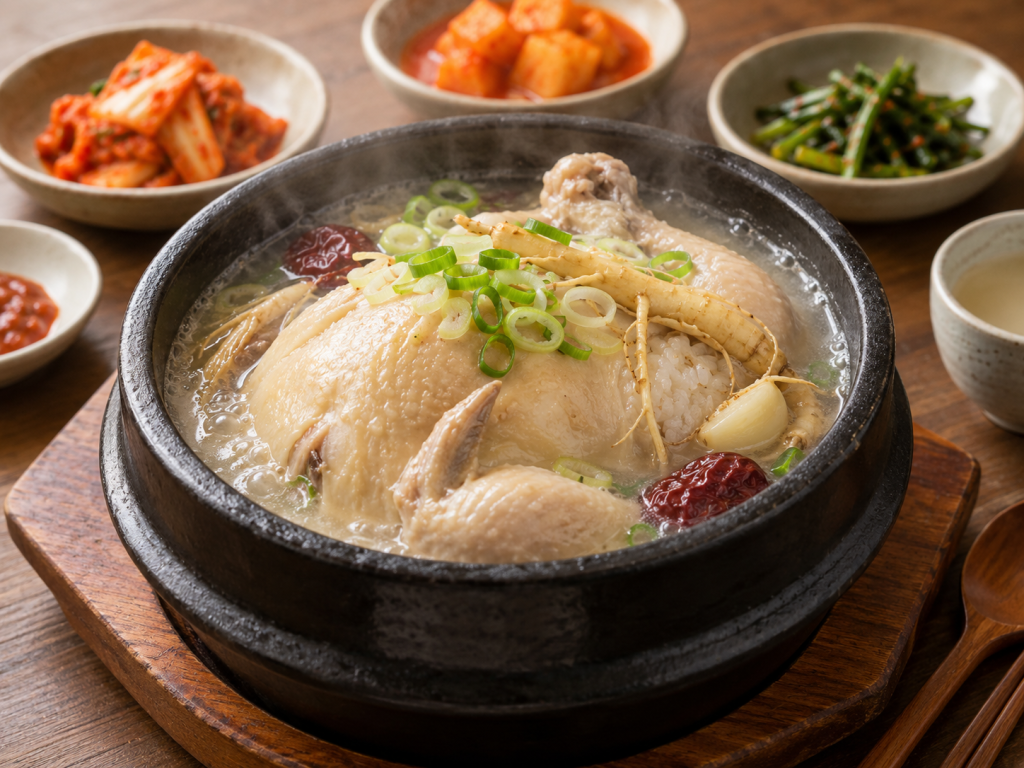
Samgyetang is made by simmering a whole young chicken filled with:
- Glutinous rice
- Garlic
- Ginseng
- Jujube
It is one of Korea’s best-known traditional health foods.
A Unique Korean Tradition
Koreans often eat hot samgyetang during the hottest days of summer.
This tradition is often described by the Korean expression:
“Fight heat with heat.”
Flavor
The broth is mild, clean, and comforting rather than spicy.
The chicken is tender, and the glutinous rice inside makes the meal filling.
How to Eat It
Salt and pepper are usually provided separately.
You can season the soup to your taste or dip pieces of chicken into seasoned salt.
Typical Price
Per bowl:
₩16,000–₩25,000
Approx.:
$12–$18
Premium versions with abalone or wild ginseng cost more.
Recommended For
- Visitors who cannot eat spicy food
- People who enjoy hot soup
- Travelers interested in traditional Korean health food
10. Korean Fried Chicken
One of the Most Globally Popular K-Foods
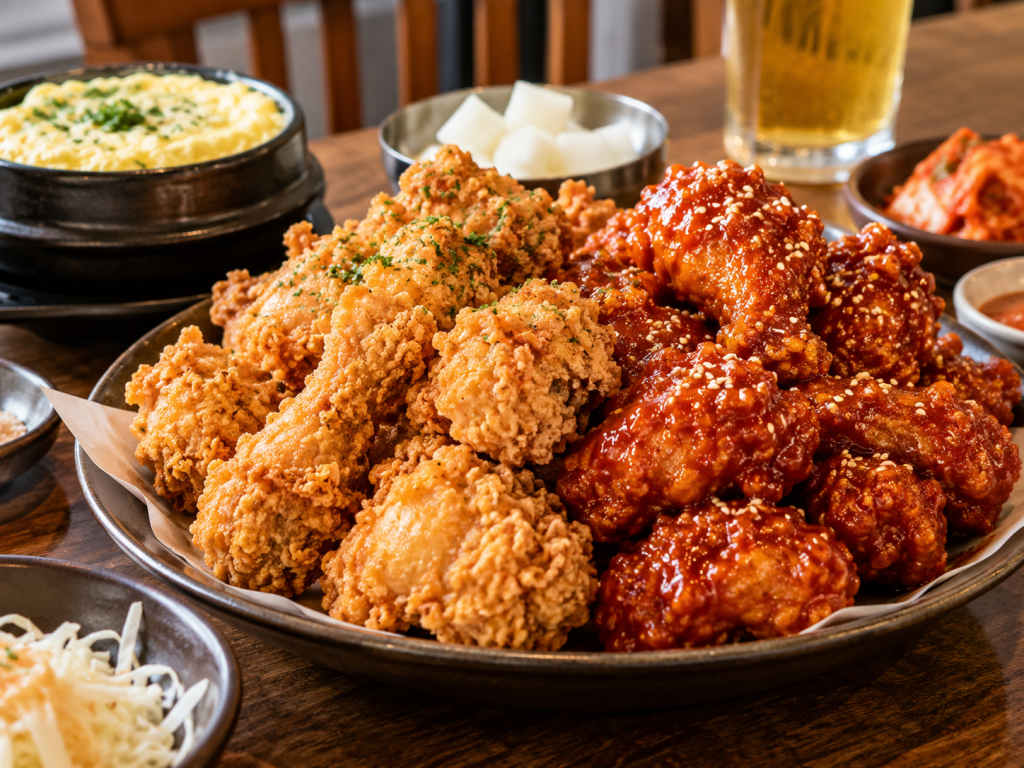
Korean fried chicken has become popular around the world.
Its signature characteristics are:
- Very crispy coating
- Juicy meat
- A wide variety of sauces and seasonings
Popular Styles
- Original fried chicken
- Yangnyeom chicken
- Soy garlic chicken
- Garlic chicken
- Spicy chicken
- Green onion chicken
The Famous “Half-and-Half” Order
In Korea, you can often order one whole chicken with two flavors.
For example:
Half original + half spicy sauce
This is called:
Banban chicken
Chimaek Culture
One of the most famous Korean food combinations is:
Chimaek = Chicken + Beer
It is especially popular for casual evening gatherings with friends.
Typical Price
One whole chicken:
₩18,000–₩28,000
Approx.:
$13–$20
Delivery fees and side dishes may add to the total.
Best Korean Foods by Preference
| Traveler Preference | Recommended Foods |
|---|---|
| Loves spicy food | Kimchi, Tteokbokki |
| Cannot eat spicy food | Bulgogi, Japchae, Samgyetang |
| Wants Korean BBQ | Samgyeopsal, Galbi |
| Prefers healthier meals | Bibimbap, Samgyetang |
| Wants a quick and affordable meal | Gimbap, Tteokbokki |
| Wants food to share with friends | Samgyeopsal, Korean Fried Chicken |
| Wants traditional Korean food | Kimchi, Bibimbap, Samgyetang |
| Trying Korean food for the first time | Bulgogi, Bibimbap, Korean Fried Chicken |
Recommended Order for First-Time Visitors
If you are new to Korean cuisine, this order makes the experience easier and more enjoyable.
Step 1. Bulgogi
A familiar, mild, sweet-and-savory introduction.
Step 2. Bibimbap
A balanced introduction to Korean vegetables, rice, and sauces.
Step 3. Korean Fried Chicken
Familiar in style, but distinctly Korean in flavor.
Step 4. Samgyeopsal
Experience Korean barbecue and lettuce wraps.
Step 5. Gimbap
Try a simple everyday Korean meal.
Step 6. Japchae
Discover a popular traditional celebration dish.
Step 7. Galbi
Move on to a more premium Korean barbecue experience.
Step 8. Samgyetang
Experience traditional Korean health food.
Step 9. Kimchi
Explore Korea’s famous fermented flavors in greater depth.
Step 10. Tteokbokki
Finish with a bold and spicy Korean street-food challenge.
Final Takeaway
The biggest appeal of Korean food is that it cannot be described with only one flavor.
From the fermentation of kimchi and the sweetness of bulgogi to the communal barbecue culture of samgyeopsal, the balance of bibimbap, the bold spice of tteokbokki, and the crispiness of Korean fried chicken, every dish shows a different side of Korea.
For international visitors, K-Food is not simply a meal.
It is a way to experience Korean daily life, hospitality, sharing culture, tradition, and modern lifestyle—all at the same table.


Leave a Reply