
Discover the Korea You Won’t Find on a Typical Tour
Korea is much more than K-pop, palaces, shopping, and famous food streets. If you want to experience the country the way locals do, try these 10 unforgettable activities — from sleeping in a Buddhist temple to cheering with thousands of baseball fans.
Price Guide: Approximate 2026 prices. USD conversions use about ₩10,000 ≈ US$7.47 as of October 6, 2026. Actual prices may vary by season, location, and program.
| No. | Unique Korean Experience | Recommended Area | Approx. Cost |
|---|---|---|---|
| 1 | Stay Overnight at a Buddhist Temple | Seoul, Gyeongju, Danyang | ₩70,000–₩120,000 / US$52–90 |
| 2 | Sleep in a Traditional Hanok | Jeonju, Andong, Gyeongju | ₩70,000–₩250,000 / US$52–187 |
| 3 | Spend a Night at a Jjimjilbang | Nationwide | ₩12,000–₩25,000 / US$9–19 |
| 4 | Cheer at a Korean Baseball Game | Seoul, Busan, Daegu | ₩10,000–₩70,000 / US$7–52 |
| 5 | Hike a Mountain Like a Korean | Seoul & nationwide | Free–₩30,000 / US$0–22 |
| 6 | Explore a Traditional Market in the Morning | Seoul, Busan, Daegu | ₩10,000–₩40,000 / US$7–30 |
| 7 | Make Traditional Korean Rice Wine | Seoul, Jeonju | ₩30,000–₩80,000 / US$22–60 |
| 8 | Take a KTX Trip to a Smaller Korean City | Nationwide | ₩30,000–₩120,000 / US$22–90 |
| 9 | Have a Korean-Style Hangang Picnic | Seoul | ₩15,000–₩50,000 / US$11–37 |
| 10 | Experience a Korean Rural Village | Gangwon, Jeolla, Gyeongsang | ₩30,000–₩150,000 / US$22–112 |
1. Spend a Night in a Buddhist Temple
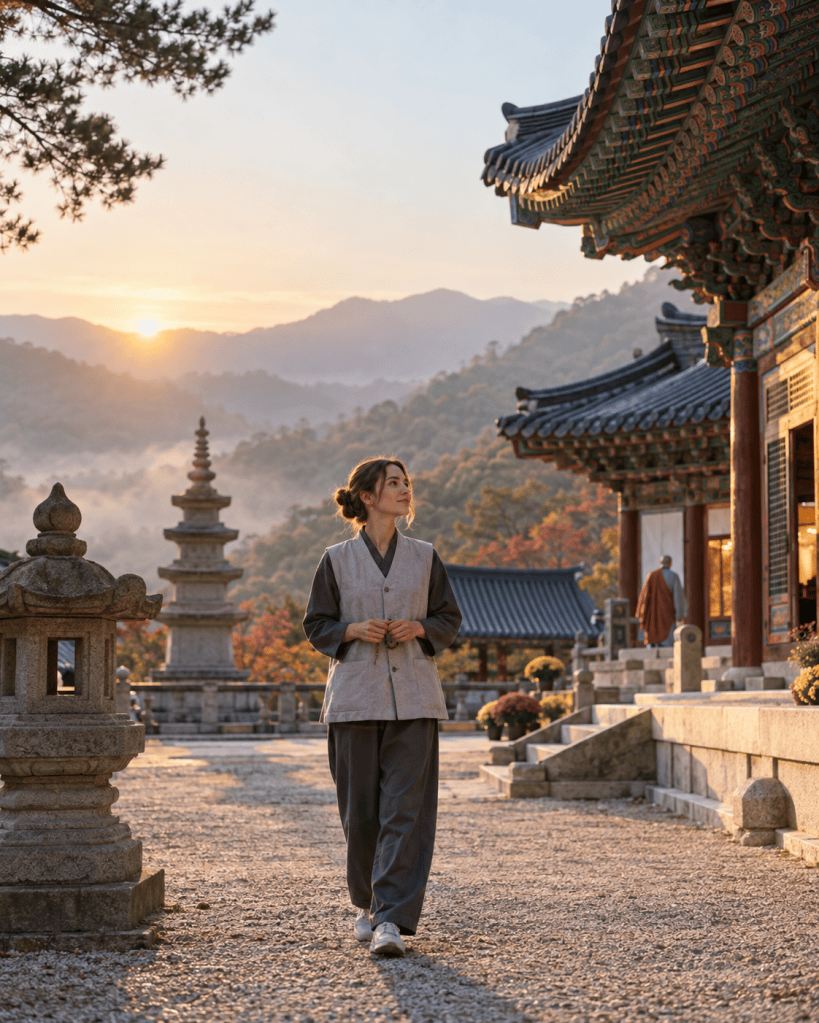
Templestay — Find Another Side of Korea
Imagine waking before sunrise to the sound of a temple bell in the mountains.
A Korean Templestay allows visitors to experience Buddhist culture rather than simply looking at a temple. Depending on the program, travelers can try meditation, Buddhist meals, morning ceremonies, tea with monks, or the traditional 108 bows. Korea’s official Templestay program offers one-day, experience-oriented, and rest-oriented options. VISITKOREA – Imagine Your Korea
For example, a regular overnight program at Bongeunsa in Seoul is listed at ₩120,000, while programs at other temples can be less expensive. 템플스테이
Recommended: Bongeunsa in Seoul, Golgulsa in Gyeongju, Guinsa in Danyang
Typical Cost: ₩70,000–₩120,000 (US$52–90)
Best For: Culture, meditation, wellness, solo travelers
Traveler Tip:
You do not have to be Buddhist. International travelers are welcome, and many programs provide English information.
2. Sleep in a Traditional Korean Hanok
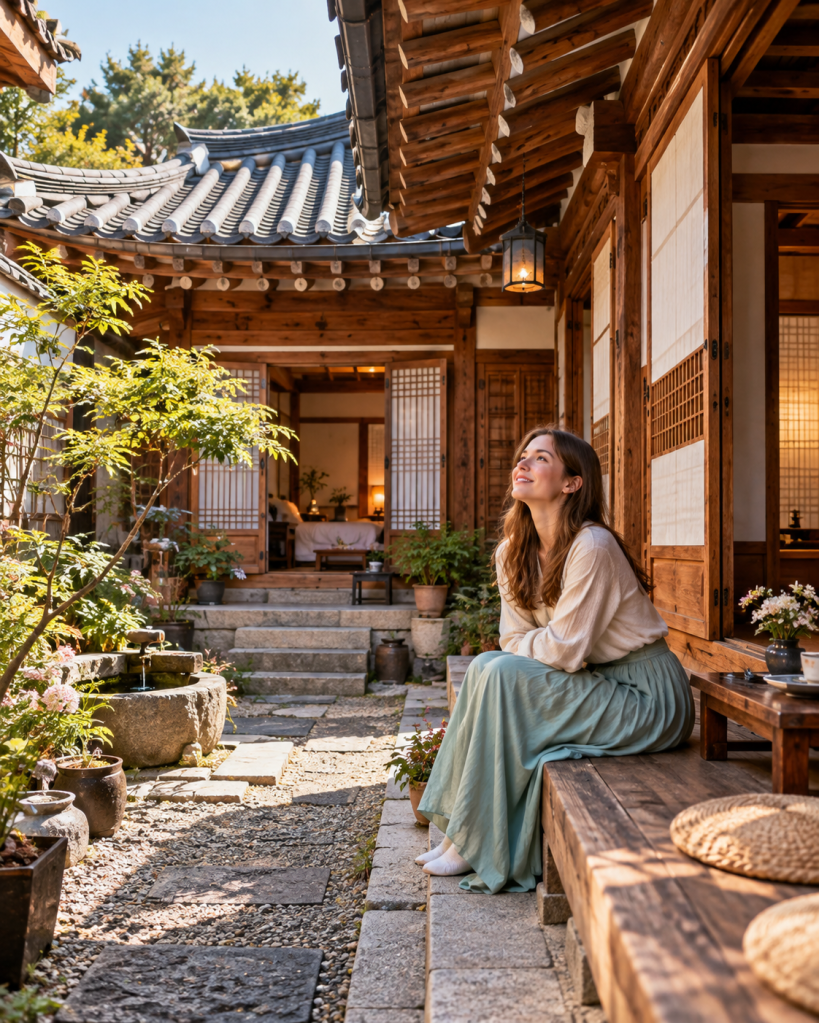
Forget the Hotel for One Night
A hanok is a traditional Korean house built around natural materials, wooden structures, courtyards, and Korea’s distinctive architectural style.
Rather than staying in another international hotel, spend a night sleeping close to the floor on traditional bedding and wake up inside one of Korea’s historic neighborhoods. Hanok accommodations are promoted by Korea Tourism Organization as a way to experience the aesthetics, nature, and slower pace of traditional Korean living. VISITKOREA – Imagine Your Korea
Recommended:
Jeonju Hanok Village, Andong, Gyeongju, Bukchon/Eunpyeong in Seoul
Typical Cost: ₩70,000–₩250,000 per room (US$52–187)
Best For: Couples, families, photographers, culture lovers
Don’t Miss:
Wake up early and walk through the neighborhood before day-trip visitors arrive.
3. Spend an Evening at a Korean Jjimjilbang
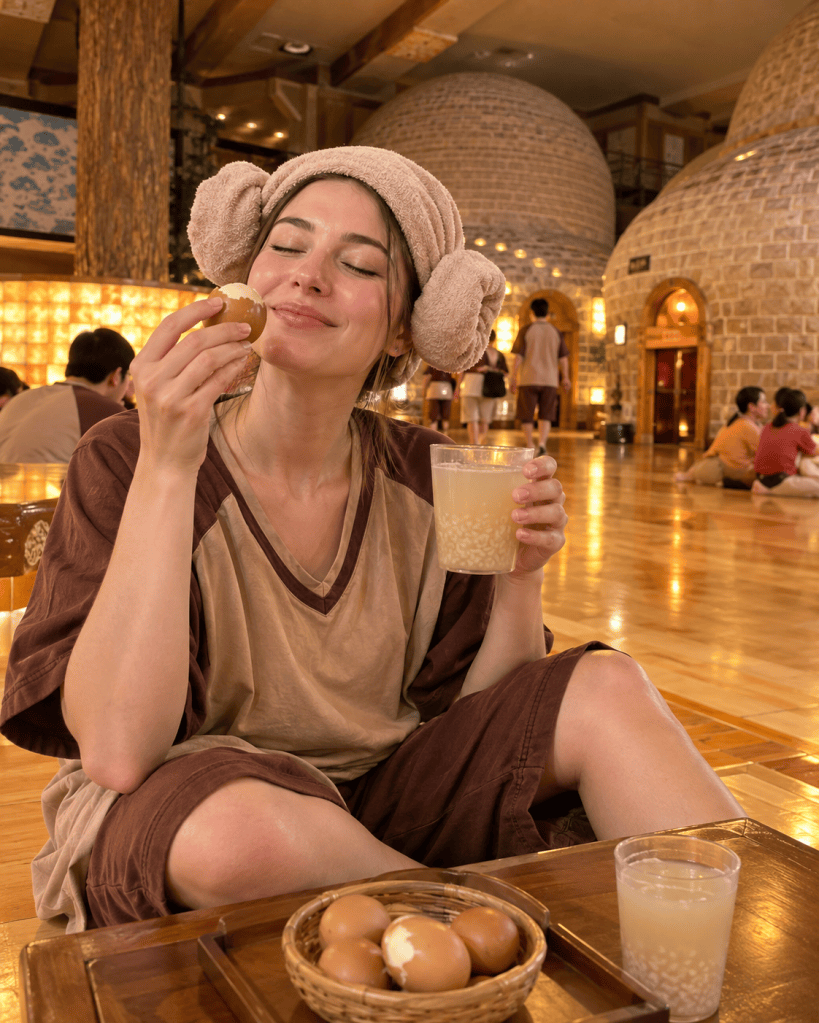
Korea’s Sauna Culture Is an Experience of Its Own
A jjimjilbang is much more than a sauna.
Large Korean bathhouses may include hot and cold baths, saunas, heated rooms, relaxation areas, restaurants, massage chairs, and sleeping spaces.
And yes — you should try the classic combination:
Sikhye + baked eggs
Sikhye is a sweet Korean rice drink that has become almost inseparable from the jjimjilbang experience.
Typical Admission: ₩12,000–₩25,000 (US$9–19)
Food & Extras: ₩5,000–₩20,000 (US$4–15)
Best For: Rainy days, winter travel, jet lag recovery
Traveler Tip:
Bathing areas are normally separated by gender, while common sauna and relaxation areas are shared.
4. Go to a Korean Baseball Game
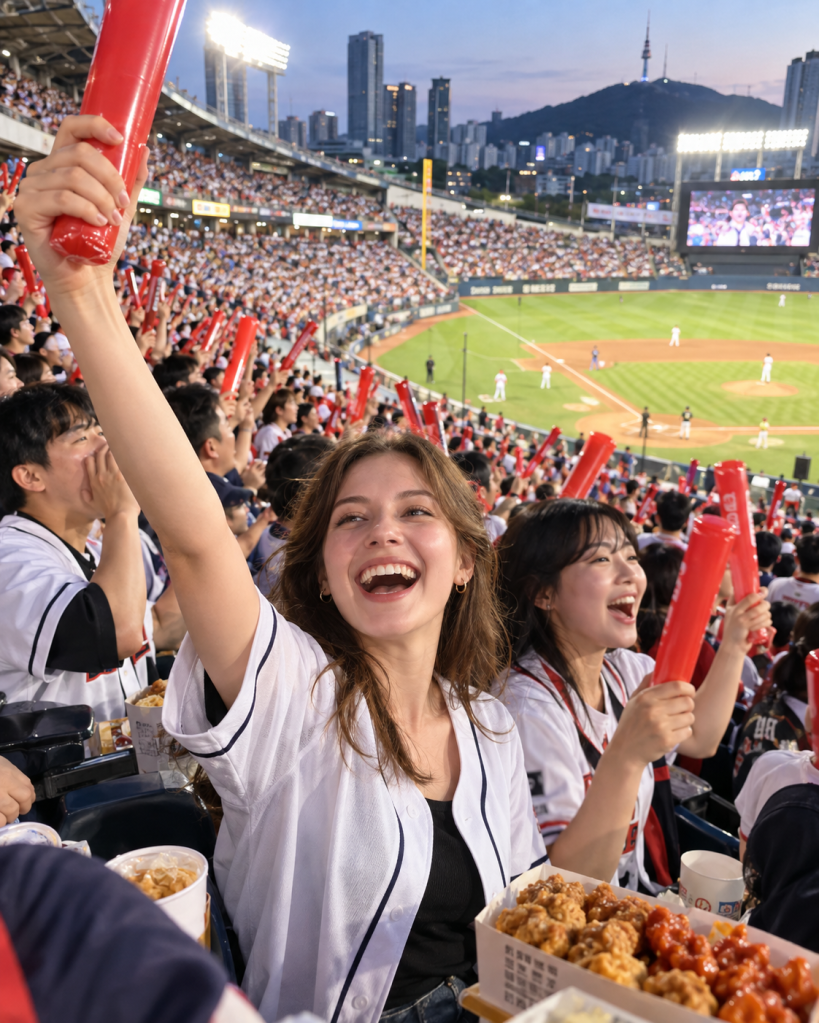
You May Spend More Time Cheering Than Watching Baseball!
Even travelers who do not care about baseball can fall in love with a Korean game.
Korean professional baseball is famous for coordinated chants, cheerleaders, music, team songs, food, and extremely enthusiastic supporters.
Instead of quietly watching the game, entire sections of the stadium may sing and cheer together.
Recommended Cities: Seoul, Busan, Daegu, Daejeon, Gwangju, Changwon
Approximate Ticket: ₩10,000–₩70,000 (US$7–52)
Food: ₩10,000–₩30,000 (US$7–22)
Best For: Friends, families, solo travelers who want to meet locals
Korean Experience:
Buy fried chicken or stadium food and learn your team’s main chant.
Why It’s Special:
You don’t simply watch Korean baseball.
You participate in it.
5. Hike a Mountain the Korean Way
Seoul Is a City Surrounded by Mountains
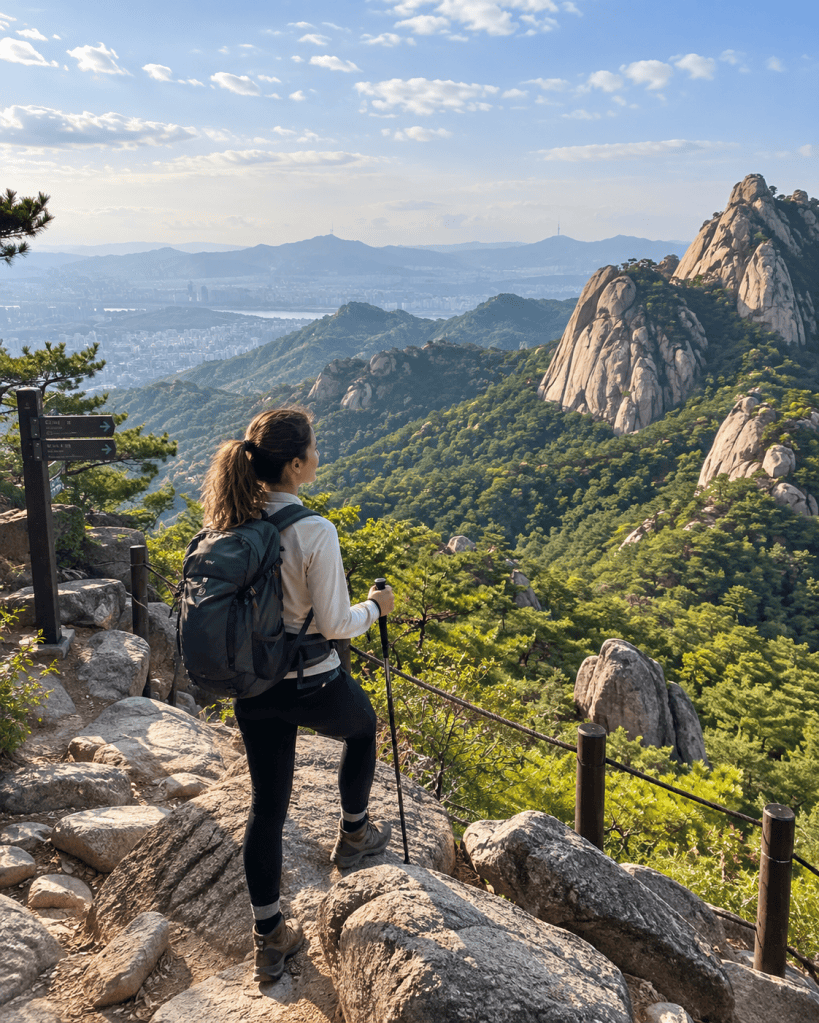
One of the easiest ways to see authentic weekend life in Korea is to go hiking.
Mountains are part of everyday Korean leisure culture. On weekends, trails fill with hikers of all ages.
For a full Korean experience:
Hike → Eat → Celebrate
Bring gimbap or a snack, enjoy the view, then finish the hike with jeon, a Korean pancake, and perhaps makgeolli. VISITKOREA specifically highlights summit food and the post-hike jeon-and-makgeolli combination as part of Korean hiking culture. VISITKOREA – Imagine Your Korea
Recommended: Bukhansan, Inwangsan, Achasan, Seoraksan
Trail Cost: Usually free
Food/Transport: ₩10,000–₩30,000 (US$7–22)
Best For: Nature lovers and active travelers
Best Seoul Choice:
Bukhansan offers serious mountain scenery without leaving the capital.
6. Visit a Traditional Market Early in the Morning
See Korea Before the Tourist Crowds Arrive
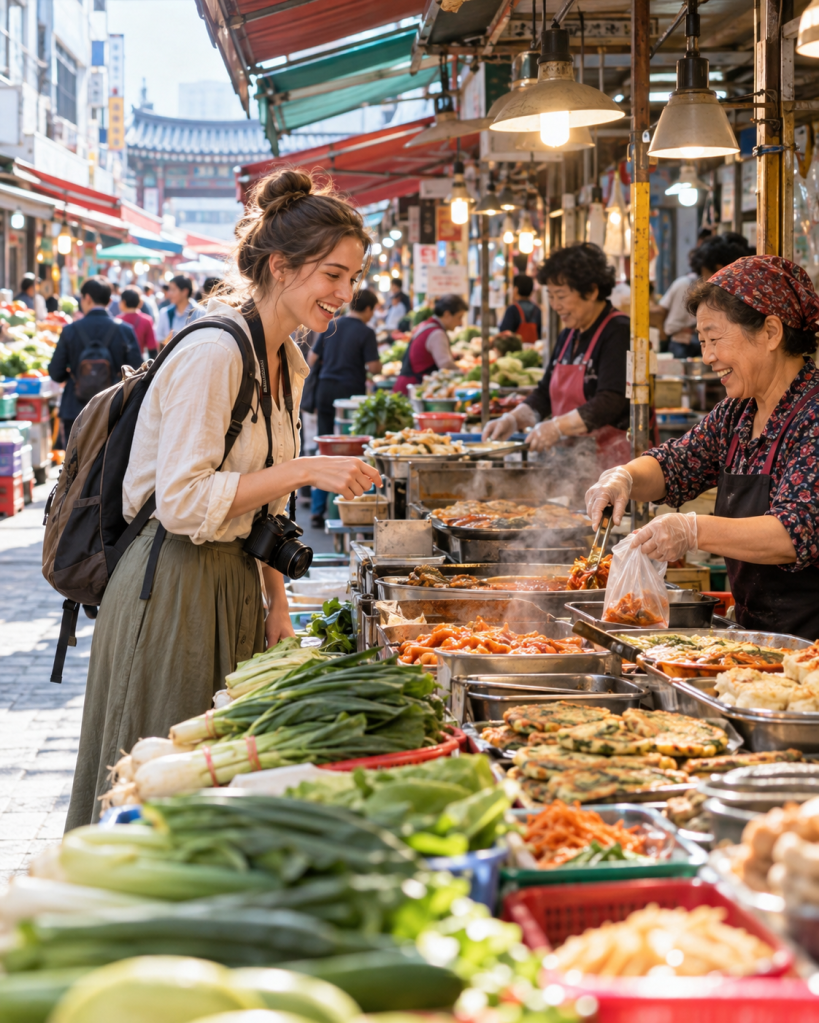
Don’t visit Korean markets only for dinner.
Go early.
That is when you can see vendors preparing ingredients, fresh seafood arriving, merchants opening their shops, locals buying produce, and Korea’s everyday commercial culture coming to life.
Markets worth exploring include Mangwon and Gyeongdong in Seoul, Haeundae Market in Busan, Seomun Market in Daegu, Sokcho’s Tourism and Fisheries Market, Jeonju Nambu Market, and Jeju’s Dongmun Market. VISITKOREA – Imagine Your Korea
Food Budget: ₩10,000–₩40,000 (US$7–30)
Best For: Foodies, photographers, repeat visitors
Try several small dishes instead of ordering one full meal.
Useful Korean
“Igeo eolmayeyo?”
= “How much is this?”
7. Make Your Own Makgeolli
Don’t Just Drink Korean Culture — Make It
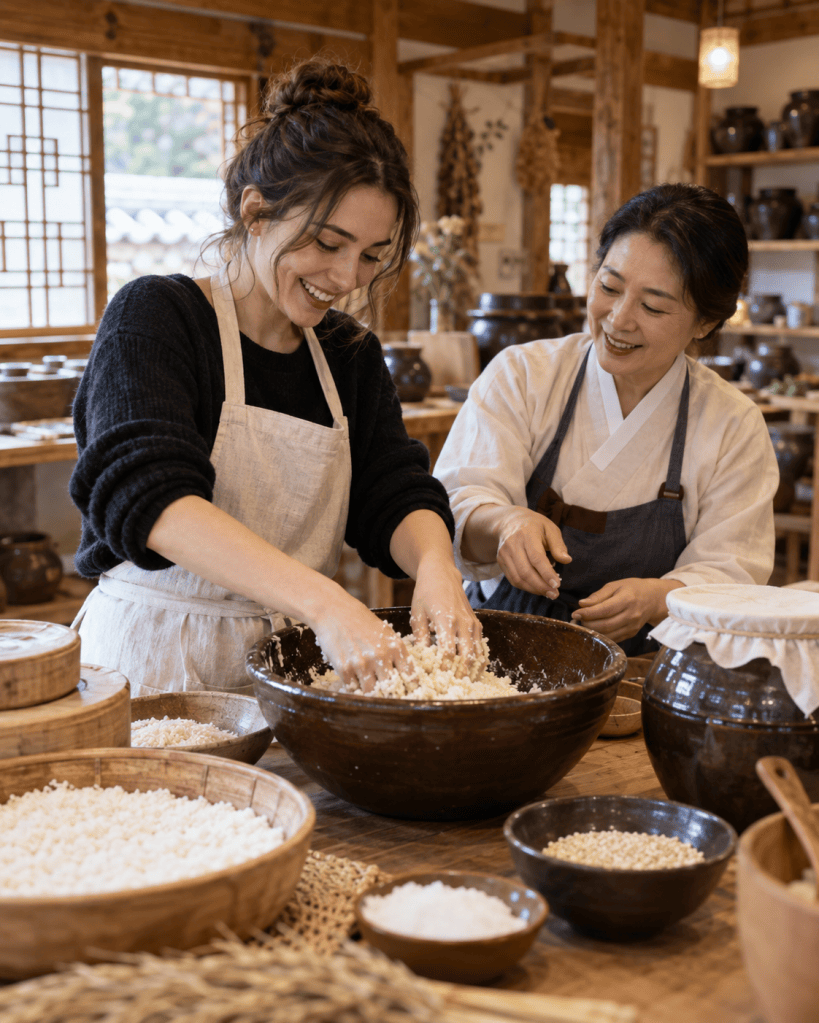
Makgeolli is Korea’s traditional unfiltered rice wine.
Instead of simply ordering a bottle in a restaurant, join a brewing or tasting class and learn how rice, fermentation, water, and traditional techniques create one of Korea’s oldest drinks.
Korea Tourism Organization even promotes dedicated Seoul itineraries centered on makgeolli culture and the traditional foods served with it. VISITKOREA – Imagine Your Korea
Typical Workshop: ₩30,000–₩80,000 (US$22–60)
Recommended: Seoul, Jeonju
Best For: Couples, food travelers, cultural travelers
Pair makgeolli with:
- Pajeon — green-onion pancake
- Kimchi-jeon — kimchi pancake
- Dubu-kimchi — tofu with kimchi
Traveler Tip:
Because makgeolli contains alcohol, age restrictions apply.
8. Take the KTX Beyond Seoul
Korea Changes Dramatically in Just Two Hours
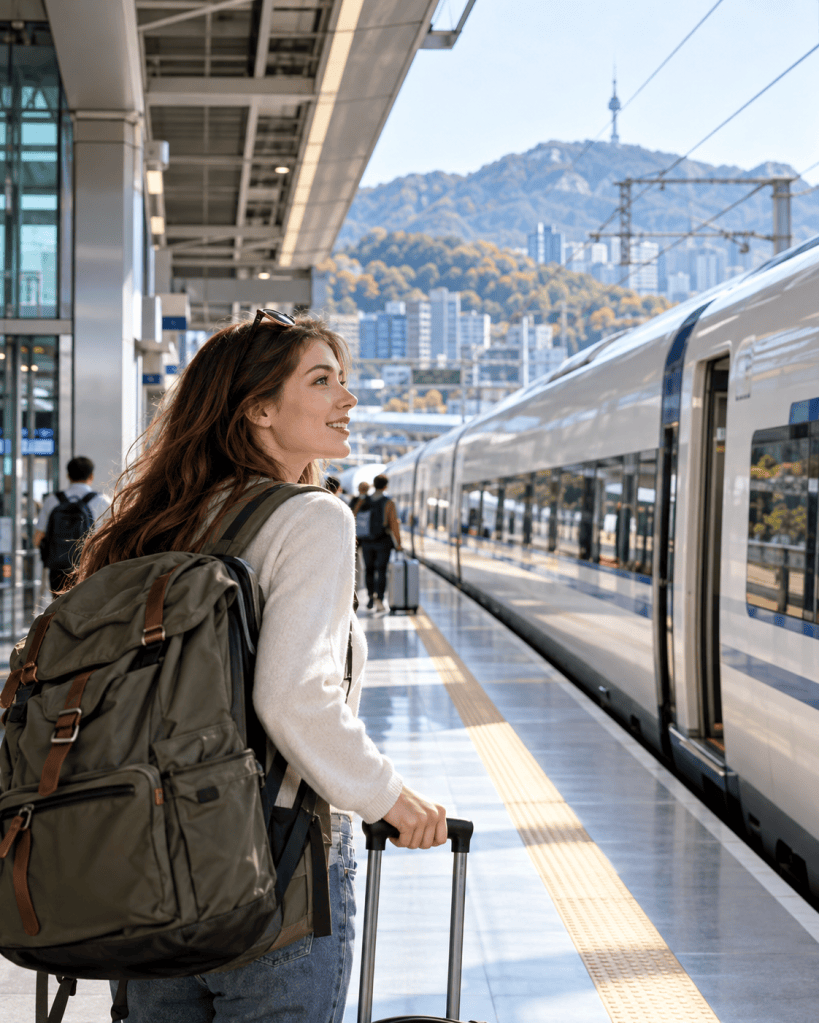
One of the biggest mistakes first-time visitors make is spending their entire trip in Seoul.
Korea’s high-speed rail makes regional travel surprisingly easy.
Try destinations such as:
Jeonju — food and hanok culture
Gyeongju — ancient Korean history
Gangneung — beaches and cafés
Andong — Confucian heritage
Busan — coast, seafood and city life
Suncheon — wetlands and nature
Approximate Transport Budget: ₩30,000–₩120,000 round trip (US$22–90), depending on route and train.
Best For: Anyone staying in Korea five days or longer.
Travel Rule
Seoul shows you modern Korea.
Regional cities help you understand Korea.
9. Have a Korean-Style Picnic by the Hangang River
Do What Seoulites Do After Work
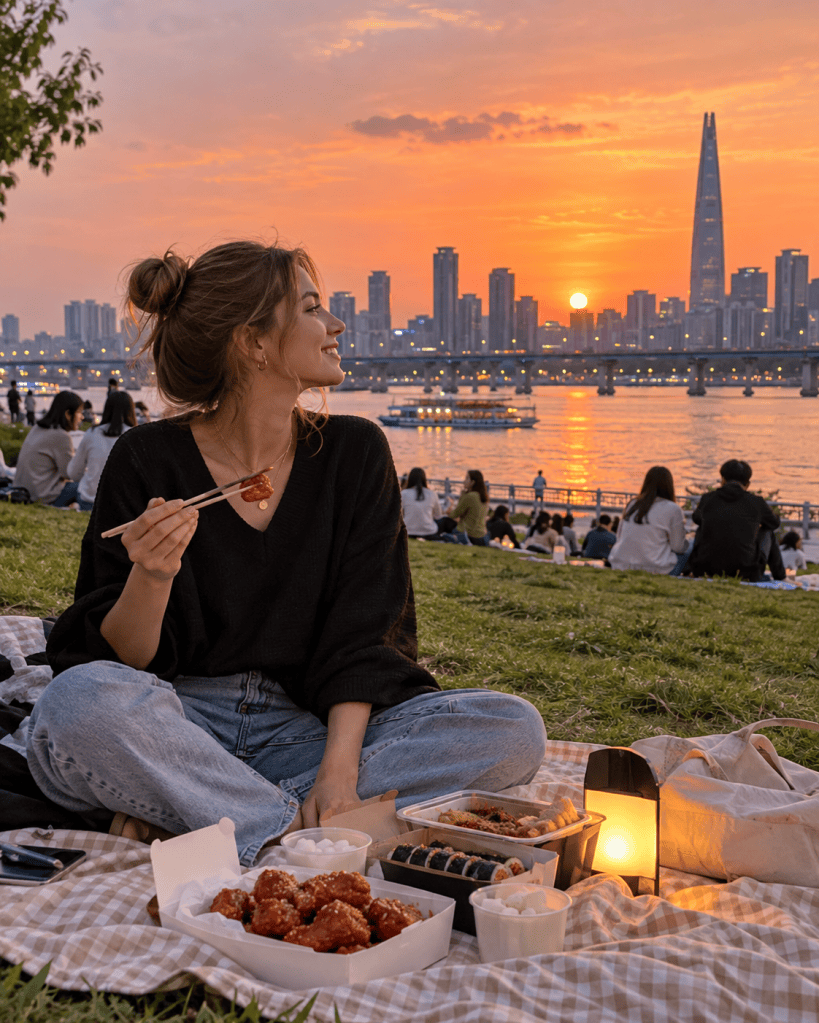
Instead of visiting the Hangang River simply to take a photograph, turn it into an evening experience.
Buy food, sit beside the river, watch cyclists and runners pass, and wait for Seoul’s skyline to light up.
Seoul operates 11 Hangang parks, including Yeouido, Banpo, Ttukseom, Mangwon, Jamsil and others, each with a slightly different atmosphere. Official Website of the
Picnic Food: ₩15,000–₩35,000 (US$11–26)
Mat/Extras: ₩5,000–₩15,000 (US$4–11)
Total: About ₩20,000–₩50,000 (US$15–37)
Try:
Chicken + Ramyeon + Han River Sunset
Best Time: Late afternoon through evening in spring or autumn.
10. Spend a Day in a Korean Rural Village
Discover the Korea Between the Big Cities
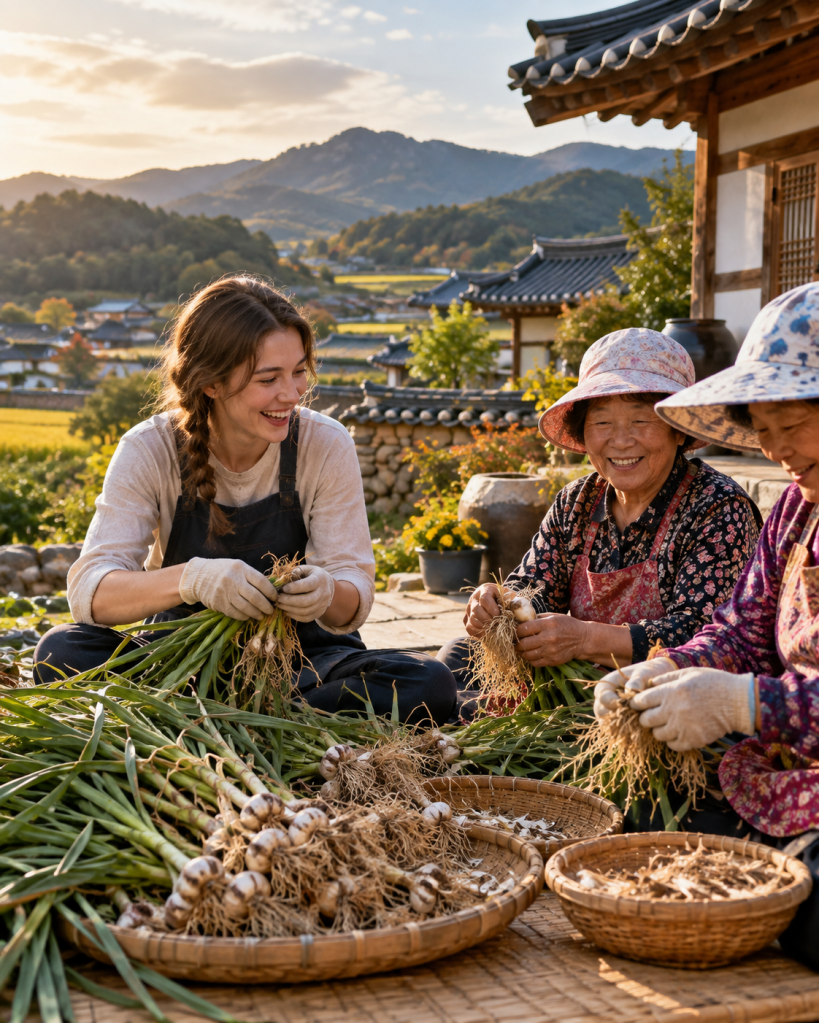
For a completely different side of the country, leave the shopping districts and skyscrapers behind.
Korean rural tourism can include:
- Rice farming
- Fruit picking
- Traditional cooking
- Village meals
- Pottery
- Tea experiences
- Local festivals
- Farm stays
- Traditional crafts
Depending on the region and season, you might pick strawberries, harvest apples, make kimchi, learn pottery, or eat a meal prepared with ingredients grown only meters away.
Recommended Regions: Gangwon, Jeolla, Gyeongsang, Jeju
Day Experience: ₩30,000–₩80,000 (US$22–60)
Experience + Overnight Stay: ₩70,000–₩150,000 (US$52–112)
Best For: Families, slow travelers, repeat visitors
Traveler Tip:
Many of these experiences require advance reservations and may offer limited English assistance.
Which Korean Experience Is Right for You?
| If You Love… | Try This |
|---|---|
| Peace & Wellness | Templestay |
| Traditional Culture | Hanok Stay |
| Local Lifestyle | Jjimjilbang |
| Energy & Entertainment | Korean Baseball |
| Nature | Korean Hiking |
| Food | Traditional Market |
| Korean Drinks & Culture | Makgeolli Making |
| Exploring | KTX Regional Trip |
| Seoul Lifestyle | Hangang Picnic |
| Authentic Local Korea | Rural Village Experience |
Final Tip
The most memorable Korean trips are often not about seeing more places.
They are about doing more Korean things.
So on your next trip, don’t just take photos of Korea.
Sleep in Korea’s traditional houses.
Eat where locals eat.
Climb their mountains.
Cheer with their baseball fans.
Ride beyond Seoul.
And experience Korea from the inside.
🇰🇷 Experience Korea, Not Just the Tourist Attractions.
Prices are approximate and can change by season, provider, day of the week, and reservation conditions. USD equivalents are rounded using the October 6, 2026 exchange rate.


Leave a Reply