
And the Perfect Time to Visit
One of the best things about traveling in South Korea is that every season feels like a completely different country.
Spring brings pink cherry blossoms and colorful flower fields. Summer is filled with beaches, green mountains, and coastal escapes. Autumn turns Korea’s mountains and historic sites red and gold. Winter transforms the countryside into a world of snow, ski resorts, and romantic scenery.
For travelers wondering “When is the best time to visit Korea?”, here are 10 unforgettable seasonal destinations to add to your itinerary.
Quick Guide: Korea’s Best Seasonal Destinations
| No. | Destination | Best Season | Best Time | Main Attraction | Estimated Day Budget* |
|---|---|---|---|---|---|
| 1 | Jinhae, Changwon | Spring | Late Mar–Early Apr | Cherry blossoms | KRW 70,000–120,000 / USD 52–90 |
| 2 | Jeju Island | Spring | Late Mar–Apr | Canola & cherry blossoms | KRW 100,000–180,000 / USD 75–134 |
| 3 | Taean | Spring | Apr–May | Tulip fields | KRW 60,000–100,000 / USD 45–75 |
| 4 | Busan | Summer | Jun–Aug | Beaches & nightlife | KRW 80,000–150,000 / USD 60–112 |
| 5 | Gangneung | Summer | Jun–Sep | East Coast beaches & cafés | KRW 80,000–140,000 / USD 60–105 |
| 6 | Seoraksan | Autumn | Mid–Late Oct | Fall foliage | KRW 60,000–110,000 / USD 45–82 |
| 7 | Gyeongju | Autumn | Oct–Early Nov | Historic sites & foliage | KRW 70,000–120,000 / USD 52–90 |
| 8 | Naejangsan | Autumn | Late Oct–Mid Nov | Red maple forests | KRW 60,000–110,000 / USD 45–82 |
| 9 | Pyeongchang | Winter | Dec–Feb | Snow & winter activities | KRW 100,000–200,000 / USD 75–149 |
| 10 | Jeongseon & Gangwon | Winter | Dec–Feb | Snowy mountains & winter scenery | KRW 90,000–180,000 / USD 67–134 |
*Estimated traveler budget includes typical meals, local transportation, and basic sightseeing/activities. Accommodation and international airfare are not included.
1. Jinhae, Changwon
Korea’s Ultimate Cherry Blossom Destination
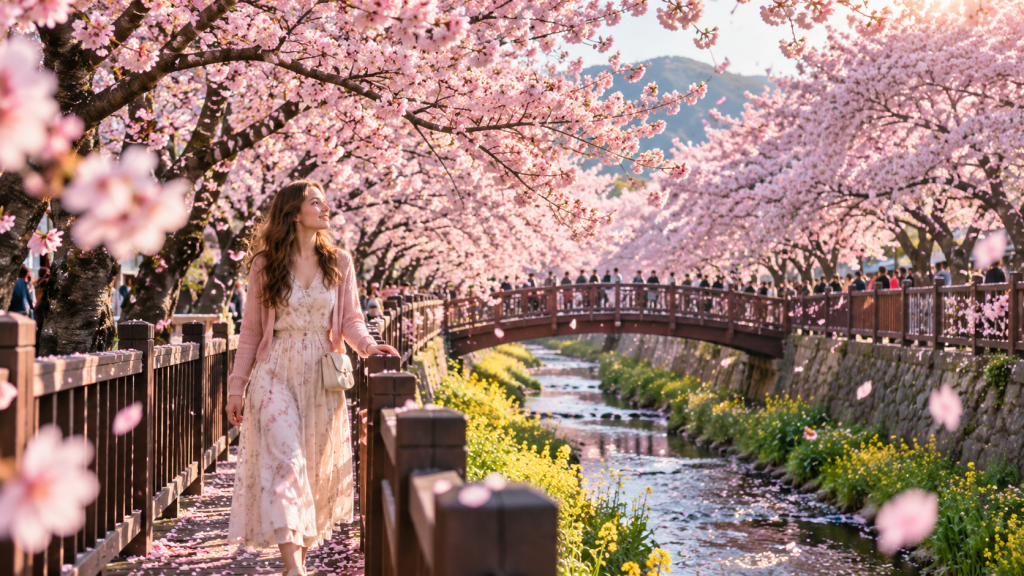
Best time: Late March to early April
Recommended stay: 1–2 days
If you want to experience Korea at its most romantic, visit Jinhae during cherry blossom season.
Jinhae is considered one of Korea’s premier cherry blossom destinations. During the annual Jinhae Gunhangje Festival, streets, streams, railway tracks, and neighborhoods are covered with pink blossoms.
The 2026 Jinhae Gunhangje Festival was held from March 27 to April 5, and Jinhae’s famous Yeojwacheon Stream is one of Korea’s best-known cherry blossom locations.
Don’t Miss
- Yeojwacheon Stream
- Gyeonghwa Station
- Jinhae Gunhangje Festival
- Night cherry blossom illumination
- Local street-food stalls
Estimated Cost
| Expense | KRW | USD |
|---|---|---|
| Local transportation | 10,000–20,000 | $7–15 |
| Meals & snacks | 30,000–45,000 | $22–34 |
| Festival/attractions | Mostly free | Mostly free |
| Café & miscellaneous | 15,000–30,000 | $11–22 |
| Total | 70,000–120,000 | $52–90 |
Traveler Tip
Cherry blossoms usually remain at their best for only a short period. In 2026, blossoms were forecast to begin around March 25 in Busan and Jeju, with peak bloom roughly one week later. Weather can shift the exact dates every year.
2. Jeju Island
Spring Flowers, Volcanic Landscapes and Coastal Roads
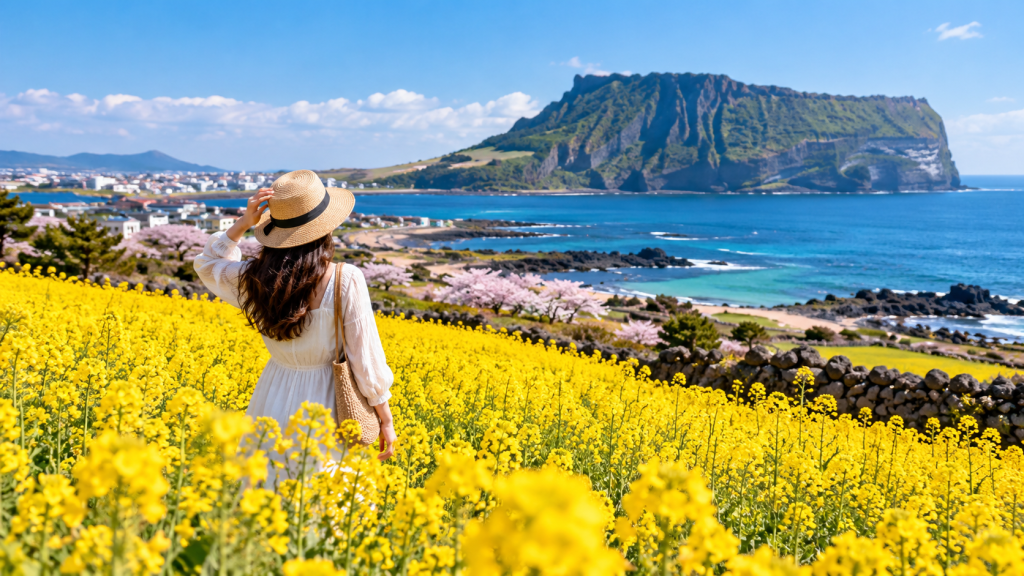
Best time: Late March to April
Recommended stay: 3–4 days
Spring is one of the most beautiful seasons to explore Jeju.
Bright yellow canola flowers contrast with pink cherry blossoms, volcanic mountains, stone walls, and the blue ocean.
Jeju also tends to experience cherry blossoms earlier than mainland Korea. In 2026, Jeju’s cherry blossoms were forecast to begin around March 25.
Don’t Miss
- Jeonnong-ro Cherry Blossom Street
- Noksan-ro Canola Flower Road
- Seongsan Ilchulbong
- Hallasan National Park
- Seopjikoji
- Jeju coastal drives
Estimated Daily Cost
| Expense | KRW | USD |
|---|---|---|
| Local transport/car share | 30,000–70,000 | $22–52 |
| Meals | 35,000–60,000 | $26–45 |
| Attractions | 10,000–30,000 | $7–22 |
| Café/snacks | 15,000–25,000 | $11–19 |
| Total | 100,000–180,000 | $75–134 |
Traveler Tip
Renting a car can make exploring Jeju much easier, especially for flower fields and coastal routes outside Jeju City.
3. Taean
Walk Through a Sea of Spring Tulips
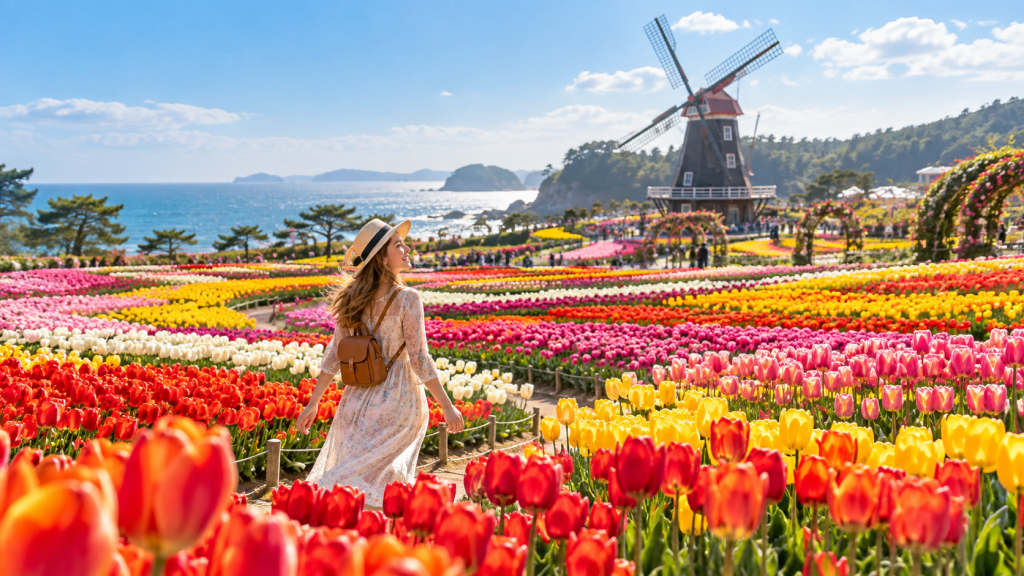
Best time: April to May
Recommended stay: 1–2 days
Cherry blossoms are not Korea’s only spectacular spring flowers.
Taean, on Korea’s west coast, becomes famous in spring for enormous fields of colorful tulips.
Rows of red, yellow, purple, pink, and white flowers create one of Korea’s most photogenic spring landscapes. Taean is also recognized by Korea Tourism Organization resources as a major spring tulip destination.
Don’t Miss
- Taean tulip gardens
- Kkotji Beach
- Anmyeondo Island
- Sunset over the Yellow Sea
- Local seafood
Estimated Cost
| Expense | KRW | USD |
|---|---|---|
| Local transportation | 15,000–25,000 | $11–19 |
| Flower garden admission | 10,000–20,000 | $7–15 |
| Meals | 30,000–45,000 | $22–34 |
| Café & snacks | 10,000–20,000 | $7–15 |
| Total | 60,000–100,000 | $45–75 |
4. Busan
Korea’s Ultimate Summer Beach City
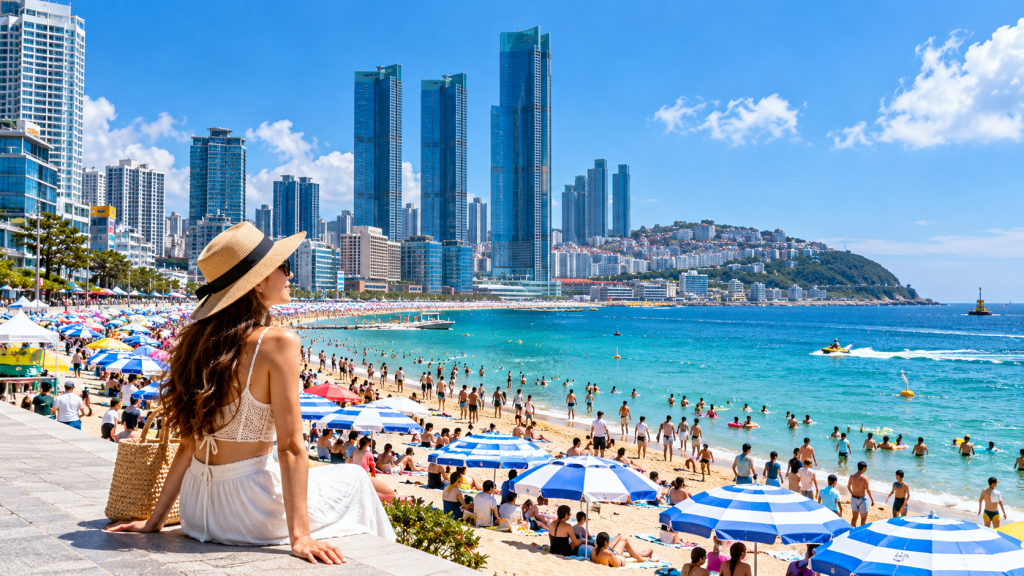
Best time: June to August
Recommended stay: 2–3 days
When summer arrives, head south to Busan.
Korea has hundreds of beaches, and summer is the country’s main season for seaside activities. Korea Tourism Organization recommends June through August for beaches and water activities, while also noting that late June through July can overlap with the rainy season.
Don’t Miss
- Haeundae Beach
- Gwangalli Beach
- Songjeong Beach
- Haedong Yonggungsa Temple
- Jagalchi Market
- Gwangandaegyo Bridge at night
Estimated Daily Cost
| Expense | KRW | USD |
|---|---|---|
| Subway & buses | 8,000–15,000 | $6–11 |
| Meals | 35,000–60,000 | $26–45 |
| Attractions/activities | 15,000–40,000 | $11–30 |
| Café/nightlife | 20,000–40,000 | $15–30 |
| Total | 80,000–150,000 | $60–112 |
Traveler Tip
July and August are peak domestic vacation periods, so beachfront hotels can become significantly more expensive.
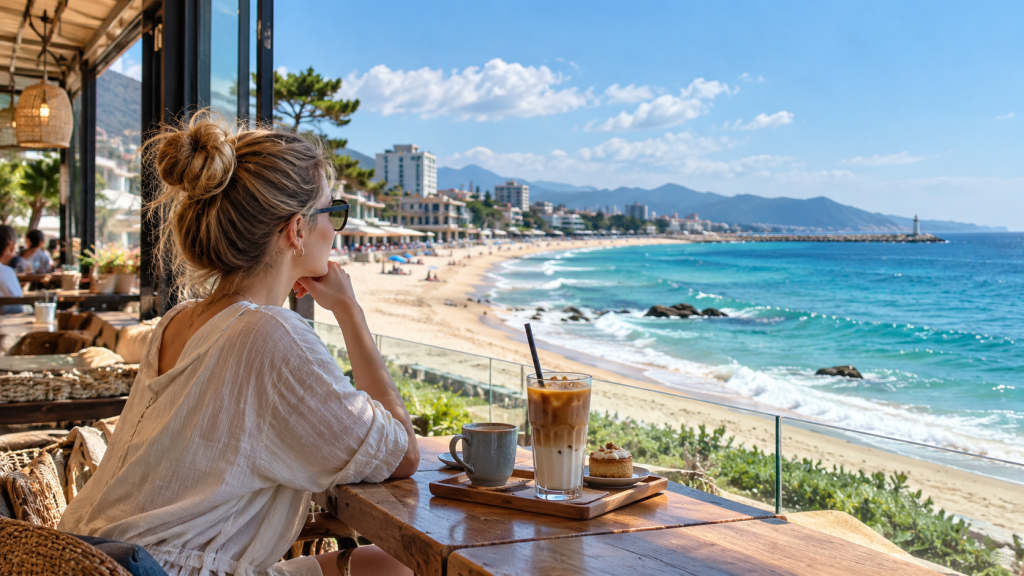
5. Gangneung
Beaches, Coffee and the Korean East Coast
Best time: June to September
Recommended stay: 1–2 days
For travelers looking for a more relaxed summer destination than Busan, Gangneung is an excellent choice.
It combines beautiful East Coast beaches with one of Korea’s best café scenes.
Don’t Miss
- Gyeongpo Beach
- Anmok Coffee Street
- Gangneung Jungang Market
- Gyeongpo Lake
- Sunrise on the East Sea
Estimated Cost
| Expense | KRW | USD |
|---|---|---|
| Local transport | 10,000–20,000 | $7–15 |
| Meals | 30,000–50,000 | $22–37 |
| Attractions | 5,000–20,000 | $4–15 |
| Coffee & desserts | 15,000–30,000 | $11–22 |
| Total | 80,000–140,000 | $60–105 |
Traveler Tip
Take an early train from Seoul and you can easily turn Gangneung into a weekend coastal escape.
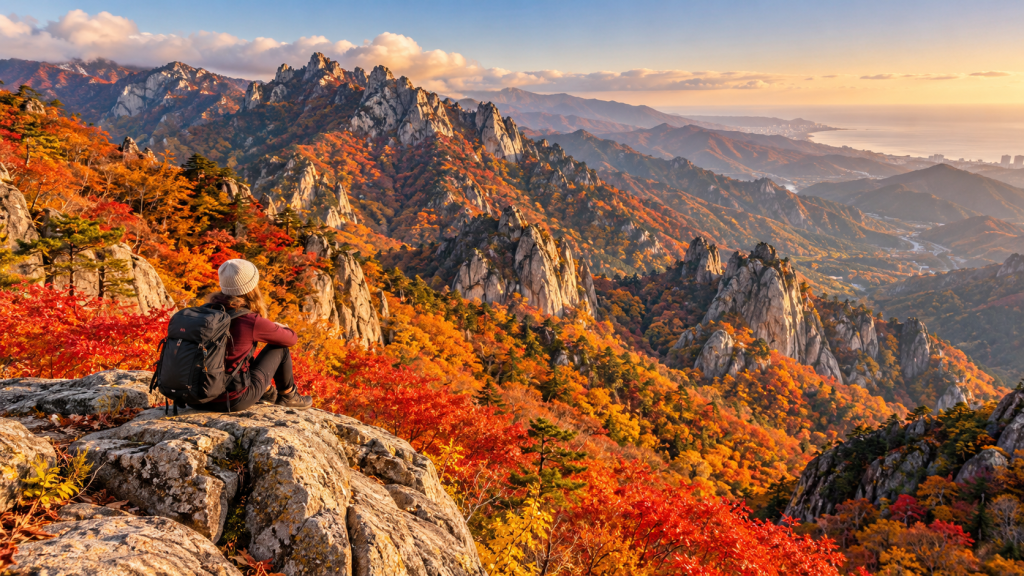
6. Seoraksan National Park
Korea’s Most Dramatic Autumn Mountains
Best time: Mid to late October
Recommended stay: 1–2 days
Few places represent Korean autumn better than Seoraksan National Park.
Mountain slopes change from green to brilliant shades of red, orange, and yellow.
For 2026, Korea Tourism Organization forecast the first autumn foliage at Seoraksan around October 3, with peak colors around October 25.
Don’t Miss
- Seoraksan hiking trails
- Cable car
- Sinheungsa Temple
- Ulsanbawi Rock
- Sokcho nearby
Estimated Cost
| Expense | KRW | USD |
|---|---|---|
| Local transportation | 15,000–25,000 | $11–19 |
| Activities/cable car | 15,000–25,000 | $11–19 |
| Meals | 30,000–45,000 | $22–34 |
| Snacks/café | 10,000–20,000 | $7–15 |
| Total | 60,000–110,000 | $45–82 |
Traveler Tip
Arrive early. Autumn weekends can be extremely busy.
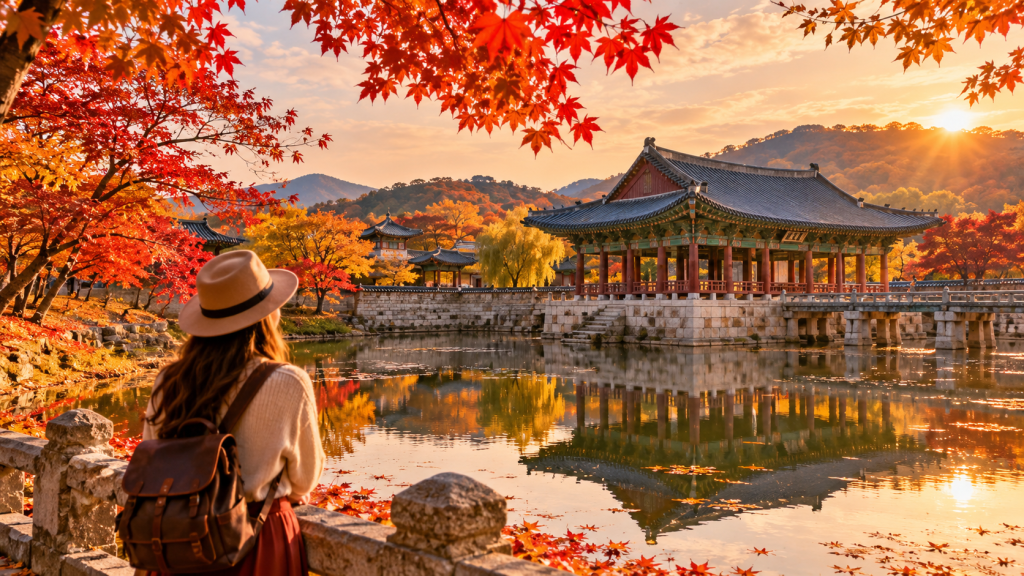
7. Gyeongju
Ancient Korea Surrounded by Autumn Colors
Best time: October to early November
Recommended stay: 2 days
Gyeongju combines history and autumn scenery better than almost anywhere else in Korea.
Once the capital of the ancient Silla Kingdom, the city is filled with royal tombs, Buddhist temples, stone pagodas, traditional architecture, and historic landscapes.
Don’t Miss
- Bulguksa Temple
- Daereungwon Tomb Complex
- Cheomseongdae Observatory
- Donggung Palace & Wolji Pond
- Hwangnidan-gil
- Bomun Lake
Korea Tourism Organization also identifies Bulguksa Temple in Gyeongju as a notable place for autumn foliage.
Estimated Daily Cost
| Expense | KRW | USD |
|---|---|---|
| Transportation | 10,000–20,000 | $7–15 |
| Admission fees | 10,000–20,000 | $7–15 |
| Meals | 30,000–50,000 | $22–37 |
| Café/snacks | 15,000–30,000 | $11–22 |
| Total | 70,000–120,000 | $52–90 |
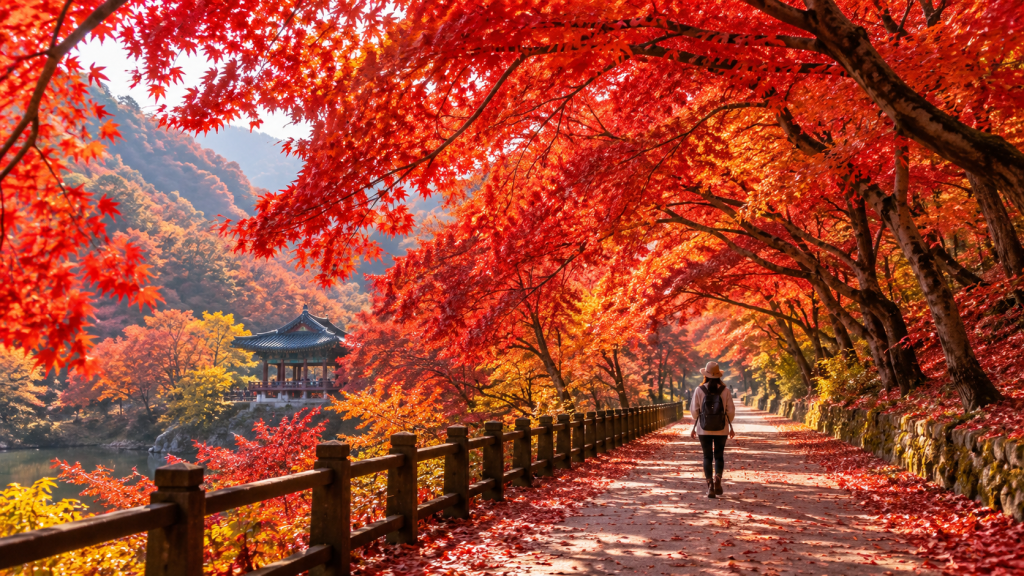
8. Naejangsan National Park
Korea’s Famous Red Maple Wonderland
Best time: Late October to mid-November
Recommended stay: 1 day
If your dream Korean autumn involves walking under tunnels of brilliant red maple leaves, visit Naejangsan.
In 2026, peak foliage at Naejangsan was forecast around November 11.
Don’t Miss
- Maple tree tunnels
- Naejangsa Temple
- Cable car
- Mountain walking paths
- Autumn photography
Estimated Cost
| Expense | KRW | USD |
|---|---|---|
| Local transportation | 15,000–25,000 | $11–19 |
| Activities | 10,000–20,000 | $7–15 |
| Meals | 30,000–45,000 | $22–34 |
| Snacks | 10,000–20,000 | $7–15 |
| Total | 60,000–110,000 | $45–82 |
9. Pyeongchang
Experience a Real Korean Winter
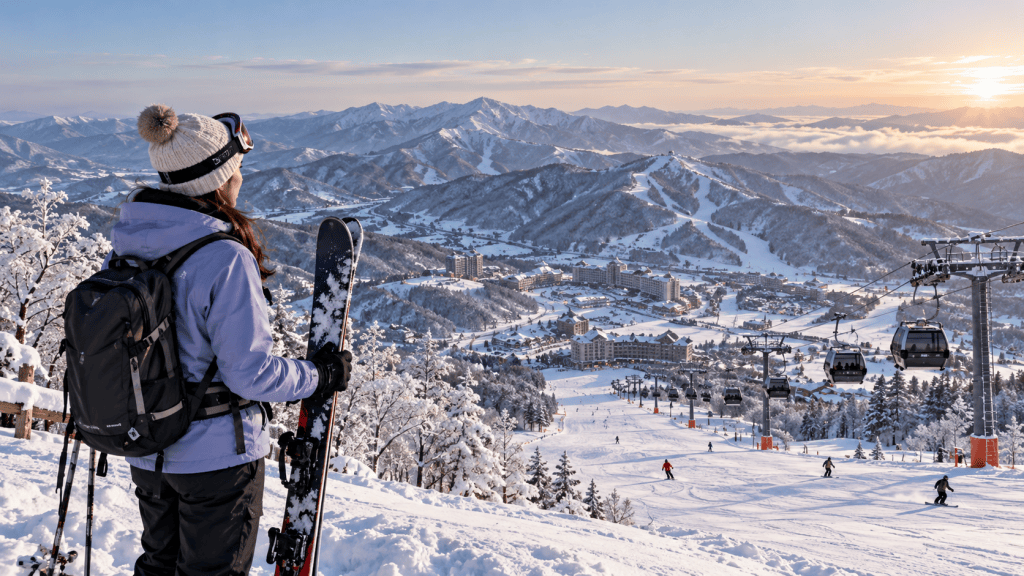
Best time: December to February
Recommended stay: 2–3 days
Pyeongchang is one of Korea’s most famous winter destinations.
The mountainous region is known for snow-covered landscapes, ski resorts, ranches, and winter sports.
Daegwallyeong Sheep Farm is especially famous in winter, when snow covers its rolling fields.
Don’t Miss
- Daegwallyeong Sheep Farm
- Samyang Ranch
- Ski resorts
- Snow activities
- Woljeongsa Temple
Estimated Daily Cost
| Expense | KRW | USD |
|---|---|---|
| Local transportation | 20,000–30,000 | $15–22 |
| Meals | 35,000–55,000 | $26–41 |
| Basic sightseeing | 10,000–30,000 | $7–22 |
| Winter activities | 30,000–100,000+ | $22–75+ |
| Total | 100,000–200,000+ | $75–149+ |
Important
Skiing, snowboarding, equipment rental and lift tickets can increase the budget substantially.
10. Jeongseon & the Gangwon Mountains
Korea’s Quiet Winter Wonderland
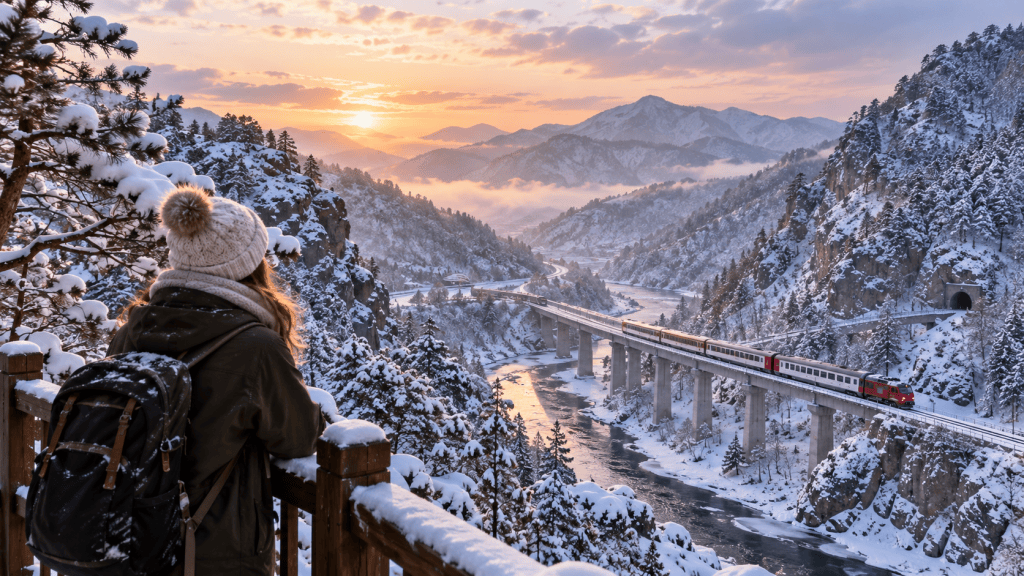
Best time: December to February
Recommended stay: 2 days
For travelers who want something quieter than the major ski resorts, explore the mountain towns of Gangwon Province.
Snow-covered mountains, rail journeys, traditional markets, and rural scenery make this area ideal for travelers who want to experience a more peaceful Korean winter.
Don’t Miss
- Snow-covered mountain scenery
- Jeongseon Arirang Market
- Mountain rail experiences
- Traditional Korean food
- Scenic winter drives
Estimated Daily Cost
| Expense | KRW | USD |
|---|---|---|
| Local transport | 20,000–40,000 | $15–30 |
| Meals | 30,000–50,000 | $22–37 |
| Attractions | 20,000–40,000 | $15–30 |
| Activities & cafés | 20,000–50,000 | $15–37 |
| Total | 90,000–180,000 | $67–134 |
Which Season Should You Choose?
| If You Love… | Visit Korea In… | Best Choices |
|---|---|---|
| Cherry blossoms & flowers | March–April | Jinhae, Jeju, Taean |
| Beaches & coastal travel | June–August | Busan, Gangneung |
| Hiking & fall foliage | October–November | Seoraksan, Gyeongju, Naejangsan |
| Snow & winter sports | December–February | Pyeongchang, Gangwon |
How Much Should You Budget?
For a comfortable independent traveler:
Budget Traveler
KRW 70,000–100,000 per day
Approximately USD 52–75
Mid-Range Traveler
KRW 120,000–200,000 per day
Approximately USD 90–149
Comfortable Traveler
KRW 200,000–350,000+ per day
Approximately USD 149–261+
These figures can include meals, public transportation, attractions and some activities, but accommodation prices vary significantly depending on city, season and hotel category.
Final Tip: Korea Is Worth Visiting Four Times
Korea is not a destination that looks the same throughout the year.
Come in spring for the flowers.
Come in summer for the sea.
Come in autumn for the colors.
Come in winter for the snow.
The secret to planning a great trip to Korea is not simply deciding where to go.
It is deciding when to go.
Choose the right season, and Korea can give you four completely different travel experiences in one country.
Exchange-rate reference: Approximately USD 1 = KRW 1,339 as of October 7, 2026. USD figures are rounded estimates and exchange rates may change.


Leave a Reply