
Top 10 Korean Skin & Anti-Aging Treatments International Visitors Want to Know
Discover the Secrets Behind Korea’s Famous Glass Skin, Youthful Glow, and Non-Surgical Beauty Innovations
What if your trip to South Korea could become a journey into the future of skincare?
Imagine walking through Seoul’s vibrant Gangnam district, where high-tech dermatology clinics, innovative skincare devices, and personalized beauty treatments are part of a thriving medical aesthetics industry.
You may have heard of Korean glass skin, the famous V-line facial contour, or treatments that help the skin look smoother and firmer without surgery.
But what exactly are Rejuran, Ultherapy, Thermage, and InMode? How do they differ? How much do they cost? And which treatments could suit your skin concerns?
South Korea welcomed approximately 2.01 million international patients in 2025, according to Medical Korea. Interest in Korean healthcare and aesthetic medicine continues to make the country an important medical travel destination.
In this guide, we explore ten Korean skincare and anti-aging treatments worth knowing about, including their technologies, potential benefits, costs, recovery considerations, and the characteristics that make Korean aesthetic medicine distinctive.
This is an editorial Top 10 selection, not an official ranking by treatment volume. No treatment guarantees a particular appearance or outcome.
2026 Korean Skin Treatment Price Guide
How Much Do Korean Skin Treatments Cost?
The following table provides approximate planning ranges for selected treatments at Korean aesthetic clinics.
Exchange rate: USD 1 ≈ KRW 1,346
| No. | Treatment | Estimated KRW | Approx. USD |
|---|---|---|---|
| 1 | Rejuran Skin Treatment | ₩250,000–600,000 | $186–446 |
| 2 | Ultherapy | ₩600,000–3,000,000 | $446–2,229 |
| 3 | Thermage FLX | ₩1,000,000–3,000,000 | $743–2,229 |
| 4 | Botox | ₩50,000–350,000 | $37–260 |
| 5 | Skin Boosters | ₩150,000–700,000 | $111–520 |
| 6 | Laser Toning | ₩80,000–400,000 | $59–297 |
| 7 | Acne Scar Laser | ₩200,000–1,000,000 | $149–743 |
| 8 | Dermal Fillers | ₩250,000–900,000 | $186–669 |
| 9 | InMode Lifting | ₩80,000–500,000 | $59–372 |
| 10 | HIFU Lifting | ₩100,000–600,000 | $74–446 |
Important pricing information
These are illustrative price ranges, generally for one treatment session or selected treatment area. They are not fixed nationwide averages. Ultherapy and Thermage costs depend heavily on the number of treatment lines or shots. Botox costs depend on the brand and number of units, while filler and skin booster prices depend on product volume.
Some advertised prices exclude Korea’s 10% VAT, consultation fees, numbing cream, or aftercare. Promotional prices may be lower, while extensive treatments can exceed the estimates above.
1. Rejuran — The Korean Skin-Quality Treatment Everyone Is Talking About
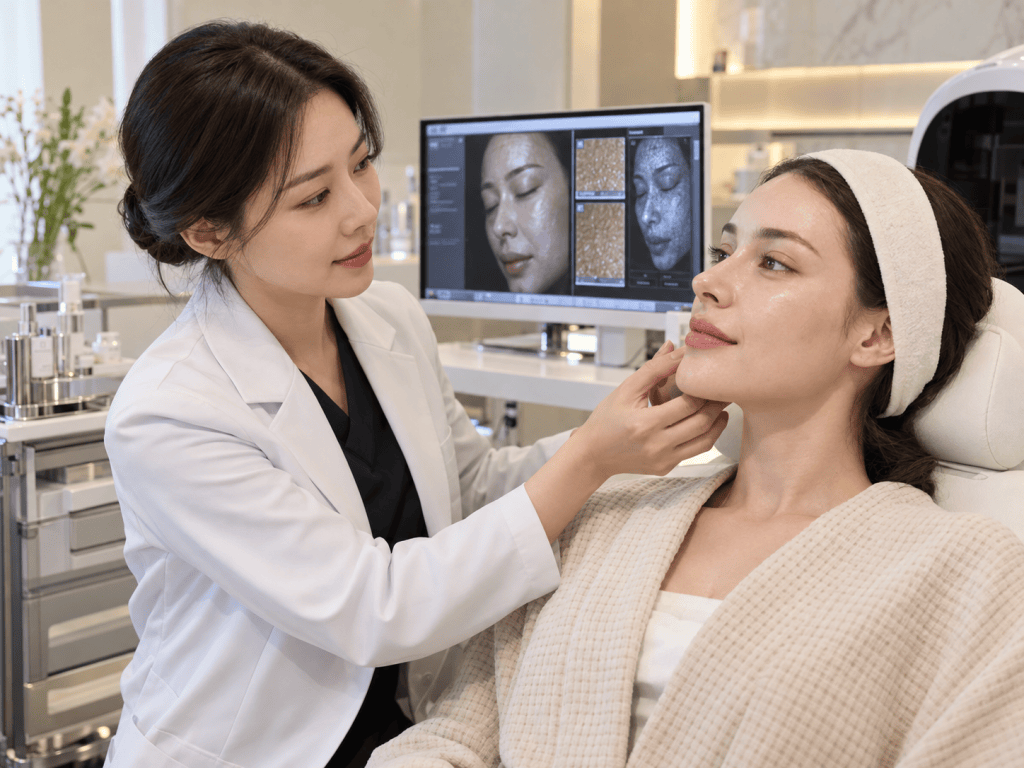
Estimated Cost: ₩250,000–600,000 ($186–446)
Can an injectable treatment help your skin look smoother without changing your facial shape?
Rejuran is one of the recognizable names in Korean aesthetic dermatology.
Unlike fillers, which are primarily designed to add volume, Rejuran is generally promoted as a treatment focused on skin quality.
It contains polynucleotides (PN), a form of DNA-derived material commonly sourced from salmon.
What Does Rejuran Aim to Do?
Rejuran is used in aesthetic practice to address concerns such as:
- Fine lines and uneven skin texture
- Dull-looking or rough skin
- Reduced skin elasticity
- Overall skin-quality improvement
The evidence supporting specific benefits is still developing. Results differ between patients, and claims of complete skin regeneration should be treated cautiously.
What Makes the Korean Approach Distinctive?
1. Skin-quality-centered treatment planning
Korean clinics often distinguish between treatments intended to enhance skin texture and those intended to add volume or alter facial contours.
2. Different Rejuran formulations
Products may differ according to the treatment area and indication. Patients should confirm the exact formulation, approval status, and dosage.
3. Combination treatment planning
Some Korean clinics offer Rejuran alongside laser treatments or other skin therapies. The suitability and timing of combinations should be medically assessed.
4. Detailed skin analysis
Clinical photography and skin assessment may help identify pigmentation, texture, dryness, and other concerns before treatment.
What Is the Experience Like?
- Procedure: Usually multiple superficial injections
- Treatment duration: Approximately 20–40 minutes, excluding consultation and preparation
- Downtime: Temporary injection bumps, redness, bruising, or swelling may last several days
- Results: Changes, if achieved, may become more noticeable over several weeks
- Repeat treatment: Some clinics suggest a series of sessions rather than a single visit
Who Might Be Interested?
Adults concerned about rough texture, early fine lines, or reduced skin quality who prefer an approach that does not primarily change facial volume.
What to ask your Korean clinic: Which Rejuran formulation and how many milliliters are included in the price?
Safety note: Injection-related risks include swelling, infection, inflammation, and allergic or hypersensitivity reactions. Confirm product approval and professional qualifications.
2. Ultherapy — The High-Tech Ultrasound Lift
Estimated Cost: ₩600,000–3,000,000 ($446–2,229)
Could ultrasound energy improve facial firmness without a surgical facelift?
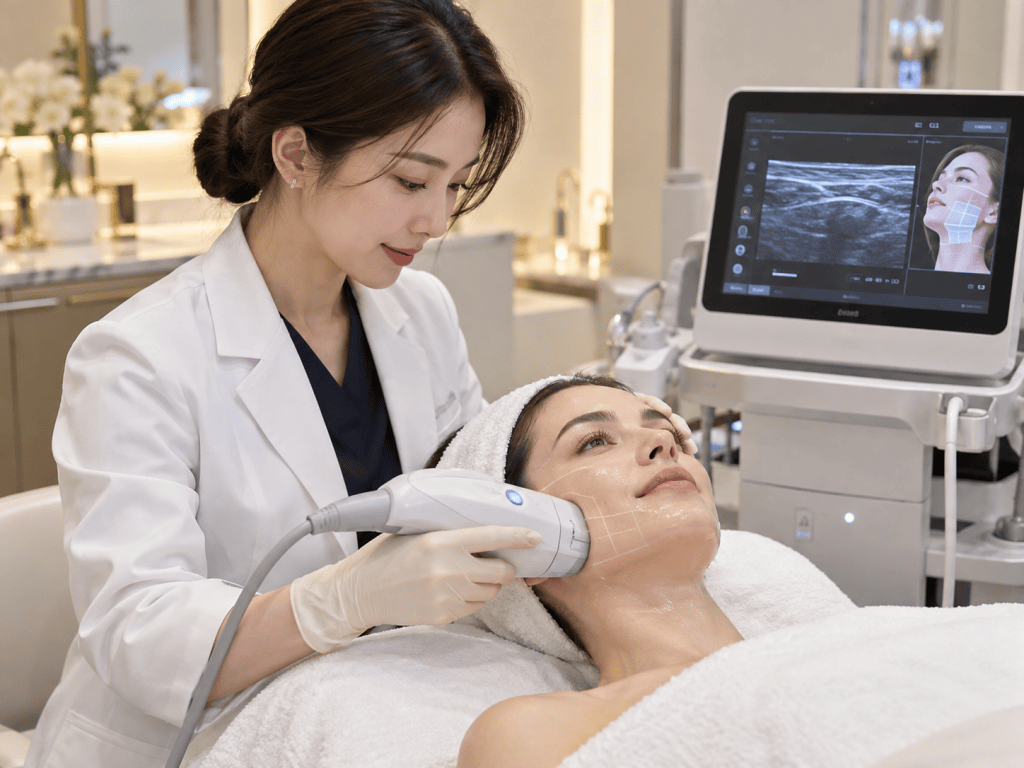
Ultherapy uses microfocused ultrasound energy to target tissue beneath the skin.
Its goal is to stimulate a tissue response that may gradually improve firmness and lift in selected areas.
It does not reproduce the results of a surgical facelift.
How Does It Work?
A handheld device delivers focused ultrasound energy at controlled depths.
The treatment creates small thermal coagulation points that trigger tissue remodeling and collagen production over time.
What Makes the Korean Approach Distinctive?
1. Facial contour planning
Korean aesthetic practitioners may assess the cheeks, jawline, and lower face separately rather than treating every patient with an identical pattern.
2. Attention to ultrasound imaging
Certain Ultherapy systems provide real-time visualization to help trained providers identify treatment depth.
3. Multiple treatment options
Korean clinics offer Ultherapy alongside other ultrasound and radiofrequency systems, enabling patients to compare different approaches.
4. Personalized energy planning
Treatment intensity, depth, and the number of lines can be adjusted according to anatomy and treatment goals.
What Can It Potentially Improve?
- Mild to moderate skin laxity
- Some jawline and lower-face sagging
- Selected brow or neck concerns
- Gradual improvement in facial firmness
What Should You Expect?
- Treatment duration: Approximately 30–90 minutes
- Downtime: Usually limited, although tenderness or swelling can occur
- Results: May emerge gradually over 2–3 months and continue developing
- Duration: Can vary, often lasting many months in responding patients
- Discomfort: Heat and deep aching sensations may occur during treatment
What to ask your Korean clinic: How many treatment lines are included, and what exact device will be used?
Safety note: Ultherapy may cause temporary pain, swelling, altered sensation, or, rarely, more significant tissue or nerve-related complications. It should not be marketed as painless or risk-free.
3. Thermage FLX — The Radiofrequency Skin-Tightening Experience
Estimated Cost: ₩1,000,000–3,000,000 ($743–2,229)
What if you could target skin firmness without needles or incisions?
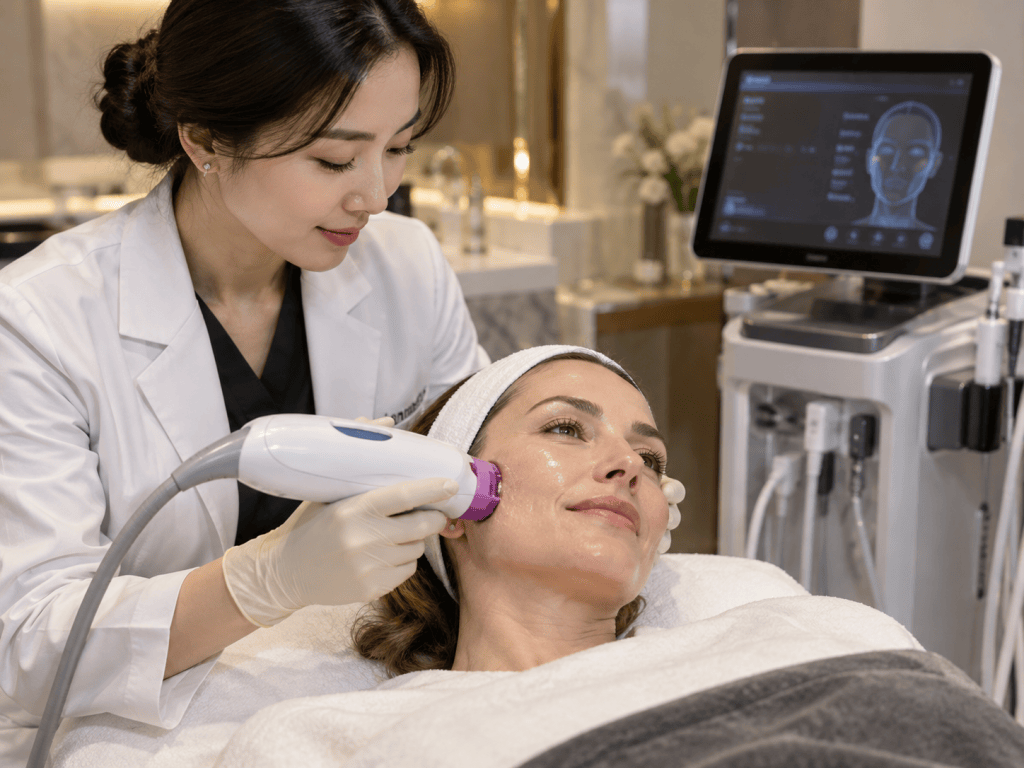
Thermage FLX is a radiofrequency-based technology used to improve the appearance of skin laxity.
Unlike Ultherapy, which uses focused ultrasound, Thermage delivers radiofrequency energy that heats targeted tissue.
How Does Thermage Work?
Controlled radiofrequency heating can cause immediate collagen contraction and stimulate remodeling over time.
The treatment is designed to improve firmness, although outcomes can be subtle and vary.
What Makes the Korean Approach Distinctive?
1. Full-face aesthetic assessment
Practitioners may evaluate different facial regions to decide whether tightening or volume restoration is the more appropriate objective.
2. Customized treatment zones
Treatment may focus on the lower face, cheeks, or other approved areas.
3. Integration with dermatological care
Korean clinics sometimes develop longer-term skin maintenance plans involving separate pigmentation or texture treatments.
4. Device and treatment-tip selection
Different configurations, treatment areas, and shot counts lead to substantial differences in price and treatment scope.
What Can It Potentially Improve?
- Mild skin laxity
- Early facial sagging
- Skin firmness
- Selected fine lines and textural concerns
Treatment Experience
- Duration: Approximately 45–90 minutes
- Downtime: Often minimal, but temporary redness and swelling are possible
- Results: Gradual improvement may develop over several months
- Treatment frequency: Many patients undergo a single treatment followed by reassessment
Ultherapy vs. Thermage: What’s the Difference?
| Feature | Ultherapy | Thermage |
|---|---|---|
| Energy | Focused ultrasound | Radiofrequency |
| Primary goal | Tissue lifting and tightening | Skin tightening |
| Imaging guidance | Available on Ultherapy systems | Not equivalent ultrasound imaging |
| Typical downtime | Limited | Limited |
| Results | Gradual | Gradual |
What to ask your Korean clinic: Is the device an authentic Thermage FLX system, and how many shots are included?
Safety note: Burns, unwanted contour changes, and other complications are possible when thermal energy is administered incorrectly.
4. Botox — The Small Injection With a Big Reputation
Estimated Cost: ₩50,000–350,000 ($37–260)
Why do so many visitors associate Korean aesthetics with subtle wrinkle treatment and a refined jawline?
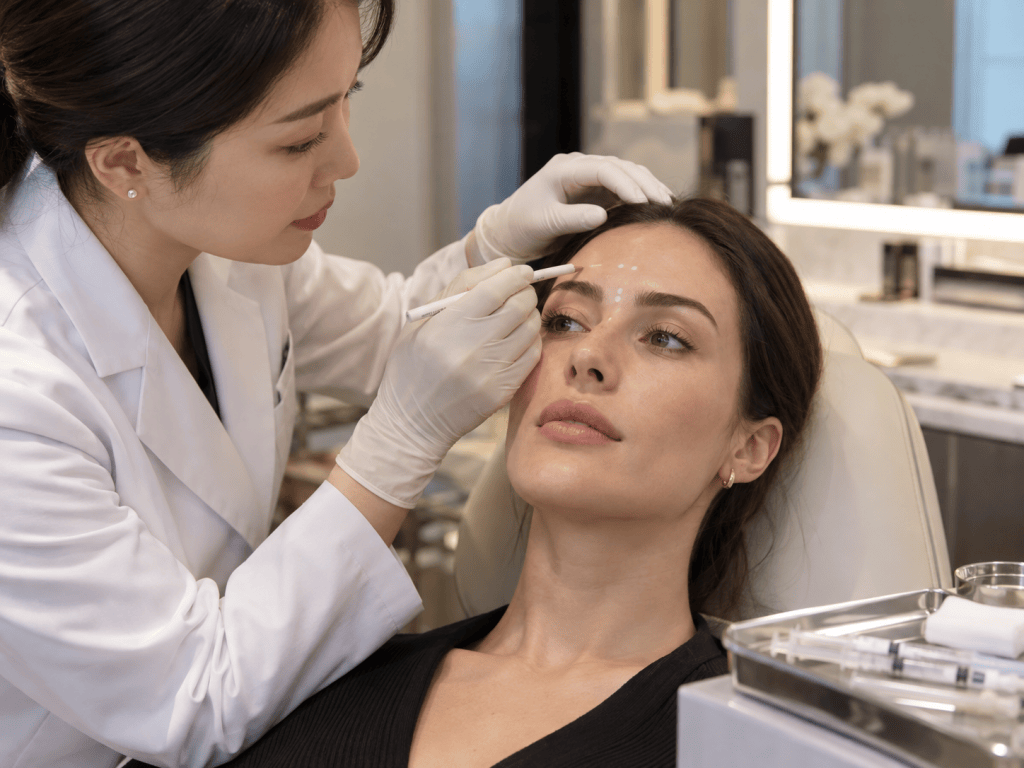
Botox is a brand name for a botulinum toxin product. Similar products are available from other manufacturers.
Botulinum toxin temporarily reduces activity in selected muscles, which can soften certain expression lines.
In some cases, treatment of the masseter muscles may also reduce the appearance of a prominent muscular jawline.
Common Treatment Areas
- Forehead lines
- Frown lines between the eyebrows
- Crow’s feet
- Masseter muscles
- Selected other areas under professional guidance
What Makes the Korean Approach Distinctive?
1. Natural-expression goals
Many Korean aesthetic clinics promote treatment plans that aim to soften lines while retaining facial movement.
2. Masseter-focused facial contouring
Masseter injections are particularly recognizable within the Korean non-surgical jawline-contouring market.
3. Variety of brands
Korea has domestically developed botulinum toxin products alongside imported options.
Product approval, quality, and dosing should always be verified.
4. Individualized unit selection
The appropriate number of units depends on muscle activity, facial anatomy, and the product used.
Treatment Experience
- Procedure duration: Approximately 10–20 minutes
- Downtime: Usually minimal
- Early results: Often within several days
- Fuller results: Commonly around 1–2 weeks
- Duration: Frequently around 3–4 months for expression lines, although it varies
Why Is It Interesting for Travelers?
The injection appointment itself is relatively short. However, follow-up assessment may be needed, and side effects can develop after the appointment.
What to ask your Korean clinic: Which toxin brand will be used, how many units are included, and who performs the injections?
Safety note: Possible adverse effects include bruising, asymmetry, unintended muscle weakness, and eyelid drooping. Rare systemic effects require urgent medical attention.
5. Korean Skin Boosters — The Fascination Behind Glass Skin
Estimated Cost: ₩150,000–700,000 ($111–520)
Is Korean glass skin really just skincare products—or is there more behind the trend?
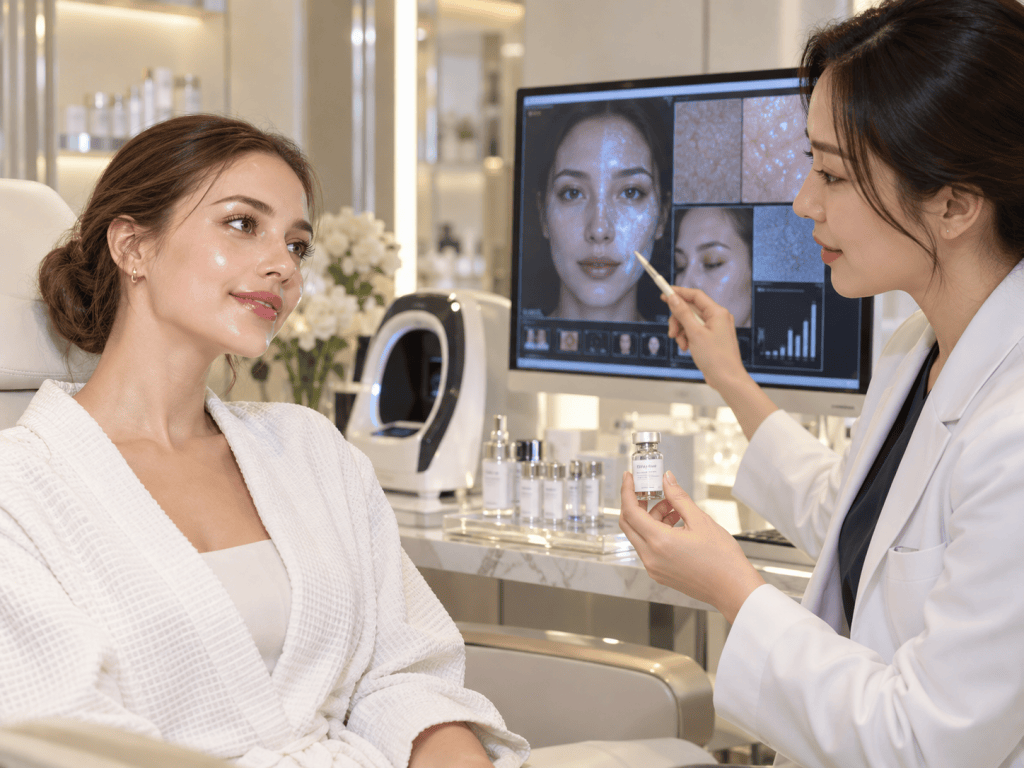
Glass skin refers to a smooth, well-hydrated, luminous-looking complexion.
Although the concept became internationally famous through K-Beauty skincare, some Korean aesthetic clinics also offer injectable treatments marketed as skin boosters.
These may contain hyaluronic acid, polynucleotides, collagen-stimulating substances, or other formulations.
Not all skin boosters are equivalent.
What Do Skin Boosters Aim to Improve?
- Skin hydration
- Fine surface lines
- Uneven texture
- Dullness
- Certain early signs of skin aging
What Makes Korea Distinctive?
1. Emphasis on overall complexion
Some practitioners focus on skin texture, hydration, and consistency rather than visible changes in facial shape.
2. Multiple product categories
Korean clinics may offer several formulations that differ in ingredients, evidence, approval status, and injection methods.
3. Combination skincare plans
Skin boosters may be considered alongside non-invasive dermatological treatments, with appropriate spacing and safety assessment.
4. K-Beauty-inspired maintenance
The concept of maintaining a healthy-looking skin barrier is often included in consultation and aftercare discussions.
What Is the Experience Like?
- Duration: Approximately 20–60 minutes
- Downtime: Injection marks or swelling may last several days
- Results: Vary by formulation; some changes may be noticeable over days or weeks
- Maintenance: May require repeat sessions
Is Glass Skin Guaranteed?
No. Skin luminosity depends on many factors, including genetics, pigmentation, hydration, skin conditions, and daily care.
What to ask your Korean clinic: What exact product is being injected, and is it approved for that use?
Safety note: Injection-related bruising, infection, nodules, and vascular complications are possible. Some emerging products have limited clinical evidence.
6. Laser Toning — The Korean Approach to Uneven Skin Tone
Estimated Cost: ₩80,000–400,000 ($59–297)
Struggling with dark spots, sun damage, or stubborn pigmentation?
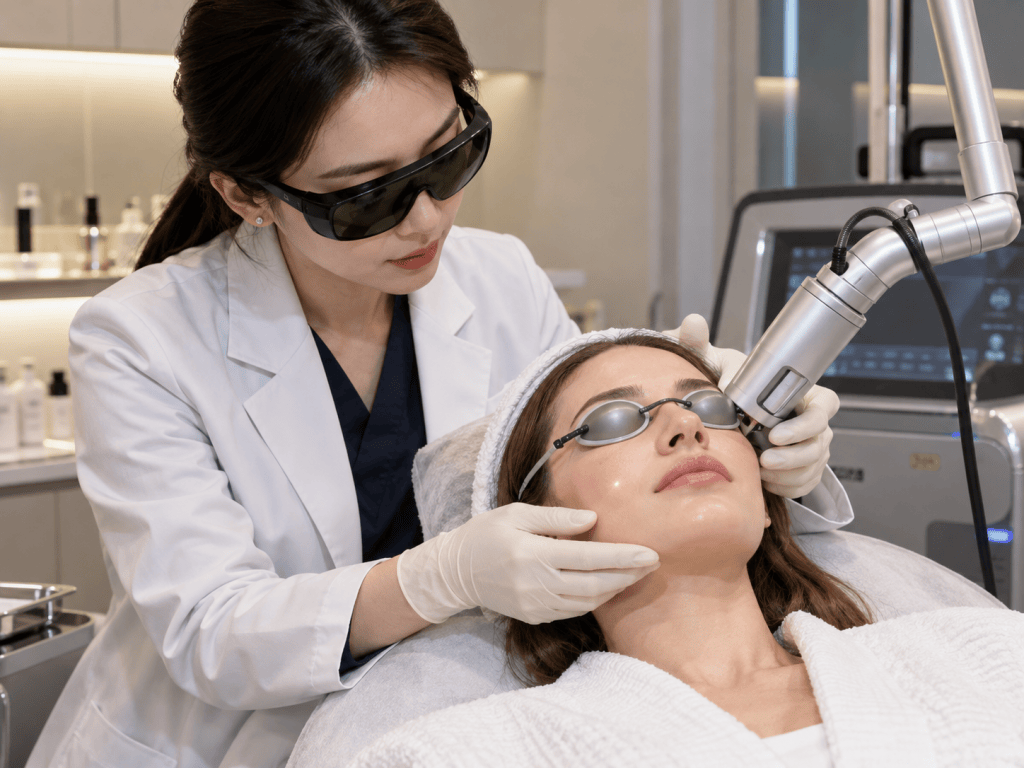
Laser toning is a broad term for laser treatments intended to improve selected pigmentation concerns.
Depending on the laser type and settings, treatment may target pigment while attempting to minimize injury to surrounding tissue.
What Can Laser Toning Address?
- Certain forms of hyperpigmentation
- Uneven skin tone
- Some sun-related discoloration
- Selected post-inflammatory dark marks
- Melasma in carefully selected patients
What Makes Korean Laser Care Distinctive?
1. Extensive range of devices
Clinics may offer Q-switched lasers, picosecond lasers, and other pigment-focused technologies.
2. Treatment based on pigment type
A proper evaluation distinguishes melasma, sunspots, post-inflammatory pigmentation, and other skin conditions.
3. Gradual treatment strategies
Some providers favor multiple conservative sessions over a single aggressive session, particularly for difficult pigmentation.
4. Strong focus on sun protection
Effective pigmentation management usually requires daily photoprotection and appropriate skincare.
Treatment Experience
- Duration: Approximately 10–30 minutes
- Downtime: Often limited, depending on treatment intensity
- Results: Frequently require multiple sessions
- Expected changes: Gradual and condition-dependent
Can Laser Toning Remove Melasma Forever?
No. Melasma is frequently recurrent, and excessive laser treatment may worsen pigmentation.
What to ask your Korean clinic: Which type of pigmentation do I have, and why is this particular laser appropriate?
Safety note: Burns, post-inflammatory hyperpigmentation, hypopigmentation, and pigment recurrence are possible.
7. Acne Scar Laser — Exploring Smoother Skin After Acne
Estimated Cost: ₩200,000–1,000,000 ($149–743)
Acne may disappear, but what happens when the scars remain?
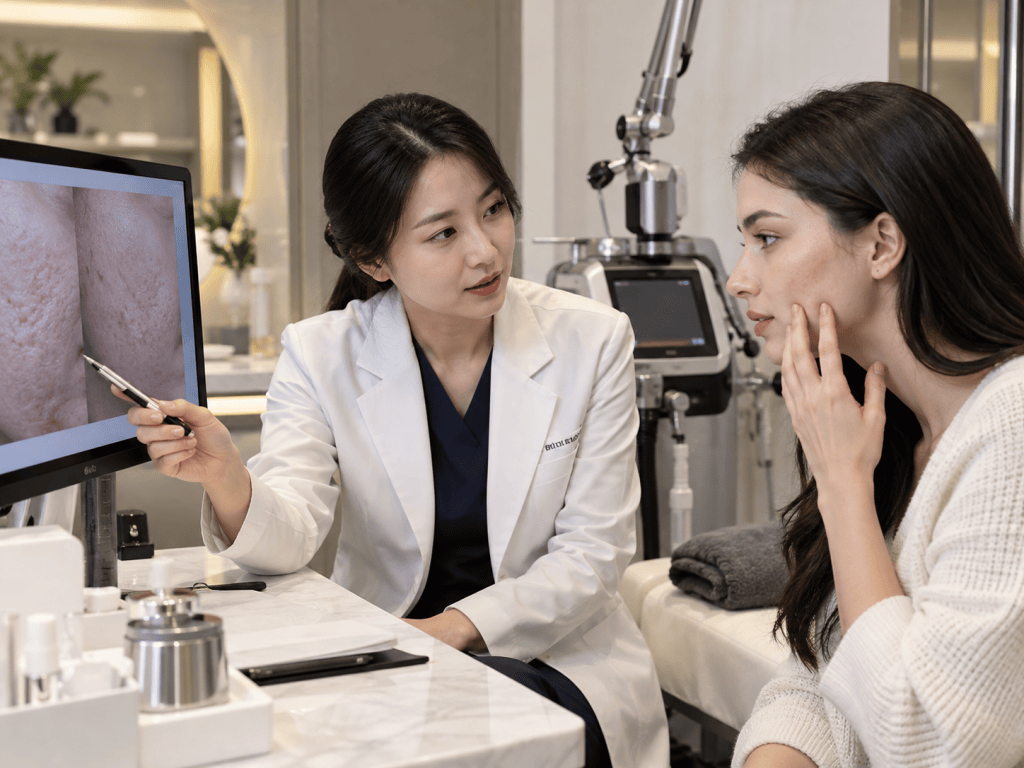
Acne scarring can affect skin texture long after active acne improves.
Korean dermatology clinics offer several techniques to address different types of scars.
Three Common Acne Scar Types
Ice-pick scars: Narrow, deep scars that may require specialized treatment.
Boxcar scars: Round or oval depressions with relatively distinct edges.
Rolling scars: Broad depressions caused partly by fibrous attachments beneath the skin.
These scar types respond differently to treatment.
What Makes the Korean Approach Distinctive?
1. Scar-type analysis
Rather than applying the same laser to every patient, clinics may assess scar depth, distribution, and skin type.
2. Multiple technologies
Available options can include fractional laser resurfacing, radiofrequency microneedling, and other approaches.
3. Combination scar therapy
Some patients may benefit from subcision, selected reconstruction techniques, or other procedures in addition to laser treatment.
4. Long-term improvement planning
A series of treatments with healing periods between sessions may be necessary.
Treatment Experience
- Duration: Approximately 30–90 minutes
- Downtime: Several days to more than a week, depending on intensity
- Results: Usually gradual over multiple sessions
- Treatment course: Frequently requires several visits
Can Acne Scars Disappear Completely?
Complete removal is generally unrealistic. The goal is improvement in appearance and texture.
What to ask your Korean clinic: What scar types do I have, and what degree of improvement is realistic?
Safety note: Risks include prolonged redness, pigment changes, infection, and additional scarring.
8. Dermal Fillers — The Art of Restoring Facial Volume
Estimated Cost: ₩250,000–900,000 ($186–669)
What if facial rejuvenation were more about restoring balance than changing your appearance?
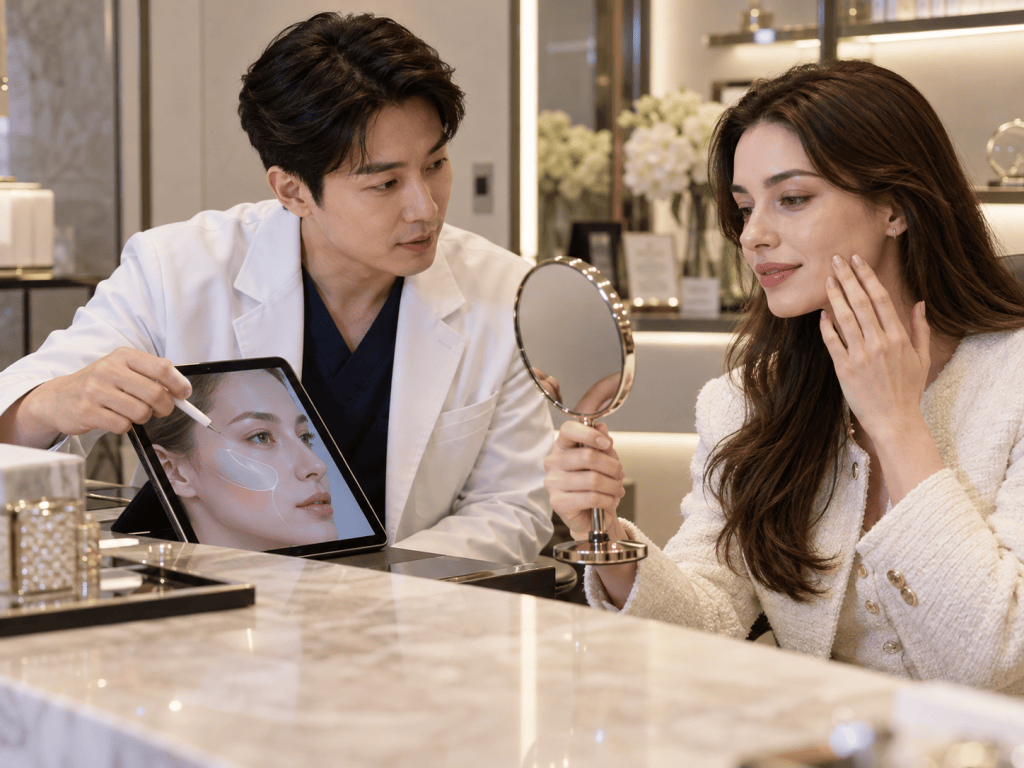
Dermal fillers are injectable materials used to restore or enhance volume in selected areas.
Hyaluronic acid fillers are among the most widely recognized options.
Common Treatment Areas
- Cheeks
- Chin
- Lips
- Nasolabial folds
- Certain areas of age-related volume loss
What Makes Korean Filler Treatment Distinctive?
1. Facial proportion assessment
Some Korean practitioners emphasize the relationship between the forehead, cheeks, chin, and jawline.
2. Interest in subtle contour refinement
Patients may request conservative changes that preserve their recognizable facial features.
3. Choice of formulations
Fillers differ in consistency, longevity, approved uses, and suitability for individual anatomical areas.
4. Integration with broader facial planning
A proper consultation should distinguish between volume loss, skin laxity, and muscle-related concerns.
Treatment Experience
- Duration: Approximately 20–45 minutes
- Downtime: Bruising and swelling may last several days
- Results: Volume changes are usually visible immediately, with appearance changing as swelling settles
- Longevity: Often several months to more than a year, depending on the product and area
What Is the Most Important Safety Question?
Ask whether the practitioner understands facial vascular anatomy and has a documented emergency response protocol.
Safety note: Filler injections carry rare but serious risks of vascular occlusion, tissue damage, blindness, and stroke. They should only be performed by appropriately qualified healthcare professionals.
9. InMode — Korea’s Popular Non-Surgical Facial Contouring Option
Estimated Cost: ₩80,000–500,000 ($59–372)
Can radiofrequency energy help refine the appearance of the jawline?
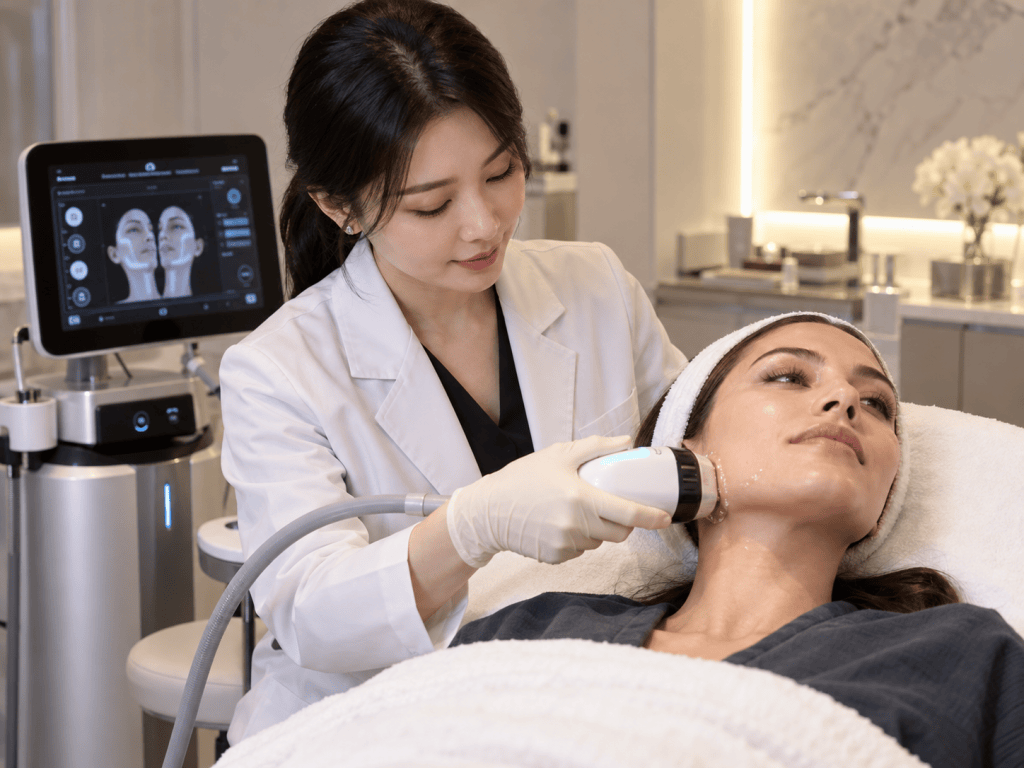
InMode is a manufacturer of aesthetic technologies, and its various treatment modes have different purposes.
Two recognizable options in Korean aesthetic clinics are MiniFX and Forma.
MiniFX vs. Forma
| Feature | MiniFX | Forma |
|---|---|---|
| Technology | Radiofrequency with suction | Radiofrequency heating |
| Main objective | Selected small-area contouring | Skin firmness |
| Common focus | Lower face and submental area | Skin laxity and texture |
| Recovery | Bruising and swelling can occur | Often limited redness |
| Treatment course | Often multiple sessions | Often multiple sessions |
What Makes the Korean Approach Distinctive?
1. Focus on lower-face aesthetics
Korean clinics frequently offer consultation plans centered on the jawline and lower-face appearance.
2. Combination treatment menus
Some clinics offer FX and Forma together or separately, allowing more individualized planning.
3. Consideration of facial fat distribution
A practitioner should assess whether the concern is related to fat, muscle, skin laxity, or bone anatomy.
4. Relatively accessible entry pricing
Limited-area InMode treatments are offered at various price points, including lower-priced promotional options.
Treatment Experience
- Duration: Approximately 15–45 minutes
- Downtime: Temporary redness, tenderness, or bruising, depending on the mode
- Results: May develop progressively over a series of sessions
- Treatment course: Depends on the device mode and clinical goal
Does InMode Melt Away a Double Chin?
That description is too simplistic. Selected treatments may improve appearance, but results vary, and not every double chin is caused by excess fat.
What to ask your Korean clinic: Am I receiving FX, Forma, or both, and which facial areas are included?
Safety note: Burns, bruising, unwanted contour changes, and discomfort are possible. Excessive fat reduction may be undesirable in some faces.
10. HIFU Lifting — Discovering Korea’s Accessible Ultrasound Treatments
Estimated Cost: ₩100,000–600,000 ($74–446)
Is there a more accessible alternative to premium ultrasound lifting?
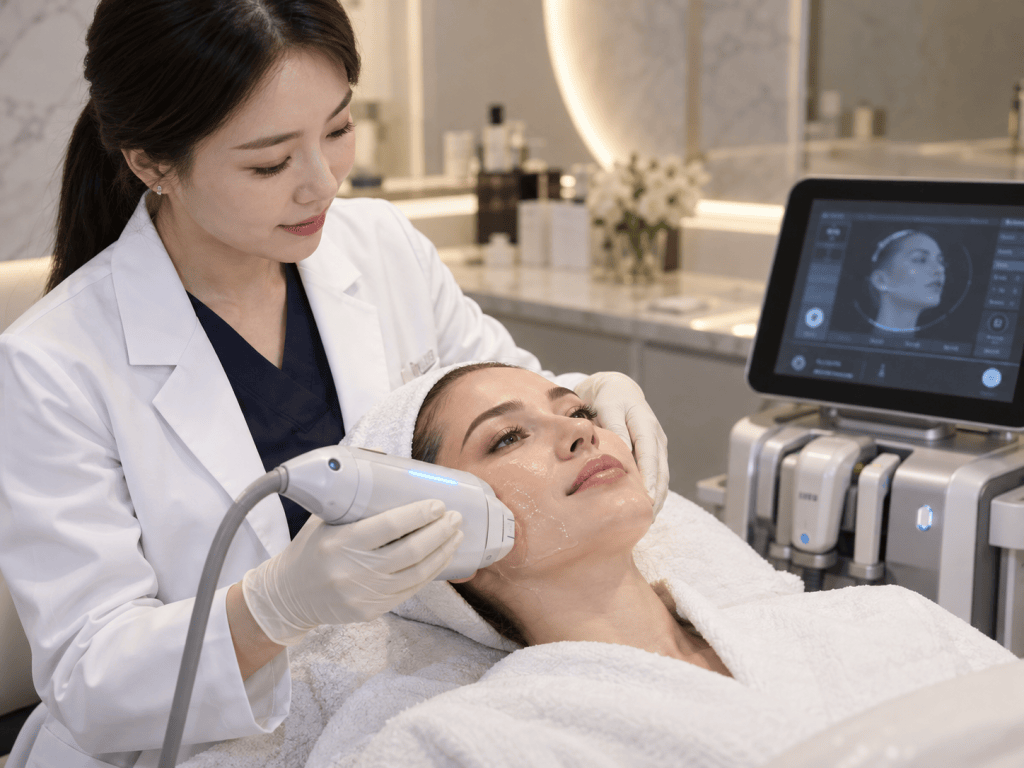
HIFU stands for High-Intensity Focused Ultrasound.
In aesthetic medicine, various focused-ultrasound systems are used to deliver energy to selected tissue depths.
Korea offers several HIFU-based technologies, including the widely recognized Shurink family of devices.
Not all HIFU devices have equivalent specifications, clinical evidence, or regulatory approvals.
What Makes Korean HIFU Treatments Distinctive?
1. Multiple device options
Patients may encounter different Korean-manufactured and imported devices.
2. Facial-zone planning
Treatment can be planned for selected areas such as the cheeks, jawline, or lower face.
3. Flexible treatment packages
Some clinics offer different shot counts and area-based pricing.
4. Potentially lower entry costs
Selected HIFU treatments may be available at lower initial costs than premium ultrasound systems such as Ultherapy.
What Can HIFU Potentially Improve?
- Mild facial laxity
- Early jowling
- Some lower-face contour concerns
- Selected age-related changes
Treatment Experience
- Duration: Approximately 20–60 minutes
- Downtime: Often limited, although swelling or tenderness is possible
- Results: May develop over several weeks or months
- Maintenance: Depends on results and medical assessment
Is HIFU Better Than Ultherapy?
Not necessarily. Device specifications, treatment protocols, anatomical suitability, and clinical evidence matter more than branding or price alone.
What to ask your Korean clinic: Which HIFU device is being used, how many shots are included, and what clinical evidence supports the proposed treatment?
Safety note: Excessive or inappropriate energy delivery can cause burns, nerve injury, or unwanted tissue changes.
Which Korean Treatment Matches Your Skin Goals?
If you are wondering where to begin, the following comparison can help you prepare questions for a professional consultation.
| Your Main Concern | Treatments to Discuss |
|---|---|
| Fine expression lines | Botox |
| Dryness and uneven texture | Skin Boosters, Rejuran |
| Mild skin laxity | Thermage, Ultherapy, HIFU |
| Soft jawline definition | Ultherapy, InMode, HIFU |
| Pigmentation and sunspots | Laser Toning |
| Acne-related scars | Fractional Laser, Scar Therapy |
| Facial volume loss | Dermal Fillers |
| Overall skin-quality maintenance | Individualized dermatology plan |
These are not automatic treatment recommendations. A qualified clinician should determine the diagnosis, assess contraindications, and explain alternatives, including no treatment.
Six Things That Make the Korean Dermatology Experience Different
1. A Culture of Detailed Skincare
Korean beauty culture emphasizes consistent skincare, including cleansing, moisturizing, sun protection, and maintaining a healthy-looking complexion.
This interest has helped create demand for treatments focused on subtle improvements in skin quality.
2. Access to Different Medical Technologies
Korean aesthetic clinics may offer multiple ultrasound, radiofrequency, laser, and injectable treatment categories.
This creates opportunities for comparison, but more devices do not necessarily mean better medical care.
3. Personalized Facial Analysis
Many clinics incorporate facial photography, skin assessment, or device-based analysis into consultations.
These can be useful planning tools when combined with sound medical judgment.
4. Special Interest in Natural-Looking Results
A common theme in Korean aesthetic marketing is the goal of looking refreshed without visibly changing one’s identity.
Actual results depend on the provider’s clinical skill, the patient’s anatomy, and the selected treatment.
5. Competitive Treatment Prices
The availability of numerous clinics and treatment programs may make some services competitively priced compared with those in other countries.
Visitors should compare equivalent procedures rather than only advertised starting prices.
6. International Patient Services
Some Korean clinics provide multilingual consultations, assistance with scheduling, written aftercare guidance, and coordination for overseas patients.
Travelers should confirm which services are actually included.
How Much Should You Budget for a Korean Skin Clinic Visit?
For an international visitor, the cost of treatment is only one component of the total budget.
| Expense | What to Check |
|---|---|
| Treatment | Exact product, dosage, shot count, or area |
| Consultation | Whether a separate doctor’s fee applies |
| VAT | Whether 10% VAT is included |
| Anesthetic cream | Whether it is included or separately billed |
| Medication | Any postoperative prescriptions |
| Aftercare | Follow-up appointments and recovery products |
| Additional sessions | Whether a series is medically necessary |
| Travel arrangements | Time required in Korea for follow-up |
Travel tip: If you are staying in Seoul for only three to five days, avoid assuming that every treatment can safely be completed before departure. Some procedures require follow-up, staged treatment, or recovery time that exceeds a short holiday.
Five Questions International Visitors Frequently Ask
Q1. Can I receive treatment during a short vacation in Seoul?
Some low-downtime procedures may fit into a short visit. However, the suitability of treatment depends on medical history, anticipated side effects, and the possibility of complications.
Q2. Is it safe to combine Rejuran, Botox, and laser treatments on the same day?
Not automatically. Some combinations may be appropriate, while others can increase irritation, swelling, or other risks. An individualized medical assessment is essential.
Q3. Is Korean skin treatment less expensive than treatment in the United States?
Some procedures may be less expensive, but prices differ widely. Travel costs, product quantity, treatment scope, and aftercare should be included in comparisons.
Q4. How can I identify a reliable Korean dermatology clinic?
Confirm the institution’s registration for international patients, relevant physician qualifications, authentic products and devices, transparent costs, and clear emergency and aftercare arrangements.
Q5. Which Korean treatment produces the famous glass skin effect?
There is no single treatment that guarantees glass skin.
The appearance of smooth, luminous skin reflects multiple factors, including skin health, skincare habits, pigmentation, hydration, lighting, and sometimes appropriately selected professional treatments.
Before You Book: Essential Safety Checklist
Before paying for any procedure in Korea:
- Confirm the hospital or clinic’s registration and the treating professional’s credentials.
- Request the exact device name, product brand, dosage, and treatment area.
- Ask about expected benefits, limitations, side effects, and contraindications.
- Obtain a complete written quotation in Korean won.
- Ask what happens if complications occur after you leave Korea.
- Avoid providers who promise guaranteed results or pressure you into multiple treatments.
- Arrange appropriate follow-up care and retain copies of your medical records.
Korea’s official Medical Korea platform provides resources for international patients and medical institutions.
Official website: https://www.medicalkorea.or.kr/en
Final Thoughts: The Real Secret Behind K-Beauty
The global fascination with Korean skincare is about more than glass skin, celebrity beauty routines, or high-tech dermatology equipment.
It reflects a growing interest in personalized skincare, thoughtful aging, facial harmony, and modern aesthetic medicine.
From Rejuran and skin boosters to ultrasound lifting and sophisticated laser technologies, Korea offers international visitors a broad range of treatments to investigate.
But the real question is not:
“Which treatment is the most famous in Korea?”
It is:
“Which approach is appropriate for my skin, my health, and my long-term goals?”
Because healthy-looking skin is not achieved by following every trend.
It begins with understanding your skin, receiving trustworthy medical advice, and making informed choices.
Discover K-Beauty. Explore K-Medical. Experience Korea with Confidence.
K-Medical Korea 2026 — International Skincare & Aesthetic Medicine Guide
Disclaimer: This article is intended for general education and medical travel planning. It does not replace professional diagnosis or medical advice. Treatment outcomes, downtime, complications, and recovery vary. Prices are approximate 2026 market references rather than guaranteed quotations, and USD amounts are rounded conversions using the October 8, 2026 reference exchange rate.


Leave a Reply