
10 Surprising Secrets of Korean Plastic Surgery: Why the World Is Fascinated by K-Beauty Medicine
From Invisible Transformations to High-Tech Facial Design — Discover What Makes Korean Aesthetic Medicine So Distinctive
Introduction: What Makes Korean Beauty So Different?
Imagine visiting Seoul, where futuristic medical technology meets a culture that pays extraordinary attention to beauty, facial harmony, and skincare.
You walk into a modern clinic in Gangnam. Instead of simply asking which feature you want to change, the doctor may begin by examining your facial proportions, skin quality, expression, and personal aesthetic preferences.
Perhaps you have heard of the famous Korean V-line face, double eyelid surgery, glass skin, or lunch-break beauty treatments.
But Korea’s aesthetic medicine industry involves much more than a few famous procedures.
What makes it fascinating is the combination of surgical specialization, detailed treatment planning, a wide selection of medical technologies, and the influence of Korean beauty culture.
Here are ten characteristics that make Korean plastic surgery and aesthetic medicine especially interesting to international visitors.
1. The Invisible Makeover — Looking Different Without Looking “Done”
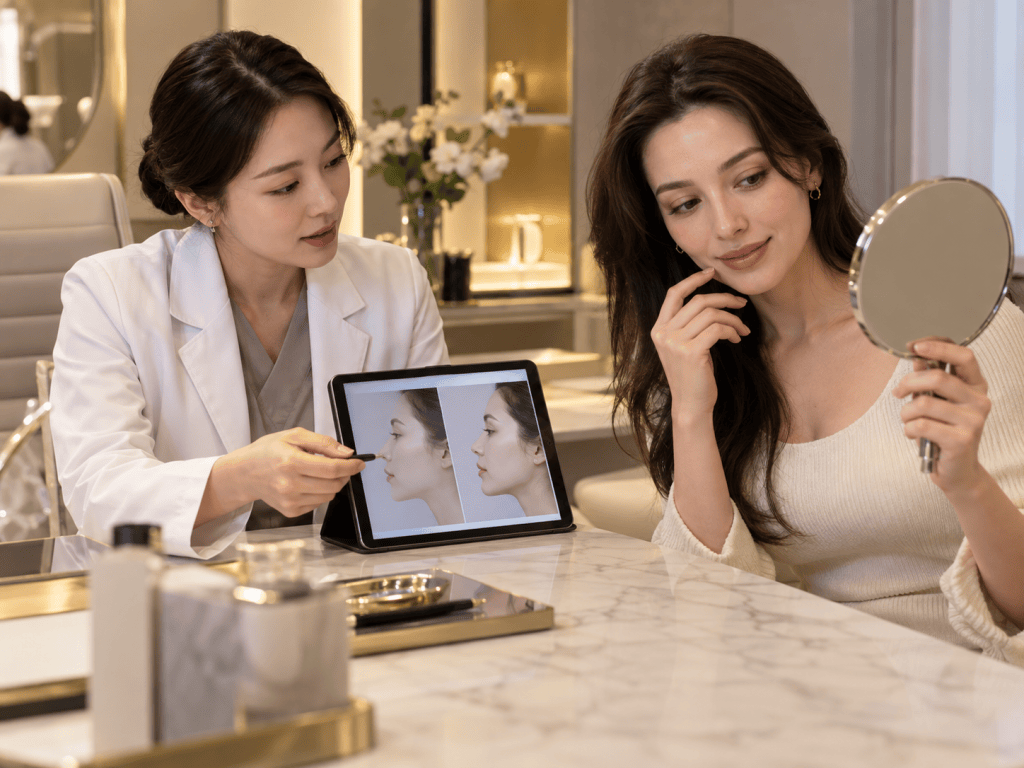
The big surprise: A cosmetic change does not always have to look dramatic.
One recognizable theme in Korean aesthetic medicine is the pursuit of subtle, natural-looking refinement.
Rather than requesting an entirely new face, some patients prefer to look refreshed, balanced, or more confident while remaining recognizable.
What Makes This Interesting?
The idea is sometimes described as improving your appearance without making it obvious that you have undergone a procedure.
It may involve subtle changes in eyelid creases, nose shape, facial volume, or skin texture.
Four Distinctive Characteristics
1. Preserving personal identity
A well-planned procedure should account for the patient’s existing facial anatomy and individual appearance.
2. Subtle changes in facial proportions
Small anatomical adjustments can sometimes produce a noticeable change in the overall impression of a face.
3. Attention to facial expressions
Good planning considers how someone looks while speaking, smiling, and moving—not only in photographs.
4. Conservative treatment options
Some patients may benefit from minimal intervention or nonsurgical care rather than extensive surgery.
Examples and Estimated Costs
| Treatment | KRW | USD |
|---|---|---|
| Double eyelid surgery | ₩1,000,000–3,500,000 | $743–2,600 |
| Primary rhinoplasty | ₩3,500,000–8,000,000 | $2,600–5,944 |
| Facial fat grafting | ₩2,500,000–5,500,000 | $1,857–4,086 |
What International Visitors Should Know
Natural-looking results are not guaranteed, and there is no universally accepted definition of natural beauty. The right outcome depends on individual preferences, anatomy, and medical suitability.
The fascinating question: Could the most sophisticated cosmetic change be one that nobody immediately notices?
2. Facial Harmony — The Korean Art of Balancing the Whole Face
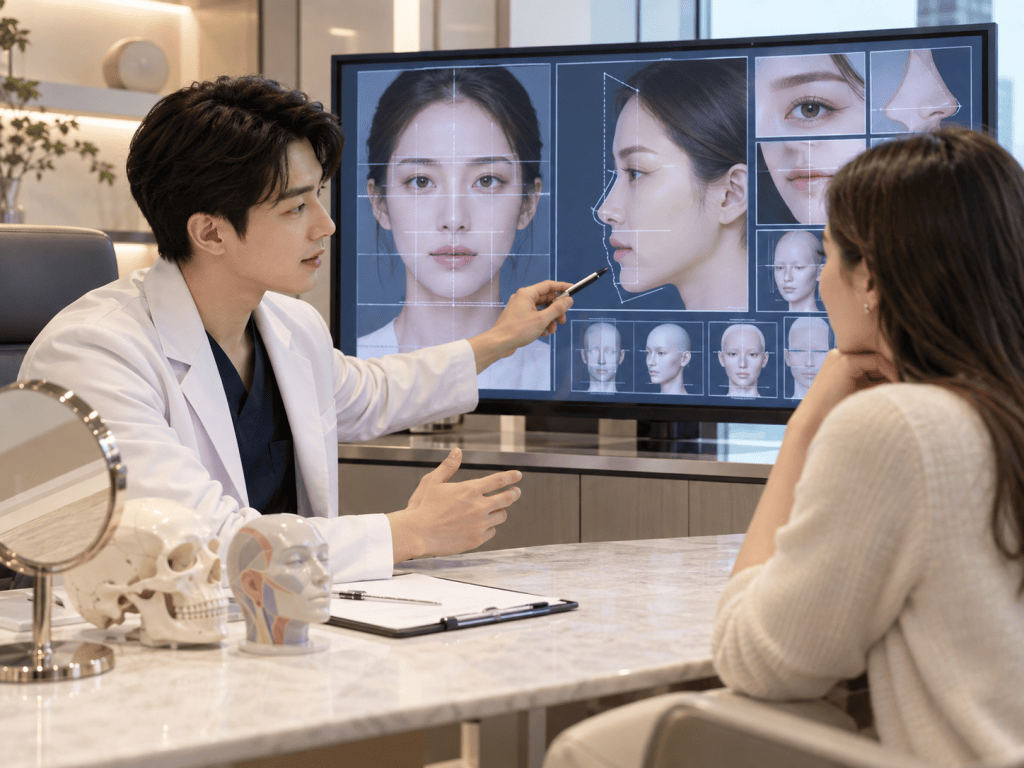
The big surprise: A nose consultation may become a discussion about your entire facial profile.
Many Korean aesthetic practices emphasize facial harmony rather than evaluating each feature independently.
This approach can involve the relationship between the forehead, eyebrows, eyes, nose, lips, chin, and jawline.
What Makes This Interesting?
Imagine asking for a higher nose bridge. A responsible surgeon may first examine whether your concern is related to nasal projection, chin position, or facial proportions.
The most appropriate procedure may be different from the one you originally imagined.
Four Distinctive Characteristics
1. Full-face photography
Standardized photographs help document facial anatomy from multiple angles.
2. Profile analysis
The relationship between the nose, lips, and chin may be considered when planning selected facial procedures.
3. Three-dimensional imaging
Some clinics offer 3D imaging or CT-based planning for procedures that require detailed structural assessment.
4. Personalized aesthetic preferences
Modern facial planning should consider the patient’s identity, culture, and individual goals—not impose one ideal facial shape.
Examples and Estimated Costs
| Treatment | KRW | USD |
|---|---|---|
| Rhinoplasty | ₩3,500,000–8,000,000 | $2,600–5,944 |
| Facial fillers | ₩250,000–900,000 | $186–669 |
| Facial bone contouring | ₩9,000,000–18,000,000 | $6,686–13,373 |
What International Visitors Should Know
Facial proportion analysis can support planning, but mathematical symmetry does not guarantee attractiveness or satisfaction.
The fascinating question: What if the secret to a beautiful face is not perfect individual features, but how those features work together?
3. The Famous Korean V-Line — Why Jawline Design Gets So Much Attention
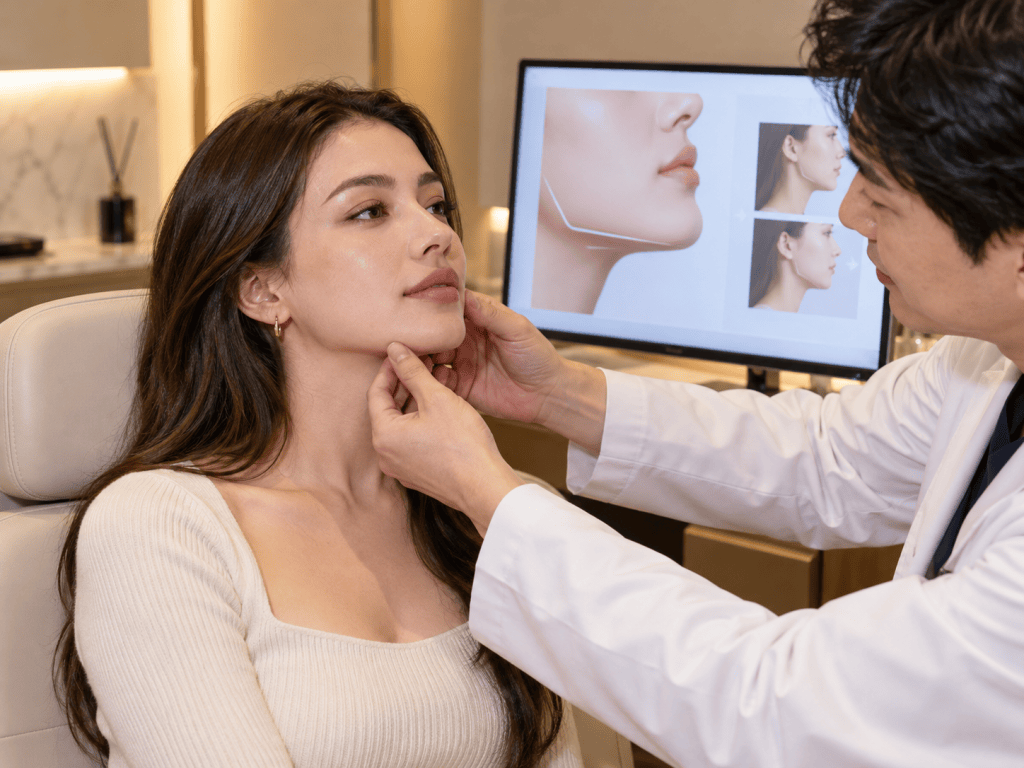
The big surprise: In Korea, facial contouring is sometimes as much about the silhouette as the individual facial features.
The V-line is one of the most recognizable terms associated with Korean beauty culture.
It generally refers to the appearance of a relatively tapered lower face, with an emphasized transition from the cheeks to the chin.
However, not every patient wants or benefits from this aesthetic.
What Makes This Interesting?
A broad-looking lower face can have different causes.
It may relate to the jawbone, chewing muscles, subcutaneous fat, chin anatomy, or skin laxity.
Each requires a different assessment.
Four Distinctive Characteristics
1. Bone-based contouring
Some specialists perform jawbone or chin procedures to address selected structural concerns.
2. Masseter Botox
For people with prominent masseter muscles, botulinum toxin may reduce muscle size over time.
3. Facial fat treatment
Selected fat-removal procedures may address localized deposits beneath the chin or around the lower face.
4. Non-surgical tightening
Radiofrequency and ultrasound technologies are used in some patients with mild skin laxity.
Examples and Estimated Costs
| Treatment | KRW | USD |
|---|---|---|
| Jawline Botox | ₩50,000–350,000 | $37–260 |
| Small-area facial liposuction | ₩2,000,000–6,000,000 | $1,486–4,458 |
| V-line bone contouring | ₩9,000,000–18,000,000 | $6,686–13,373 |
What International Visitors Should Know
Jawbone surgery is a major operation and carries substantially greater risks than most nonsurgical treatments. Risks may include nerve injury, bleeding, infection, and altered sensation.
The fascinating question: How can two patients with similar jawline concerns require completely different treatments?
4. Double Eyelid Surgery — A Small Feature With Remarkable Design Choices
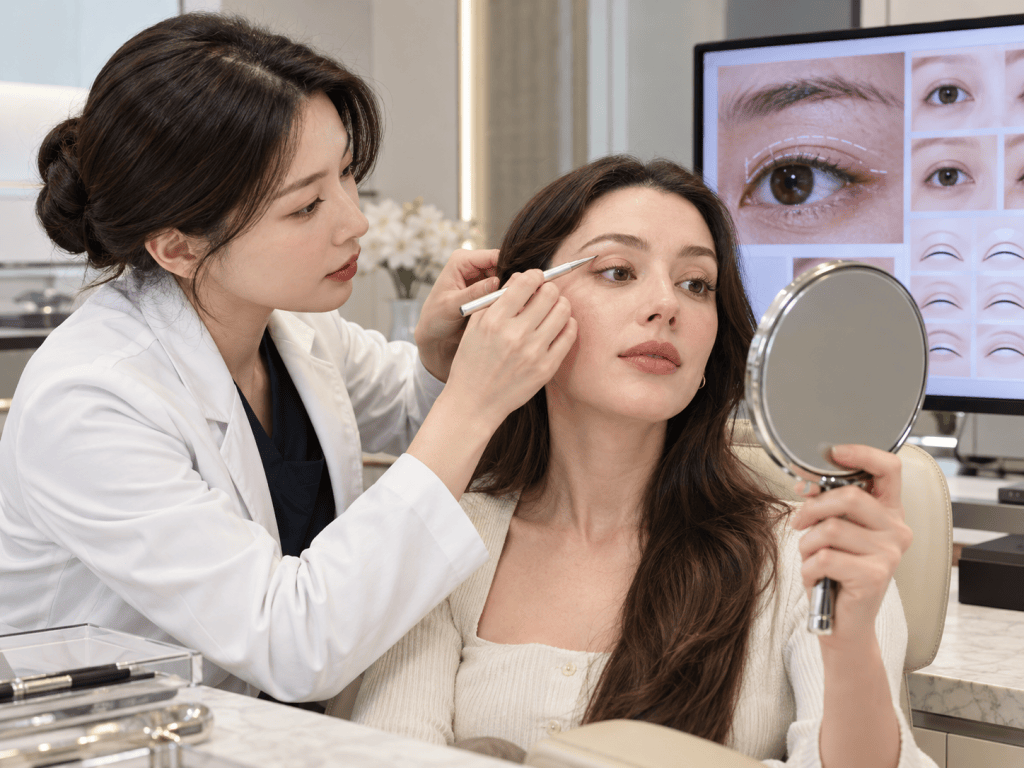
The big surprise: Korean eyelid surgery involves much more than simply creating a crease.
South Korea has well-established expertise in cosmetic eyelid procedures.
Different techniques may be used depending on upper-eyelid anatomy, skin thickness, existing creases, and the patient’s goals.
What Makes This Interesting?
Two patients may request the same general appearance, yet have very different eyelid structures.
The best surgical plan is not necessarily the same for both.
Four Distinctive Characteristics
1. Non-incisional techniques
Selected patients may be suitable for suture-based crease formation.
2. Full-incision techniques
Patients with excess skin or other anatomical concerns may need an incisional approach.
3. Ptosis assessment
Some patients require evaluation of the eyelid-lifting muscles rather than cosmetic crease modification alone.
4. Detailed crease placement
A surgeon can discuss different crease heights and shapes, taking into account existing anatomy and personal preference.
Examples and Estimated Costs
| Treatment | KRW | USD |
|---|---|---|
| Non-incisional eyelid surgery | ₩1,000,000–2,000,000 | $743–1,486 |
| Incisional eyelid surgery | ₩1,800,000–3,500,000 | $1,337–2,600 |
| Additional ptosis correction | ₩1,000,000–2,500,000 | $743–1,857 |
Recovery
Visible bruising and swelling may improve during the first one to two weeks, while final healing can take considerably longer.
What International Visitors Should Know
Potential complications include dry eyes, asymmetry, scarring, and difficulty closing the eyelids.
The fascinating question: How much planning can go into changing a crease only a few millimeters wide?
5. The Non-Surgical Beauty Revolution — More Choices Beyond the Operating Room
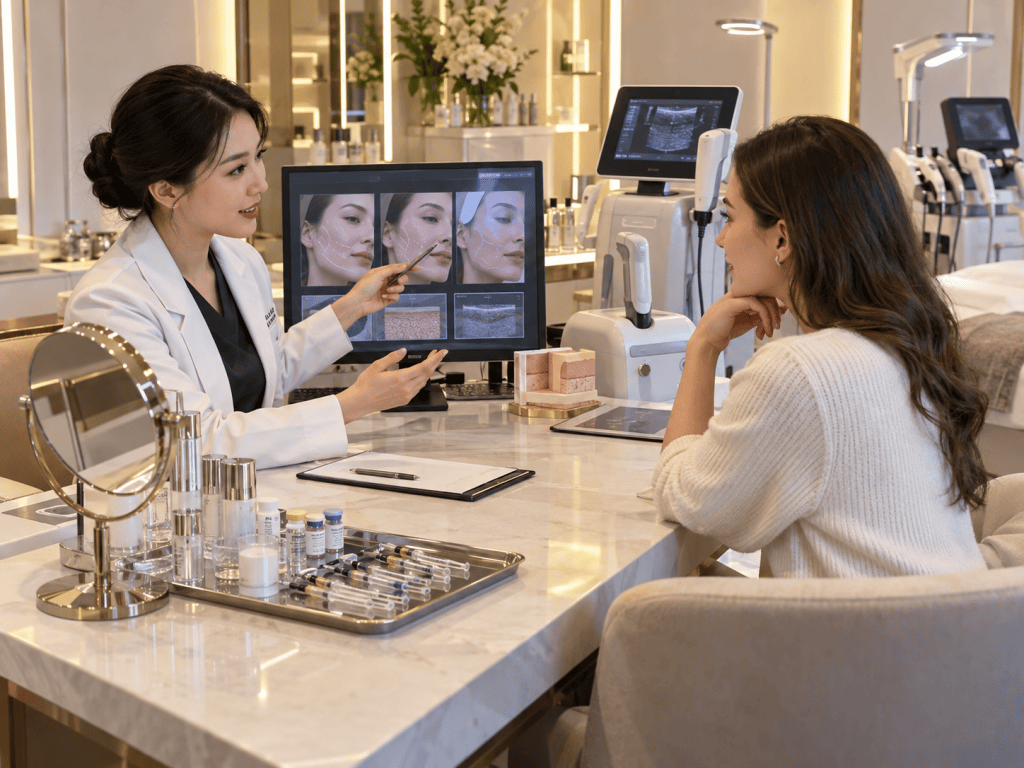
The big surprise: Not every Korean beauty treatment involves surgery.
Korea’s medical aesthetics sector offers a wide selection of injectables, lasers, ultrasound devices, and radiofrequency treatments.
Patients interested in modest improvements may want to explore whether a nonsurgical option is suitable.
Four Distinctive Characteristics
1. Ultrasound lifting
Treatments such as Ultherapy and other HIFU systems deliver focused ultrasound energy to selected tissue depths.
2. Radiofrequency skin tightening
Thermage and other radiofrequency platforms use controlled energy to target skin laxity.
3. Injectables
Botulinum toxin and fillers may address selected wrinkles, muscle-related concerns, or volume loss.
4. Dermatological lasers
Different lasers are used to treat pigmentation, scars, and certain skin-texture concerns.
Examples and Estimated Costs
| Treatment | KRW | USD |
|---|---|---|
| Botox | ₩25,000–350,000 | $19–260 |
| HIFU lifting | ₩100,000–600,000 | $74–446 |
| Ultherapy | ₩600,000–3,000,000 | $446–2,229 |
| Thermage FLX | ₩1,000,000–3,000,000 | $743–2,229 |
What International Visitors Should Know
Nonsurgical does not mean risk-free. Thermal injuries, tissue changes, injection complications, and unsatisfactory outcomes are possible.
The fascinating question: How much can medical technology change the appearance of the skin without a surgical incision?
6. Glass Skin — Why Korea Treats Skin Quality as Part of Beauty
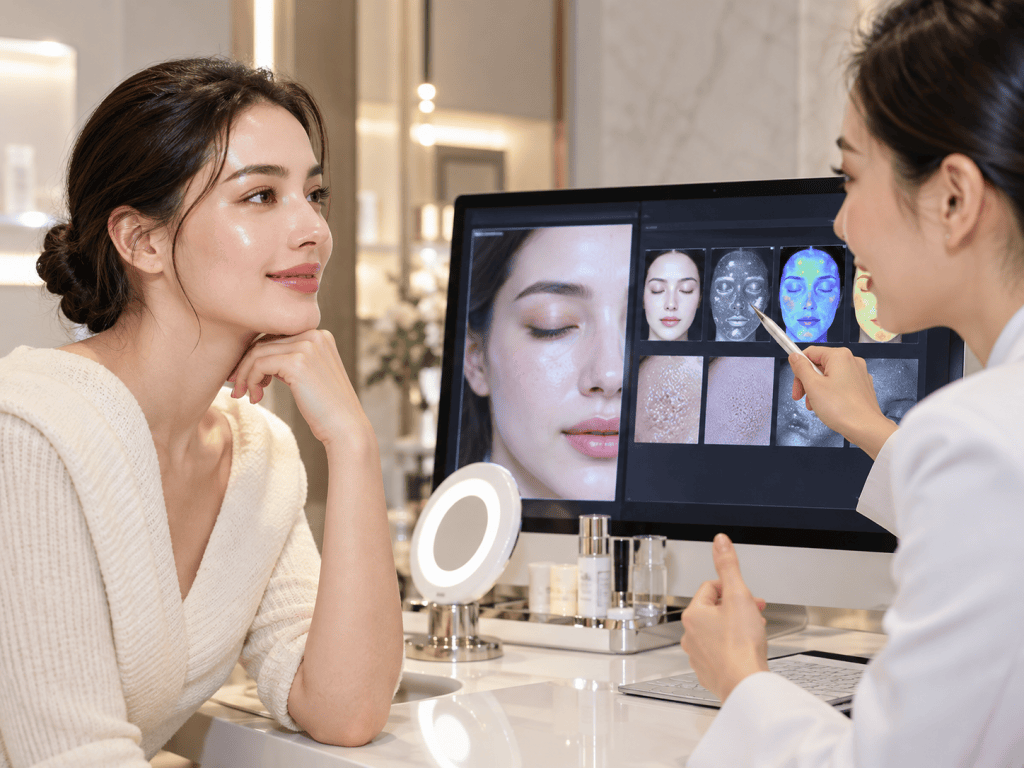
The big surprise: Korean beauty culture often places as much emphasis on skin quality as facial shape.
The internationally famous term “glass skin” describes a smooth, luminous, well-hydrated complexion.
While glass skin is primarily a beauty ideal and skincare trend, it has also influenced interest in aesthetic dermatology.
Four Distinctive Characteristics
1. Skin hydration
Maintaining the skin barrier and appropriate hydration is a central part of many K-Beauty skincare routines.
2. Skin texture analysis
Clinics may assess pores, scars, uneven texture, and fine lines.
3. Pigmentation care
Laser and topical treatments may be considered for certain pigmentation conditions.
4. Injectable skin-quality treatments
Some clinics offer Rejuran or skin boosters, though evidence and approval status vary across products.
Examples and Estimated Costs
| Treatment | KRW | USD |
|---|---|---|
| Rejuran | ₩250,000–600,000 | $186–446 |
| Skin boosters | ₩150,000–700,000 | $111–520 |
| Laser toning | ₩80,000–400,000 | $59–297 |
What International Visitors Should Know
No single procedure guarantees glass skin. Healthy skin depends on many factors, including genetics, appropriate skincare, protection from ultraviolet radiation, and individual medical conditions.
The fascinating question: Is the secret of Korean beauty actually more about skin quality than facial shape?
7. The Beauty Lunch Break — Korea’s Interest in Low-Downtime Procedures
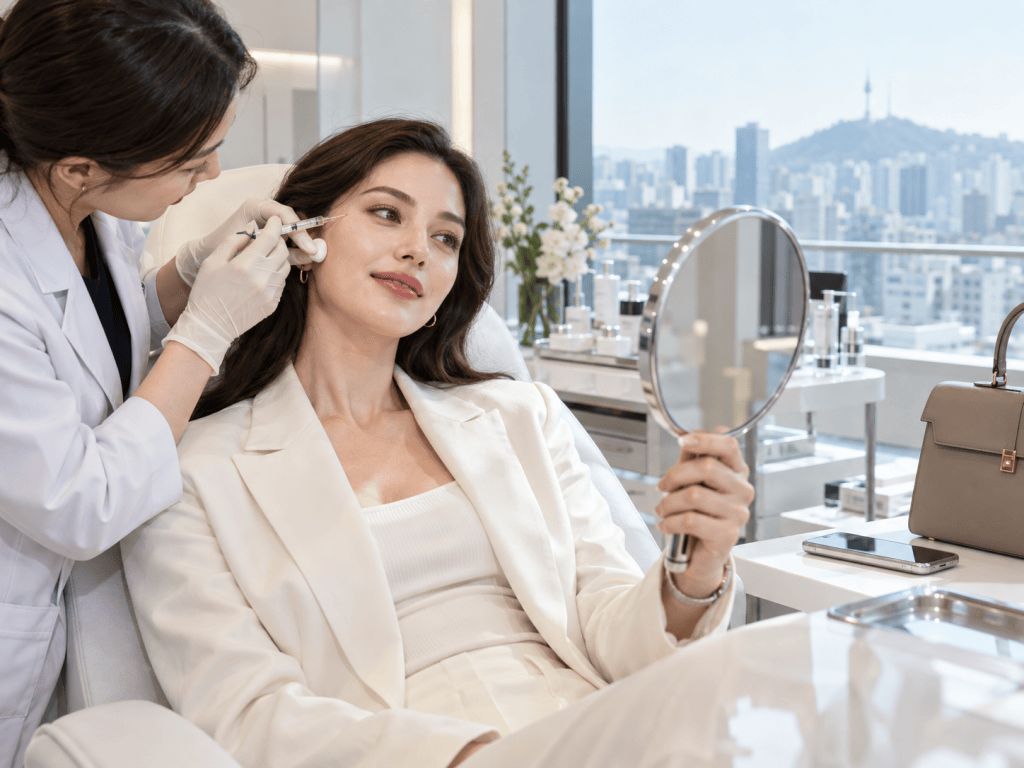
The big surprise: Some cosmetic appointments can be shorter than a restaurant lunch.
In a busy city such as Seoul, convenience is an important consideration for many consumers.
Some nonsurgical treatments may be completed within a relatively short clinical appointment.
However, appointment duration and recovery time are not the same thing.
Four Distinctive Characteristics
1. Short treatment appointments
Selected Botox, laser, and skincare appointments may take less than an hour.
2. Convenient urban access
Major Seoul districts have numerous aesthetic healthcare providers.
3. Flexible treatment schedules
Some clinics offer evening or weekend appointments, subject to their operating hours.
4. Limited-downtime options
Certain procedures may cause relatively little visible disruption, although redness, bruising, and other side effects remain possible.
Examples and Estimated Costs
| Treatment | KRW | USD | Typical Appointment |
|---|---|---|---|
| Botox | ₩25,000–350,000 | $19–260 | 10–30 minutes |
| Laser toning | ₩80,000–400,000 | $59–297 | 15–45 minutes |
| HIFU lifting | ₩100,000–600,000 | $74–446 | 20–60 minutes |
Appointment times are approximate and exclude potential waiting, consultation, and preparation.
What International Visitors Should Know
Even a short appointment can require postoperative care. Travelers should avoid scheduling procedures too close to international flights without medical advice.
The fascinating question: Can an aesthetic treatment fit into a vacation itinerary without disrupting the rest of the trip?
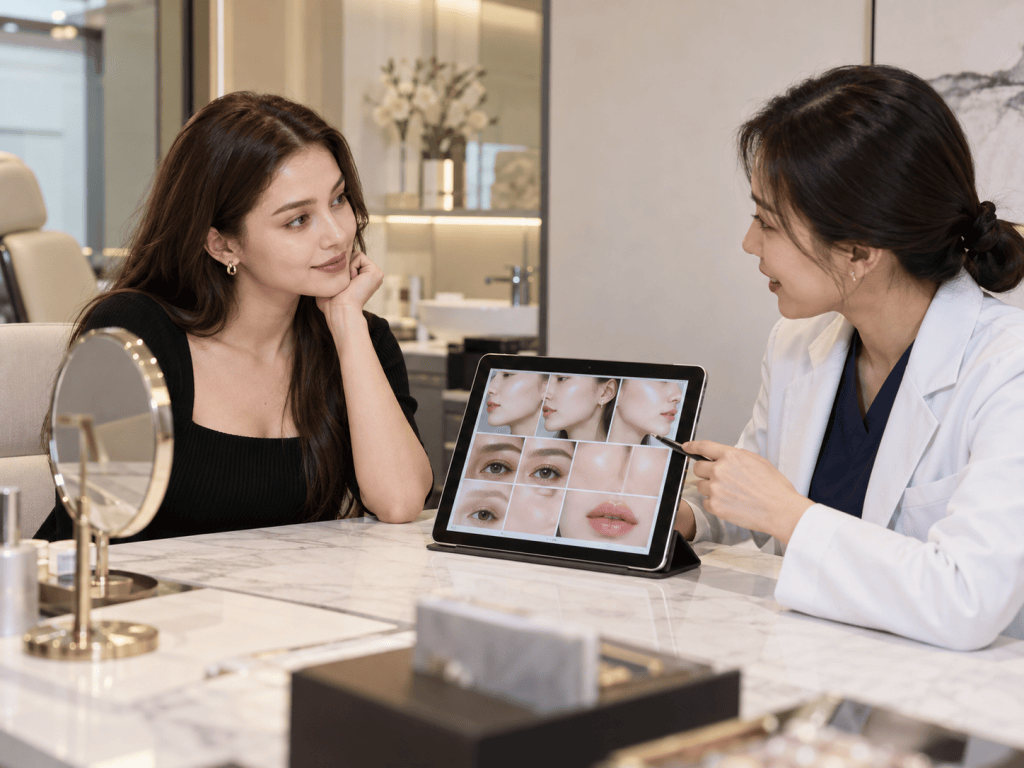
8. High-Tech Facial Planning — When Cosmetic Surgery Meets Digital Technology
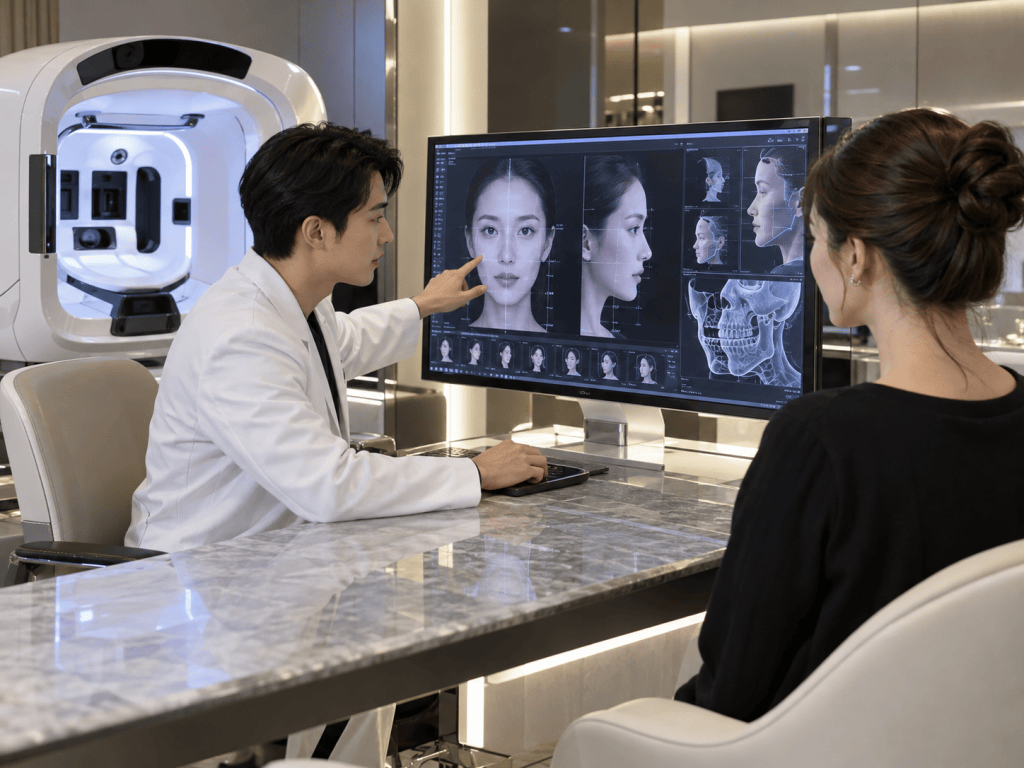
The big surprise: Some Korean aesthetic consultations look more like a digital design studio than a traditional doctor’s office.
Modern aesthetic planning may involve digital photography, imaging, anatomical measurements, and simulation tools.
These technologies can support communication between doctors and patients.
Four Distinctive Characteristics
1. Three-dimensional facial imaging
Some clinics use 3D technology to examine facial shape and proportions.
2. CT-based skeletal assessment
CT imaging may be appropriate for selected facial bone procedures.
3. Standardized photographic analysis
Consistent photography can help document treatment planning and subsequent changes.
4. Digital consultation tools
Some providers use simulation and visualization systems to discuss possible aesthetic changes.
Examples and Estimated Costs
| Associated Procedure | KRW | USD |
|---|---|---|
| Rhinoplasty | ₩3,500,000–8,000,000 | $2,600–5,944 |
| Facial bone contouring | ₩9,000,000–18,000,000 | $6,686–13,373 |
| Facial fillers | ₩250,000–900,000 | $186–669 |
Important: These figures represent associated treatment costs, not standalone imaging fees. Imaging may be included or billed separately, and CT scans should only be used when clinically justified.
What International Visitors Should Know
Digital simulations cannot guarantee surgical outcomes. Real healing involves biological factors that software cannot predict perfectly.
The fascinating question: How far can digital technology improve the communication between a cosmetic surgeon and a patient?
9. Fast-Moving K-Beauty Trends — How Culture and Medicine Influence Each Other
The big surprise: Korean beauty trends can evolve quickly, sometimes influencing the way consumers discuss medical procedures.
Korean entertainment, social media, fashion, and skincare culture all help shape discussions about personal appearance.
Aesthetic clinics may respond to consumer interest by expanding treatment menus or emphasizing different cosmetic goals.
Four Distinctive Characteristics
1. Influence of Korean popular culture
K-dramas, celebrities, and beauty influencers have helped spread awareness of Korean aesthetic trends internationally.
2. New treatment terminology
Terms such as V-line, glass skin, and skin boosters are recognizable in many beauty discussions.
3. Growing interest in individualized results
Not every patient wants the same appearance. Many seek treatment tailored to their features and preferences.
4. Broad variety of aesthetic services
Patients may encounter surgical and nonsurgical options within Korea’s wider medical aesthetics ecosystem.
Examples and Estimated Costs
| Treatment | KRW | USD |
|---|---|---|
| Jawline Botox | ₩50,000–350,000 | $37–260 |
| Skin boosters | ₩150,000–700,000 | $111–520 |
| Facial fillers | ₩250,000–900,000 | $186–669 |
What International Visitors Should Know
A treatment becoming fashionable is not evidence that it is safe or appropriate for everyone.
Marketing terms such as “celebrity treatment” or “trending in Gangnam” should not replace a proper medical assessment.
The fascinating question: Why do some Korean beauty trends become recognizable around the world?
10. Beauty as Self-Care — The Korean Connection Between Skincare, Confidence, and Lifestyle
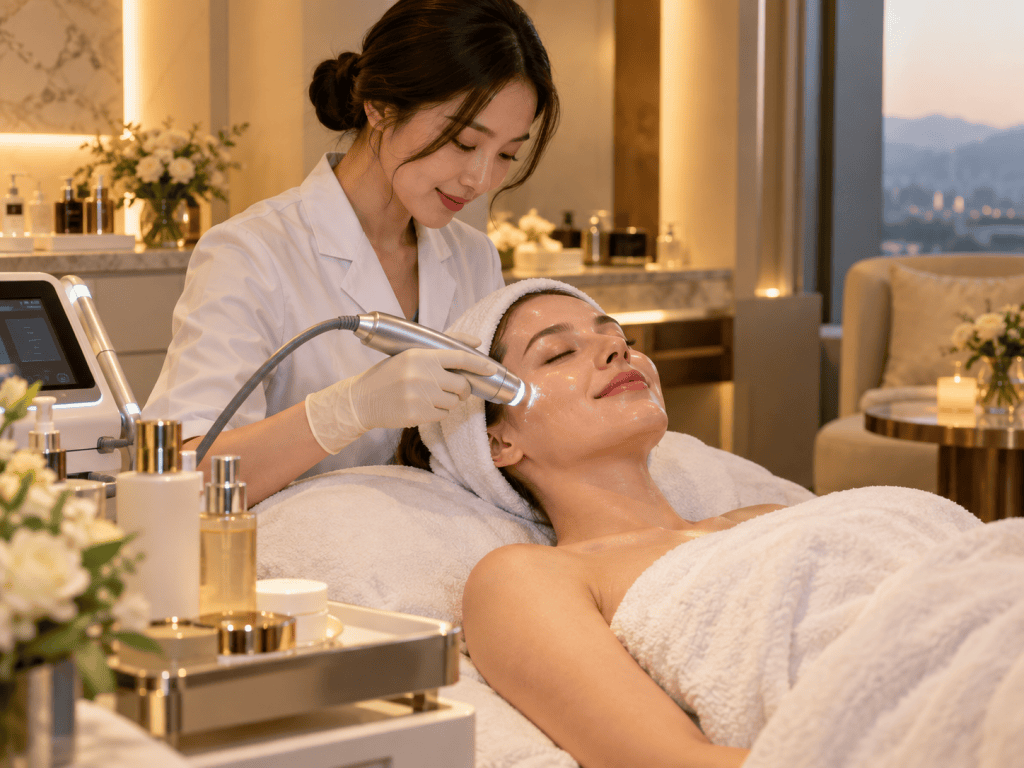
The big surprise: In Korea, aesthetic care is often discussed alongside daily grooming, wellness, and personal presentation.
Korean beauty culture includes extensive interest in skincare routines, sunscreen, cosmetic products, dermatology, and appearance-related services.
For some consumers, medical aesthetic treatments form one part of a broader personal care routine.
However, attitudes differ widely between individuals and generations.
Four Distinctive Characteristics
1. Preventive skincare habits
Sun protection, moisturizing, and skin-barrier care are commonly emphasized in Korean skincare discussions.
2. Interest in ongoing maintenance
Some people prefer periodic professional skin assessments rather than waiting until they have a particular aesthetic concern.
3. Connections with wellness and lifestyle
Sleep, stress, nutrition, and environmental exposure can influence the appearance and health of the skin.
4. Greater choice in personal presentation
Aesthetic medicine offers possibilities, but choosing no treatment is equally valid.
Examples and Estimated Costs
| Service | KRW | USD |
|---|---|---|
| Basic professional facial care | ₩50,000–200,000 | $37–149 |
| Selected laser treatment | ₩80,000–400,000 | $59–297 |
| Skin booster treatment | ₩150,000–700,000 | $111–520 |
What International Visitors Should Know
Cosmetic medical procedures are not medically necessary for everyone. Good self-care does not require aesthetic surgery or injections.
The fascinating question: Is the most distinctive aspect of Korean beauty the procedures—or the wider culture of caring for personal appearance?
The Korean Beauty Experience: Comparing All 10 Characteristics
| No. | Distinctive Feature | What Makes It Interesting |
|---|---|---|
| 1 | Invisible Makeover | Subtle, natural-looking refinement |
| 2 | Facial Harmony | Considering the entire facial profile |
| 3 | V-Line Culture | Emphasis on lower-face contour |
| 4 | Specialized Eye Surgery | Multiple eyelid techniques and designs |
| 5 | Non-Surgical Innovation | Ultrasound, radiofrequency, and injectables |
| 6 | Glass Skin | Focus on skin texture and luminosity |
| 7 | Low-Downtime Care | Short appointments for selected treatments |
| 8 | Digital Facial Planning | Imaging and individualized assessment |
| 9 | Fast-Moving Beauty Trends | Influence of culture and consumer preferences |
| 10 | Beauty as Self-Care | Integration with everyday skincare and wellness |
What Should International Visitors Check Before Choosing a Korean Clinic?
Before booking a treatment, consider the following questions.
- Is the institution registered to treat international patients in Korea?
- What are the qualifications of the practitioner performing the procedure?
- What benefits and limitations can reasonably be expected?
- Are anesthesia, consultation, medication, and follow-up fees included in the quotation?
- What complications are possible, and how will they be managed?
- How long should I remain in Korea after treatment?
- Will I receive medical documentation and follow-up guidance in a language I understand?
Official information: Medical Korea — https://www.medicalkorea.or.kr/en
Final Thoughts: Korean Beauty Is More Than a Transformation
Korean aesthetic medicine is not defined by a single facial shape, surgical procedure, or beauty trend.
Its international appeal reflects an evolving combination of specialist medical services, consumer interest in skincare, sophisticated technologies, and cultural conversations about beauty.
Some patients may find value in subtle cosmetic changes. Others may prefer professional skincare, less invasive treatments, or no intervention at all.
The best choice is always one that respects personal identity, health, informed consent, and realistic expectations.
Discover Korea’s Approach to Beauty. Explore K-Medical. Celebrate Your Individuality.
Editorial Disclaimer: This article provides general information about Korean aesthetic medicine and beauty culture. The ten topics are editorial selections, not officially ranked medical specialties. Prices are indicative 2026 market ranges and vary by provider, procedure scope, products, taxes, and clinical circumstances. USD conversions use an approximate exchange rate of KRW 1,346 per USD. Medical treatment requires appropriate professional consultation.


Leave a Reply