
Top 10 Korean Plastic Surgery Procedures International Patients Should Know
The Ultimate Guide to Korean Plastic Surgery: Costs, Techniques, Recovery, and What Makes Korea Different
South Korea has become one of the world’s most recognized destinations for aesthetic medicine and cosmetic surgery. From sophisticated facial procedures to body contouring and hair restoration, Korea attracts international patients interested in personalized treatment, specialized surgeons, and modern medical facilities.
But what makes Korean plastic surgery different from procedures available elsewhere?
The answer is not simply price. Korea’s aesthetic surgery industry is known for its concentration of specialized clinics, extensive experience with facial procedures, detailed surgical planning, and growing international patient services.
However, quality varies between providers, and no country or surgical technique can guarantee a particular result.
This guide explores 10 procedures international patients may wish to research, comparing their techniques, potential advantages, prices, and recovery considerations.
2026 Korean Plastic Surgery Price Comparison
All prices are approximate and represent selected procedure types, not guaranteed clinic quotations.
Currency reference: USD 1 ≈ KRW 1,340 (October 8, 2026).
| Rank | Procedure | Cost in KRW | Approx. USD |
|---|---|---|---|
| 1 | Double Eyelid Surgery | ₩1,000,000–3,500,000 | $750–2,610 |
| 2 | Rhinoplasty | ₩3,500,000–8,000,000 | $2,610–5,970 |
| 3 | Facial Bone Contouring | ₩9,000,000–15,000,000 | $6,720–11,190 |
| 4 | Facelift Surgery | ₩7,000,000–18,000,000 | $5,220–13,430 |
| 5 | Liposuction | ₩2,000,000–8,000,000 | $1,490–5,970 |
| 6 | Breast Augmentation | ₩6,500,000–13,000,000 | $4,850–9,700 |
| 7 | Facial Fat Grafting | ₩2,500,000–5,500,000 | $1,870–4,100 |
| 8 | Tummy Tuck | ₩5,000,000–12,000,000 | $3,730–8,960 |
| 9 | Double Chin Liposuction | ₩1,500,000–4,000,000 | $1,120–2,990 |
| 10 | Hair Transplant | ₩4,000,000–12,000,000 | $2,990–8,960 |
Pricing notes: Liposuction prices depend on the number and size of treatment areas. Hair transplant estimates represent selected moderate-sized procedures, with graft counts affecting the total. Tummy tuck estimates generally reflect standard surgery, not extensive combination procedures. Taxes, anesthesia, tests, medications, and aftercare may be charged separately.
1. Double Eyelid Surgery — Customized Eye Aesthetics

Estimated Cost: ₩1,000,000–3,500,000 ($750–2,610)
Double eyelid surgery, medically known as blepharoplasty, is one of Korea’s most established cosmetic surgery specialties.
The procedure creates or adjusts an upper eyelid crease. Depending on the patient’s anatomy and goals, surgeons may use non-incisional sutures, partial incisions, or full-incision techniques.
What Makes the Korean Approach Distinctive?
1. Personalized eyelid design
Korean surgeons frequently evaluate the eyelid crease in relation to brow position, eyelid thickness, eye-opening function, and overall facial proportions.
The goal can be subtle enhancement rather than an exaggerated crease.
2. Multiple surgical techniques
Clinics commonly offer both non-incisional and incisional approaches. This allows the surgeon to select a method based on skin elasticity, fat distribution, and existing eyelid anatomy.
3. Attention to facial expression
A successful procedure should consider how the eyes look while smiling, blinking, and expressing emotion—not only when the patient is photographed with a neutral expression.
4. Functional assessment
Some patients also require evaluation for ptosis, a condition involving drooping of the upper eyelid.
Suitable Candidates
Adults who wish to alter their eyelid crease or address certain forms of upper-eyelid asymmetry may consider a consultation.
Recovery: Approximately 1–2 weeks for initial visible healing. Swelling and scar maturation can take several months.
Important: Potential complications include asymmetry, dry eyes, visible scarring, difficulty closing the eyelids, and dissatisfaction with the final crease.
2. Rhinoplasty — Precision Nose Reshaping
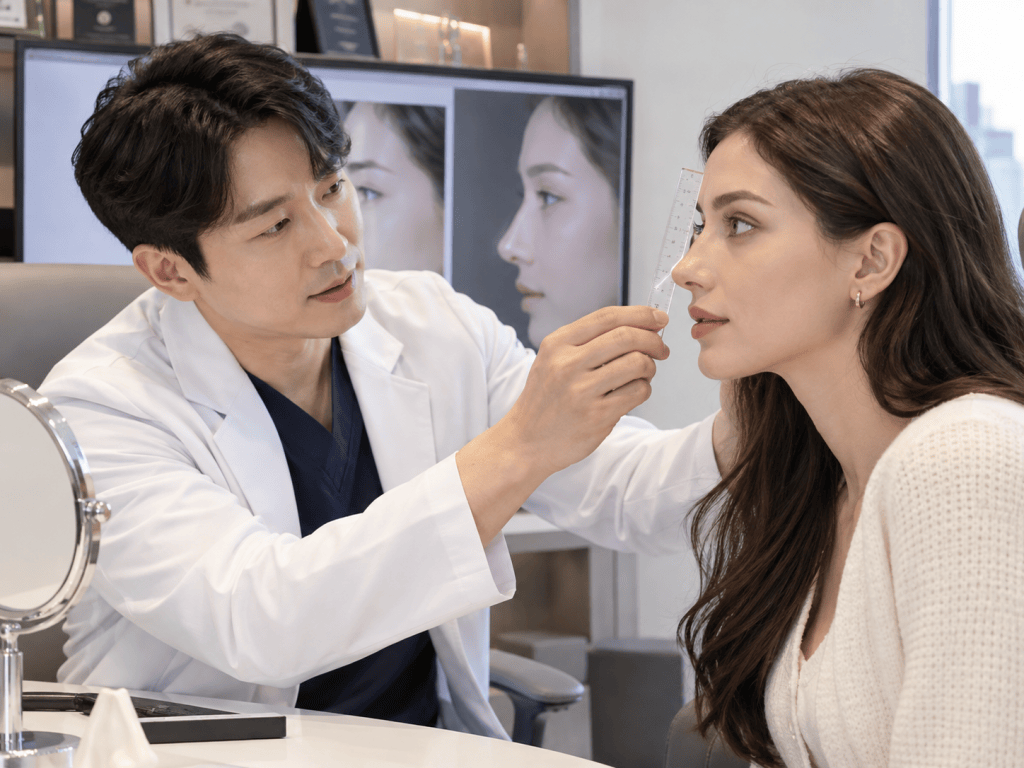
Estimated Cost: ₩3,500,000–8,000,000 ($2,610–5,970)
Rhinoplasty is a procedure that changes the structure or appearance of the nose. It may involve the nasal bridge, tip, nostrils, or internal support structures.
What Makes Korean Rhinoplasty Distinctive?
1. Detailed nasal-tip refinement
Korean facial surgery practices often place particular emphasis on the relationship between the nasal bridge and the tip.
A surgeon may adjust tip projection, rotation, or definition while maintaining overall facial balance.
2. Individualized structural planning
Nasal anatomy differs widely between patients. Surgical planning should consider skin thickness, cartilage strength, breathing function, and previous surgery.
3. Different grafting approaches
Depending on the patient, surgeons may use septal cartilage, ear cartilage, rib cartilage, or other appropriate materials.
Each option has advantages, limitations, and risks.
4. Natural-looking proportions
Some clinics emphasize results that complement the patient’s existing facial characteristics rather than applying a standardized nose shape.
What International Patients Should Ask
- Will the operation affect my breathing?
- Are implants or cartilage grafts necessary?
- What materials will be used?
- How frequently does the surgeon perform revision rhinoplasty?
Recovery: Often 1–2 weeks before returning to many routine activities; final refinement may continue for 6–12 months or longer.
Important: Risks include infection, asymmetry, breathing problems, graft complications, and possible revision surgery.
3. Facial Bone Contouring — Jawline and Cheekbone Reshaping
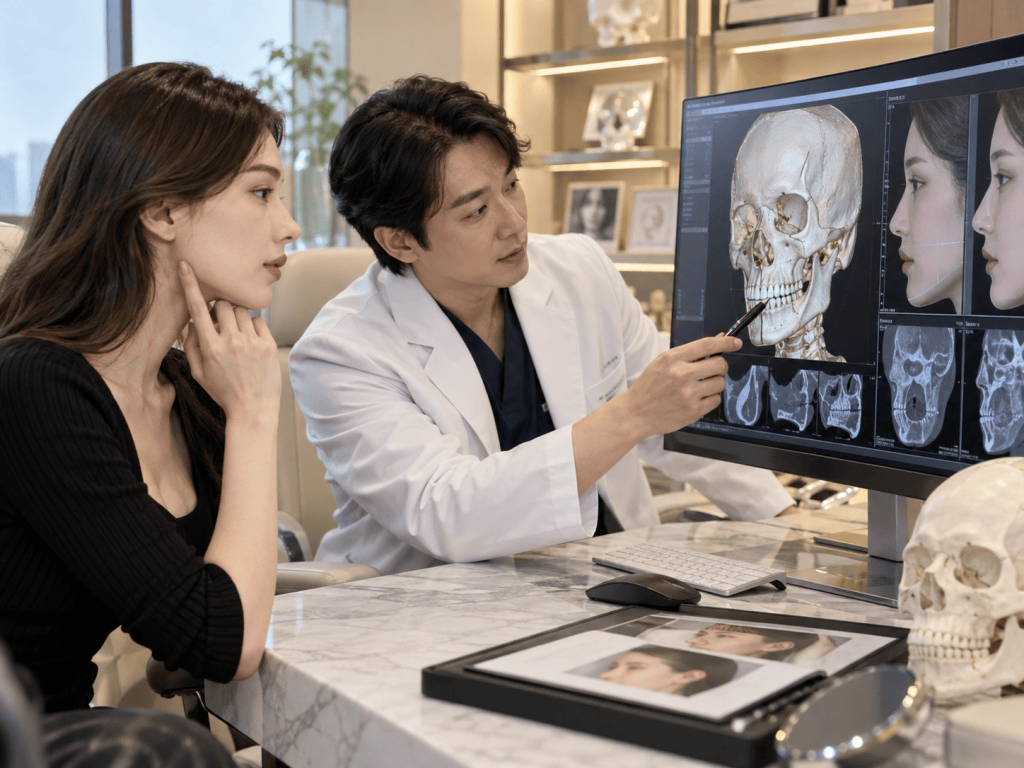
Estimated Cost: ₩9,000,000–15,000,000 ($6,720–11,190)
Facial bone contouring may involve the jawbone, chin, or cheekbones to alter the structural proportions of the face.
Procedures can include mandibular angle reduction, genioplasty, and zygomatic reduction.
What Makes Korea Distinctive?
1. Concentration of specialized facial surgery practices
Korea has clinics and surgeons with dedicated experience in facial skeletal contouring.
2. CT-based planning
Three-dimensional CT imaging can help surgeons evaluate the jawbone, facial asymmetry, nerve locations, and bone structure before an operation.
3. Full-face proportional analysis
Planning can consider the relationship between the forehead, cheekbones, jawline, and chin rather than focusing on one isolated feature.
4. Combined structural assessment
An appropriate consultation examines whether a patient’s concern originates from bone structure, soft tissue, muscle, or fat.
Not every person seeking a slimmer-looking face needs bone surgery.
Who Might Consider It?
Adults with particular structural facial concerns may seek a specialist evaluation.
Recovery: Significant early swelling may last several weeks. Bone healing and final contour changes can take months.
Important: This is major surgery. Risks can include bleeding, infection, nerve injury, altered sensation, facial asymmetry, and problems with bone healing. Patients should confirm the surgeon’s qualifications, hospital resources, and emergency arrangements.
4. Facelift Surgery — Facial Rejuvenation
Estimated Cost: ₩7,000,000–18,000,000 ($5,220–13,430)

Facelift surgery addresses facial sagging and some age-related structural changes, particularly around the cheeks, jawline, and lower face.
What Makes Korean Facial Rejuvenation Distinctive?
1. Treatment-specific specialization
Korean aesthetic clinics offer different approaches, ranging from limited lifts to more extensive surgical procedures.
2. SMAS-based surgical techniques
Some specialists use techniques that reposition the superficial musculoaponeurotic system (SMAS), an important supporting layer of facial tissue.
3. Integration with skin-focused care
Some providers combine surgical planning with separate dermatological assessments for pigmentation, texture, or skin quality.
However, combining treatments is not necessarily appropriate for every patient.
4. Individualized aging assessment
A thoughtful consultation considers skin laxity, facial fat distribution, bone structure, and the patient’s goals.
Who Might Consider It?
Adults experiencing facial or neck skin laxity who want longer-lasting structural correction than nonsurgical treatments generally provide.
Recovery: Around 2–4 weeks for early social recovery, with residual swelling and scar maturation taking longer.
Important: Risks include hematoma, nerve injury, scarring, infection, and anesthesia-related complications.
5. Liposuction — Personalized Body Contouring
Estimated Cost: ₩2,000,000–8,000,000 ($1,490–5,970)

Liposuction removes selected subcutaneous fat deposits to reshape areas of the body. It is not a treatment for obesity or a substitute for sustainable weight management.
Common areas include the abdomen, waist, thighs, upper arms, and back.
What Makes Korean Body Contouring Distinctive?
1. Targeted treatment planning
Instead of removing the greatest possible quantity of fat, appropriate planning focuses on body proportions, skin elasticity, and safe removal volumes.
2. Various surgical technologies
Depending on the clinic, options may include traditional suction-assisted liposuction or ultrasound-assisted techniques.
Advanced equipment does not automatically mean better results.
3. Attention to body symmetry
Surgeons may evaluate the relationship between the waist, hips, and thighs to plan a balanced silhouette.
4. Postoperative management
Some international-patient clinics coordinate compression garments, wound checks, and follow-up appointments.
Suitable Candidates
Adults near a stable weight who have localized fat deposits and realistic expectations.
Recovery: Initial recovery may take 1–2 weeks. Swelling and contour changes can continue for several months.
Important: Risks include contour irregularities, fluid collections, infection, blood clots, and potentially serious complications with large-volume procedures.
6. Breast Augmentation — Shape, Volume, and Proportion
Estimated Cost: ₩6,500,000–13,000,000 ($4,850–9,700)

Breast augmentation changes breast volume and shape, most commonly through implants or, in selected cases, fat transfer.
What Makes the Korean Approach Distinctive?
1. Individualized size planning
Some Korean providers emphasize proportional implant selection based on chest width, existing breast tissue, body frame, and personal preferences.
2. Preoperative imaging and measurements
Measurements and, where available, imaging or simulation may help patients understand possible outcomes.
Simulations are illustrations, not guarantees.
3. Implant selection
Surgeons consider implant size, shape, placement, and approved materials.
4. Scar and incision planning
Incisions may be placed in different anatomical locations depending on the technique and patient requirements.
Suitable Candidates
Adults seeking additional breast volume or correction of selected breast asymmetries.
Recovery: Often several weeks before a return to strenuous activity, with healing continuing over months.
Important: Breast implants are not lifetime devices. Patients should discuss capsular contracture, rupture, implant-associated complications, potential future operations, and recommended surveillance.
7. Facial Fat Grafting — Volume Restoration Using Your Own Fat
Estimated Cost: ₩2,500,000–5,500,000 ($1,870–4,100)

Facial fat grafting transfers a patient’s own fat from one area of the body to selected facial regions.
It may be used to address volume loss in the cheeks, temples, or other appropriate areas.
What Makes Korean Facial Fat Grafting Distinctive?
1. Emphasis on facial volume distribution
Rather than simply filling one wrinkle, specialists may assess the relationship between multiple facial regions.
2. Small-volume placement techniques
Surgeons can place processed fat in small quantities across several tissue levels when medically appropriate.
3. Autologous tissue
Because the material comes from the patient’s own body, it is an alternative to manufactured fillers, although it introduces donor-site risks.
4. Natural movement considerations
Planning should account for expression, asymmetry, and expected changes as swelling resolves.
Suitable Candidates
Adults with suitable donor fat who want volume restoration and understand that some transferred fat may not survive.
Recovery: Approximately 1–2 weeks for early swelling and bruising, with final volume assessment taking months.
Important: Results can be unpredictable, and complications include fat resorption, lumps, asymmetry, infection, and rare but serious vascular injury.
8. Tummy Tuck — Abdominal Reshaping
Estimated Cost: ₩5,000,000–12,000,000 ($3,730–8,960)

A tummy tuck, or abdominoplasty, removes excess abdominal skin and may repair separated abdominal muscles.
It is particularly relevant to some patients following pregnancy or significant weight loss.
What Makes Korean Abdominal Surgery Distinctive?
1. Personalized surgical scope
Surgeons may recommend a mini tummy tuck, full abdominoplasty, or another approach based on skin excess and muscle condition.
2. Integrated body-contour assessment
The relationship between abdominal skin, subcutaneous fat, waist shape, and muscle separation can be evaluated together.
3. Scar positioning considerations
Careful incision planning may allow the scar to be positioned where clothing can conceal it, although a permanent scar is unavoidable.
4. Postoperative recovery planning
Some medical centers provide coordinated wound care, compression guidance, and follow-up assessments.
Suitable Candidates
Adults with significant abdominal skin laxity or medically assessed abdominal wall separation, particularly after weight stabilization.
Recovery: Commonly 4–6 weeks or more before heavier physical activity, depending on the procedure.
Important: Risks include wound-healing problems, infection, blood clots, seroma, tissue damage, and permanent scarring.
9. Double Chin Liposuction — Defining the Lower Facial Contour
Estimated Cost: ₩1,500,000–4,000,000 ($1,120–2,990)
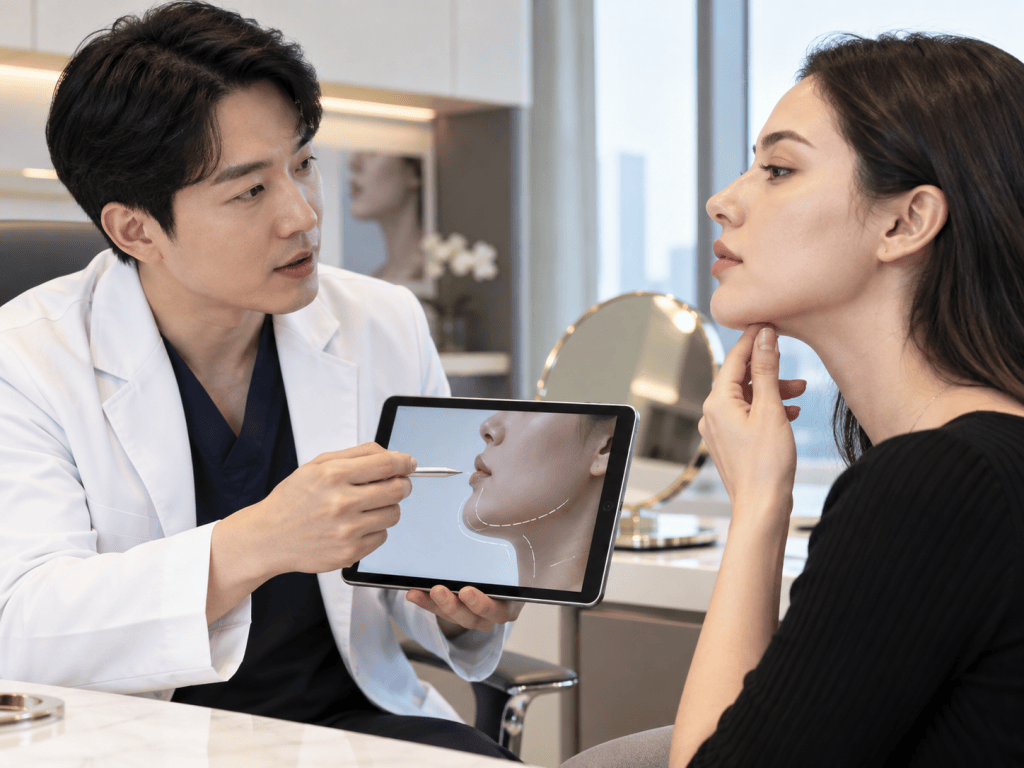
Submental liposuction targets localized fat beneath the chin.
A double chin can result from fat distribution, skin laxity, neck anatomy, or skeletal proportions. Correct diagnosis is essential.
What Makes Korean Lower-Face Contouring Distinctive?
1. Facial profile analysis
Some surgeons assess the relationship between the chin, jawline, and neck before recommending treatment.
2. Targeted fat removal
For suitable candidates, small-area liposuction can improve submental contour without requiring major facial bone surgery.
3. Distinguishing fat from skin laxity
A patient with substantial loose skin may need a different treatment, such as a neck lift, rather than liposuction alone.
4. Tailored recovery care
Compression support and scheduled follow-ups can help monitor early healing.
Suitable Candidates
Adults with localized fat beneath the chin and adequate skin elasticity.
Recovery: Approximately 1–2 weeks for early healing, though swelling may persist longer.
Important: Risks include asymmetry, contour irregularity, numbness, loose skin, and rare nerve injury.
10. Hair Transplantation — Hairline Design and Hair Restoration
Estimated Cost: ₩4,000,000–12,000,000 ($2,990–8,960)
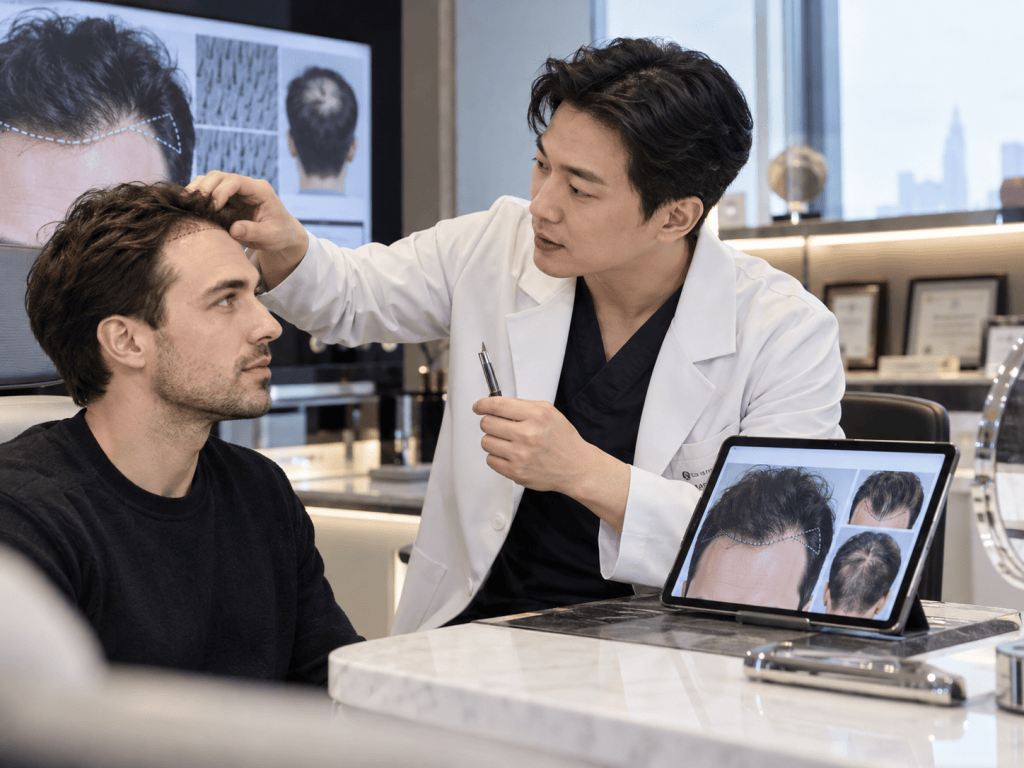
Hair transplantation relocates healthy hair follicles from a donor area to areas affected by hair loss.
Two established techniques are follicular unit extraction (FUE) and follicular unit transplantation (FUT).
What Makes Korean Hair Restoration Distinctive?
1. Hairline design
Specialists may consider facial proportions, age, natural hair direction, and expected future hair loss when designing a hairline.
2. Follicular unit techniques
FUE and FUT allow surgeons to harvest and transplant follicular units using different methods.
3. Density and direction planning
The angle, direction, distribution, and survival of transplanted grafts are important to the final appearance.
4. Long-term hair loss management
Responsible specialists assess whether ongoing hair loss could affect the appearance of the transplanted area in future years.
Suitable Candidates
Adults with a stable or appropriately evaluated pattern of hair loss and sufficient donor hair.
Recovery: Early healing typically takes 1–2 weeks. Visible growth generally develops over several months, with fuller results often assessed around 9–12 months or later.
Important: Risks include infection, scarring, poor graft survival, unnatural hairline design, and continued loss of non-transplanted hair.
Why Choose Korea? Six Characteristics of Korean Aesthetic Medicine
1. Specialized Medical Expertise
Korea has a substantial network of aesthetic medicine and plastic surgery practices, including surgeons who concentrate on particular procedures.
Specialization can be valuable, but patients should verify the operating surgeon’s qualifications, experience, and professional registration.
2. Detailed Facial and Body Planning
Some clinics use standardized photography, 3D imaging, CT scans, and anatomical measurements for selected operations.
These tools may support planning, but they cannot eliminate surgical risks or guarantee outcomes.
3. Personalized Aesthetic Preferences
A defining theme in many Korean aesthetic practices is the emphasis on harmonious proportions and individualized results.
There is no single ideal appearance. Good surgical planning should respect the patient’s natural features, cultural preferences, and personal choices.
4. International Patient Services
Selected hospitals offer multilingual consultations, translation services, appointment coordination, travel assistance, and postoperative support.
Availability varies by provider.
5. A Wide Range of Surgical and Nonsurgical Options
Korea’s aesthetic healthcare sector includes facial surgery, body contouring, hair restoration, laser dermatology, and nonsurgical rejuvenation.
Having multiple treatment options can help patients compare less invasive approaches with surgery.
6. Competitive Pricing in Selected Procedures
Some Korean procedures may cost less than comparable private treatments in certain other countries.
However, actual value depends on medical quality, surgical complexity, anesthesia, aftercare, travel costs, and the possibility of future corrective treatment.
Lower cost should never take priority over patient safety.
Essential Information for International Patients
How to Compare Medical Costs
Before booking a consultation or paying a deposit, ask for a written quotation.
| Expense | Questions to Ask |
|---|---|
| Surgery | Is the full surgeon’s fee included? |
| Anesthesia | Is the anesthesiologist’s fee included? |
| Medical tests | Are blood tests, imaging, and assessments included? |
| Facility | Are operating room and hospitalization fees included? |
| Medication | Are prescriptions and postoperative supplies included? |
| Aftercare | How many follow-up visits are included? |
| Travel | How many days must I remain in Korea? |
| Complications | What happens if emergency care or revision surgery is needed? |
Seven Safety Checks Before Surgery
- Verify the medical institution. Check whether the clinic is registered to treat international patients in Korea.
- Confirm the surgeon’s credentials. Identify the surgeon who will personally perform the procedure and verify relevant specialist qualifications.
- Ask about anesthesia safety. Confirm who administers and monitors anesthesia and what emergency resources are available.
- Request realistic expectations. Review the potential benefits, limitations, scars, and complications.
- Obtain a complete written quotation. Clarify additional costs and cancellation or refund policies.
- Plan sufficient recovery time. Follow medical advice on wound care, exercise, follow-up appointments, and when it is safe to fly.
- Arrange postoperative continuity. Confirm how complications will be handled after returning home, including access to medical records and local follow-up care.
Frequently Asked Questions
Q1. Is plastic surgery in Korea always cheaper?
No. Certain procedures may be competitively priced, but total expenses depend on the clinic, case complexity, travel, accommodation, and follow-up care.
Q2. Can international patients arrange consultations in English?
Yes, selected Korean clinics and hospitals offer English-language services. Patients should confirm whether medical interpretation is available during the consultation, consent process, and postoperative visits.
Q3. Can several procedures be performed during one trip?
Sometimes, but combining procedures increases the complexity of medical planning and may increase the risks of prolonged anesthesia, blood clots, and postoperative complications. The decision requires an individual medical assessment.
Q4. How long should I stay in Korea?
The appropriate stay varies substantially. Some relatively limited procedures require shorter follow-up schedules, while major facial or body surgery may require multiple weeks of observation and recovery. Patients should not assume that being able to walk or leave the clinic means it is safe to take a long-haul flight.
Q5. Are Korean plastic surgery results guaranteed?
No. Every surgical procedure carries risks, and outcomes depend on anatomy, surgical technique, healing, and other individual factors.
Final Thoughts: Discovering K-Beauty Through Medical Innovation
Korean plastic surgery is much more than an international beauty trend.
Its appeal includes specialized clinical practices, detailed treatment planning, a wide selection of procedures, and services designed for patients traveling from overseas.
From double eyelid surgery and rhinoplasty to body contouring and hair restoration, international patients have many options to explore.
Yet the most important question is not which procedure is most fashionable.
It is which treatment, if any, is medically appropriate for you—and who is qualified to perform it safely.
Successful medical travel begins with informed choices, realistic expectations, and a commitment to patient safety.
Discover Korea. Explore K-Medical. Put Your Health First.
Sources and Further Information
- Medical Korea — Registered Hospitals: https://www.medicalkorea.or.kr/en/registeredhospitals
- Medical Korea — Accredited Hospitals: https://www.medicalkorea.or.kr/en/kahfAccreditedHospitals
- Medical Korea — International Patient Registration System: https://www.medicalkorea.or.kr/en/registeredsystem
- Korean Plastic Surgery Costs in 2026: https://guide.kmedtour.com/korean-plastic-surgery-cost-guide/
- Korean Procedure Price Reference: https://koreacareguide.com/costs/
- Abdominoplasty Price Reference: https://bestplasticsurgeryinkorea.com/costs/abdominoplasty-cost-korea/
- Hair Transplant Price Reference: https://bestplasticsurgeryinkorea.com/costs/hair-transplant-cost-korea/
Editorial note: This Top 10 is an informational selection, not an official patient-volume ranking. Prices are illustrative 2026 market ranges and may differ from actual quotations. This article does not constitute medical advice, professional endorsement, or a guarantee of surgical outcomes.


Leave a Reply