
The Ultimate 2026 Budget Travel Guide to South Korea: Affordable Food, Accommodation, Transportation, Free Attractions, and Local Secrets


4
Think traveling to South Korea is expensive? Think again!
Imagine exploring beautiful royal palaces, tasting authentic Korean cuisine, enjoying spectacular city views, discovering hidden neighborhoods, and experiencing the world of K-culture—all without spending a fortune.
South Korea offers excellent public transportation, affordable local restaurants, inexpensive accommodation, and numerous attractions that are completely free.
The secret isn’t simply spending less. It’s knowing how to travel smarter.
Whether you’re a student, solo traveler, backpacker, couple, or family, this guide will show you 10 practical ways to save money while enjoying more of what makes Korea extraordinary.
Quick Guide: 10 Money-Saving Travel Secrets
All USD conversions use an illustrative planning rate of ₩1,400 = US$1. Actual exchange rates and prices vary.
| No. | Budget travel strategy | Estimated costs or savings |
|---|---|---|
| 1 | Find cheaper flights and travel dates | Compare off-peak dates |
| 2 | Use Seoul’s unlimited transit pass | From ₩5,000 ($3.57) |
| 3 | Stay in affordable accommodation | ₩25,000–70,000 per night |
| 4 | Eat where Koreans eat | ₩5,000–10,000 per meal |
| 5 | Explore free attractions | Free or low-cost |
| 6 | Compare tourist passes and discounts | Save on selected paid attractions |
| 7 | Plan sightseeing by neighborhood | Reduce transport costs |
| 8 | Save on eSIMs, payments, and currency exchange | Compare total fees |
| 9 | Enjoy free festivals and cultural activities | Free to around ₩10,000 |
| 10 | Follow a daily budget | From around ₩54,000 ($38.57) |
1. Save on Flights by Choosing the Right Travel Dates

Your first opportunity to save money comes before you even arrive in Korea.
Airfare can vary significantly depending on your departure country, travel dates, airline, and baggage requirements.
How to save
- Compare fares across several departure dates, including weekdays.
- Check prices outside major holiday periods and popular cherry blossom dates.
- Compare low-cost carriers with full-service airlines.
- Include checked baggage, seat selection, and other fees in your calculations.
- Consider both Incheon and other suitable Korean airports, depending on your itinerary.
Smart travel tip: A flight that looks cheaper may become more expensive once baggage and airport transfer costs are included.
Instead of choosing a flight based only on the ticket price, compare the total cost of reaching your accommodation.
2. Travel Around Seoul With an Affordable Transportation Pass

One of the best things about traveling in Seoul is its extensive public transportation network.
With subways and buses connecting major tourist districts, you can explore much of the city without relying on expensive taxis.
Discover the Climate Card short-term pass
Seoul offers short-term versions of the Climate Card (기후동행카드), which can be useful for visitors making multiple journeys within the eligible transit network.
| Pass duration | KRW | Approx. USD |
|---|---|---|
| 1 day | ₩5,000 | $3.57 |
| 2 days | ₩8,000 | $5.71 |
| 3 days | ₩10,000 | $7.14 |
| 5 days | ₩15,000 | $10.71 |
| 7 days | ₩20,000 | $14.29 |
| Physical card purchase | ₩3,000 | $2.14 |
These are the published short-term pass prices. Pass coverage is limited to eligible routes; services such as the GTX, Shinbundang Line, and airport limousine buses are not included.
When does it save money?
If you plan to travel frequently on eligible Seoul subways and buses, a short-term pass may reduce your costs.
If you only make one or two journeys in a day, an ordinary transportation card may be cheaper.
Smart travel tip: Check both your expected journeys and the pass’s eligible route network before purchasing.
3. Skip Expensive Hotels and Discover Korea’s Affordable Guesthouses

You don’t need to stay in a luxury hotel to enjoy a comfortable trip to South Korea.
The country offers a wide variety of hostels, guesthouses, budget hotels, and private rooms.
Many are conveniently located near subway stations, restaurants, cafés, and sightseeing areas.
Estimated accommodation costs
| Accommodation type | KRW per night | Approx. USD |
|---|---|---|
| Hostel dormitory bed | ₩25,000–45,000 | $17.86–32.14 |
| Guesthouse private room | ₩45,000–80,000 | $32.14–57.14 |
| Budget business hotel room | ₩65,000–120,000 | $46.43–85.71 |
| Small-city accommodation | ₩35,000–80,000 | $25.00–57.14 |
Prices are indicative and may increase considerably during holidays, festivals, and peak travel seasons. Private-room prices are generally per room, while dormitory prices are per person.
Good areas to consider in Seoul
Hongdae and Sinchon are convenient for students, solo travelers, and nightlife. Jongno offers access to historical attractions, while areas near major subway stations can make sightseeing easier.
Smart travel tip: A slightly more expensive room near public transportation may save money and time compared with a cheaper hotel far outside the city center.
4. Eat Like a Local and Enjoy Delicious Korean Meals for Less


8
Some of Korea’s most memorable meals are also among its most affordable.
Forget the idea that you need to eat at expensive Korean barbecue restaurants every day.
Local restaurants, traditional markets, and casual bunsikjip (분식집), or Korean snack restaurants, serve delicious everyday food at reasonable prices.
Budget-friendly Korean foods
| Korean food | KRW | Approx. USD |
|---|---|---|
| Gimbap — seaweed rice roll | ₩3,500–5,500 | $2.50–3.93 |
| Janchi guksu — noodle soup | ₩5,000–8,000 | $3.57–5.71 |
| Bibimbap — mixed rice bowl | ₩8,000–12,000 | $5.71–8.57 |
| Kimchi jjigae — kimchi stew | ₩8,000–11,000 | $5.71–7.86 |
| Gukbap — rice and soup | ₩9,000–12,000 | $6.43–8.57 |
| Traditional market snack | ₩2,000–6,000 | $1.43–4.29 |
Where to find affordable food
Look for restaurants near universities, office districts, residential neighborhoods, and local markets.
Some Korean restaurants provide several complimentary side dishes known as banchan. Depending on the establishment, additional servings may also be free.
Smart travel tip: A practical daily food budget of approximately ₩20,000–30,000 ($14.29–21.43) can cover three modest meals if you choose local eateries carefully.
5. Discover Korea’s Most Beautiful Attractions for Free


7
One of Korea’s biggest travel advantages is the number of memorable experiences that don’t require an admission ticket.
From historic walking paths to beautiful beaches and modern city parks, free sightseeing is easy to incorporate into your itinerary.
Six excellent free attractions

Cheonggyecheon Stream — Seoul
Enjoy a peaceful walk along a restored urban stream surrounded by the energy of downtown Seoul. Admission is free.

Naksan Park — Seoul
Follow historic fortress walls and enjoy beautiful views of the city, especially around sunset. Admission is free.

Yeouido Hangang Park — Seoul
Relax beside the Han River, watch cyclists, enjoy a picnic, and admire the skyline. Public park access is free.

Bukchon Hanok Village — Seoul
Discover traditional Korean houses in a historic residential neighborhood. Public street access is free, but visitor-hour restrictions apply in designated areas.

Gwangalli Beach — Busan
Enjoy the beach and illuminated bridge. Scheduled drone shows offer an additional free nighttime experience.

Songdo Central Park — Incheon
Take a free waterfront walk through an impressive modern cityscape. Boat rides and other optional activities cost extra.
Bonus tip: Visitors who wear qualifying traditional Korean hanbok can receive free general admission to selected royal palaces. Hanbok rental itself usually costs extra.
6. Compare Tourist Passes Before Buying Individual Tickets

If your itinerary includes multiple paid attractions, a tourist pass may offer value.
For example, the Discover Seoul Pass offers different packages covering participating attractions and benefits.
Example published pass options
| Pass type | KRW | Approx. USD |
|---|---|---|
| Pick 3 Basic | ₩49,000 | $35.00 |
| Pick 3 Theme Park | ₩70,000 | $50.00 |
| 72-hour pass | ₩90,000 | $64.29 |
| 120-hour pass | ₩130,000 | $92.86 |
The attractions included and the terms of use differ between passes.
How to decide
Calculate the regular ticket prices for the attractions you genuinely want to visit. Then compare that total with the pass price.
For example, a pass costing ₩90,000 is not a bargain if the attractions you actually plan to visit would cost only ₩60,000.
Smart travel tip: Prioritize free attractions first, then purchase a tourist pass only when the paid experiences justify the price.
Official website: Discover Seoul Pass.
7. Visit Nearby Attractions Together to Save Time and Transportation Costs

Seoul is a large metropolitan city, and unnecessary transportation can consume both time and money.
One common mistake is traveling back and forth across the city several times a day.
Instead, group nearby attractions into one sightseeing route.
Sample four-day Seoul itinerary
| Day | Area | Recommended experiences |
|---|---|---|
| Day 1 | Jongno and Bukchon | Royal palaces, Insadong, hanok streets |
| Day 2 | Hongdae and Mangwon | Street culture, local market food, Han River |
| Day 3 | Gangnam and Jamsil | COEX, Starfield Library, Seokchon Lake |
| Day 4 | Dongdaemun and Seongsu | DDP, shopping, creative cafés |
You can apply the same idea in other Korean cities. In Busan, visit Haeundae and Gwangalli on the same day. In Gyeongju, combine Daereungwon, Cheomseongdae, and Hwangnidan-gil.
Smart travel tip: Use Naver Map or KakaoMap to compare public transportation routes, walking distances, and transfer times before leaving your accommodation.
8. Save Money on Mobile Data, Currency Exchange, and Payments

Your smartphone is one of your most valuable travel tools in Korea.
It helps you navigate public transportation, translate Korean signs, compare restaurants, and plan activities.
But mobile data and overseas payment fees can add unnecessary costs.
Practical money-saving ideas
| Expense | Budget strategy | Indicative cost |
|---|---|---|
| Mobile data | Compare travel eSIM packages | ₩5,000–20,000 for 5 days |
| Currency exchange | Compare fees and effective exchange rates | Provider-dependent |
| Card payments | Use a card with low foreign-transaction fees | Card-dependent |
| Maps | Naver Map or KakaoMap | Free app |
| Translation | Papago or similar translation app | Free basic features |
| Travel information | Official tourism websites | Free |
Important tips
Check whether your phone supports eSIM before purchasing one. Compare data limits, validity periods, and any restrictions on speed.
Although card payments are common throughout Korea, carrying a little local currency is still useful for markets, small vendors, and certain unmanned kiosks.
Smart travel tip: Avoid unnecessary currency conversions at payment terminals when your card offers a better exchange rate for transactions in Korean won.
9. Enjoy Free Festivals, Street Performances, and Cultural Events

![[CULTURE] Pourquoi le “busking”, l’art de se produire dans la rue, est-il si populaire en Corée ? – Ckjpopnews](https://images.openai.com/static-rsc-4/3s-HipROHj8XuJlDG8If8beksOwrDRAjsBbDN9L1bu26gyNFF7gDjB13gyP_ZgJNyNw8UysYDvoGmimQhSXcgPH9wY_z-oxvRsHuVjNfHjhGMEI_bSQUPGPOSkDERwRoVDqKv80QNIueX8ZaosuvUA7xzE60k-QpfXgDVKhR0tk?purpose=inline)

10
Some of Korea’s most memorable cultural experiences cost absolutely nothing.
Depending on the season and destination, visitors may discover live music, traditional performances, light shows, cultural celebrations, and community festivals.
Free experiences worth seeking out
- Gwangalli Beach drone shows in Busan.
- Street performances in Hongdae, Seoul.
- Seasonal cultural programs organized by local governments.
- Outdoor music performances in public parks.
- Selected public exhibitions and local celebrations.
Not all events operate daily. Some require advance registration, and outdoor performances may be canceled because of weather.
Smart travel tip: Before your trip, search official city tourism websites for events taking place during your travel dates.
A free performance can become one of the highlights of your entire vacation.
10. Enjoy South Korea on Approximately ₩54,000 ($38.57) a Day

Is it really possible to enjoy South Korea on a modest daily budget?
Yes—if you choose affordable accommodation, eat at local restaurants, travel by public transportation, and focus on free attractions.
Here is an example for a solo budget traveler staying in Seoul.
Sample daily budget
| Expense | KRW | Approx. USD |
|---|---|---|
| Hostel dormitory bed | ₩25,000 | $17.86 |
| Breakfast: gimbap | ₩4,000 | $2.86 |
| Lunch: noodle soup | ₩6,000 | $4.29 |
| Dinner: bibimbap | ₩9,000 | $6.43 |
| Local transportation | ₩5,000 | $3.57 |
| Snack and drink | ₩5,000 | $3.57 |
| Free sightseeing | ₩0 | $0 |
| Total per day | ₩54,000 | $38.57 |
This is a deliberately low-cost example, not a guaranteed daily price. It assumes that suitable budget accommodation is available and excludes airfare, airport transfers, insurance, shopping, and paid tourist activities.
The secret
Rather than spending heavily on one expensive experience, combine affordable local food with outdoor sightseeing, cultural walks, interesting neighborhoods, and free public attractions.
Map: Explore Affordable Attractions in Seoul
4.4
4.2
3.9
4.5
4.2
4.5
4.4
4.2
Use two fingers to move the map
Use ctrl + scroll to zoom the map
모든 그룹
How Much Does a Four-Day Trip to Korea Cost?
Here is a comparison of three suggested travel budgets for one person spending four days and three nights in South Korea.
All figures are illustrative. International flights, travel insurance, and airport transfers are excluded.
| Expense | Ultra-budget | Comfortable budget | More flexible |
|---|---|---|---|
| Accommodation (3 nights) | ₩75,000 | ₩150,000 | ₩300,000 |
| Food (4 days) | ₩76,000 | ₩120,000 | ₩200,000 |
| Local transportation | ₩16,000 | ₩25,000 | ₩45,000 |
| Attractions | ₩10,000 | ₩50,000 | ₩100,000 |
| Mobile data and extras | ₩23,000 | ₩35,000 | ₩55,000 |
| Total KRW | ₩200,000 | ₩380,000 | ₩700,000 |
| Total USD | $142.86 | $271.43 | $500.00 |
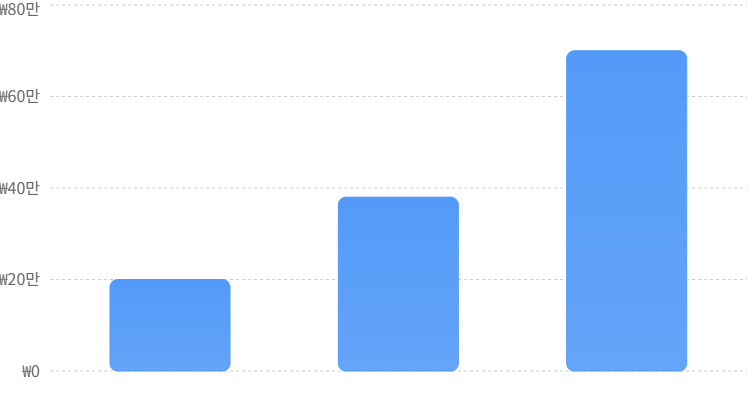
Estimated 4-day cost per person, excluding international flights
The ultra-budget plan requires careful choices, especially when booking accommodation. The comfortable budget provides more flexibility for restaurants, sightseeing, and paid experiences.
Essential Budget Travel Checklist
Before You Travel
0 of 8 completeCompare total flight costs, including baggageBook accommodation near public transportationCalculate whether a transit pass will save moneyPlan several free attractionsBookmark affordable local restaurantsCompare mobile data and currency exchange feesCheck free festivals during your travel datesLeave a small emergency fund
Useful Official Travel Resources
For updated information on destinations, transportation, tickets, and cultural events, visit the following websites:
Final Thoughts: The Best Korean Experiences Don’t Have to Be Expensive
South Korea is a destination where modern technology, fascinating traditions, spectacular scenery, and unforgettable food come together.
But you don’t need a luxury hotel, expensive restaurants, or a large travel budget to experience its magic.
A simple bowl of noodles at a local restaurant, a peaceful walk along Seoul’s historic city walls, a picnic beside the Han River, or an evening enjoying free cultural performances can be just as memorable as an expensive guided tour.
The best way to experience Korea isn’t necessarily to spend more—it’s to discover more.
Travel like a local. Explore with curiosity. Spend wisely. And create memories that last a lifetime.
Because in South Korea, some of the richest travel experiences come with the smallest price tags.
Updated October 2026. Costs are planning estimates and may vary by season, city, provider, and availability. USD conversions use an illustrative exchange rate of ₩1,400 per US dollar.
#SouthKoreaTravel #BudgetTravelKorea #VisitKorea #TravelKorea #CheapTravel #SeoulOnABudget #KoreaTravelGuide #AffordableTravel #KoreanFood #TravelSmart #ExploreKorea #Korea2026


Leave a Reply