
TOP 10 K-Medical Skin Treatments for International Patients
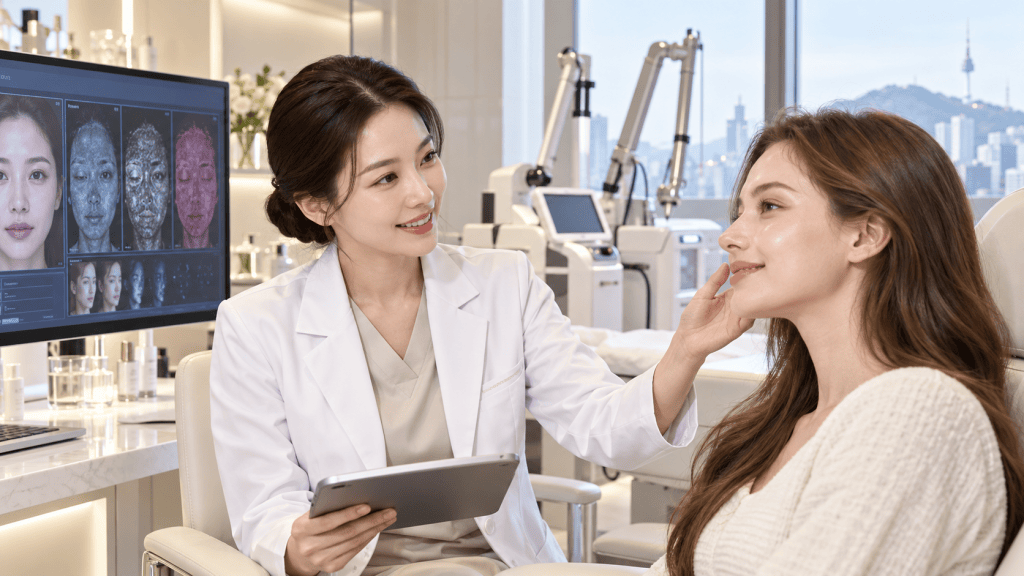
The Ultimate 2026 Guide to Korean Dermatology, Laser Treatments, Acne Scars, Pigmentation, Treatment Costs, and Medical Appointments
South Korea is famous worldwide for K-pop, K-dramas, and K-beauty. But beyond its popular cosmetics and skincare products lies another remarkable aspect of Korean innovation: advanced medical dermatology.
Imagine visiting South Korea not only to experience its vibrant culture but also to consult medical specialists about acne scars, persistent pigmentation, facial redness, uneven skin texture, and other skin concerns.
From sophisticated laser systems to personalized dermatological treatment plans, Korea offers a broad range of medical services for international patients.
What makes Korean dermatology especially interesting?
- Access to various laser and light-based treatment technologies.
- Personalized treatment options for different skin conditions.
- Dermatology clinics experienced in treating international visitors.
- Some clinics offering English-speaking consultations.
- Opportunities to combine specialist medical appointments with a visit to Korea.
However, successful dermatological care requires more than advanced equipment. Accurate diagnosis, professional medical judgment, and appropriate follow-up are essential.
This guide introduces 10 dermatological treatments available in South Korea, including estimated prices in Korean won (KRW) and US dollars (USD), booking procedures, recovery considerations, and travel planning tips.
1. TOP 10 Korean Dermatology Treatments: Cost Comparison
The following table provides indicative budgeting ranges for international patients.
| No. | Treatment | Estimated Cost (KRW) | Approx. Cost (USD) |
|---|---|---|---|
| 1 | Dermatology Consultation & Skin Analysis | ₩30,000–₩100,000 | $22–75 |
| 2 | Fractional Laser for Acne Scars | ₩200,000–₩800,000 | $149–597 |
| 3 | Pico Laser for Pigmentation | ₩100,000–₩500,000 | $75–373 |
| 4 | Laser Toning for Melasma & Dark Spots | ₩70,000–₩250,000 | $52–186 |
| 5 | IPL Phototherapy | ₩100,000–₩300,000 | $75–224 |
| 6 | Vascular Laser for Facial Redness | ₩150,000–₩500,000 | $112–373 |
| 7 | Radiofrequency Microneedling | ₩250,000–₩800,000 | $186–597 |
| 8 | Medical Chemical Peeling | ₩50,000–₩200,000 | $37–149 |
| 9 | Combination Acne Scar Treatment | ₩400,000–₩1,000,000 | $298–746 |
| 10 | Post-Treatment Skin Recovery Care | ₩40,000–₩150,000 | $30–112 |
Price information
- Currency reference: USD 1 ≈ KRW 1,341, October 11, 2026.
- Prices refer to one consultation or treatment session unless otherwise specified.
- These are illustrative private-pay planning ranges based on a selection of published Korean clinic prices and broader market estimates, not official nationwide averages.
- The total price depends on treatment area, device, physician, clinic, number of sessions, medication, and applicable taxes.
- International patients should always request a written final quotation.
For reference, Korean clinics publicly advertise acne-scar packages starting around ₩400,000 per session, while some combination treatments cost approximately ₩990,000 or more. Other clinics offer fractional laser procedures as individual treatments or discounted multi-session packages.
2. TOP 10 Advanced Korean Dermatology Treatments Explained
No. 1. Dermatology Consultation and Skin Analysis — The First Step Toward Healthier Skin
Estimated Cost: ₩30,000–₩100,000 ($22–75)
Before choosing a laser treatment, the most important step is understanding your skin condition.
Some Korean dermatology clinics offer consultations using high-resolution skin photography, dermoscopy, or digital imaging systems.
Depending on the examination, dermatologists may evaluate:
- Acne and acne-related inflammation.
- Pigmentation and dark spots.
- Redness and visible blood vessels.
- Skin texture and acne scars.
- Signs of sun damage.
- Dryness, sensitivity, and potential underlying skin disorders.
Why is this important?
Two patients with similar-looking skin problems may require completely different treatments.
For example, melasma, post-inflammatory hyperpigmentation, and certain pigmented lesions may appear similar but respond differently to lasers.
A proper medical diagnosis helps prevent unnecessary procedures and inappropriate treatment.
How to Apply
- Search for a Korean dermatology clinic registered to treat international patients.
- Request a dermatology consultation.
- Send photographs of your skin concerns if requested.
- Describe your symptoms, previous treatments, allergies, and current medications.
- Confirm the consultation fee and whether skin imaging costs extra.
Appointment Duration: Approximately 30–90 minutes, depending on the complexity of the examination.
No. 2. Fractional Laser Treatment — Addressing Acne Scars and Uneven Skin Texture
Estimated Cost: ₩200,000–₩800,000 ($149–597) per session
Acne scars can remain long after active acne has disappeared.
Fractional laser treatment is one option dermatologists use to improve the appearance of certain acne scars.
It works by creating controlled microscopic treatment zones that stimulate a wound-healing response and collagen remodeling.
Commonly Addressed Concerns
- Selected atrophic acne scars.
- Uneven skin texture.
- Certain superficial scars.
- Rough-looking skin.
Treatment Process
A dermatologist evaluates the scars and chooses the appropriate laser technique. A topical anesthetic may be applied before treatment.
Treatment may take approximately 30–90 minutes, including preparation.
Recovery
Redness, swelling, and peeling may occur. Depending on whether an ablative or non-ablative fractional laser is used, recovery may range from a few days to over a week.
Multiple treatments are often necessary.
Important: Deep ice-pick scars or tethered rolling scars may require techniques such as TCA CROSS, subcision, or combination treatment rather than laser alone.
How to Apply
Request an acne-scar consultation and ask which fractional laser the clinic uses, how many sessions are expected, and what downtime is required.
No. 3. Pico Laser Treatment — Targeting Certain Pigmented Lesions
Estimated Cost: ₩100,000–₩500,000 ($75–373) per session
Picosecond lasers deliver energy in extremely short pulses.
Depending on the device and settings, they can be used for selected pigmentation conditions and other dermatological indications.
Potential Applications
- Certain freckles and sunspots.
- Selected benign pigmented lesions.
- Some types of post-inflammatory pigmentation.
- Specific scar and texture treatments using fractional attachments.
Why Is It Popular?
Different laser systems provide options for treating pigment-related concerns, allowing physicians to select methods based on the skin condition.
However, not every dark spot should be treated with a pico laser.
Treatment Duration: Often 15–45 minutes, depending on the area and preparation.
Recovery: Temporary redness, darkening, crusting, or pigmentation changes may occur.
How to Apply
Send clear photos of the affected area and request an assessment for pigmented lesions.
Any new, changing, irregular, or suspicious pigmented spot should be medically evaluated before cosmetic laser treatment.
No. 4. Laser Toning — A Dermatological Option for Melasma and Uneven Pigmentation
Estimated Cost: ₩70,000–₩250,000 ($52–186) per session
Melasma is a common pigmentation disorder associated with sun exposure, hormonal influences, genetic factors, and other triggers.
Laser toning involves the use of carefully selected laser parameters to target pigmentation.
Potential Treatment Goals
- Improve selected pigmentation concerns.
- Reduce the appearance of certain dark patches.
- Support a broader melasma treatment strategy when appropriate.
An Important Medical Consideration
Melasma can be difficult to treat, and laser treatment is not always the first or best option.
Dermatologists often recommend sun protection and topical medication before considering procedures.
Some laser treatments can actually worsen melasma or cause additional pigmentation, particularly in susceptible skin types.
Treatment Duration: Approximately 15–30 minutes.
Treatment Frequency: Multiple sessions may be considered, with intervals determined by the dermatologist.
How to Apply
Request a melasma evaluation rather than booking laser toning without a diagnosis.
Ask whether topical medication and sun protection should be part of your treatment plan.
No. 5. IPL Phototherapy — Treating Selected Pigmentation and Vascular Concerns
Estimated Cost: ₩100,000–₩300,000 ($75–224) per session
Intense Pulsed Light (IPL) uses broad-spectrum light rather than a single-wavelength laser.
Different filters and settings allow physicians to target selected pigment and vascular concerns.
Potential Applications
- Certain freckles and sunspots.
- Some superficial vascular redness.
- Selected sun-related skin changes.
What Happens During Treatment?
Protective eyewear is provided, and pulses of light are delivered to the target area.
Patients may experience a brief snapping or warming sensation.
Duration: Commonly 20–40 minutes.
Recovery: Mild redness or temporary darkening of treated spots may occur.
Important: IPL is not appropriate for every skin tone or pigmentation condition. Incorrect settings can cause burns or post-inflammatory pigmentation.
How to Apply
Ask for an IPL suitability consultation and disclose recent tanning, photosensitizing medications, and previous skin reactions.
No. 6. Vascular Laser Treatment — Reducing Selected Forms of Facial Redness
Estimated Cost: ₩150,000–₩500,000 ($112–373) per session
Persistent facial redness may be caused by several conditions, including rosacea and visible superficial blood vessels.
Vascular lasers, such as pulsed-dye and certain other laser systems, may help treat selected vascular lesions.
Potential Applications
- Visible facial capillaries.
- Some rosacea-associated redness.
- Selected vascular birthmarks or lesions.
- Certain persistent red marks.
Benefits
For appropriately selected conditions, vascular lasers can improve the visibility of superficial blood vessels.
Treatment Duration: Approximately 15–45 minutes.
Recovery: Temporary redness, swelling, and sometimes bruising or purpura may occur.
Important: Rosacea is a chronic inflammatory condition. Laser treatment may address visible redness but does not cure the underlying disease.
How to Apply
Request a vascular or rosacea-focused dermatology appointment.
Ask whether prescription medication, trigger management, or laser treatment would be more appropriate.
No. 7. Radiofrequency Microneedling — Treatment for Selected Acne Scars and Skin Texture
Estimated Cost: ₩250,000–₩800,000 ($186–597) per session
Radiofrequency microneedling combines fine needles with radiofrequency energy to create controlled treatment zones within the skin.
Devices used in Korean clinics may include different RF microneedling systems.
Potential Applications
- Certain atrophic acne scars.
- Uneven skin texture.
- Selected enlarged-pore concerns.
How It Works
The needles deliver energy beneath the skin surface, producing a controlled healing response intended to promote tissue remodeling.
Treatment Duration: Approximately 40–90 minutes, including topical anesthesia.
Recovery: Redness, swelling, and temporary tenderness may last for several days.
Risks: Infection, burns, scarring, pigmentation changes, and other complications are possible, particularly when treatment is performed improperly.
How to Apply
Ask the dermatologist to compare RF microneedling with fractional laser treatment based on your scar type and skin tone.
No. 8. Medical Chemical Peeling — A Treatment for Selected Acne and Pigmentation Concerns
Estimated Cost: ₩50,000–₩200,000 ($37–149) per session
Chemical peeling involves applying a controlled chemical solution to exfoliate selected layers of skin.
Dermatologists may use salicylic acid, glycolic acid, or other agents depending on the condition.
Potential Applications
- Certain forms of acne.
- Uneven skin texture.
- Selected superficial pigmentation.
- Some sun-related skin changes.
Advantages
Superficial peels may have relatively limited downtime compared with more aggressive resurfacing procedures.
Treatment Duration: Approximately 20–45 minutes.
Recovery: Mild peeling, dryness, or redness may occur. Medium or deep peels involve greater risks and longer recovery.
How to Apply
Request a medical chemical peel consultation and inform the clinic about retinoid use, sensitive skin, previous peeling treatments, and active skin infections.
No. 9. Combination Acne Scar Treatment — A Personalized Strategy for Complex Scars
Estimated Cost: ₩400,000–₩1,000,000 ($298–746) per session package
Not all acne scars respond to the same treatment.
Patients may have several scar types, including:
- Ice-pick scars.
- Boxcar scars.
- Rolling scars.
- Post-inflammatory dark marks.
A dermatologist may recommend a combination approach.
Possible Treatment Components
- Fractional laser resurfacing.
- Subcision for selected tethered scars.
- RF microneedling.
- TCA CROSS for certain narrow deep scars.
- Additional scar-specific procedures.
Why Combination Treatment?
Different scar types have different structural characteristics. Treating each type appropriately may be more effective than using one technology for every scar.
Treatment Duration: Often 60–120 minutes, depending on the procedures.
Recovery: Varies substantially. Some combinations can require extended downtime.
Important: Improvements usually occur gradually. Complete scar removal cannot be guaranteed.
How to Apply
Request a comprehensive acne-scar assessment, including a written explanation of each proposed procedure and its individual cost.
No. 10. Post-Treatment Skin Recovery Care — Supporting Healing After Dermatological Procedures
Estimated Cost: ₩40,000–₩150,000 ($30–112) per session
Appropriate aftercare is essential following many dermatological procedures.
Some Korean clinics offer supplementary recovery-focused services, such as soothing treatments, moisturization, and certain light-based or non-invasive care options.
Possible Components
- Skin barrier assessment.
- Gentle cleansing.
- Moisturizing and barrier-support products.
- Physician-approved dressings.
- Recovery instructions.
- Follow-up skin checks.
Important: Commercial recovery packages are optional and do not necessarily accelerate healing. They should not replace medically necessary wound care, prescribed medication, or follow-up examinations.
How to Apply
Ask whether postoperative care is included in the original treatment price.
Patients should avoid unnecessary additional procedures on irritated or healing skin.
3. How to Book Korean Dermatology Treatment as an International Patient
Foreign patients can generally begin the process before arriving in South Korea.
Step 1. Find a Registered Korean Medical Institution
Begin with the official Korean government-supported Medical Korea portal.
Official Website:
Medical Korea Registered Hospitals:
Search for dermatology services and confirm that the institution is registered to treat international patients.
Medical Korea also publishes information about institutions with international-patient accreditation.
Step 2. Contact the Clinic
Use the clinic’s official website, email, telephone number, or verified messaging channel.
Provide the following information:
- Full name and country of residence.
- Age.
- Main skin concern.
- Duration of symptoms.
- Previous dermatological treatment.
- Relevant medical conditions and allergies.
- Current medications.
- Preferred dates for visiting Korea.
- Preferred consultation language.
The clinic may request photographs, but photos cannot replace an in-person diagnosis.
Step 3. Request an Estimated Treatment Plan
Ask the clinic to provide:
- Initial consultation fee.
- Recommended examination procedures.
- Available treatment options.
- Price per treatment.
- Expected number of sessions.
- Anticipated recovery period.
- Medication and aftercare charges.
- Additional taxes or service fees.
Do not assume that a discounted promotional price includes every required service.
Step 4. Confirm Your Appointment
Once you have reviewed the information, confirm the consultation date.
Check whether a deposit is required and obtain the cancellation and refund policy in writing.
Step 5. Travel to South Korea
Before departure, verify the visa and entry requirements applicable to your nationality and purpose of visit.
Bring any relevant medical records and a list of current medications.
Step 6. Receive Your Dermatology Consultation
Your dermatologist will examine your skin and explain the appropriate treatment options.
The recommended procedure may be different from the one you originally requested.
Step 7. Complete Treatment and Aftercare
Follow the clinic’s medical instructions carefully.
If your treatment requires additional sessions after you leave Korea, arrange follow-up care in your home country.
4. How Much Time Should You Plan in Korea?
| Treatment | Typical Appointment Time | Suggested Travel Planning |
|---|---|---|
| Dermatology Consultation | 30–90 minutes | 1 day |
| Fractional Laser | 30–90 minutes | Several days to over 1 week |
| Pico Laser | 15–45 minutes | 1–3+ days |
| Laser Toning | 15–30 minutes | 1–3 days |
| IPL Phototherapy | 20–40 minutes | 1–3+ days |
| Vascular Laser | 15–45 minutes | 2–7+ days |
| RF Microneedling | 40–90 minutes | 3–7+ days |
| Chemical Peeling | 20–45 minutes | 1–7+ days |
| Combination Scar Treatment | 60–120 minutes | 5–14+ days |
| Recovery Consultation | 20–60 minutes | As medically indicated |
Important: These are approximate scheduling suggestions, not guaranteed recovery periods. Treatment intensity, skin type, complications, and follow-up needs may require a longer stay.
For acne scars and melasma, meaningful improvements often require treatment over several months rather than a single tourist visit.
5. Sample Dermatology Travel Budgets
Example A. Three-Night Pigmentation Treatment Visit
A hypothetical budget for an international visitor receiving one pigmentation-focused consultation and treatment.
| Expense | Cost (KRW) | Cost (USD) |
|---|---|---|
| Dermatology Consultation | ₩50,000 | $37 |
| Pico Laser Treatment | ₩250,000 | $186 |
| Prescribed Skincare / Medication | ₩60,000 | $45 |
| Hotel — 3 Nights | ₩360,000 | $268 |
| Meals | ₩120,000 | $89 |
| Local Transportation | ₩50,000 | $37 |
| Contingency Budget | ₩100,000 | $75 |
| Estimated Total | ₩990,000 | $738 |
Example B. Five-Night Acne Scar Treatment Visit
| Expense | Cost (KRW) | Cost (USD) |
|---|---|---|
| Dermatology Consultation | ₩50,000 | $37 |
| Fractional Laser / Scar Treatment | ₩600,000 | $447 |
| Follow-Up / Medication Allowance | ₩100,000 | $75 |
| Hotel — 5 Nights | ₩600,000 | $447 |
| Meals | ₩200,000 | $149 |
| Local Transportation | ₩80,000 | $60 |
| Contingency Budget | ₩150,000 | $112 |
| Estimated Total | ₩1,780,000 | $1,327 |
These examples exclude international flights and travel insurance. They assume a single treatment session and do not represent the cost of a complete multi-month course of therapy.
6. Where Can Foreign Patients Find Dermatology Clinics in Korea?
The Medical Korea Accredited Hospitals directory is a useful starting point.
Official Directory:
Examples of institutions listed by Medical Korea include:
DM Dermatology — Seoul
Location: 158 Apgujeong-ro, Gangnam-gu, Seoul, 4th Floor.
Official Website: https://www.dmdermatology.com/
Telephone: +82-2-3445-0803
Medical Korea lists international patient services and interpretation options, including English, Chinese, Russian, Japanese, and Mongolian.
Patients should confirm which treatments are currently offered and whether the dermatologist is appropriate for their particular condition.
Ain Hospital — Incheon
Location: 372 Gyeongin-ro, Michuhol-gu, Incheon.
Website: https://www.ainwh.co.kr/eng/
International Patient Email: international@ainwh.co.kr
Telephone: +82-32-459-5616
Medical Korea lists dermatology among the institution’s medical services and reports international patient support facilities.
Availability of a specific laser treatment should be verified directly.
JIWOO Clinic — Seoul
Location: 14F, 107 Teheran-ro, Gangnam-gu, Seoul.
Website: https://jiwooclinic.co.kr/
Telephone: +82-2-565-1201
Medical Korea lists services for international patients, including interpretation in English, Chinese, and Japanese.
Tip: Government registration and international-patient accreditation are different programs. Confirm the institution’s current status before booking.
7. Frequently Asked Questions
Q1. Can tourists receive dermatology treatments in South Korea?
Yes. Many Korean clinics provide consultations and treatments for international visitors, subject to medical suitability, appointment availability, and applicable entry requirements.
Q2. Can I make an appointment before arriving?
Yes. Clinics serving international patients may offer advance appointment requests through official websites, email, telephone, or messaging services.
Q3. Are Korean dermatology treatments always cheaper than those in other countries?
Not necessarily. Prices vary considerably by clinic, procedure, physician, and country. Compare complete treatment plans rather than individual promotional prices.
Q4. Can acne scars disappear completely?
Complete removal cannot be guaranteed. Appropriate treatments can improve the appearance of some scars, but results depend on scar type, severity, skin characteristics, and treatment response.
Q5. Can melasma be permanently cured with laser treatment?
Melasma is frequently chronic or recurrent. Laser treatment is not suitable for every case, and ongoing sun protection and medical management are often essential.
Q6. Can patients receive several laser procedures on the same day?
Sometimes, but this is not automatically advisable. Combining procedures may increase irritation, downtime, or pigmentation risks. A dermatologist should determine whether a combination is medically appropriate.
Q7. Are English-language consultations available?
Some medical institutions offer English-speaking staff or interpretation services. Confirm availability before booking.
Q8. Is laser treatment safe for darker skin tones?
Certain treatments can be performed on darker skin types, but careful device selection and settings are particularly important. Burns and post-inflammatory pigmentation are significant considerations.
Q9. Does one treatment session produce a noticeable result?
Some patients notice improvement after a single treatment, while others require multiple sessions over several months. Results cannot be guaranteed.
Q10. What if a complication occurs after I return home?
Contact the treating Korean clinic and seek medical care locally. Before leaving Korea, obtain treatment records, device details when relevant, medication instructions, and an emergency contact procedure.
8. Essential Safety Tips for International Patients
Choose medical expertise over advertising.
A clinic offering hundreds of laser treatments is not necessarily the best choice for your particular skin condition.
When selecting a provider:
- Confirm the clinic’s foreign-patient registration status.
- Ask who will diagnose your condition and perform the procedure.
- Verify the physician’s professional qualifications.
- Request a clear explanation of treatment risks.
- Disclose allergies, previous pigmentation problems, and relevant medication use.
- Understand the full treatment cost before paying.
- Avoid unnecessary combinations of procedures.
- Allow sufficient recovery time before major sightseeing activities.
- Follow prescribed skincare and sun-protection instructions.
- Arrange medical follow-up if multiple sessions are required.
Special precautions for pigmentation disorders
Patients with melasma or a history of post-inflammatory hyperpigmentation should be particularly cautious.
Aggressive treatments may worsen pigmentation in susceptible individuals.
For many pigmentation disorders, topical treatments and consistent sun protection are essential components of care.
9. Why Korean Dermatology Attracts International Interest
Korea’s international reputation in beauty and skincare has helped introduce visitors to its broader dermatology services.
Three factors make the country worth considering for professional skin care.
Advanced Treatment Options
Patients may have access to a variety of laser systems, light-based treatments, and scar-management techniques.
This allows dermatologists to consider different approaches according to the condition.
Personalized Dermatological Care
The best treatment is not necessarily the newest technology.
It is the treatment that matches the patient’s diagnosis, skin characteristics, medical history, and long-term needs.
International Patient Services
Korea has an established registration system for medical institutions treating foreign patients, along with a separate accreditation program.
Some registered institutions provide multilingual assistance, appointment coordination, and help with medical documentation.
These services can make medical planning more convenient for visitors.
10. Beyond K-Beauty: Discover the Science of Healthier Skin in Korea
For years, South Korea has inspired beauty enthusiasts around the world through innovative cosmetics, skincare routines, and popular culture.
Today, international visitors can explore another dimension of Korean skincare: professional medical dermatology.
From acne scars and persistent pigmentation to facial redness and uneven skin texture, modern dermatology provides treatment possibilities that go beyond everyday cosmetics.
But the true value of advanced skin care lies not in a promise of perfect skin.
It lies in understanding the causes of skin problems, selecting appropriate medical treatment, and protecting skin health over time.
Beautiful skin begins with healthy skin—and healthy skin begins with the right diagnosis.
If you are considering dermatological treatment abroad, discover what Korea’s medical dermatology services may offer, compare your options carefully, and consult a qualified physician before making your decision.
Begin Your K-Medical Journey
Medical Korea — Official International Healthcare Portal
Registered Medical Institutions
Accredited Medical Institutions
References and Further Reading
- Medical Korea — Foreign Patient Registration System: https://www.medicalkorea.or.kr/en/registeredsystem
- American Academy of Dermatology — Acne Scar Treatment: https://www.aad.org/public/diseases/acne/derm-treat/scars/treatment/
- American Academy of Dermatology — Melasma Treatment: https://www.aad.org/public/diseases/a-z/melasma-treatment
- Renewme Skin Clinic — Published Treatment Pricing: https://english.renewmi.com/clinic6/clinic6_02.htm
Medical Disclaimer: This article is for general educational and medical travel-planning purposes only. It does not replace professional medical advice, diagnosis, or treatment. All dermatological procedures carry potential risks and should be discussed with a qualified physician. Costs are indicative planning estimates as of October 2026 and may change without notice.
#KMedical #KoreanDermatology #MedicalKorea #SkinHealth #AcneScarTreatment #LaserTreatment #KBeauty #MedicalTourism #VisitKorea #SkinCare #SouthKorea #Dermatology


Leave a Reply