
K-STUDY | How to Make Korean Friends as an International Student

10 Practical Ways to Build Real Friendships in Korea
Studying in Korea can be an exciting and life-changing experience. You will discover a new culture, meet people from around the world, and create unforgettable memories. However, one of the biggest challenges for many international students is making Korean friends.
At first, Korean students may seem shy or busy. Some international students also feel nervous about language differences or cultural misunderstandings. But the good news is this: Korean friendships often grow slowly, but they can become very warm, loyal, and meaningful over time.
If you want to build genuine friendships during your study-abroad journey, here are 10 practical ways to make Korean friends as an international student.
1. Join a Club or Student Organization
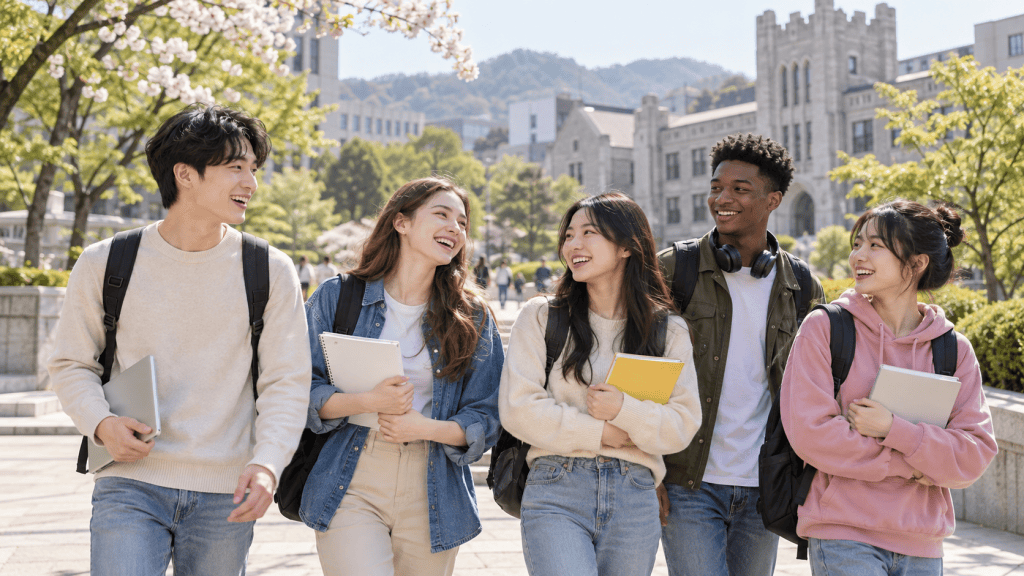
One of the easiest ways to meet Korean students is by joining a university club. Korean universities usually have many student organizations, such as music clubs, sports clubs, volunteer groups, photography clubs, language clubs, and cultural societies.
When you join a club, you naturally meet people who share the same interests as you. It also gives you repeated opportunities to see the same people, which helps friendships grow more naturally.
Why clubs work so well
- You already share a common interest.
- You meet regularly.
- Conversations happen more naturally.
- Group activities reduce awkwardness.
Examples of popular university clubs
| Club Type | What You Can Expect | Good For |
|---|---|---|
| Sports Club | Soccer, basketball, badminton, hiking | Active students |
| Music Club | Band practice, singing, instruments | Creative students |
| Volunteer Club | Community service, social activities | Friendly and service-minded students |
| Language Exchange Club | Korean-English conversation practice | Students who want cultural exchange |
| Photography Club | Campus walks, travel, photo-sharing | Students who enjoy visual storytelling |
| Cultural Club | Festivals, performances, traditions | Students interested in Korean culture |
Photo suggestion: International and Korean students smiling together at a university club fair or campus activity.
2. Say “Yes” to Group Activities and Invitations
Sometimes friendships begin with a simple invitation: “Do you want to eat together?” or “Would you like to join us?” Even if you feel shy or tired, it is often a good idea to say yes.
Many Korean students build friendships through shared activities rather than deep conversations right away. Going to lunch, attending a festival, joining a study group, or visiting a café together can help break the ice.
Good opportunities to join
- Club gatherings
- Department events
- Campus festivals
- Volunteer activities
- Group dinners
- Casual coffee breaks after class
Tip: Even if your Korean is limited, your positive attitude matters more than perfect language skills.
3. Learn Simple Korean Conversation Starters
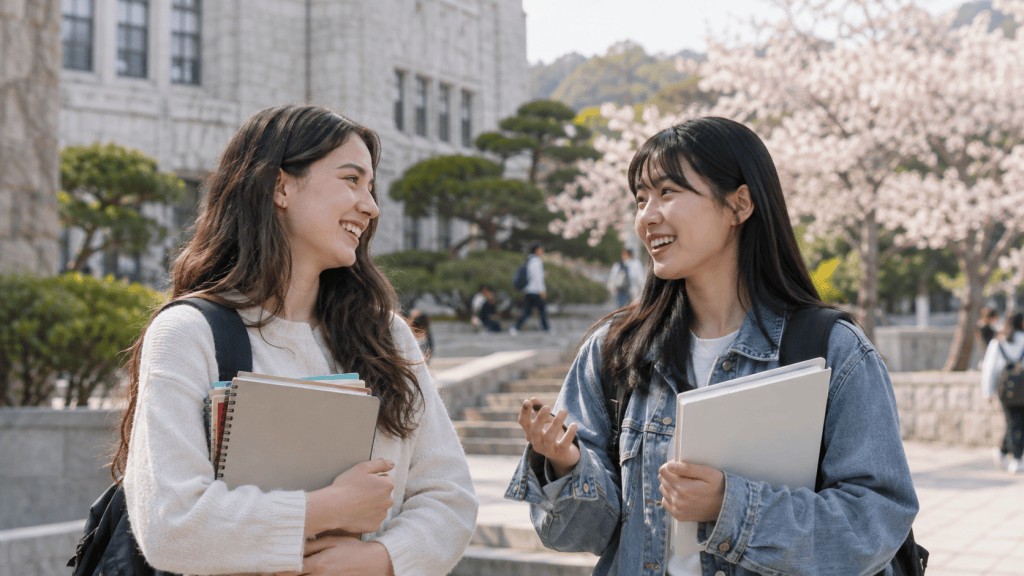
You do not need to speak perfect Korean to make Korean friends. In fact, using a few simple Korean phrases can show friendliness, effort, and respect.
Korean students usually appreciate it when international students try to speak Korean, even in a small way.
Useful conversation starters
| Korean | English Meaning |
|---|---|
| 안녕하세요? | Hello. |
| 저는 교환학생이에요. | I’m an exchange student. |
| 어느 학과예요? | What is your major? |
| 이 수업 어때요? | How is this class? |
| 같이 점심 먹을래요? | Do you want to have lunch together? |
| 한국 생활은 재미있어요. | Life in Korea is interesting. |
| 추천해 줄 만한 곳 있어요? | Is there any place you recommend? |
| 감사합니다! | Thank you! |
Example conversation
You: Hi, I’m Maria. I’m an international student.
Korean student: Nice to meet you. I’m Jihoon.
You: Nice to meet you too. What’s your major?
Jihoon: Business Administration. How about you?
You: International Studies. This class seems interesting.
Jihoon: Yes, I think so too.
Small conversations like this can lead to lunch, study sessions, or future friendships.
Photo suggestion: Two students talking together on campus with notebooks in hand.
4. Eat With People — Food Builds Friendships in Korea
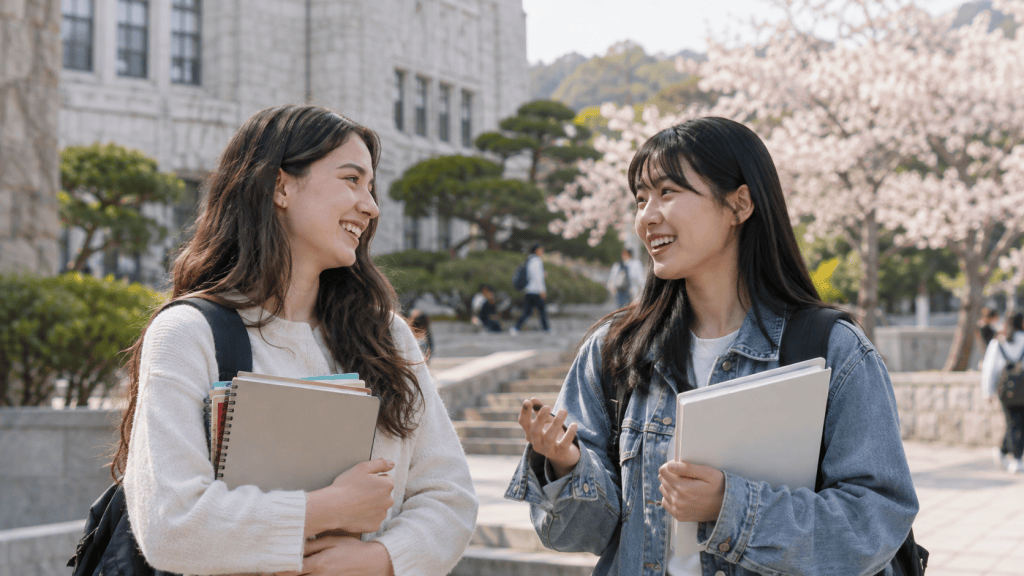
In Korea, food is a very important part of social life. Many friendships become closer through shared meals. If someone invites you to eat together, it is often more than just food — it is an opportunity to connect.
Korean students often go for:
- lunch between classes
- dinner after activities
- café time after studying
- group meals during festivals or meetings
Popular friendship-building food situations
| Situation | Why It Helps |
|---|---|
| Lunch after class | Easy and casual |
| Dinner with club members | Builds closeness |
| Café after studying | Good for conversation |
| Late-night snack outing | Common in student life |
| Festival food booths | Fun and relaxed |
If you are not sure what to talk about, you can ask:
- “What food do you recommend?”
- “Do you come here often?”
- “What Korean dish should I try next?”
Food creates relaxed and natural moments for friendship.
5. Participate Actively in Team Projects

Team projects can be stressful, but they are also a great way to get to know Korean classmates.
Instead of staying quiet, try to participate actively. You do not need to speak all the time — simply being responsible, polite, and cooperative makes a strong impression.
How to build friendships through group projects
- Introduce yourself warmly.
- Volunteer for one part of the work.
- Submit your part on time.
- Offer help when possible.
- Stay in touch after the project ends.
Good team project habits
| Good Habit | Why It Matters |
|---|---|
| Reply quickly in group chats | Shows responsibility |
| Be on time for meetings | Builds trust |
| Finish your tasks well | Earns respect |
| Speak up politely | Encourages communication |
| Thank teammates | Leaves a positive impression |
Often, classmates who work well together become friends outside the classroom too.
Photo suggestion: A mixed group of Korean and international students working together on a project in a study room.
6. Use KakaoTalk and Stay Connected
In Korea, KakaoTalk is the most common messaging app. Many Korean students use it every day to communicate with friends, classmates, and club members.
If you want to maintain friendships, it helps to use KakaoTalk actively.
Ways to use KakaoTalk naturally
- Join class or club group chats.
- Send a friendly message after meeting someone.
- Ask simple questions about school or daily life.
- Share interesting information, photos, or event updates.
- Invite someone to coffee or lunch.
Example messages
| Situation | Example Message |
|---|---|
| After meeting someone | “It was nice meeting you today!” |
| Before lunch | “Are you free for lunch after class?” |
| Asking for help | “Do you know where the class building is?” |
| Following up | “Thank you for helping me earlier!” |
| Making plans | “Would you like to go to a café this weekend?” |
Important: Don’t worry if replies are short at first. Some Korean students communicate briefly by text, but that does not necessarily mean they are unfriendly.
7. Attend Festivals, Orientation, and Campus Events
Korean universities often host exciting events such as orientation programs, department welcome parties, international student gatherings, sports days, and seasonal festivals.
These events are ideal for making friends because people are more open, relaxed, and social.
Best events for meeting people
| Event Type | Why It’s Great |
|---|---|
| Orientation | Everyone is new and open to meeting others |
| Campus Festivals | Fun atmosphere and shared experiences |
| International Student Events | Easy way to meet both Koreans and foreigners |
| Department Gatherings | Great for meeting classmates in your major |
| Volunteer Events | Helps people bond through teamwork |
At events, try to:
- smile first
- introduce yourself
- ask simple questions
- join group photos
- stay a little longer instead of leaving early
Sometimes one campus event can lead to several lasting friendships.
Photo suggestion: Students enjoying a Korean university festival with booths, food, and performances.
8. Be Patient — Korean Friendships Often Take Time
One important thing to understand is that Korean students may not become close friends immediately. Some people may seem shy, reserved, or cautious at first.
This does not mean they dislike you.
In many cases, Korean friendships develop gradually through repeated contact, shared meals, and growing trust. Once the relationship becomes close, the friendship can become very deep and long-lasting.
What to remember
- Don’t expect instant closeness.
- Keep showing up consistently.
- Be friendly without being too forceful.
- Let trust grow naturally.
- Respect personal space and schedules.
Friendship growth mindset
| If This Happens… | Don’t Assume… | Better Response |
|---|---|---|
| Someone replies slowly | “They don’t like me.” | They may just be busy. |
| Someone is quiet | “They are cold.” | They may simply be shy. |
| Plans don’t happen quickly | “No one wants to be friends.” | Try again another time. |
| Group members stay formal | “We can’t get close.” | Friendships often grow slowly in Korea. |
Patience is often the key to making real friends in Korea.
9. Show Respect for Korean Culture and Social Etiquette
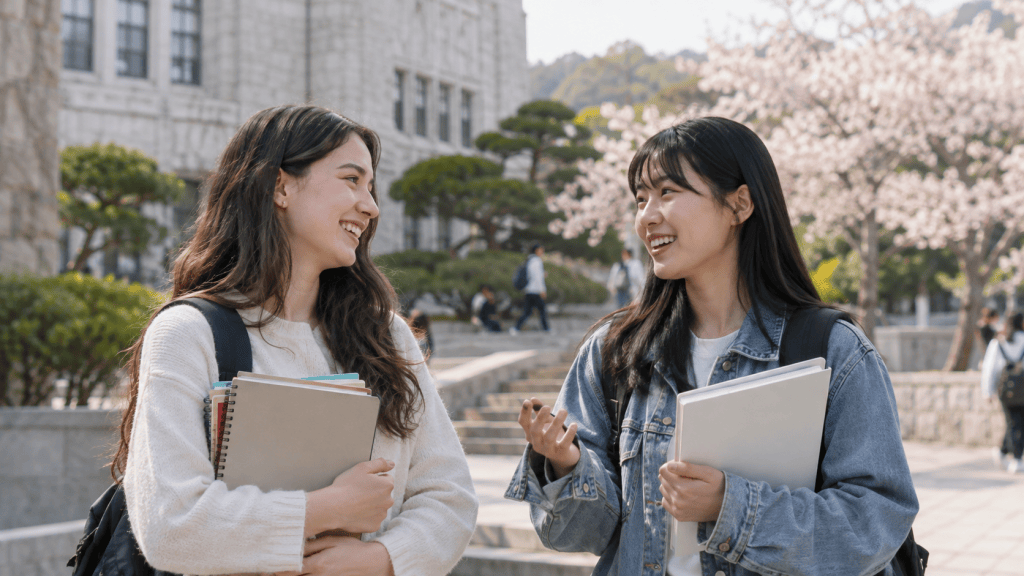
Cultural awareness can make a big difference in how people feel around you. You do not need to know everything about Korean culture, but understanding a few social basics can help you avoid misunderstandings.
Simple Korean social etiquette tips
- Be polite when meeting someone for the first time.
- Use respectful language when appropriate.
- Be on time.
- Show gratitude when someone helps you.
- Accept food or items with courtesy.
- Don’t interrupt too aggressively in conversation.
Do’s and Don’ts
| Do | Don’t |
|---|---|
| Greet people politely | Be overly casual too quickly |
| Say thank you often | Ignore small acts of kindness |
| Be punctual | Arrive very late without notice |
| Respect group harmony | Dominate conversations |
| Show interest in Korean culture | Judge differences too quickly |
Respect makes people feel comfortable, and comfort helps friendships grow.
Photo suggestion: International student greeting Korean classmates respectfully in a bright classroom or campus café.
10. Be Yourself and Build Genuine Friendships
Finally, the most important tip is simple: be genuine.
Do not try too hard to impress people. You do not need to act like someone else or hide your personality. Real friendships are built through sincerity, kindness, trust, and shared experiences.
Ask questions. Share your culture. Be curious about others. Laugh together. Study together. Eat together. Over time, these moments become friendship.
What makes a good friend in any culture?
| Quality | Why It Matters |
|---|---|
| Kindness | Makes people feel safe and welcomed |
| Reliability | Builds trust |
| Curiosity | Helps conversations grow |
| Respect | Prevents misunderstandings |
| Openness | Encourages deeper connection |
| Patience | Allows real friendship to develop naturally |
Friendship is not about making many contacts quickly. It is about building meaningful connections that can enrich your life in Korea.
Bonus: Best Places to Meet Korean Friends
If you are wondering where friendships most naturally begin, here are some of the best places:
| Place | Why It Works |
|---|---|
| University clubs | Shared interests and regular meetings |
| Classrooms | Easy to start with study-related conversations |
| Group projects | Frequent interaction and teamwork |
| Campus cafés | Casual and relaxed environment |
| Student lounges | Good for everyday interaction |
| Language exchange programs | Natural cultural and language sharing |
| University festivals | Fun and social atmosphere |
| Dormitories | Daily contact and shared living experience |
Final Thoughts
Making Korean friends as an international student may feel difficult at first, but it is absolutely possible. The key is not to rush. Start with small conversations, join activities, stay open-minded, and keep showing genuine interest in others.
Some friendships may begin slowly, but they can become some of the most meaningful relationships of your life.
Your time in Korea is not only about studying. It is also about people, memories, and connections.
So take the first step. Say hello. Join the activity. Accept the lunch invitation. Send the KakaoTalk message.
A great friendship may be waiting for you just around the corner.
Suggested Photo Placement Summary
If you want to upload this as a blog post with images, place photos like this:
- Top banner image
- International and Korean students walking together on campus
- After Section 3
- Two students having a friendly conversation
- After Section 5
- Students doing a team project together
- After Section 7
- Korean university festival or student event scene
- After Section 9 or near the conclusion
- Diverse students smiling together in a café or on campus
Hashtags
#KStudy #StudyInKorea #InternationalStudents #KoreanFriends #StudentLifeInKorea #KoreanUniversity #StudyAbroad #CampusLife #MakeFriendsInKorea #LivingInKorea


Leave a Reply