
K-STUDY | Student Life in Korea · Emergency Preparedness · Safety & Support


What if you suddenly become sick in Seoul? What should you do if your passport disappears, your employer refuses to pay you, or someone steals money from your bank account?
Studying abroad is an exciting adventure, but emergencies can happen when you least expect them. In a foreign country, even a relatively small problem can feel overwhelming when you do not speak the language or understand the local system.
The good news is that South Korea has well-established emergency services, public healthcare, police assistance, immigration support, and labor protection systems.
This guide explains exactly whom to contact, what to do first, how much certain services may cost, and which Korean phrases can help you get assistance quickly.
1. Emergency Numbers Every International Student Must Know
112
Police
Crime, assault, threats, serious fraud
24/7
119
Ambulance & Fire
Medical emergencies, accidents, fires
24/7
1345
Immigration
Visa, residence card, foreigner services
Weekday counseling hours
1350
Labor Rights
Unpaid wages, working conditions
Weekdays 9 AM–6 PM
Important phone numbers
| Number | Service | When to use it |
|---|---|---|
| 112 | Korean National Police | Theft, violence, threatening behavior, crimes |
| 119 | Fire & Emergency Medical Services | Ambulance, serious injury, fire |
| 1345 | Immigration Contact Center | Visa issues, residence documents |
| 1350 | Ministry of Employment and Labor | Unpaid wages, labor problems |
| 1332 | Financial Supervisory Service | Financial fraud and consumer complaints |
| 1577-1366 | Danuri Helpline | Multilingual assistance, domestic violence support |
| 110 | Government Civil Service Call Center | General government information |
Police and ambulance emergency calls are available around the clock. Interpretation assistance may be arranged; tell the operator your language and stay on the line. Immigration and labor consultations have service-hour restrictions.
SOS Korea
+2
How to make an emergency call
- Dial 112 or 119, depending on the emergency.
- Tell the operator what happened.
- Give your exact location, including the building name, floor, or nearby landmark.
- Request language assistance if necessary.
- Follow instructions and remain in a safe location.
Useful Korean sentence:
“도와주세요! 영어 통역이 필요해요.”
Dowajuseyo! Yeongeo tongyeogi piryohaeyo.
“Please help me! I need an English interpreter.”
2. What to Do If You Suddenly Become Sick

Imagine waking up at midnight with severe stomach pain. Your Korean-speaking roommate is away, and you do not know where the nearest hospital is.
Knowing the difference between a clinic and an emergency room can save time and unnecessary expenses.
Step 1: Decide how urgent your condition is
| Situation | Recommended action |
|---|---|
| Mild fever, headache, cold | Visit a local clinic (의원) |
| Persistent symptoms or moderate pain | Visit a clinic or hospital promptly |
| Need common nonprescription medicine | Ask a pharmacist (약국) |
| Severe chest pain, difficulty breathing, unconsciousness | Call 119 immediately |
| Serious injury or major bleeding | Call 119 immediately |
Do not wait until morning for life-threatening symptoms.
Step 2: Find medical facilities
Useful resources include:
- E-GEN Emergency Medical Portal — hospitals, emergency rooms, pharmacies.
- National Health Insurance Service — insurance eligibility and benefits.
- Naver Map or KakaoMap — search for “병원” (hospital), “응급실” (emergency room), or “약국” (pharmacy).
- Your university’s international student office — assistance finding nearby clinics.
Step 3: Understand medical costs in Korea
Medical charges depend heavily on your insurance status, treatment, tests, and hospital type.
Below is an illustrative medical expense example, not a fixed hospital price list.
| Medical expense example | Korean won | Approx. USD |
|---|---|---|
| Basic medical bill | ₩30,000 | $23 |
| Patient share at 30% | ₩9,000 | $7 |
| Remaining insured portion | ₩21,000 | $16 |
| Higher-cost treatment example | ₩200,000 | $150 |
| Patient share at 30% | ₩60,000 | $45 |
Currency conversions use approximately ₩1,330 = US$1, rounded. The 30% calculation illustrates a possible insured clinic or pharmacy co-payment, not a universal rate. Noncovered treatment and emergency room surcharges can significantly change the final bill.
Investing.com
+1
Before receiving nonemergency treatment, you can ask:
“건강보험 적용되나요?”
Geongang boheom jeogyong doenayo?
“Is this covered by National Health Insurance?”
“진료비가 얼마나 나오나요?”
Jillyobi-ga eolmana naonayo?
“How much will the treatment cost?”
3. National Health Insurance: What International Students Should Know
Many international students are eligible for Korea’s National Health Insurance Service (NHIS).
For eligible students, insurance provides access to benefits similar to those available to Korean citizens.
When does enrollment begin?
| Student visa | General insurance enrollment rule |
|---|---|
| D-2 (degree program) | Upon foreigner registration following initial entry |
| D-4 (general language training) | Generally after six months in Korea |
| D-4-3 (primary/secondary school) | From foreigner registration |
| Other statuses | Depends on immigration and insurance eligibility |
Enrollment for eligible students is generally automatic. Some qualifying international students receive a 50% premium reduction, subject to eligibility conditions.
Run by Korean Government
+1
How does insurance affect your medical bill?
For NHIS-covered outpatient treatment, typical patient co-payment rates vary by facility.
| Facility | Typical patient share of covered costs |
|---|---|
| Local clinic | 30% |
| Hospital | 40% |
| General hospital | Approximately 45–50% |
| Tertiary hospital | 60% |
| Pharmacy | 30% |
These rates are subject to applicable exceptions and do not include all noncovered expenses.
영어 사이트
Before seeking care, check your insurance status. If you have not yet been enrolled, you may need private or university-arranged medical insurance.
Practical tip: Keep copies of your insurance eligibility details, passport, residence card, prescriptions, and payment receipts.
4. Lost Passport, Residence Card, or Smartphone: What to Do First

Losing an important document can be stressful, especially just before international travel or a visa appointment.
The correct response depends on what was lost.
A. If you lose your passport
- Check where you last used it, including your dormitory, classroom, bank, or transportation.
- If it may have been stolen, report the incident to the police.
- Contact your country’s embassy or consulate in Korea.
- Ask about obtaining a replacement passport or emergency travel document.
- Contact 1345 about updating your immigration records and checking travel requirements.
Passport replacement fees depend on your nationality and embassy.
Do not assume that a police loss report alone replaces an official passport.
B. If you lose your Residence Card (formerly ARC)
- Contact the immigration helpline at 1345.
- Ask about the replacement application and any reporting deadline.
- Check the required documentation through HiKorea.
- Apply for a replacement through the relevant immigration office or available online procedure.
- Keep proof of your application until the replacement is issued.
C. If you lose your smartphone
Immediately:
- Call your phone or use its device-finding service.
- Activate lost mode and remotely lock your device.
- Contact your mobile carrier to suspend your SIM or mobile service if necessary.
- Secure mobile banking, email, and payment apps.
- Check the police lost-property system at LOST112.
- Report suspected theft to the police.
Korea’s LOST112 system helps people search for items submitted to police lost-property centers.
Example emergency replacement budget
The following is a personal planning budget, not a list of government fees.
| Possible expense | KRW | Approx. USD |
|---|---|---|
| Transportation to embassy or office | ₩15,000 | $11 |
| Replacement photos, copies, printing | ₩15,000 | $11 |
| Temporary SIM or connectivity allowance | ₩30,000 | $23 |
| Suggested contingency reserve | ₩100,000 | $75 |
| Total sample emergency reserve | ₩160,000 | $120 |
Official document fees and any extra travel costs must be checked separately.
5. What If Your Part-Time Employer Refuses to Pay You?

Many international students work part-time in cafés, restaurants, convenience stores, or university-related jobs.
Unfortunately, some experience unpaid wages, unfair working conditions, harassment, or pressure from employers.
Scenario: Your employer has not paid your wages
Imagine working 40 hours at an agreed hourly rate of ₩12,000 ($9.02), but your employer refuses to pay.
EXAMPLE: UNPAID WAGES
₩480,000 ≈ $361 USD
40 hours × ₩12,000 per hour, before any applicable deductions or additional entitlements
What you should do
- Collect evidence. Save your employment contract, work schedule, messages, pay slips, and bank statements.
- Request payment in writing. Clearly state the amount owed and the relevant working dates.
- Call 1350. The Ministry of Employment and Labor provides employment-related consultations, including English and Chinese language assistance.
- Submit a complaint if necessary. Visit the Ministry of Employment and Labor’s Labor Portal for information about wage-related complaints.
- Consult your university. International student advisers may help you understand employment rules and locate professional support.
The Ministry’s labor consultation service operates on weekdays from 9 AM to 6 PM.
고용노동부
+1
Important: Check your work permission
International students holding D-2 or D-4 visas generally need authorization for eligible part-time employment. Permitted hours and activities depend on individual circumstances, visa conditions, and Korean language qualifications.
Check with your university and immigration authorities before starting work.
Run by Korean Government
Even if you are worried about a work-permission issue, seek professional advice about unpaid wages rather than assuming you have no options.
6. Traffic Accidents, Voice Phishing, and Online Scams

A. What to do after a traffic accident
Whether you are walking, riding a bicycle, using an electric scooter, or traveling in a taxi, accidents can happen.
Follow this order:
- Move away from immediate danger if you can do so safely.
- Call 119 if anyone is seriously injured.
- Call 112 when police assistance or an accident report is needed.
- Record the location, vehicle license plate, photographs, and witness details when safe.
- Seek medical attention for any injury.
- Keep medical bills, police reports, and insurance correspondence.
Avoid signing a document you cannot understand, especially one involving compensation or liability. Ask for an interpreter or legal advice first.
B. What to do if you become a victim of voice phishing
Voice phishing is a scam in which criminals pretend to represent banks, police, immigration officers, delivery companies, or other organizations.
They may attempt to persuade you to transfer money or disclose personal information.
Warning signs include:
- Someone claims your visa will be canceled unless you transfer money immediately.
- A caller asks for your banking password or one-time verification code.
- A message demands a payment to release a package.
- Someone instructs you to install an unfamiliar mobile application.
- A person claiming to be a government official insists you keep the call secret.
If you have already transferred money:
- Immediately call your bank’s fraud hotline and request an emergency transaction or account freeze where applicable.
- Report the suspected crime to 112.
- Contact 1332 for financial fraud guidance.
- Preserve transaction records, messages, account numbers, and screenshots.
- Change compromised passwords and secure your phone.
Speed matters. Recovery is not guaranteed, but prompt reporting may improve the chance of preventing further losses.
C. What if an online seller takes your money and disappears?
For online shopping, secondhand-market transactions, or rental deposit scams, save the seller’s profile, bank account details, payment confirmation, advertisement, and chat history.
Contact the payment service or bank promptly and report suspected fraud to police. Avoid sending additional money to someone promising to recover your original payment.
7. Where International Students Can Find Help

You do not have to solve every problem alone.
Support organizations and useful resources
| Organization | How it can help | Contact |
|---|---|---|
| Immigration Contact Center | Visa, immigration documents, residence-related questions | 1345 |
| National Health Insurance Service | Health coverage, premiums, enrollment | NHIS |
| Ministry of Employment and Labor | Wages and employment rights | 1350 |
| Korea Tourism Organization | Travel information and multilingual interpretation | 1330 |
| Korea National Police | Crime reports and emergencies | 112 |
| Danuri Helpline | Multilingual counseling and crisis assistance | 1577-1366 |
| University International Office | Campus-specific assistance and referrals | Your university |
| Your embassy or consulate | Lost passports, nationality-related consular assistance | Embassy contact |
The 1345 Immigration Contact Center generally offers weekday counseling from 9 AM to 10 PM, with Korean, English, and Chinese service after 6 PM. Other language availability may be more limited.
법무부
For travel-related information and interpretation, the Korea Tourism Organization also offers the 1330 Travel Helpline.
VISITKOREA – Imagine Your Korea
Your university is an important support system
International students should learn the contact details for their school’s international office, dormitory administration, student counseling center, and campus security service.
Some universities also operate campus health centers or provide referrals to hospitals with interpretation services.
8. 30 Essential Korean Emergency Phrases

Knowing even a few simple Korean expressions can make an enormous difference during a stressful situation.
Save or screenshot the following tables on your phone.
A. General emergencies
| Korean | English meaning |
|---|---|
| 1. 도와주세요! | Please help me! |
| 2. 긴급 상황이에요. | It’s an emergency. |
| 3. 경찰을 불러주세요. | Please call the police. |
| 4. 구급차를 불러주세요. | Please call an ambulance. |
| 5. 영어 통역이 필요해요. | I need an English interpreter. |
| 6. 한국어를 잘 못해요. | I don’t speak Korean well. |
B. Medical emergencies
| Korean | English meaning |
|---|---|
| 7. 몸이 아파요. | I feel sick. |
| 8. 숨쉬기가 힘들어요. | I have difficulty breathing. |
| 9. 가슴이 아파요. | My chest hurts. |
| 10. 응급실이 어디예요? | Where is the emergency room? |
| 11. 약국이 어디예요? | Where is the pharmacy? |
| 12. 이 약에 알레르기가 있어요. | I’m allergic to this medicine. |
| 13. 건강보험 적용되나요? | Is this covered by health insurance? |
| 14. 병원비가 얼마나 나오나요? | How much will the medical bill be? |
C. Lost documents and belongings
| Korean | English meaning |
|---|---|
| 15. 여권을 잃어버렸어요. | I lost my passport. |
| 16. 외국인등록증을 잃어버렸어요. | I lost my residence card. |
| 17. 휴대전화를 잃어버렸어요. | I lost my phone. |
| 18. 분실 신고를 하고 싶어요. | I want to report a lost item. |
| 19. 제 물건을 도난당했어요. | My belongings were stolen. |
| 20. 가까운 경찰서가 어디예요? | Where is the nearest police station? |
D. Employment and money problems
| Korean | English meaning |
|---|---|
| 21. 월급을 못 받았어요. | I haven’t received my wages. |
| 22. 근로계약서를 확인하고 싶어요. | I want to check my employment contract. |
| 23. 노동 상담을 받고 싶어요. | I would like labor advice. |
| 24. 사기를 당했어요. | I’ve been scammed. |
| 25. 은행 계좌를 정지해 주세요. | Please freeze the bank account. |
E. Safety and getting assistance
| Korean | English meaning |
|---|---|
| 26. 교통사고가 났어요. | There has been a traffic accident. |
| 27. 지금 위치를 모르겠어요. | I don’t know my current location. |
| 28. 안전한 곳으로 가고 싶어요. | I want to go somewhere safe. |
| 29. 제 대학교에 연락해 주세요. | Please contact my university. |
| 30. 천천히 말씀해 주세요. | Please speak slowly. |
Practice the five most important sentences
Phrase 1 of 5
도와주세요!
Please help me!
Previous CopyNext
9. Save This Emergency Contact Card on Your Phone
You may not have time to search online when something goes wrong.
Keep this reference in your phone’s favorites, notes, or emergency information section.
K-STUDY · QUICK REFERENCE
MY KOREA EMERGENCY CARD
112
Police
119
Ambulance / Fire
1345
Immigration
1350
Labor Advice
1330
Tourist Assistance
1332
Financial Guidance
For immediate danger, call 112 or 119. Other helplines may have limited operating hours. Copy Emergency Contact Card
Create your own personal emergency plan
Fill in the following information and save a copy on your phone.University nameUniversity emergency phoneMy Korean addressTrusted contact personEmbassy or consulate contactMedical information (optional) Copy My Personal Emergency PlanKeep your saved copy in a secure location. Avoid sharing personal medical information publicly.
10. How Much Emergency Money Should an International Student Keep?
Although Korea has accessible public services, unexpected expenses can still arise from healthcare, transportation, replacing belongings, or short-term accommodation.
Having a small emergency reserve can make a difficult situation easier to manage.
Suggested emergency savings
| Budget level | Korean won | Approx. USD | Purpose |
|---|---|---|---|
| Minimum cushion | ₩100,000 | $75 | Transportation and small urgent expenses |
| Basic reserve | ₩300,000 | $226 | Short-term unexpected expenses |
| More comfortable reserve | ₩500,000 | $376 | Medical co-payments or urgent personal costs |
| Extended reserve | ₩1,000,000 | $752 | Larger unexpected living expenses |
These amounts are suggested savings targets, not guaranteed emergency costs.
Suggested emergency reserves
Amounts in Korean won; personal budgeting suggestions, not official requirements.
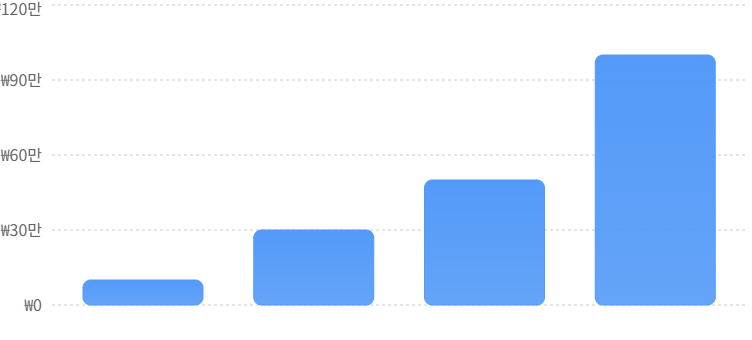
USD equivalents are rounded using the illustrative rate of ₩1,330 per US$1. Exchange rates change, so check the current rate before transferring money.
For students with limited financial resources, maintaining access to emergency transportation funds and a trusted contact is more important than meeting any particular savings target.
11. Before an Emergency Happens: Seven Things to Prepare

My emergency readiness checklist
0 of 7 completedSave 112 and 119 in my phone.Save my university international office and campus security numbers.Check my National Health Insurance enrollment.Save a secure copy of my passport and residence card.Learn the Korean address of my dormitory or apartment.Identify a nearby clinic, pharmacy, and hospital.Choose an emergency contact and prepare some backup funds.
Final Thoughts: Being Prepared Helps You Study with Confidence
Living in another country means learning much more than what is taught in a classroom.
It means understanding how to protect yourself, access healthcare, ask for help, and navigate unfamiliar systems.
An emergency can be frightening, particularly when family members are thousands of miles away. But remember: you do not need perfect Korean to ask for help, and you do not have to face a difficult situation alone.
Start with three simple actions today: save 112 and 119, learn how to say “Please help me” in Korean, and find your university’s emergency contact information.
A few minutes of preparation today could make an enormous difference tomorrow.
Stay informed. Stay prepared. Stay safe in Korea.
And make the most of your international student experience.
Official Resources for International Students
For the latest information, visit:
- Study in Korea — official Korean government international student portal.
- HiKorea — immigration and residence services.
- National Health Insurance Service — healthcare insurance information.
- E-GEN — emergency healthcare and pharmacy information.
- Ministry of Employment and Labor — employment complaints and labor services.
- Police LOST112 — lost property services.
- Visit Korea — multilingual travel and visitor information.
Editorial note: This guide provides general information, not individualized medical, immigration, financial, or legal advice. Official procedures, fees, eligibility requirements, and helpline availability may change. Currency values are approximate. Photographs are illustrative.
Suggested SEO keywords: emergency numbers in Korea, international student safety Korea, hospital in Korea for foreigners, Korean health insurance for students, lost passport in Korea, unpaid wages Korea, Korean emergency phrases, study abroad safety guide, 112 Korea, 119 Korea.


Leave a Reply